


Whether you’re in B2B or B2C, buyers now expect quick responses, experiences, and personalized interactions at every stage. In other words, with customer expectations rising faster than ever, delivering a great product or service is no longer enough.
This shift has made customer experience (CX) a key factor in business growth and loyalty.
The good news? With the right CX strategy, frameworks, and technology, you can meet these demands and turn CX into a competitive edge.
In this blog, we’ll break down what is customer experience, why it is essential, when to invest in CX management, and introduce proven frameworks to guide your CX strategy. We’ll also explore the best technologies businesses are using to stay ahead.
✨ Key Takeaways
- Customer experience means how your customers perceive your business throughout their entire customer journey.
- A smooth customer experience design allows you to meet customer expectations, improve customer retention rate, stand out from competitors, and increase revenue.
- The right time to invest in customer experience management is when you notice an increase in customer churn, negative reviews, low satisfaction scores, or difficulty attracting new customers.
What is customer experience?
Customer experience (CX) refers to a customer’s overall perception and feeling toward your business, product, or service across all their interactions.
It includes every point of contact throughout the entire customer journey, which starts from initial awareness and ends with post-purchase support. For many businesses, the payment experience is also a critical touchpoint that influences customer satisfaction and loyalty. To find out more about payment solutions that can help streamline the checkout experience, it’s worth exploring platforms designed to support modern commerce.
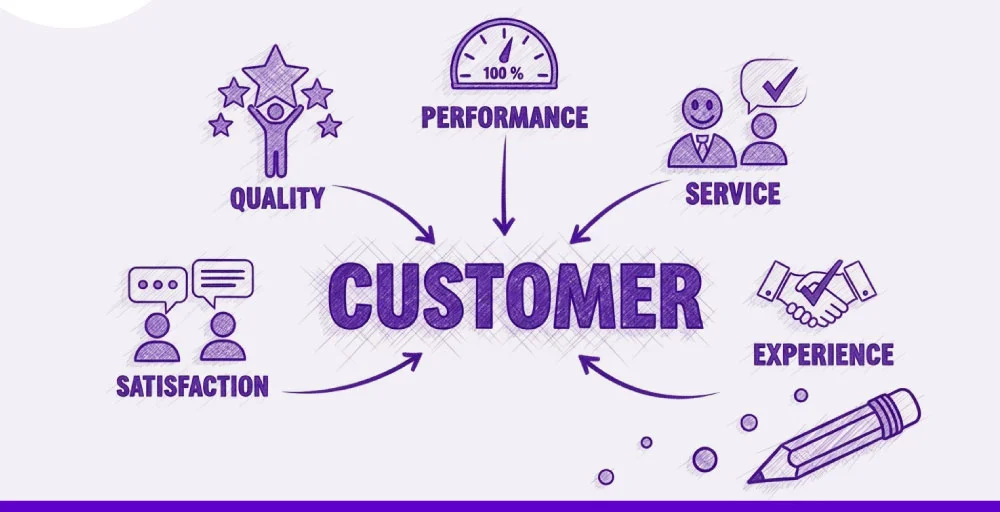
Customer experience strategy isn’t just about solving problems. CX strategy is about making each touchpoint feel smooth, personal, and valuable.
When customers feel heard, respected, and supported, they’re more likely to stay loyal and suggest your business to others. That’s why CX is a long-term growth strategy rather than just a service.
Check out 👉: 12 Most Important Customer Experience Metrics to Measure
Why is customer experience important?
A positive customer service experience with your business can increase satisfaction, foster customer loyalty, enhance retention rates, and lead to brand advocacy. It not only retains your existing customers but also attracts new ones.
Let’s learn why customer service experience is essential and how it benefits you:
1. Gather customer feedback for continuous improvement
Customers constantly give you clues about what works for them and what doesn’t.
Whether through reviews, surveys, or direct conversations, their feedback highlights pain points and areas for improvement at every stage of their journey. When you listen to their feedback, you can fix what is not working for them and constantly refine your service.
2. Improve customer retention
When customers enjoy a smooth and positive experience with your business, they are more likely to return to your brand.
This kind of experience builds trust and leads to a long-term relationship with your brand. Over time, they choose your brand over competitors with the confidence that you will deliver what they need.
3. Helps you to meet customer expectations
Customers expect quick response, personalized support, and smooth service across multiple channels. When you deliver faster and consistent customer service, customers engage with your business.
A well-designed consumer experience helps you to stay aligned with the rising expectations of customers.
4. Directly impact on revenue
There is a direct relationship between a business’s client experience and its revenue.
When you offer a smooth experience, your customers remain loyal to you for a long time, which generates continuous income. Plus, satisfied customers don’t just stay; they refer others to your brand, product, and service.
5. Creates a competitive advantage
With so many businesses offering similar products with similar prices, customer experience is what sets you apart.
In a competitive market where everything can be copied, the experience you deliver can’t be stolen easily. What makes customers choose your brand over others is how you treat them during their pre- and post-journey.
When is the best time to invest in customer experience?
If you know when to focus on improving consumer experience, you can save your business from costly errors and missed opportunities.
But when to prioritize customer interaction experience? Here are certain signs that indicate the best time to invest in a customer experience solution:
1. When the customer churn rate starts to rise
If you notice that your existing customers are leaving your business for competitors, it’s time to look at your customer service experience.
It usually means their experience with your business is not working. So, when churn rate increases continuously, you should take a close look at your CX and invest time to improve.
2. Poor online reviews
Bad reviews on different online platforms not only hurt your brand reputation but also influence buying decisions.
If you see that your customers are constantly complaining and leaving negative feedback about your business online, don’t ignore them. You should work on what you lack, which will convert your critics into loyal customers.
3. Low customer satisfaction score
If your customer satisfaction score is decreasing, it signals that your customers are feeling disappointed or disconnected.
When your CSAT, net promoter score (NPS), and customer effort scores (CES) drop, you definitely need to prioritize changing your CX strategy.
When you invest in CX, it helps you to identify what is missing and refine your strategy to build trust. It also shows them that you listen to them and improve.
4. Difficult to attract new customers
Today, buyers often check reviews and recommendations before making a decision. And if your ads, outreach, or promotions aren’t bringing in new customers like they used to.
If your current customers are not happy, they won’t refer others and leave negative reviews. So, if you are struggling to attract new customers, look after your CX.
5. High customer service costs
High customer service costs often mean your customers are facing the same problems repeatedly. This creates more work for your team and more frustration for your customers.
If you’re spending more just to keep things running, it’s a clear sign your experience isn’t working smoothly and needs to invest in CX to fix issues.
Top customer experience frameworks
The CX framework is a structured approach that guides a company to design, implement, measure, and improve customer experience. Implementing better CX frameworks results in omnichannel customer engagement, enhanced satisfaction rates, and higher retention.
The top consumer experience CX frameworks are:
1. Customer journey mapping
This customer journey mapping framework involves visualizing the different stages that a customer goes through when interacting with your business, from initial awareness to post-purchase.
It helps you spot pain points, assess customer emotions, and create a smoother and thoughtful experience at every stage to improve what truly matters.
2. Voice of customer (VoC)
The VoC framework is all about gathering and analyzing direct feedback, opinions, and expectations across multiple channels from your customers.
It uses surveys, interviews, reviews, and direct customer feedback. It gives you real insight into what your customers expect and value so that you can make improvements.
3. Service blueprinting
Service blueprinting is a visual tool that outlines all the people, processes, and tools involved in delivering your service. It includes the behind-the-scenes processes that support each part of the experience.
It helps you align internal operations with the customer journey, so everything runs more efficiently and consistently.
4. Customer experience pyramid
This customer experience pyramid model breaks CX into 3 different layers:
- Functional (meet the needs)
- Accessible (make it easy)
- Emotional (make it enjoyable)
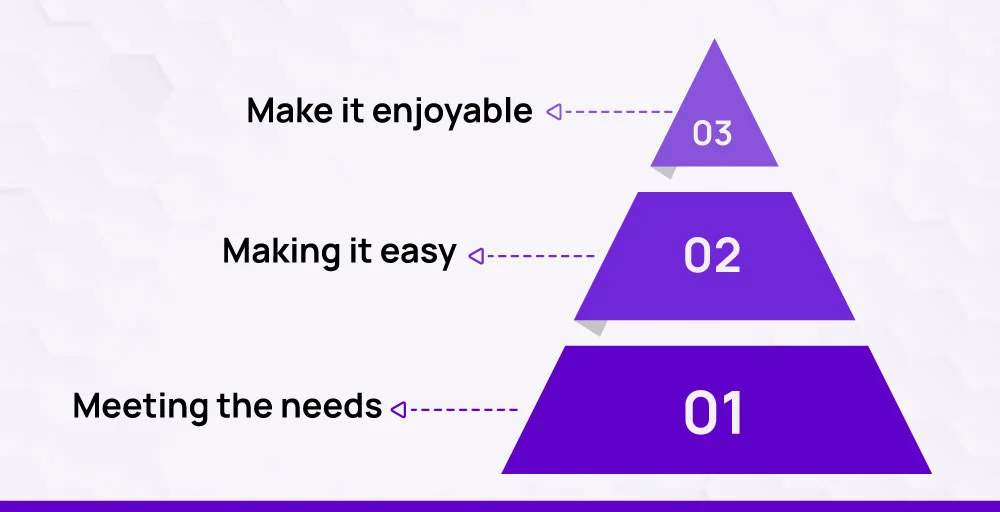
This pyramid helps you to understand what customers really need from your business and evaluate every aspect of CX to prioritize improvement at each stage.
5. Emotional experience design
Emotional experience design is all about how your customers feel when they interact with your brand.
It focuses on creating a strong connection and positive emotions at every step of the customer journey that drive long-term loyalty. With this, you can build relationships that go beyond just transactions.
Best CX technologies to invest in 2026
Want to stay ahead in 2026? Investing in the right customer experience (CX) technologies can make all the difference. It helps you build stronger relationships, deliver faster support, and stand out in a crowded market.
Here are the top CX technologies worth your investment:
1. Feedback and surveys
Real-time feedback tools like customer surveys are an important source of data in consumer experience.
It helps you to know how your customers feel about your experience and gain valuable insight into pain points and action opportunities. Over time, that feedback fuels continuous improvement and builds more trust towards your brand.
2. Digital experience platform
A Digital experience platforms manage digital experience across websites, apps, email, chatbots, and more.
A DXP makes it easier to create personalized, consistent experiences for each customer by connecting with your backend systems This ensures your CX stays consistent no matter where your customers interact with you.
3. E-commerce platform
An e-commerce platform not only helps you to sell products, but it can also be a key part of improving your customer service experience.
With easy navigation, fast checkout, and personalized product suggestions, a smooth and intuitive online store keeps customers engaged and satisfied. The better the experience, the more likely they are to return and recommend your brand.
4. CRM systems
A CRM system is often used in marketing, sales, and customer support teams. They store important details like contact info, purchase history, previous issues, and even preferences. It helps you track every customer interaction, automate follow-ups, and personalize communication based on their needs and history.
The right CRM lets your team stay informed and equipped to deliver faster customer service that improves CX at every touchpoint. With KrispCall’s HubSpot CRM Integration, Pipedrive, and Zapier, you can centralize and automate your workflows.
Whether you’re handling sales calls, customer service, or marketing, these integrations keep everything connected, so you never miss a chance to impress.
5. Contact center platforms
Your contact center is often the front line of your customer service experience. You must invest in a modern contact center platform that makes it easy to route calls, reduce wait times, and provide personalized support across channels.
When agents have the right tools, they can focus on solving problems, rather than switching between multiple apps or chasing down information. Contact center software providers like KrispCall enable you to manage customer interactions across multiple channels, including phone calls, SMS, and voicemail.
KrispCall’s cloud contact center software offers a multichannel customer experience with seamless CX. With KrispCall, you can get access to advanced features such as real-time call monitoring, Interactive Voice Response (IVR), call transfer, call analytics, call recordings, and many more.
Whether you’re a small business or scaling fast, you’ll find it easier to maintain consistent and high-quality customer support.
Watch this video to see how you can boost your team’s performance and customer experience with KrispCall.
Boost customer interaction with KrispCall’s cloud contact center – Try it now!
Frequently Asked Questions
What makes a great customer experience?
- Understanding your customer needs
- Implementing AI
- Offer self-service options
- Provide personalized service
- Invest in customer experience software
- Train your agents
- Deliver a proactive experience
- Use data and analytics