


Have you ever wondered why, despite your best efforts, customers still choose to walk away? The truth is, simply doing things “right” isn’t enough anymore. In today’s highly competitive market, customers expect more than quality products; they demand personalized, seamless experiences at every interaction.
Many businesses fail to meet these expectations because they are held back by high operational and maintenance costs tied to outdated systems. These issues not only slow down teams but also weaken the customer experience, leading to lost opportunities.
This is where customer experience transformation solutions become crucial. It involves making fundamental changes to how your business interacts with customers to ensure a unified, efficient, and customer-centric experience.
In this guide, we answer what is CX transformation, why it matters, how to build a strong CX framework, and practical ways to address common challenges.
✨ Key Takeaways
- Customer experience transformation is the process of enhancing business processes and technology to create personalized, seamless interactions that meet customer expectations.
- An effective CX framework depends on synchronized data, team alignment, and advanced AI-powered technologies to deliver personalized experiences.
- To overcome the common challenges in CX transformation, it’s important to prioritize data security, allow seamless technology integration, preserve the human touch, and eliminate internal silos.
What is customer experience transformation?
Customer experience transformation is the process of making significant changes or overhauls across different touchpoints in the customer journey to enhance their experience.

It goes beyond making simple adjustments to traditional methods, but forming comprehensive and innovative strategies that improve the satisfaction rate and foster long-term loyalty.
At its core, CX transformation involves optimizing customer-centric processes, integrating advanced technologies, training employees, and using the data-driven insights to enhance every interaction. With this approach, companies can strengthen customer relationships and drive long-term business growth.
Why is customer experience transformation crucial?
Good customer experience has come a long way from being a nice-to-have aspect to a critical factor for keeping businesses profitable. A report from Dimension Data Global CX reveals that companies prioritizing CX have experienced strong improvements in customer engagement KPIs, such as a 92% increase in customer loyalty, along with 84 % growth in revenue and 79% in cost savings.
These metrics clearly indicate that customers are actively looking and rewarding businesses that focus more on personalizing the experience. To meet the customer’s growing expectations, it is essential for companies to elevate their approach through customer experience transformation.
Here are 5 reasons why companies are transforming customer experience
1. Meet customer expectations
Simply offering good products or services isn’t enough to retain customers these days, as the competitive market has substantially increased customer demands and expectations.
They are now more inclined to do business with companies that value convenience and customer care personalization. CX transformation helps in this regard by creating an experience that feels tailored, effortless, and consistent.
2. Adapt to customer buying behavior
Aside from meeting customer expectations, it is also important to re-evaluate your approach from time to time to find bottlenecks and formulate new innovative strategies.

Customers have easy access to all information about a product or service, making them more selective towards efficient solutions. With CX optimization, businesses can adapt to customers’ buying behavior via data-driven insights and continuously optimized experiences.
3. Make data driven decisions
Customer journey optimization primarily relies on collecting and analyzing customer data.
Not only does this data give insight into the customer’s preferences, but it also helps to innovate your offerings and make data-driven business decisions.
4. Cost efficiency in the long run
Transformed CX emphasizes the customer experience for better retention and loyalty. A loyal customer is more valuable than new ones, as they are the primary source for sustained revenue and positive word of mouth.
In the long run, these aspects will help to gradually increase the profit and save the expensive marketing cost of acquiring new customers.
5. Better use of technology
Technology plays a vital role in the CX transformation roadmap as it helps improve customer experiences via different tools and software.
Modern AI and machine learning can process huge amounts of customer data to gain insight into their preferences and behaviors. The information can be utilized to deliver unique and personalized service to every customer and ultimately enhance their experience.
How to build a proper customer experience framework?
To personalize customer interaction and create a memorable experience, you’ll need to create a proper customer experience transformation framework that optimizes workflows, employees, and technology.
There are a few aspects that you need to focus on:
1. Data integration
Data collection is one of the most effective ways to understand your customers. By gathering relevant information from various customer touchpoints, including phone calls, emails, social media, and website interactions, you get valuable insights into customer needs, behaviors, and preferences.
This data-driven information can help to create customer centric strategies, making every interaction feel more impactful and relevant. Although there are different CRM platforms and tools that can automate this process, it’s crucial to follow data privacy and security regulations to protect customer information and avoid legal risks.
2. Team alignment
Consistency across all customer touchpoints is key to building efficient workflows and delivering a strong customer experience. When the customer data is synchronized across all departments (including sales, support, and marketing), they gain the necessary context for engaging with the customers in a more personalized and meaningful way.
You can utilize different collaboration tools and Customer Experience Management (Unified-CXM) platforms to centralize team communication, allowing them to share insights and collaborate in real time. Team working in sync eliminates communication gaps, allowing for a smoother customer journey mapping, from initial contact to long-term support.
3. Select the right technology stack
There are many modern tools and technologies that you can utilize to make your customer experience transformation strategy more effective. For example, solutions such as AI-powered chatbots can save time via auto responses, automated prospecting tools can make outreach efforts more efficient, real-time analytics and reporting tools can help to improve data accuracy.
Together, these tools create a feedback loop tracking customer behavior and delivering engaging experiences across every touchpoint.
4. Customer feedback loops
Customer feedback is essential for business growth, as it provides valuable insights for improvement. Gathering feedback through online surveys, review platforms, and forum discussions can help you identify customer pain points and preferences.
You can even go a step further and use sentiment analysis tools to process raw data and understand customers’ emotions and needs. With these insights, you can create optimization plans that exceed customer expectations.
5. Build customer personas and segments
Customer personas and segments can also play an important role in an effective CX plan. Customer personas essentially represent different customer types based on their behavior pattern or shared objectives.
These personas can be used to understand the target customer better and tailor the experiences to meet their specific needs.
Top 5 CX transformation trends
Modern technologies and trends have revolutionized offline and digital customer experiences by overhauling the way businesses interact with their customers.
Here are some of the key trends that will drive the customer experience forward;
1. AI-powered personalization
Advanced artificial intelligence (AI) generative tools and machine learning play a key role in delivering hyper-personalized customer experiences.
In fact, Gartner reported that 38% of business owners have invested in Gen AI for the sole purpose of improving customer experience. Through the use of complex algorithms and analyzing customer behavioral patterns, these tools can deliver highly accurate and unique responses that can fulfill the customer’s needs.
2. Omnichannel integration
Seamless cross-platform support is an absolute necessity in 2026 as customers expect a consistent experience across all touchpoints throughout their journey. This trend has made omnichannel integration an important aspect in CX transformation.
Omnichannel customer experience synchronizes interactions across all platforms, allowing customers to switch between communication channels without losing context. This seamless communication makes them feel valued, leading to stronger trust and retention rate.
3. Customer data and insights
A business that utilizes customer data can effectively create better CX strategies. This data gives businesses a deeper understanding of customer pain points, preferences, and behavior, allowing them to anticipate needs and deliver personalized recommendations.
With these data-driven insights, companies can deliver tailored experiences that not only exceed expectations but also create meaningful interaction that reduces churn rate, strengthens trust, and improve customer retention.
4. Voice and conversational AI
Conversational AI technology is advancing rapidly and transforming how businesses communicate with their customers.
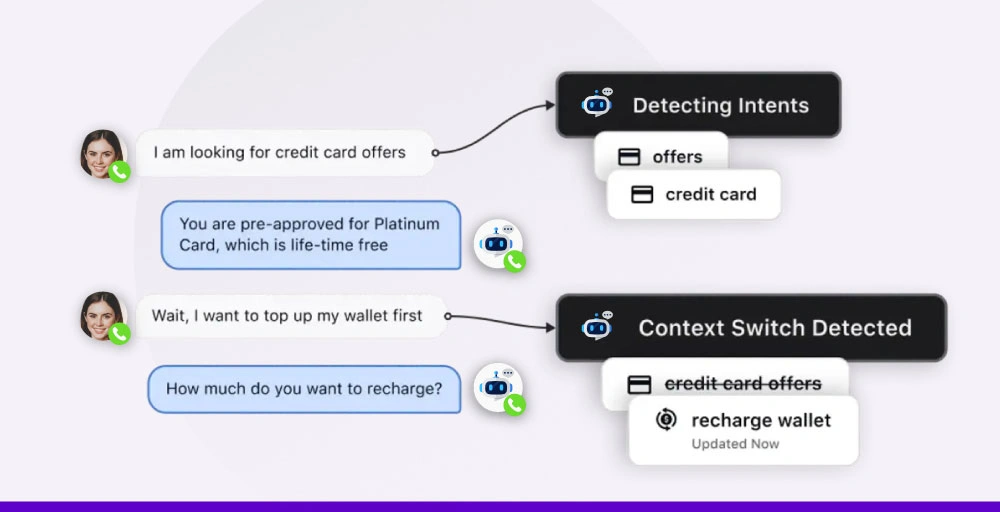
Human-like speech and highly accurate responses in real-time can effectively improve customer engagement. Moreover, the 24/7 availability, reduced operation cost, and conversational personalization make Voice AI bots a powerful tool for improving customer experience.
5. Immersive AR and VR
Modern technologies like Augmented Reality (AR) and Virtual Reality (VR) have taken customer engagement to another level. By combining the virtual world with the real world, these tools can create immersive experiences that deepen emotional connection and leave lasting impressions.
For instance, brands can utilize AR tech to showcase their products, allowing customers to visualize them and make them feel more confident to complete the purchase.
How to overcome challenges in CX transformation?
We’ve established that improving customer experience is important for overall growth. However, putting it into practice is not as easy as it seems. Even with clear goals and objectives, businesses can often face challenges in CX transformation.
1. Ensure data privacy and security
Many data collection platforms and machine learning tools rely on processing large volumes of customer data to generate accurate results. But without proper measures, handling vast amounts of customer data raises significant concerns about privacy and security.
To address this, companies must strictly comply with data protection laws like GDPR and CCPA. i.e., getting clear consent from the customers and using strong security measures are essential. The transparency about how data is being used helps to build trust with the customers and protects the company from potential legal issues.
2. Data synchronization
Another big hurdle in CX transformation is the lack of data synchronization. As customers use different channels to communicate, their data is fragmented across different departments. This can lead to inconsistency, outdated information, and possibly cause miscommunication.
A centralized CXM system is essential to keep data from all platforms in sync and updated in real-time. It ensures the team has access to accurate and up-to-date information at all times. Thus, helping to deliver consistent service.
3. Technology integration
Integrating new systems and CX technologies with your current infrastructure can oftentimes be a complex process. Plus, any issues faced during the integration can disrupt workflows, create data silos, and cause crashes that reduce the efficiency of the company and negatively affect the customer’s experience.
To avoid facing these issues, you need to choose a platform that supports easy integration with your tech stack. Moreover, creating a well-thought-out strategy plan with proper testing will also help you prevent any compatibility issues in the future.
4. Maintain a human touch
Although AI in CX transformation can help to improve the efficiency, relying on them too much can potentially backfire. Robotic and generic responses are simply not enough to solve complex issues and help frustrated customers.
This is why maintaining a good balance between automation tools and human interaction is key to effective customer service. You can use AI tools for automated prospecting or other routine tasks, but also provide the customers with an option to connect with a live agent for more complex or sensitive issues.
5. Break down organizational silos
Organizational silos are responsible for creating collaboration barriers across different departments. This data fragmentation can create inconsistencies across different touchpoints in the customer experience journey, leading to a poor experience.
To break down these organizational silos, you need to incorporate unified data platforms and use tools that allow teams to collaborate in real time. This approach also supports a customer-first culture, where all teams work together to deliver a smooth and consistent experience.
Frequently Asked Questions
What are the key drivers of CX transformation?
- Evolving customer demands
- Customer-centric culture
- Competitive pressure
- Data-driven insights
- Technology advancements