



Customers today expect smooth, personalized experiences with every interaction. Yet many businesses struggle to understand exactly where customers get frustrated, lose interest, or feel undervalued.
Such a disconnect often leads to lost opportunities, customer loss, and a damaged brand reputation. To fix this, companies need a clear view of the customer’s path from start to finish.
Customer journey mapping offers that clarity by highlighting key interactions, emotions, and gaps. In this guide, you’ll learn what customer service journey mapping is, its benefits, and how to create one.
✨ Key Takeaways
- Customer journey mapping is a step-by-step look at how people interact with your business from the first moment they hear about you to becoming repeat customers.
- It helps businesses make things easier and better for customers by fixing problems and improving every interaction along the way.
- The customer journey follows a natural flow from learning about a brand, deciding to buy, and eventually sharing their positive experiences with others.
What is customer journey mapping?
Customer journey mapping is the process of visually outlining the entire path a customer takes when interacting with your business, from initial awareness to becoming a loyal customer.
It helps you view each step and interaction through the customer’s eyes, so you can understand what they’re thinking.
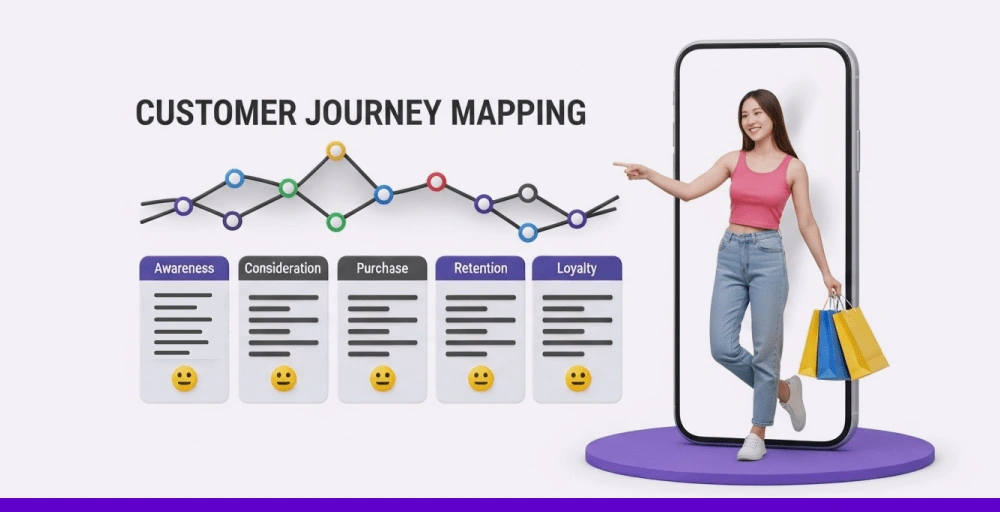
Mapping out each touchpoint visually helps you to identify what’s working well and where you need to work.
It’s a practical way to improve the overall experience, build stronger relationships, and make sure every touchpoint meets your customer’s needs.
Benefits of customer journey mapping
Customer experience mapping helps businesses understand what their customers go through at each step.
It promotes customer centricity by pinpointing exactly where to improve, ensuring the overall experience feels smooth and personal.
1. Improved customer experience
A well-planned customer journey enhances the overall customer experience and keeps customers satisfied. Mapping out each stage, businesses can gain a clear understanding of how customers interact with their brand.
Outlining every step helps pinpoint areas of confusion or frustration, allowing you to simplify and improve those touchpoints.
2. Identification of pain points and opportunities
Journey mapping gives you a clear view of where customers struggle or even drop off completely. By pinpointing these pain points, you can fix them before they drive people away.
It also helps you find new ways to improve the experience and make things easier, faster, or more enjoyable for your customers.
3. Enhanced personalization
When you use customer behavior analysis to really understand what people need at each stage, you can tailor customer care personalization in meaningful ways.
This means offering the proper support or suggestions at just the right moment, so it feels personal rather than generic.
4. Better resource allocation
A clear journey map helps you view where your team’s time, tools, or budget will have the most impact.
Instead of spreading efforts too thin or guessing where to invest, you can focus on the touchpoints that matter most to customers.
5. Increased customer loyalty and advocacy
A truly great experience doesn’t just make someone buy once; it turns them into a loyal customer who keeps coming back and tells others about you.
When people feel satisfied, appreciated, and valued, they’re much more likely to recommend your business to friends and family.
Key stages of customer journey mapping
Every user moves through different customer journey stages when they interact with a brand. Each stage offers a chance to build trust, solve problems, and encourage loyalty.
1. Awareness
People initially discover a brand through ads, social media, search results, or conversations with friends.
The goal at this stage is to spark curiosity and make a strong, memorable first impression that sticks with them when they realize they need something similar.
2. Consideration
Once the customer knows about your brand, they start exploring whether it actually fits their needs as part of the customer decision-making process.
They might compare you with competitors, read reviews, check features, or ask others for advice.
3. Purchase
The decision to buy happens once the customer has built enough trust and interest. It’s essential to make the buying process as easy and reassuring as possible.
Hassle-free checkout, transparent pricing, flexible options, and responsive customer service can help turn that interest into real action.
4. Retention
After the customer makes their first purchase, the real work begins, which is keeping them engaged and satisfied.
This means offering regular, thoughtful communication, strong after-sales service, helpful support when needed, and even small rewards or loyalty programs.
5. Advocacy
Truly happy customers often become your biggest supporters by sharing their experiences with friends, family, or online communities.
Encouraged reviews, referrals, and user-generated content can turn that loyalty into powerful word-of-mouth marketing.
Types of customer journey mapping
Different types of journey maps serve different goals depending on the situation. They give you a clearer picture of either the current experience, the ideal future, or the daily life of your customer.
1. Current state journey map
A current state journey map shows how customers truly experience your brand today, with captured thoughts, emotions, pain points, and customer satisfaction mapping data at each touchpoint.
Use it to spot gaps, reduce friction, and guide immediate improvements.
2. Future state journey map
A future state journey map outlines the ideal experience you want to deliver.
It’s best for planning improvements, setting goals, and aligning teams on a shared vision for the customer onboarding journey.
3. Day-in-the-life journey map
A day-in-the-life journey map looks at your customer’s routine beyond brand interactions to reveal daily contexts and behaviors.
Use it to find new, natural opportunities to engage with your audience.
4. Service blueprint
A service blueprint details the internal processes and teams supporting the customer journey.
It helps uncover bottlenecks like high average handle time and aligns operations to deliver a smooth, consistent experience.
How to create a customer journey map?
To build a useful journey map, first know who your customers are and what they need. The process then lays out all the important steps to help you improve how people experience your brand.
1. Define goals and target personas
Start by clarifying what you want to achieve with your map and customer journey strategy, like improving conversion rates or reducing churn, and define detailed customer personas.
Understand their needs, motivations, and challenges to keep the journey focused on real users.
2. Identify customer touchpoints
List every customer touchpoint where they interact with your brand, from ads and social media to chatbots and support calls.
The step ensures you see the full path customers take and don’t miss critical interactions for each segment of your customers that shape their experience.
3. Collect qualitative and quantitative data
Gather customer insights from surveys, interviews, social media listening, customer feedback, and customer lifecycle mapping data.
Hard data combined with personal stories helps you understand not just what customers do, but why they do it and how they feel along the way.
4. Map the customer experience across stages
Organize your findings into clear stages like awareness, consideration, purchase, and post-purchase as part of a structured customer journey framework.
Plot customer goals, emotions, and actions at each step to visualize the full journey and spot patterns in behavior.
5. Identify gaps and improvement areas
Look for pain points, dropped interactions, or moments of frustration in the journey using insights from customer surveys.
Highlight where expectations aren’t met so you can prioritize fixes and support customer journey optimization for the most significant impact on customer satisfaction.
6. Optimize and iterate
Use customer journey analytics to drive changes across teams, like refining processes, improving after-sales service, adopting customer service software, or enhancing overall service delivery.
Keep revisiting and updating it to reflect new insights and evolving customer needs.