

Your internal teams rely on a single communication platform to talk with each other. Your contact center agents rely on a completely different one to manage customer interactions. Most of the time, nobody outside IT notices the split between these separate systems until a customer gets bounced between departments, repeats an issue for the third time, or sits on hold while an agent tries to find someone who can actually help.
More vendors, Microsoft, Zoom, RingCentral, and others, have spent the last couple of years working to connect customer facing systems with the internal business communication tools employees use every day, rather than selling unified communications and contact center software as two unrelated products. The split made sense when internal communications and customer-facing support were treated as genuinely different problems. They aren’t anymore.
This blog covers the benefits of UCaaS and CCaaS convergence, how it plays out across a few industries, the tradeoffs nobody likes to advertise, and a quick way to tell if it’s worth exploring for your business.
✨ Key Takeaways
- UCaaS and CCaaS are converging into a single platform, driven by AI’s need for connected data, hybrid work, and vendor fatigue.
- A converged platform delivers eight key benefits, from lower costs and faster resolution to better AI context and easier scalability.
- The ROI is well-documented but comes with real tradeoffs around migration complexity, upfront costs, and compliance.
- A phased, integration-first approach works best, and KrispCall offers SMBs an accessible entry point into convergence.
What Is UCaaS and CCaaS Convergence?
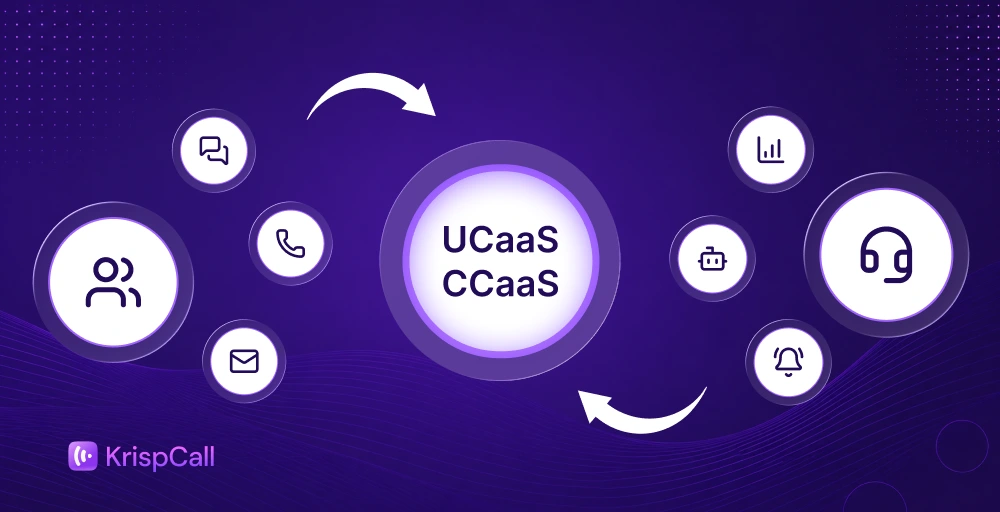
Unified Communications as a Service (UCaaS) covers the tools internal teams use to collaborate with each other, including calling, messaging, video meetings, and presence status. Contact Center as a Service (CCaaS) covers the specialized tools built for customer-facing agents, such as intelligent call routing, Interactive Voice Response (IVR), omnichannel support, and agent workflows.
Convergence means bringing these two separate architectures together onto a single platform with shared data and unified presence tracking. Instead of running disconnected systems that merely sit on the same network, organizations bring them together into a converged communications model built around one customer communications strategy rather than two competing ones.
UCaaS and CCaaS Integration vs. Convergence
These terms get used interchangeably, but they describe different levels of connection:
- Integration means two separate platforms exchange data or connect specific workflows, for example, a CCaaS tool pulling presence status from a separate UCaaS system.
- Convergence means UCaaS and CCaaS share a common platform: the same identity layer, administration system, presence information, and underlying data environment.
The distinction matters because most organizations don’t jump straight to full convergence. Many start with integration between existing systems and move toward convergence over time, an approach covered later in the migration section.
Why the two are converging now
UCaaS (Unified Communications as a Service) and CCaaS (Contact Center as a Service) are converging to blur the lines between internal employee collaboration and external customer support. Businesses are merging these systems to eliminate data silos, reduce IT complexity, and accelerate issue resolution
The convergence of UCaaS and CCaaS is driven by several key factors:
- AI performs better with connected data: Modern AI tools, chatbots, agent assist, call summarization, work more effectively when they can access relevant, accessible, and properly governed data across both internal knowledge and customer interactions, rather than pulling from systems that don’t talk to each other.
- The rise of hybrid work: Distributed teams have blurred the line between back-office employees and front-line agents, making it essential for any worker to handle customer issues instantly on any device.
- Vendor fatigue: Businesses are actively consolidating their technology stacks to eliminate the administrative headache of managing separate vendor relationships, billing cycles, and support channels. A vendor consolidation exercise that, done right, also helps simplify technology management across the board.
8 Benefits of a Converged UCaaS & CCaaS Platform
Bringing UCaaS and CCaaS together does more than simplify business communications. A converged platform improves how employees collaborate, how customer interactions are managed, and how organizations scale their operations.
Here are some key benefits businesses can gain from using a combined UCaaS and CCaaS platforms:
1. Lower total cost of ownership
Consolidating platforms can reduce overall technology spend, along with ongoing licensing and administration costs. Instead of paying for separate user licenses, maintaining redundant integration points, and managing multiple contracts, streamline operations through a single platform. Disconnected tools cause IT overhead to compound over time, whereas a unified model eliminates data silos and can reduce the cost of vendor consolidation and volume-pricing penalties.
2. Unified customer and employee data for better AI context
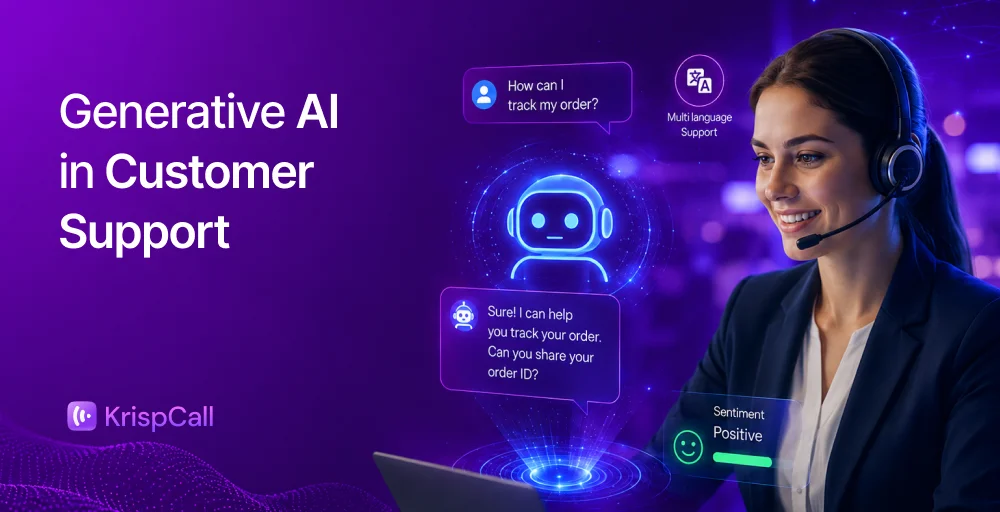
Artificial intelligence (AI) tools deliver more accurate, contextual assistance to both employees and customers. AI models, including chatbots, real-time agent assist, and automated call summarization, require complete visibility to work effectively. If call logs, internal team knowledge bases, and customer chats live in isolated silos, the AI operates with critical blind spots that lead to broken context and incorrect answers.
3. Faster first call resolution via presence sharing
Frontline agents can address complex customer issues during the first interaction, minimizing follow-up requests. Unified presence indicators show real-time availability across the organization, so agents can quickly see who is online, busy, or away. This cuts down on guesswork and helps agents spend less time on admin work and more on resolving issues.
4. Single customer view across every channel
Customers can move between communication channels without repeating information. A converged architecture ties phone calls, SMS, web chat, and email interactions to a single customer identity, giving agents visibility into every channel and full customer conversation history. The history follows the customer automatically, so an internal department or an external chat window updates the master customer record.
5. Reduced IT and admin overhead
Internal IT teams can spend less time managing, troubleshooting, and provisioning communication tools when administration is centralized. Operating a converged UCaaS platform means administrators have one system to patch, one security configuration to audit, and one point of contact for technical support when an issue arises.
6. Better employee experience (which drives CX)

Reducing operational friction for staff can lower workplace stress and improve the quality of customer care. Employees deal with less cognitive fatigue when they aren’t constantly switching tabs, copying data between tools, or manually reconciling two disconnected systems to answer one question. A streamlined workspace can shorten onboarding for new hires and keep current staff focused on problem-solving rather than navigating software.
7. Improved reporting and journey visibility
Leadership gains clearer, end-to-end visibility into the entire customer lifecycle. Instead of manually exporting data from two systems and stitching spreadsheets together, metrics live in a single dashboard. This brings internal performance data together with external customer satisfaction scores (CSAT), making it easier to track the key performance metrics (KPIs) that matter, a benefit that both leadership and customers end up appreciating, since problems get caught earlier.
8. Easier scalability for growing or distributed teams
Businesses can expand their footprint, add new locations, or shift their workforce model with less friction. A cloud-native environment treats every user, location, and department as part of the same system, running on a genuinely unified data environment rather than a patchwork of regional tools. Cloud-native platforms generally allow teams to add users, numbers, and locations with little or no additional on-premises hardware, often using the exact same security and routing templates already in place.
Read more 👉: VoIP vs UCaaS: What is the Difference & Which to Use?
The Real ROI: What the Data Shows
While the operational efficiency gains of a converged UCaaS and CCaaS platform are compelling, decision-makers often want proof that the investment delivers measurable business value. Independent analyst firms and industry researchers consistently report improvements in productivity, efficiency, and customer experience, though it’s important to distinguish between independent research and vendor-sponsored studies.
A Forrester Total Economic Impact™ (TEI) study commissioned by RingCentral, based on interviews with five customer representatives combined into a single composite organization, modeled a 211% ROI, up to a 45% reduction in average call-handling time, roughly $10.8 million in savings over three years, and a payback period of under six months. As with all TEI studies, these are modeled outcomes for a representative composite organization rather than findings from an independent, market-wide survey.
According to Metrigy’s “UC and Contact Center Platform Integration Drives Business Success” research, high-performing organizations that used a single cloud-based provider for UCaaS and CCaaS reported a 37.4% increase in agent efficiency and a 56.6% improvement in CX ratings. These figures reflect top-performing organizations in Metrigy’s survey sample, not an average outcome every organization can expect simply by integrating the two systems.
Bringing your communications stack together can shift the contact center from an isolated operational function into an asset used across the business, but these gains aren’t automatic. The cited studies indicate meaningful potential returns, though their results are based on specific research samples and modeled organizations. Actual outcomes will depend on how strategically and cleanly the migration is executed.
Convergence Benefits by Industry
Retail and e-commerce
True convergence closes the gap between the warehouse or storefront and the remote customer service team. Instead of operating in isolation, customer experience reps are directly connected to inventory specialists and store managers on the same system.
Example: A customer service representative handling an e-commerce live chat about a damaged high-value delivery can message a brick-and-mortar store manager directly to secure an immediate local inventory hold.
Healthcare
Merging patient-facing phone queues with internal clinical scheduling systems removes the administrative friction that delays patient care. Front-desk staff, medical assistants, and on-call physicians share a single view of real-time availability, all while continuing to handle sensitive patient information appropriately.
Example: A patient calls to reschedule a telehealth appointment. Instead of the front desk taking a message and calling back once they’ve checked with a provider, staff see real-time provider availability directly in the system and rebook the appointment on the same call.
Professional services and real estate
Clients expect quick answers when large financial transactions or tight timelines are involved. Convergence keeps mobile field agents, brokers, and back-office legal or underwriting teams visible to one another at all times.
Example: A client calls their account rep with a question outside the rep’s expertise: a lease clause, a tax implication, a contract detail. Rather than taking a message, the rep checks availability, identifies the customer’s needs and the colleague with the right expertise, and brings them into the same call, so nothing gets lost in the handoff.
Education
Educational institutions can frustrate parents and students by bouncing them between siloed administrative departments. Connecting the central campus switchboard to academic and financial aid offices untangles institutional communication.
Example: A parent calls an administrative line with a question that spans two departments, say financial aid and IT account access. Instead of a cold transfer that resets the conversation, staff can pull the right person directly into the existing call or chat thread, so the parent explains their situation once rather than twice. Small moments like this are what better customer outcomes actually look like day to day.
Common Challenges and Tradeoffs
While the benefits of converging CCaaS providers with UCaaS platforms are significant, the transition is not without challenges. Organizations need to plan their migration, integrate existing systems, and support employee adoption to see the expected return.
Understanding these tradeoffs helps businesses prepare for potential obstacles and build a more successful implementation strategy.
Integration and migration complexity
Combining two systems built and sold separately isn’t always plug-and-play, especially with legacy telephony contracts, custom CRM integrations, or workflows that weren’t designed to talk to each other. Most successful projects lean on phased interoperability rather than replacing an existing infrastructure overnight. This approach lowers operational risk considerably compared to a full cutcover.
Upfront cost vs. long-term savings
The ROI numbers above are real, but they typically show up over months, not immediately. Migrating critical customer workflows, integration work, and training all carry upfront costs before the savings materialize. Anyone promising convergence is cheaper starting week one isn’t giving you the full picture.
Compliance considerations
Merging systems that previously had separate security boundaries raises legitimate questions about how you handle sensitive customer information, call recordings, and data retention, particularly for organizations subject to HIPAA or PCI requirements. This isn’t a reason to avoid convergence, but it is a reason to bring compliance and security stakeholders into the migration conversation early rather than retrofitting policy after the fact, especially when migrating critical customer workflows that touch regulated data.
Is Your Business Ready to Converge? A Quick Self-Assessment
Business convergence requires the alignment of technology, processes, and people.
Look at the checklist
- Do your agents and internal teams use different platforms for calls and messaging?
- Do customers get transferred more than once for the same issue?
- Are you paying for separate contracts with separate renewal cycles across multiple communication providers?
- Do you plan to adopt AI tools that need a unified view of customer data?
- Is your team growing fast enough that managing two systems is becoming a bottleneck?
- Do agents regularly lose time switching between tools mid-conversation to find information or the right colleague?
How to Approach a UCaaS-CCaaS Migration
Phased rollout vs. full replacement
For most businesses, especially those with existing telephony contracts or deeply customized CRM integrations, starting with interoperability between existing systems makes more sense than a full platform switch on day one. You get the benefits of shared presence and unified customer profiles sooner, with less operational disruption, and you can decide later whether a full convergence is worth pursuing.
What to look for in a converged platform provider
Look for vendor-agnostic integrations, transparent pricing that doesn’t hide the true cost of vendor consolidation, dedicated support during migration, and onboarding that doesn’t require a six-month runway before you see value. A converged platform requires planning around your existing technology stack, so ask any provider how they handle interoperability with what you already run, not just what their own system does in isolation.
Where KrispCall fits
For small and mid-market businesses, KrispCall offers a more approachable entry point into UCaaS and CCaaS convergence than the enterprise-heavy platforms built primarily for large, complex deployments.
KrispCall provides growing businesses with a cloud telephony and contact center platform that supports communication convergence through global virtual numbers in 100+ countries, AI-powered call management, shared customer conversations, CRM integrations, and contact center capabilities like call routing, IVR, analytics, and transcription, with simpler pricing and a faster deployment timeline than legacy enterprise solutions typically require.
That makes it a practical fit for growing teams that want the benefits of convergence without an enterprise-scale project behind it.
Ready to see KrispCall in action?
Request a personalized demo, and let us show you how we can help elevate your business telephony conversations.