

AI customer service is changing the way businesses and customers interact. AI is being used everywhere, including in customer support, which has significantly increased customer demand.
To keep up with that, businesses have no choice but to start using AI in their daily workflows. By the end of 2026, it is predicted that AI will power 95% of customer interactions.
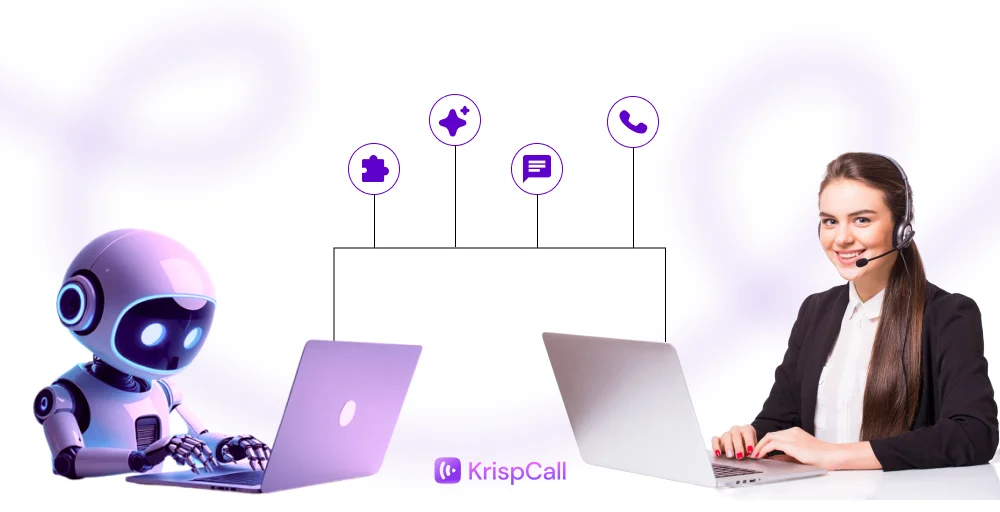
This does not mean humans will be replaced. AI is used to help agents increase productivity and support business growth. Keep reading to understand how AI is being used, how it works, and how your business can use it effectively to improve customer service.
✨ TL;DR
- AI customer service is a technology that helps agents with important insights to increase customer satisfaction.
- Artificial intelligence in customer service works by using technologies such as NLP, machine learning, generative AI, and automation.
- AI in customer support reduces response times, personalizes interactions, increases agent productivity, and is available 24/7.
What is AI customer service?
AI customer service is the use of artificial intelligence to automate support, quickly assist customers, and reduce the need for human involvement. AI-based customer service automates time-consuming tasks, such as handling support tickets, answering FAQs, and routing calls.

It uses tools like natural language processing (NLP) and machine learning to understand customer needs better and respond accordingly in real-time. These technologies suggest solutions based on the pattern of customer conversations. It improves with each interaction over time.
How does AI work in customer support?
AI-powered customer support uses multiple AI technologies to create a support system for identifying queries and resolving issues. Let’s break down some of the core technologies used to increase CES (Customer Effort Score).
| Technology | What It does | What it does | Example |
| Natural Language Processing (NLP) | Understands the meaning and intent behind customer messages | Reads customer queries, identifies intent, and determines the right response or routing action | A customer types “my bill is wrong,” and NLP identifies it as a billing dispute and routes it to the billing team |
| Machine Learning (ML) | Learns from past interactions to improve accuracy over time | Analyses patterns in customer conversations, resolutions, and outcomes to make smarter decisions with each new interaction | AI predicts that a customer calling after a failed payment is likely asking about account suspension and prepares the agent accordingly |
| Generative AI | Creates human-like, context-aware responses | Generates replies, call summaries, and follow-up messages based on the full context of each conversation, not a fixed script | After a support call, Generative AI automatically writes a summary and sends a follow-up email to the customer |
| Automation | Executes tasks without human input | Handles routing, ticket creation, CRM logging, follow-ups, and notifications in the background, triggered by customer actions or AI decisions | A customer submits a complaint, automation logs it in the CRM, assigns it to an agent, and sends an acknowledgment message instantly |
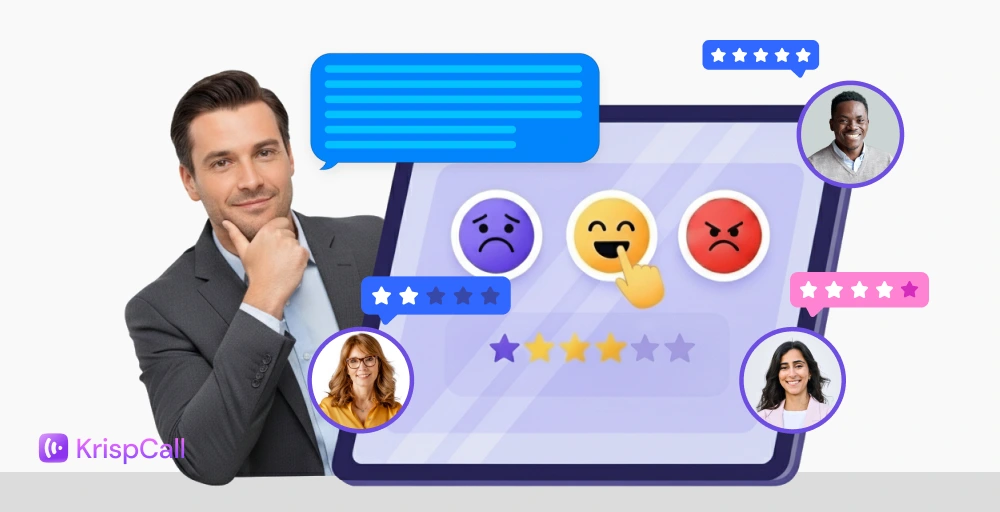
| Sentiment Analysis | Detects customer emotion in real time | Monitors tone, word choice, and patterns during calls or chats to flag frustration, satisfaction, or urgency | A customer’s tone shifts during a call, and sentiment analysis alerts a human agent to step in before the situation escalates |
| Speech Recognition | Converts spoken language into text for AI to process | Transcribes customer calls in real time, enabling AI to analyze, route, and respond to voice interactions the same way it handles text | A customer calls and says, “Cancel my subscription.” Speech recognition transcribes it instantly and triggers the cancellation workflow |
What are the benefits of using AI in customer service?
AI in customer service is not only about replacing repetitive tasks. When you combine it with a strong human support team, artificial intelligence for customer service becomes a powerful tool for improving agent efficiency, customer experience, and long-term business growth.
Here are the key benefits:
1. Available 24/7 without extra staffing
AI based customer support makes your customer service platform available around the clock across every time zone, every day of the week. Unlike a team that only relies on shifts, AI-powered chatbots and virtual assistants handle incoming queries even outside business hours.
Customers get help when they need it, which improves their satisfaction level. As a result, businesses strengthen customer relationships and reduce missed conversations.
Learn more about 👉: 24/7 customer support operations.
2. Faster response time
AI handles customer service tasks as routine, so support agents no longer have to wait to provide an immediate answer to every individual query. Common complaints are resolved instantly without an agent needing to step in for every interaction.
This directly improves two critical support metrics:
- Customer Satisfaction Score (CSAT) goes up because customers aren’t waiting
- Average Handle Time (AHT) decreases because agents spend less time on repetitive tasks.
Your team is freed up to focus on complex, high-priority issues that genuinely need a human touch.
3. Personalized interaction
AI learns from previous interactions, purchase history, and past conversations, and uses the data to provide tailored responses and recommendations. AI in customer communications can anticipate what a customer is likely to need next and proactively offer support.
This builds genuine loyalty, and customers don’t just feel served; they feel understood. With a Gen AI personalization engine, these recommendations become even more dynamic, adapting in real time to changing behaviors and delivering truly individualized journeys.
👉 Explore how customer care personalization works.
4. Consistent omnichannel experience
Customers switch between channels, and they might start on live chat, follow up via email, and then call in. Without AI for customer care, context can be lost, and customers might need to repeat themselves.
Combining AI intelligence with customer service tasks, you carry conversation history and context across web chat, email, social media, and other touchpoints. This omnichannel customer service strategy lets other agents know customers’ identities and needs, providing better support.
5. Provides data-driven insights for continuous improvement
Every customer interaction is a source of data, and this is how AI can help customer service teams go well beyond just answering queries.
Using call center analytics, customer care AI identifies recurring pain points, tracks sentiment trends, flags common failure points in your support process, and surfaces patterns that would take a human analyst weeks to find.
These insights don’t just improve customer service artificial intelligence outcomes; they inform agent training, product decisions, and broader business strategy. The more your AI system learns, the more precise and valuable those insights become over time.
How to effectively use AI in customer support?
AI can get more than half of the job done for automation and repetitive tasks that do not include critical decision-making. Some of the effective ways to use AI in customer support are:

1. Use AI agents to handle customer queries
AI chatbots in call centers are the most used form of AI customer service solution that you can see today. Intelligent customer service contributes to a solid business continuity plan by ensuring customer support remains active even during outages or staffing shortages.
AI agents are remarkably adept at handling customer questions with prior fed data. By 2029, agentic AI is predicted to autonomously resolve 80% of common customer service queries without the involvement of human agents.
2. Assist human agents with AI-supported suggestions
AI can suggest helpful responses by identifying the patterns of previous customer interactions. AI analyzes customer history, emotional cues, and routine inquiries and helps human agents provide personalized responses.
For technical support teams, AI coding assistants are even able to generate code snippets or troubleshooting scripts in real-time to resolve complex technical issues faster.
3. Summarize customer conversations instantly
AI solutions boost efficiency in customer support by summarizing every customer’s history and recommending steps to save time and provide quick support. Now, human agents don’t have to take manual call notes of complex customers’ inquiries.
A summary of the conversations, along with suggestions and response templates, is provided by an AI agent. This helps agents in drafting replies, preparing before calling customers, and reducing post-call work.
4. Predict staffing needs with AI
AI can forecast high-traffic periods based on prior interactions. This directly helps you with call center management by predicting the right number of coach agents during peak hours to avoid long call wait times.
5. Improve quality assurance with AI analytics
AI reviews can help you identify missed opportunities, refine the tone, and address knowledge gaps. Additionally, you can use AI conversation analytics to understand your customers and make changes in the field that are raising customer issues. This can help you flag missed opportunities
6. Improve the content of the help center
Not every customer wants to reach out to customer support to get answers to their simple queries. And, you can exactly find out what the most common problems faced by customers using AI customer services are.
So you can update and create help desk platforms and FAQs regarding those areas.
7. Turn personalized support into a revenue channel
When you have context-aware suggestions. AI can help with upsells, renewals, and referrals for a better support operation to help you add value without sounding promotional.
8. Uncover customer pain points with AI insights
With the proper analysis of conversation trends and sentiment analysis, A can actually highlight the major problems your customers are not saying outright. These insights can help your business guide through product improvements, pricing tweaks, and even marketing messages.
Examples of AI in customer service
AI tools have grown up to solving complex issues like handling customer interactions in real-time, even during peak hours, without compromising on speed or accuracy. It can identify customer behavior and adapt its responses to craft personal, engaging conversations in the contact center.


1. AI chatbots and virtual agents:
AI chatbots answer customer questions across chat, email, and social media, all at the same time. They not only focus on using keywords but also understand context and make conversations feel natural.
Routine queries get resolved instantly, without a human agent needing to step in.
2. Automated call summaries
After every call or chat, AI can automatically summarize what the issue was, what was done, and how it was resolved. No manual notes, and agents can move to the next customer without losing time.
3. Intelligent call routing
AI can look at who’s calling, why they’re calling, and their conversation history, then quickly send them to the right agent. This results in fewer transfers, shorter wait times, and better first-call resolution.
4. Personalized recommendations
AI uses past purchases, previous conversations, and browsing behavior to suggest relevant products and solutions during a support interaction. Customers get answers that actually fit their situation without any non-generic responses.
5. Voice AI
Voice AI is used in contact centers for responding to initial customer inquiries. It understands customer queries effectively, where customers don’t even have to press “0” for help or any other buttons.
6. Sentiment analysis
AI listens to how a customer sounds during a conversation and identifies frustration and urgency. It notifies agents in real time so that they adjust their approach before things escalate.
7. Reply suggestions
While an agent is handling a live conversation, AI suggests ready-to-send responses based on the customer’s query and history. Then, after the agent reviews and sends.
8. Self-service portals
Customers can track orders, reset passwords, check account details, and find answers on their own without waiting for an agent. For this, AI helps in including the exact questions that are searched for more often by customers.
9. Predictive support
Predictive AI spots patterns in customer behavior and flags potential issues before they turn into complaints. Support teams can reach out proactively and solve problems that even customers were unaware of.
10. Customer segmentation
AI tools segment customers based on their behavior, preferences, and interaction history. This helps support teams prioritize, personalize, and serve each group in a way that actually matches what they need.
Why does AI matter in customer service today?
AI is a tool you cannot afford to miss out on to thrive in these emerging business needs. AI customer service solution matters today more than ever, due to the continuous evolution of customer expectations.
Implementing AI helps businesses keep up with these demands by offering smart, real-time assistance that is both efficient and human-like. It can detect customer frustration and adapt its responses based on tone, behavior, and historical data.
It is transforming how modern AI call center solutions operate and predict problems before they occur. In short, AI-driven customer service interaction brings speed, scale, and insight to the customer experience (CX) platforms while maintaining the human touch.