


In today’s fast-moving digital world, businesses can’t afford communication that slows them down. Whether your team is spread across cities or your customers expect instant support, the old days of bulky phone systems and expensive hardware simply don’t fit modern needs anymore.
That’s where cloud communication steps in with a smarter, faster, and more flexible way to connect through voice, video, messaging, and collaboration tools hosted entirely online.
But cloud communication isn’t just about replacing a phone system. It’s a strategic shift that empowers teams to work from anywhere, respond faster to customers, and scale effortlessly as the business grows.
In this article, the definition of cloud communication, along with its key aspects, benefits, and use cases.
✨ Key Takeaways
- Cloud communications let businesses make calls and share data over the internet using services managed by an outside provider.
- They are economical and scalable, enabling companies to expand, cut expenses, and easily manage distant teams.
- They are utilized by teams across various industries, including healthcare, education, retail, and others, to facilitate safe and real-time collaboration.
What is cloud communications?
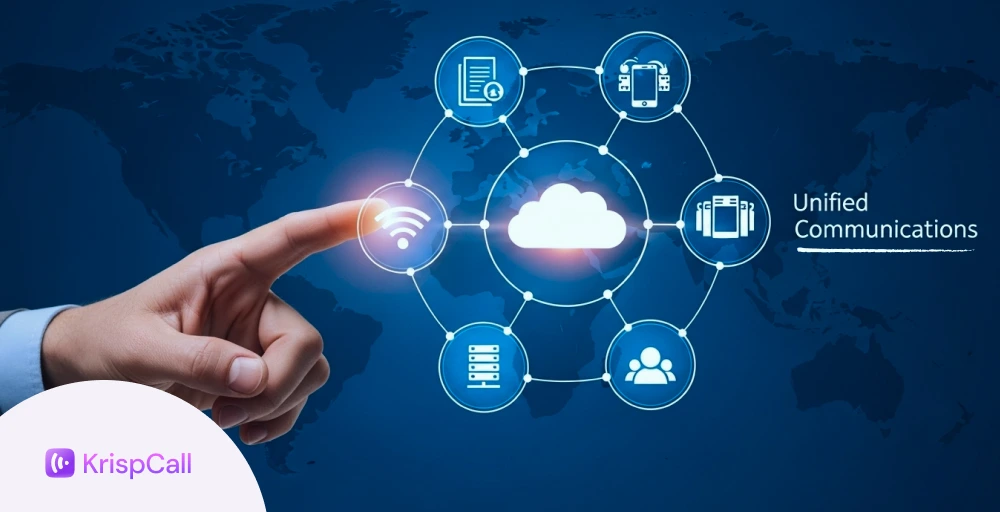
Cloud communication is the modern way businesses connect with customers, teams, and partners using internet-based systems instead of traditional phone lines and on-site hardware. In simple terms, it means your calls, messages, video meetings, and collaboration tools are hosted in the cloud and delivered over the internet. This removes the need for bulky physical equipment like PBX systems, expensive wiring, and constant maintenance.

Components of cloud communications include:
- VoIP: Making phone calls using the internet
- Video-conferencing: Host or join virtual meetings from anywhere
- Messaging: Collaborating with teams in real-time
- UCaaS: All of these communications tools in one cloud communications platform
Key aspects of cloud communications
Cloud communication is more than just internet-based calling. It is a full ecosystem that combines several essential elements to enable faster, smarter, and more flexible communication.
Here are the key aspects that define cloud communications and how they work together.
- Voice over Internet Protocol (VoIP): VoIP lets you make phone calls over the internet instead of traditional phone lines. It acts as the road system that carries all voice calls.
- Unified Communications as a Service (UCaaS): UCaaS combines voice, video, chat, and collaboration into one platform. It functions like a control center that unifies all communication tools.
- Cloud Contact Center (CCaaS): CCaaS manages customer support calls and routes them efficiently through the cloud. It works as a traffic system directing calls to the right agent.
- Communication APIs (CPaaS): CPaaS allows businesses to add calling, messaging, or video features to applications using APIs. It serves as the building block for custom communication experiences.
- Cloud-Based Collaboration Tools: These tools enable team chat, file sharing, and video meetings online. They act as a shared workspace for real-time teamwork.
- Cloud PBX (Virtual Phone System): Cloud PBX manages call routing, voicemail, and extensions without physical hardware. It works like a front desk receptionist organizing all incoming calls.
Core benefits of cloud communications
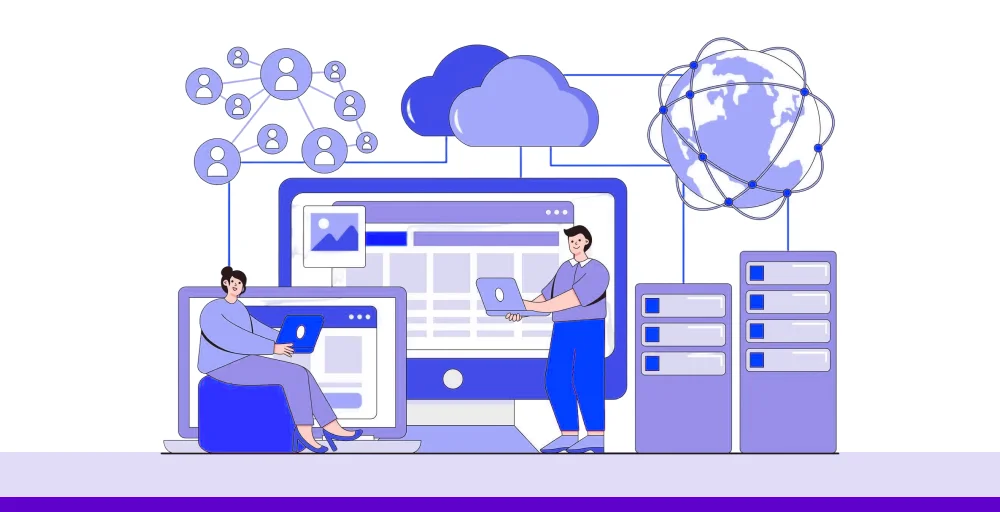
Cloud communications offer an innovative and flexible way for teams and customers to connect.
It provides opportunities to reduce costs, enhance collaboration, and establish connections from anywhere.
1. Cost effectiveness
Cloud communications relieve you of the expense of hardware, complicated installations, and ongoing maintenance. You have lower capital and operating costs.
Cloud providers offer scalable, subscription-based price plans in the majority of instances, so you pay for only what you use.
This enables businesses of all sizes and types to afford budgets and benefit from the best communication tools.
2. Scalability & flexibility
Whether you’re a startup or an established company, cloud infrastructure scales with your business without any inconvenience.
You can scale up or down by adding or removing users at any time, adding features, or expanding to other geographies without requiring changes to your infrastructure.
Cloud communication also supports work-from-anywhere and hybrid work by enabling your employees to communicate and work from anywhere on any networked device.
3. Enhanced collaboration
Cloud platforms offer a range of authentic communication features, including video calls, group messaging, file sharing, and VoIP calls, all in one platform.
Such software enables teams to stay in touch in real-time or asynchronously, break down silos, and boost productivity.
Integration with CRMs and project management tools also streamlines workflows, facilitating more agile and effective communication among departments.
4. Business continuity & reliability
Downtime will cost you customers and reputation. Cloud communications platforms offer robust uptime guarantees and built-in disaster recovery features.
During a failure or crisis, your communication lines are always up and working wherever you are. Cloud providers typically have redundant systems across two or more data centers, ensuring your business never goes offline.
5. Security & compliance
Safety is one of the key issues that any business addresses first, and cloud providers do as well. End-to-end encryption, regular updates, and adherence to industry standards such as GDPR and HIPAA are available on most platforms.
State-of-the-art access controls and backup data protection ensure that important business and customer data are secure, allowing you to communicate online with confidence.
Use cases of cloud communications
Cloud communication solutions cater to a diverse range of industries and business sizes, from agile startups to large global enterprises.
These platforms provide reliable voice, video, and messaging tools that support a range of applications, from customer service and sales to remote team collaboration and virtual meetings.
1. Small and medium businesses (SMBs)
Small- to medium-sized businesses (SMBs) often seek affordable, scalable communication tools.
Cloud VoIP solutions enable them to access high-quality phone, video conferencing, and messaging services without the need for expensive hardware or dedicated IT staff.
This allows smaller teams to operate professionally and efficiently while keeping overhead costs low.
2. Hybrid & remote teams
Cloud-based communications platforms support remote and hybrid working. It provides real-time collaboration to users from anywhere, on any device, including in the office, on a laptop, or a tablet.
Employees can collaborate in video calls, share messages, and receive updates, regardless of their location.
3. Call centre and customer support
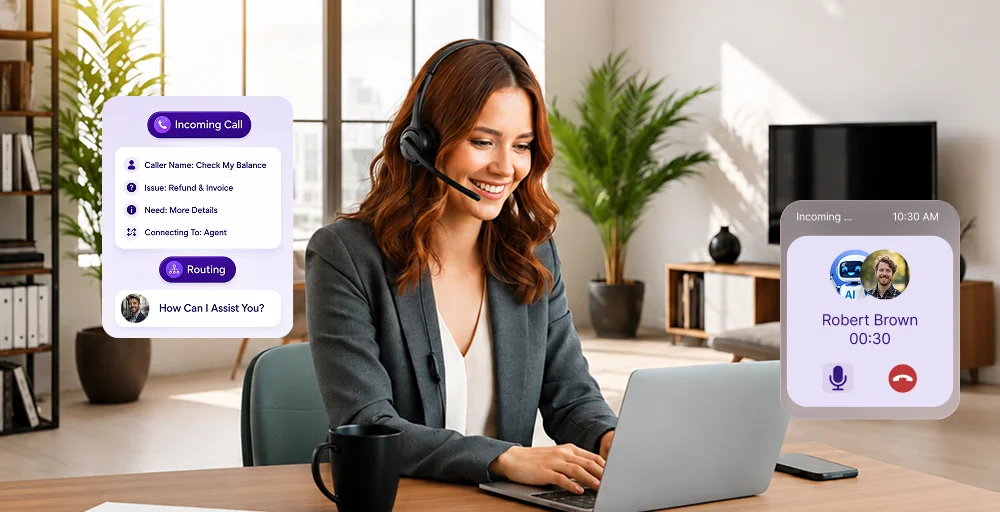
Cloud communication platforms equip call centers with advanced features, including call routing, Interactive Voice Response, and real-time analytics.
These capabilities help support teams manage and respond to customer interactions more effectively, monitor performance, and deliver a consistent, reliable service.
4. Healthcare providers
Healthcare providers are utilizing cloud communications solutions for telehealth encounters, internal coordination, and secure instant messaging.
Partnering with a trusted healthcare software consultancy helps ensure these solutions enable instant communication among doctors, staff, and patients while maintaining HIPAA compliance.
5. Educational institutions
Schools and universities utilize cloud communications to support remote learning and improve engagement with parents and students.
Features such as video conferencing and group messaging enable flexible teaching, real-time collaboration, and effective communication among educators, students, and families.
6. Retail & e-commerce
Retailers and online retailers use cloud communication platforms to enhance customer satisfaction, track order status, and coordinate with suppliers for seamless order fulfillment.
Features like live chat, voice calls, automated responses, and real-time messaging enhance customer accessibility and ensure smooth, efficient fulfillment processes.
Top 5 Cloud Communication Providers
Choosing the right cloud communication provider can make a real difference in how your business connects with customers and teams. The best platforms combine reliability, flexibility, and modern features without adding unnecessary complexity. Below are five leading cloud communication providers trusted by businesses worldwide.
1. KrispCall
KrispCall is a modern cloud communication solution built for growing businesses and global teams. It offers virtual phone numbers in multiple countries, smart call routing, call recording, and seamless CRM integrations. What makes KrispCall stand out is its ease of use and transparent pricing, making it ideal for startups, remote teams, and sales-driven organizations looking for scalable cloud communication without technical hurdles.
2. RingCentral
RingCentral is one of the most established cloud communication providers in the market. It delivers voice, video meetings, team messaging, and contact center solutions in one platform. RingCentral is a good choice for mid-sized and enterprise businesses that need advanced collaboration tools and enterprise-grade reliability.
3. Zoom Phone
Zoom Phone extends the popular Zoom ecosystem into cloud communication. In addition to video meetings, it offers VoIP calling, voicemail, and team messaging. Businesses already using Zoom find it convenient to manage both meetings and phone systems in one familiar interface.
4. Nextiva
Nextiva focuses on unified cloud communication with strong customer experience features. It combines business calling, video conferencing, messaging, and analytics into a single dashboard. Nextiva is well-suited for customer support teams and service-oriented businesses that rely heavily on communication performance insights.
5. Vonage
Vonage provides flexible cloud communication solutions with a strong focus on APIs and customization. It supports voice, SMS, video, and messaging across global networks. Vonage is a good fit for businesses that want to embed cloud communication features directly into their applications or workflows.
How to choose & implement a cloud communications service?
Selecting an exemplary cloud communications provider’s service is crucial in the business world for enhancing business operations, lowering costs, and supporting remote or hybrid teams.

Here is a simple step-by-step guide for you to select and deploy the best cloud-based communication solution for your business:
1. Identify your business needs
Begin by understanding what your company needs from a cloud communications platform.
Do you need VoIP technology for phone calls, video conferencing, messaging, or an entire unified communications solution? Understanding your goals helps you stay focused on the right cloud communications solutions.
2. Determine key features
Look for communication channels and computing platforms that support the features your team needs, such as call forwarding, mobile access, CRM integration, video meetings, and analytics.
Cloud-based unified communications should have all these features in one place.
3. Consider scalability & flexibility
Select a cloud communications provider’s solution that will grow with your business and is easy to scale, adding or removing users, upgrading plans, and handling remote or mobile teams as needs change.
4. Test reliability & uptime
There should be high uptime, robust backup systems, and effective disaster recovery capabilities from reliable cloud communication services.
Ensure the provider has a strong reputation for maintaining reliable systems, particularly for critical business communications.
5. Prioritize security & compliance
Select a cloud communications platform that offers end-to-end encryption, secure access controls, and compliance with industry standards like HIPAA or GDPR. Security is paramount for protecting your business data communications and customer information.
6. Compare pricing plans
Ask for transparent pricing with no hidden fees. Cloud communication companies typically offer adjustable, pay-as-you-use models, allowing you to pay only for what you use, making it affordable for businesses of any size.
7. Pilot test and train your staff
Pilot test with a test group first to experiment with features and resolve issues. When you’re ready, train your staff to make the most of the new cloud-based communication solution.
8. Monitor and optimize
Track performance, voice quality, and user experience post-deployment. Leverage learning from your cloud communication service providers to optimize and provide seamless day-to-day delivery.
Why KrispCall stands out in the cloud communications landscape?
KrispCall is redefining how businesses connect and interact with customers by offering an entirely cloud-based solution that is modern, scalable, and designed for today’s hybrid workforce.
Unlike traditional systems that require complex infrastructure and costly upkeep, KrispCall empowers organizations to handle voice, messaging, and contact center through a single, user-friendly platform hosted entirely in the cloud.
Businesses can also choose virtual phone numbers from over 100 countries, making it easy to establish a local presence in global markets without setting up physical offices.
Additionally, users can get access to advanced functionalities such as Multi-level IVR, Automatic Call Distribution, call tagging, and forwarding.
Frequently Asked Questions
What is an example of cloud communications?
Examples of cloud communications include messaging apps like WhatsApp, video conferencing platforms like Google Meet, and VoIP (Voice over Internet Protocol) services like Zoom Phone. All of these use cloud infrastructure to facilitate communication.