

📝 Quick Summary
- Virtual phone numbers let you make and receive calls online without being tied to a SIM card, landline, device, or location.
- They come in different types, including local, toll-free, vanity, international, and temporary numbers, each suited for different use cases.
- SMS support varies by provider and number type, and US business texting may require 10DLC registration.
- Virtual numbers improve flexibility and privacy, but they do not guarantee anonymity or universal OTP/2FA support.
- Before choosing a provider, businesses should check compliance, STIR/SHAKEN attestation, E911 support, porting rights, and call reliability.
What is a virtual phone number?
A virtual phone number is a telephone number that is not tied to a specific physical SIM card or landline. Instead, it operates over the internet using cloud-based VoIP (Voice over Internet Protocol) technology, allowing you to make and receive calls or texts on multiple devices.
There are several things that make a phone number “virtual.” They are:
- Not tied to geography: A London phone number can ring a user in Toronto, Singapore, or anywhere with an internet connection.
- Not tied to a device: The same number can ring multiple devices simultaneously, such as a mobile phone, laptop, and desktop app.
- Not tied to a carrier contract: Numbers can be activated, reassigned, or canceled without replacing hardware or rewiring lines.
- Not limited to one user: Teams can share a single number with routing rules that determine who answers.
Keep in mind: A virtual phone number and VoIP often work together, but they are not the same thing. VoIP is the technology that transports calls over the internet, while a virtual number is the digital phone number used to receive them.
Get Virtual Phone Number Online.
Get virtual phone numbers from all over the world for personal & professional use.
Select numbers :
How does a virtual phone number work?
A virtual phone number works by routing calls and text messages through cloud-based communication software instead of traditional phone lines. When someone dials the number, the request is handled by a virtual phone service provider or cloud PBX system, which then sends the call over the internet to the devices you’ve connected to the account.
Here’s the basic process behind a virtual phone number:
- A caller dials your virtual phone number.
- The call reaches your cloud PBX or VoIP provider.
- The provider routes the call over the internet.
- Your assigned devices or apps ring simultaneously or in sequence.
Unlike traditional phone systems, there’s no need for a dedicated copper line or a fixed SIM card. Everything is managed digitally through the provider’s network.
Types of virtual phone numbers
Not all virtual numbers are the same. The type you need depends on your use case, your audience, and, in some cases, your legal obligations.
| Type | Best For | SMS Capable | Typical Cost |
| Local | Local business presence | Usually yes | Low to Medium |
| Toll-Free | Inbound customer support and sales | Requires 10DLC registration | Medium |
| Vanity | Branding and marketing | Varies | Medium to High |
| International (DID) | Global business presence | Varies by country | Medium |
| Temporary/Disposable | Privacy or one-time use | Very limited | Free to Low |
1. Local virtual numbers
Local virtual numbers use the area code of a specific city or region. A business serving customers in Chicago can display a 312 number regardless of where the team is physically located. Local numbers tend to have higher answer rates than unknown or toll-free numbers for outbound calls.
2. Toll-free numbers
Toll-free virtual numbers use prefixes such as 800, 888, 877, allowing customers to call at no cost. They are widely used for customer service and national sales lines.
Important: Toll-free numbers used for business SMS now require 10DLC registration in the US.
3. Vanity numbers
Vanity numbers use custom digit patterns, such as 1-800-FLOWERS or 1-888-NEW-CARS. They are easy for customers to remember from advertising and carry brand recognition. The tradeoff is cost and availability; popular patterns are often already taken.
4. International DID (Direct Inward Dialing) numbers
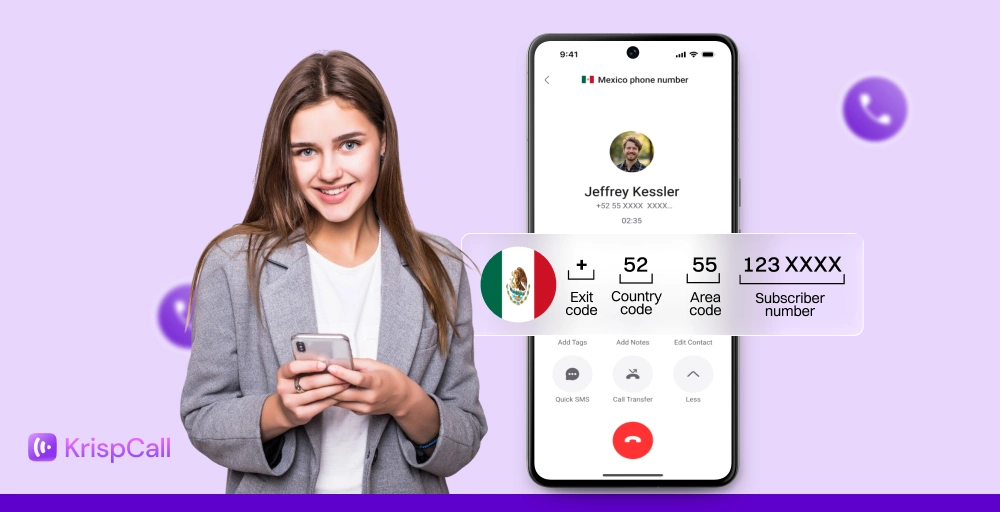
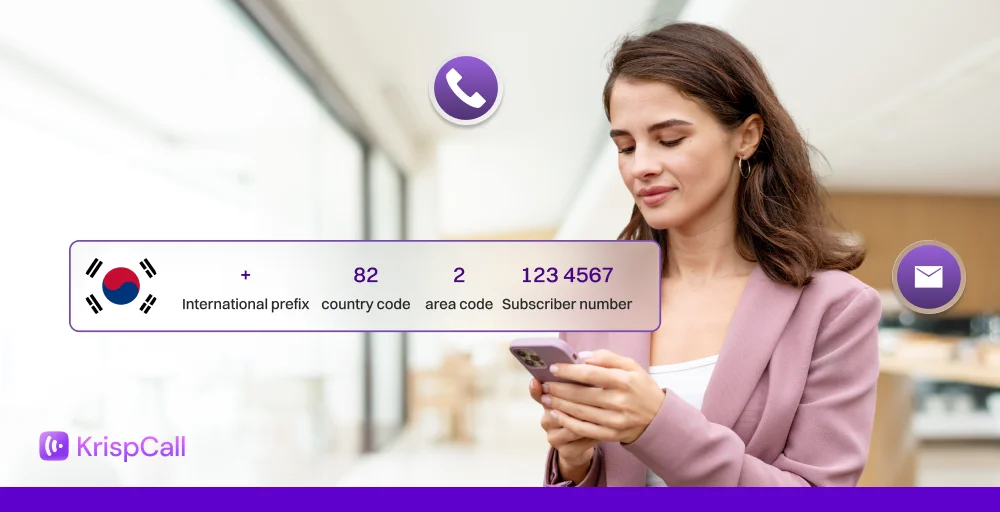
International virtual numbers, also called DID (Direct Inward Dialing) numbers, give you a local phone number in a foreign country without a physical presence there. A US company can have a +44 UK number that rings a team in Austin.
Note: Countries such as Germany, Brazil, and Australia often require strict identity verification and business documentation before issuing virtual numbers to foreign companies.
5. Temporary and disposable virtual numbers
Temporary virtual numbers are short-lived numbers intended for one-time use or short-term privacy. Services like Google Voice, TextNow, Hushed, and Burner offer these at low or no cost.
Critical limitation: Most disposable virtual numbers are actively blocked by major platforms, Google, Apple, Meta, banks, and most financial services, for OTP (one-time password) verification. If receiving SMS verification codes is a core requirement, a disposable number will not work for most services.
How to Get a Virtual Phone Number?
Getting a virtual phone number is simple when you know what type of number you need and how you plan to use it. A personal privacy number, business support line, or international sales number may each require a different setup.
Step 1: Choose your number type and location
Decide whether you need a local, toll-free, vanity, mobile, or international number. Also choose the country or region where you want your number to appear. If SMS is important, confirm that the number type supports texting.
Step 2: Select a virtual phone number provider
Choose a provider that offers numbers in your preferred location and supports the features you need. For business use, look for call routing, voicemail, SMS, team access, CRM integrations, number porting, and compliance support.
Step 3: Sign up and submit your details
Create an account with the provider and add your personal or business information. Some countries may require identity proof, business documents, or address verification before issuing a number.
Step 4: Choose and purchase your number
Search for an available number by country, area code, or number type. Once you find a suitable number, select your plan and complete the purchase.
Step 5: Activate and configure the number
After purchase, the number may activate instantly or after document approval, depending on the country and number type. Once active, set up call forwarding, voicemail, business hours, IVR, team access, device preferences, and SMS settings.
Step 6: Start using and warm up the number
Use your virtual number from a web, desktop, or mobile app to make and receive calls or messages. If you plan to use it for outbound calling or SMS, start with low volume and gradually increase activity to build trust and reduce the risk of spam flags.
Pro tip: For US business SMS, check whether your provider supports 10DLC registration. Also review number porting, E911 support, and number ownership policies before committing to a provider.
Virtual phone number vs regular phone number
Virtual phone numbers and traditional phone numbers both allow you to make and receive calls, but they work very differently behind the scenes. Traditional numbers are tied to physical phone lines, SIM cards, or carrier networks. Virtual numbers operate through cloud-based internet systems, making them more flexible for remote teams, international businesses, and users who need multi-device access.
Key differences at a glance
| Feature | Virtual Number | Traditional Number |
| Physical hardware required | No dedicated hardware needed | Usually tied to a SIM card or landline |
| Geographic flexibility | Work from almost anywhere | Usually tied to a physical region |
| Porting and reassignment | Easy to move or reassign digitally | Often slower and carrier-dependent |
| Cost structure | Subscription-based, scalable | Higher setup and infrastructure costs |
| Call quality dependency | Internet connection quality | Cellular or landline network |
When a traditional number still makes sense
Traditional phone numbers can still be the better choice in certain situations.
- Emergency calling services may not always work the same way with VoIP or virtual systems, especially if E911 location information is not properly configured.
- Areas with weak or unreliable internet connections may also experience inconsistent call quality on virtual systems.
- Some regulated industries and government-related services may require a registered physical phone line for compliance or verification purposes.
In these cases, a traditional number may still be necessary alongside a virtual communication setup.
Can you use a virtual phone number for SMS and text messaging?
Yes, many virtual phone numbers support SMS and text messaging, but not all of them do. Whether a virtual number can send or receive texts depends on the provider, the number type, and local telecom regulations.
Voice vs. SMS Capability, Not All Virtual Numbers Do Both
SMS capability depends on your provider and the number type you select. Some virtual numbers are provisioned for voice only. Before signing up with any provider, explicitly confirm:
- Whether the number supports two-way SMS.
- Includes short codes, toll-free numbers, and standard 10-digit numbers.
What is 10DLC and why does it matter?
10DLC stands for 10-Digit Long Code. It is the US industry standard for A2P (application-to-person) business texting, meaning any SMS sent from software or a business application to a person’s phone number.
Since 2023, 10DLC registration has been mandatory for businesses sending SMS in the US. Unregistered numbers are subject to carrier-level message filtering, which means your texts may be silently blocked before they reach the recipient. This affects appointment reminders, order confirmations, and sales follow-ups alike.
Registration requires three things:
- Business EIN (Employer Identification Number).
- Declared use case (e.g., customer care, marketing, transactional notifications).
- Sample message content.
Approval typically takes 1–2 weeks. Some providers handle registration on your behalf; others require you to self-register through the Campaign Registry. Ask your provider explicitly which model they use.
What virtual numbers can’t do for SMS?
Even with a properly registered virtual number, some hard limits remain:
- OTP/2FA verification codes from major platforms are usually blocked. Google, Apple ID, Instagram, most banks, and financial services actively block virtual and VoIP numbers from receiving verification SMS messages.
- Free disposable numbers are almost universally blocked for this use case. Google Voice, TextNow, and similar services will not receive 2FA codes from most major platforms.
- No provider can guarantee delivery from every platform. A provisioned number from a tier-1 carrier-connected provider offers the best chance of delivery, but it is not absolute.
Virtual phone numbers for personal privacy
Virtual phone numbers are not just for businesses. Many individuals use them to protect their personal numbers, reduce spam, and keep different parts of their lives separate without carrying a second phone number.
Why individual use virtual numbers
Individuals use virtual numbers to protect personal privacy and separate work from personal life, and manage communications across multiple devices without needing extra physical SIM cards.
- Online marketplaces: Selling on Facebook Marketplace, Craigslist, or eBay Kleinanzeigen means interacting with strangers. A virtual number keeps your personal mobile private.
- Dating apps: Many people prefer to move communication off an app without giving a stranger their real number.
- Freelance and side work: A separate number for client calls creates a clearer boundary between personal and professional life.
- International travel: A local virtual number for the country you are visiting can be cheaper than roaming or buying a local SIM.
What privacy a virtual number actually provide
A virtual number shields your personal number from casual exposure, but it is not anonymous. The companies hosting the numbers keep detailed connection logs, and law enforcement can trace the true user behind any virtual number.
Like traditional telecom providers, virtual number services can respond to lawful subpoenas or legal investigations when required. A virtual number improves privacy from public exposure, but it should not be viewed as a tool for anonymity.
Free virtual number apps for personal use: What to know
Free virtual number apps can be useful for temporary communication, but they often come with limitations. Many free services display ads, restrict features, recycle inactive numbers, or block SMS verification from major platforms.
Apps such as Google Voice, TextNow, Hushed, and Burner are commonly used for personal privacy, short-term communication, or secondary numbers, but reliability and SMS support vary by provider.
Is your virtual phone number legally compliant?
While virtual phone numbers offer flexibility and privacy benefits, businesses must also ensure they are using them in a legally compliant way, especially for calling, texting, and customer communication.
TCPA compliance for outbound calling and texting
The Telephone Consumer Protection Act (47 U.S.C. § 227) applies to virtual numbers the same way it applies to any other number. Sending unsolicited marketing texts without prior written consent is a violation; the technology behind the number doesn’t matter.
Penalties run from $500 per violation up to $1,500 for willful violations. Because TCPA cases are routinely filed as class actions, a single non-compliant bulk SMS campaign can compound quickly. Get documented opt-in consent before sending any outbound marketing texts or running auto-dialed campaigns.
STIR/SHAKEN, call authentication
STIR/SHAKEN is a framework that cryptographically verifies the caller ID to confirm the number displayed matches the entity placing the call. It was mandated by the FCC to reduce spoofing.
Calls from unverified virtual numbers will often be labeled “Spam Likely” by AT&T, Verizon, and T-Mobile. This is a direct consequence of missing or low-level attestation. Tier-1 providers with direct carrier relationships can pass full (A-level) attestation. Many resellers can’t. Ask your provider what attestation level your outbound traffic carries before committing.
Number porting rights
Your number belongs to you, not your provider. The FCC mandates number portability for virtual numbers provisioned in your name:
- Simple ports must complete within one business day.
- Porting in from another carrier typically takes one to three business days.
- Watch for delay tactics when leaving a provider: excessive documentation demands or unexplained rejections are red flags. If a provider stalls beyond the FCC window, file a complaint at fcc.gov.
Country-specific restrictions
Regulations vary significantly by country. Before ordering international virtual numbers, be aware of the following:
- Germany: Registration with BNetzA is required. Caller ID suppression on outbound marketing calls is prohibited. Local city-code numbers require a physical address in that city.
- Brazil: Outbound campaigns must include a call identification code under ANATEL Act No. 12.712/2024. Foreign companies need a Brazilian-registered entity to hold a number.
- Australia: A mandatory SMS Sender ID Register (effective 1 July 2026) via ACMA. Unregistered sender IDs will appear as “Unverified” to recipients.
Why does my virtual number show as “spam likely”?
New virtual numbers often appear as “Spam Likely” because caller ID reputation starts at zero, like a blank credit file, and carriers rely on analytics and signals to decide whether to label a call
How carriers flag numbers
Carriers and third‑party scoring services (for example, TNS and First Orion) evaluate numbers using patterns such as call volume, answer rates, complaint reports, and STIR/SHAKEN attestation level. If those signals look risky or unfamiliar, the carrier may downgrade the number and apply spam labels to protect subscribers.
Common triggers for “spam likely” labels
Common triggers included for spam likely labels are:
- Sudden high outbound volume from a brand-new number.
- Very low answer rates (many rings but few pickups).
- Consumer complaints submitted through apps like Hiya or Nomorobo.
- Weak STIR/SHAKEN attestation “C‑level” indicates unverified call origination.
How to fix or prevent it
Fixing or preventing the label requires deliberately building a positive reputation.
- Register the number with major analytics providers (for example, Free Caller Registry), so scoring services recognize legitimate use.
- Warm up new numbers gradually, avoid high call volumes on day one, and focus on expected, quality call patterns.
- Choose a provider with direct carrier integrations that can deliver A‑level STIR/SHAKEN attestation.
Are virtual phone numbers secure?
Virtual phone numbers offer several security advantages compared with traditional mobile lines. Because they aren’t tied to a physical SIM card, they eliminate the SIM‑swapping attack vector that threatens many mobile numbers used for two‑factor authentication. Most reputable providers offer provider‑level call encryption (TLS for signaling and SRTP for media), protecting call metadata and audio in transit.
Security strengths
- No SIM card means no SIM-swapping vulnerability: SIM swapping, where an attacker convinces a carrier to transfer your number to their SIM, does not apply to virtual numbers.
- Instant deactivation: If a virtual number is compromised, you can deactivate it immediately through your provider’s dashboard, without a store visit or carrier hold time.
- Call encryption: Most business providers support TLS (Transport Layer Security) for signaling and SRTP (Secure Real-Time Transport Protocol) for call media, encrypting calls in transit.
Real risks to know
The biggest security risk is account takeover. Your virtual number is managed through your provider account, so weak passwords, phishing attempts, or reused credentials can grant attackers full access. A password generator can help users create stronger provider-account credentials instead of relying on weak or reused passwords. Enabling multi-factor authentication (MFA) on your provider account is essential.
Caller ID spoofing is another issue to understand. Anyone can fake a caller ID, including a virtual number, so virtual numbers are not automatically more resistant to spoofing than traditional numbers.
There is also provider dependency. If a provider shuts down or changes ownership, access to your number could be affected unless the number is registered in your name and can be ported independently.
Best practices
- Use a strong, unique password
- Enable MFA on your provider account
- Choose providers with TLS and SRTP support
- Confirm you can port the number out if needed
- Avoid using free disposable numbers for sensitive accounts
Key features to look for in a virtual phone number service
Most virtual number services advertise the same features, such as call forwarding, IVR menus, voicemail transcription, call recording, and analytics. These features buyers consistently overlook are the ones that determine whether the service actually works reliably for business use.
| Feature | Why It Matters | Question to Ask Your Provider |
| STIR/SHAKEN attestation level | Determines if your calls show as spam | “Do you provide A-level attestation for outbound calls?” |
| 10DLC SMS registration support | Required for all US business SMS | “Do you handle 10DLC registration, or do I self-register?” |
| Outbound number porting | Your right to leave with your number | “Is outbound porting explicitly permitted in your ToS?” |
| E911 registration | Emergency services compliance | “Can I register a physical address for E911, and is it mandatory?” |
| Call analytics by number | Attribution for multi-number setups | “Can I see inbound call volume per number with timestamps?” |
| Uptime SLA | Reliability commitment | “What is your published uptime SLA and how is downtime compensated?” |
STIR/SHAKEN attestation level
Ask providers whether they hold their own carrier license or operate as a reseller on another provider’s infrastructure. Direct carrier relationships produce A-level attestation. Resellers often cannot. This single factor has more impact on whether your calls reach people than almost any other technical choice.
10DLC SMS registration support
Providers vary considerably in how much they support this process. Some handle the Campaign Registry filing on your behalf as part of onboarding. Others provide documentation and leave registration entirely to you. Self-registration is manageable but requires familiarity with CTIA requirements; budget 1–2 weeks for approval regardless.
Number porting guarantee
Confirm that outbound porting rights are explicitly documented in your provider’s Terms of Service before signing up. For any business-critical number, also verify that the number is provisioned in your entity’s name with the underlying carrier, not just in the provider’s system.
E911 compliance
Any business using virtual numbers as its primary phone system should have E911 addresses registered for all locations where employees work. This requires your provider to support E911 registration, and requires you to keep those addresses current when employees change locations.
Final Thoughts
Virtual phone numbers offer a flexible way to manage calls and messages without relying on a physical SIM card, landline, or fixed location. They help businesses support remote teams, create a local presence, and keep communication organized across devices.
However, the right provider should be chosen carefully. Factors like SMS support, call reliability, number porting, security, and country-specific rules can affect long-term usability.
With KrispCall, businesses can get virtual phone numbers from multiple countries, manage calls and SMS from one platform, and support teams working across different locations. It is a practical option for companies that want to scale communication, improve customer conversations, and manage business calls more efficiently.