


Despite the rise of digital communication, phone calls remain the most preferred channel for customer service.
Customers want to speak to a real person when it matters most, and businesses that make that experience seamless are the ones that build lasting loyalty.
Call centers sit at the heart of that experience, serving as the central hub for everything from resolving complaints to driving sales.
But not all call centers are built the same. Each type comes with its own purpose, tools, and ideal use case. Choosing the right one can mean the difference between a frustrated customer and a loyal one.
✨ Key Takeaways
- Call center basics: A call center handles customer communication mainly via phone (support, sales, feedback), while a contact center goes beyond calls to include channels like email, chat, and social media.
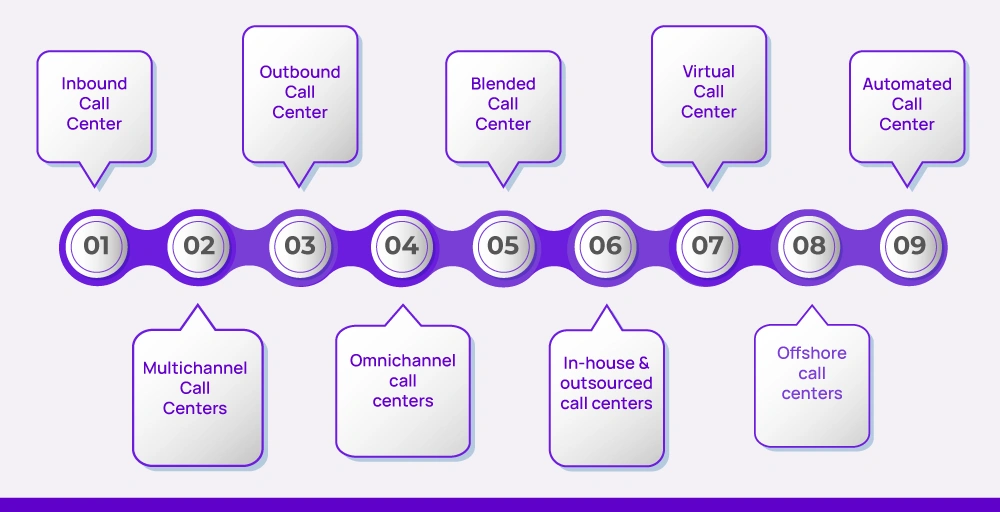
- Types vary by purpose & setup: There are 9 types (inbound, outbound, blended, virtual, automated, multichannel, omnichannel, in-house/outsourced, offshore), each designed for specific needs like customer support, sales outreach, flexibility, or cost efficiency.
- Choosing the right one depends on your needs: Key factors include your business goals (support vs sales), call volume, team capability, budget, and integration with existing tools.
What is a call center?
A call center is a dedicated operation that manages incoming and outgoing customer communications, primarily over the phone. It acts as the main point of contact between a business and its customers, handling everything from support requests and sales calls to feedback collection and appointment scheduling.
It is worth noting that call centers and contact centers are often used interchangeably but they are not the same thing. A call center focuses purely on voice calls, while a contact center goes further by managing multiple communication channels like email, live chat, and social media all in one place.
Know more about👉: How do call centers work?
9 Types of call centers
There are multiple types of call centers designed to suit specific business needs, such as handling inbound calls, outbound calls, or both (blended). Moreover, the type can also vary based on the call centre setup, whether it’s on-premise or cloud-based.
Let’s briefly take a look at the 9 different types of call center services.
1. Inbound call center
Inbound call centers are the backbone of great customer service. When customers call in with questions, concerns, or requests, inbound agents are there to listen, respond, and resolve.
From answering product queries and providing technical support to processing orders and handling complaints, inbound call centers keep businesses running smoothly and customers coming back.
What makes them work so well is smart call routing. Technologies like Automatic Call Distribution (ACD) and Interactive Voice Response (IVR) ensure every caller reaches the right agent quickly, without unnecessary transfers or long wait times.
Take the banking industry for example. Banks rely heavily on inbound call centers to handle everything from account inquiries and fraud alerts to loan applications, ensuring customers always have a trusted point of contact whenever they need one.
Who is it for? Inbound call centers are the right fit for businesses that handle high volumes of incoming calls, prioritize customer satisfaction, and want to build lasting customer loyalty through every interaction.
2. Outbound call center
Outbound call centers are built around one simple idea which is reaching customers before they even think to call you.
Agents take the initiative by making calls to prospects and existing customers to generate sales, build relationships, and gather valuable feedback. Because agents are starting the conversation, they need to be confident, well informed, and skilled at keeping people engaged from the very first hello.
Tools like predictive dialers and CRM integrations help agents work smarter by automating repetitive tasks and equipping them with the right customer context before every call.
For example, a telecom company might use an outbound call center to proactively reach customers whose contracts are about to expire, offering them a renewal deal before they consider switching to a competitor.
Who is it for? Outbound call centers are the right choice for sales driven businesses, fundraising organizations, and companies that rely on proactive outreach to grow their customer base and reduce churn.
3. Blended call center
A blended call center brings together the best of both worlds by combining inbound and outbound capabilities under one roof. Agents can seamlessly switch between receiving incoming calls and making outgoing ones depending on demand, making the operation more flexible and efficient.
The real advantage here is unified customer communication. Agents have access to complete customer information regardless of whether they are calling or being called, which means every conversation is more informed, more personal, and more effective.
A retail business, for instance, can use a blended center to handle customer complaints coming in while simultaneously running a promotional outreach campaign going out.
Who is it for? Blended call centers are ideal for medium to large businesses that need a single, flexible system to manage both customer support and outbound outreach without the cost of running two separate operations.
4. Virtual call center
A virtual call center operates entirely over the internet, meaning agents can work from anywhere in the world without the need for a physical office. It functions just like a traditional call center but relies on cloud based software to connect agents, manage calls, and track performance in real time.
The biggest advantage of going virtual is access to a global talent pool. Businesses are no longer limited to hiring locally, which means they can recruit the best agents regardless of location and operate across multiple time zones to deliver round the clock support.
This model became particularly valuable during the rise of remote work, proving that great customer service does not require four walls and a desk.
Who is it for? Virtual call centers are perfect for growing businesses that need flexibility, scalability, and cost efficiency without compromising on service quality.
5. Automated call center
Automated call centers use AI powered tools like IVR systems and chatbots to handle routine inquiries without any human involvement. Customers can check account balances, track orders, reset passwords, and get answers to frequently asked questions all without waiting for an agent.
This does not mean replacing human agents entirely. Rather, automation takes care of the repetitive, low complexity tasks so that agents can focus their energy on conversations that truly require a human touch. The result is a faster, more efficient operation that keeps both customers and agents satisfied.
Who is it for? Automated call centers are ideal for businesses with high call volumes and a large proportion of repetitive, straightforward inquiries that do not require personalized human support.
6. Multichannel call centers
A multichannel call center allows customers to reach a business through several different communication channels including phone, email, SMS, and live chat. It gives customers the freedom to choose how they want to connect, which is a significant advantage in today’s digitally diverse world.
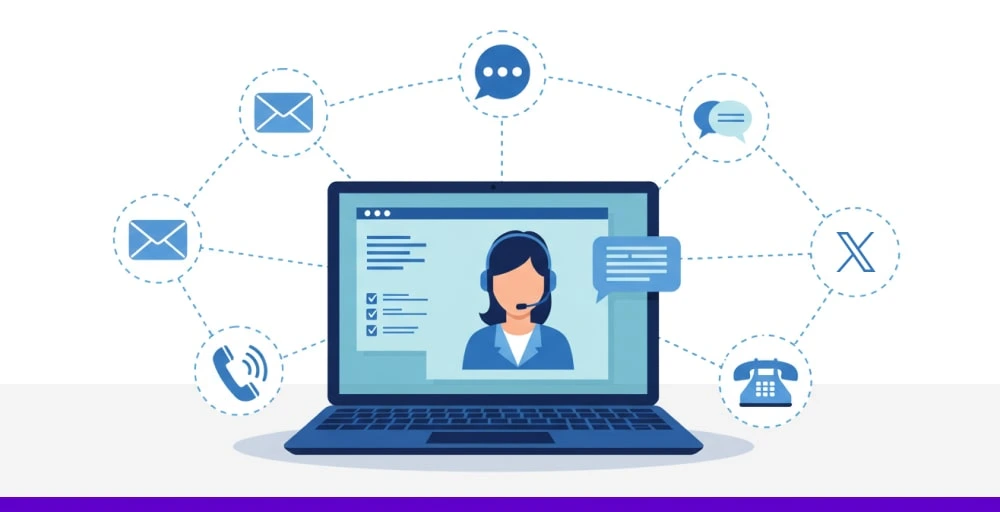
The limitation, however, is that each channel operates independently. Customer interactions are not synchronized across channels, which means an agent handling a phone call may have no visibility into a previous email conversation the same customer had.
This can lead to inconsistent experiences and frustrated customers who have to repeat themselves every time they switch channels.
Who is it for? Multichannel call centers suit businesses that want to offer customers multiple contact options but do not yet need full integration between those channels, particularly those with dedicated teams managing each channel separately.
7. Omnichannel call centers
Omnichannel call centers take everything a multichannel center offers and add one game changing difference which is full integration across all channels. Agents have access to a customer’s complete interaction history regardless of which channel was used, giving them the context they need to deliver a truly seamless experience.
Imagine a customer who starts a conversation on live chat, follows up by email, and then calls in for a final resolution. With an omnichannel setup, the agent who takes that call already knows the full story and can pick up exactly where things left off without making the customer repeat a single detail.
That kind of experience is what turns a one time buyer into a long term advocate.
Who is it for? Omnichannel call centers are essential for businesses that are serious about delivering consistent, connected customer experiences across every touchpoint.
Related 👉: Omnichannel vs Multichannel Contact Center: What’s the Difference?
8. In-house & outsourced call centers
In-house call centers are built and managed internally, giving businesses full control over their agents, processes, and brand voice. The trade off is a higher investment in infrastructure, technology, and ongoing training. For businesses where brand consistency and service quality are non-negotiable, this level of control is well worth the cost.
Outsourced call centers, also known as BPO or Business Process Outsourcing, hand over customer communication to a third party provider. This significantly reduces costs and speeds up deployment, making it an attractive option for businesses that need to scale quickly.
The trade off is less direct control over how agents represent the brand, which can sometimes lead to inconsistencies in tone and quality.
Who is it for? In-house centers suit businesses where brand experience is a top priority. Outsourced centers work well for companies looking to reduce overhead while maintaining a functional level of customer support.
9. Offshore call centers
Offshore call centers operate from a different country, typically one where labor costs are significantly lower. Popular destinations include the Philippines, India, and Eastern Europe. Beyond cost savings, offshore centers offer access to a large pool of skilled multilingual agents and the ability to provide 24/7 support across different time zones.
The challenges are real but manageable. Language barriers and cultural differences can occasionally affect communication quality, and businesses have less direct oversight over day to day operations. Data security and regulatory compliance also require careful attention when working with offshore providers.
Who is it for? Offshore call centers are a smart choice for businesses expanding into global markets, those needing multilingual support, or companies looking to significantly reduce operational costs without closing down their support function entirely.
How to choose the right call center for your business
With so many options available, choosing the right call center comes down to understanding your own business needs clearly. Here are the most important factors to consider:

- Start with your business goals: Whether the priority is customer support, lead generation, or both, your goals should drive every decision about the type of call center you choose.
- Know your call volume and patterns: High inbound volumes call for inbound or blended solutions. Businesses focused on outreach need outbound capabilities with strong dialer tools.
- Think about your agents: The right call center type needs to match the skill set of your team. Outbound agents need different training and tools compared to inbound support agents.
- Consider total cost not just the price tag: Factor in setup, licensing, training, and ongoing maintenance when comparing options. The cheapest solution is not always the most cost effective one in the long run.
- Look for integration capability: A call center that connects seamlessly with your existing CRM, helpdesk, and communication tools will always outperform one that operates in isolation.
The right call center is not just a tool. It is a strategic asset that shapes how customers perceive your business every single day. Choose wisely and it will pay dividends in loyalty, efficiency, and growth for years to come.