


BPO call centers are revolutionizing the way businesses handle customer service, sales, and technical assistance. By outsourcing these functions, companies can cut costs, boost operational efficiency, and deliver higher-quality customer experience.
With the global BPO market projected to reach $525 billion by 2030, more organizations are turning to BPO call centers to stay competitive and focus on core business growth.
In this guide, we’ll explore everything you need to know about BPO call centers, including their types, benefits, challenges, and best practices for successful implementation.
✨ Key Takeaways
- A business process outsourcing (BPO) call center is a team that handles all inbound and outbound customer calls for other businesses.
- Benefits of using a BPO call center include reducing costs, train agents, increasing customer service, and providing access to skilled professionals.
- To implement a BPO call center for your business, start with your business objectives, choose the right BPO partner, provide training, and use the right tools and technology.
What is a BPO call center?
A BPO (Business Process Outsourcing) call center is a company or service provider that manages customer communication and support tasks on behalf of another company. These call center bpo handles inbound and outbound calling, along with services like customer support, sales, technical support, telemarketing, and lead generation.
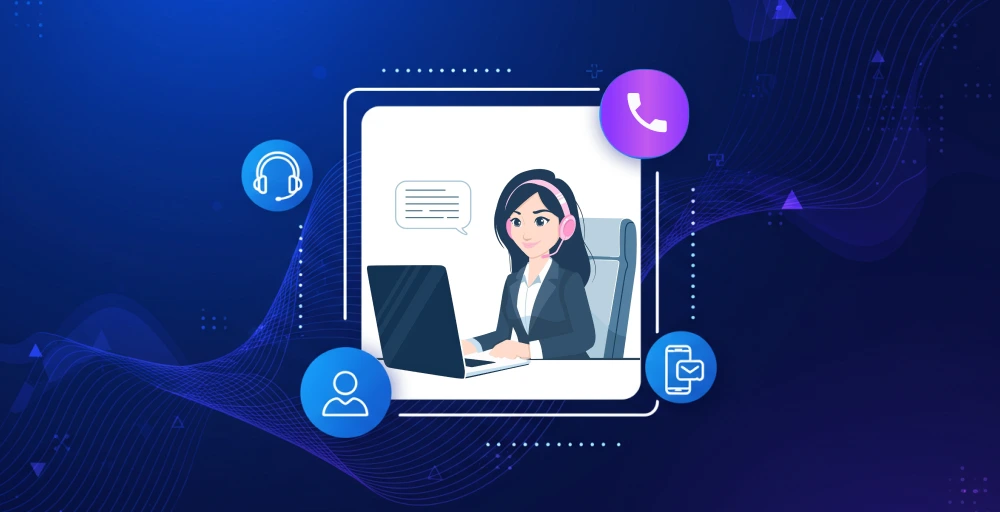
For example, if your business offers a product or service, a BPO call center can handle answering customer queries, addressing complaints, and making calls to prospective leads. This allows your internal team to focus on core tasks while the BPO team handles day-to-day customer communication.
Beyond handling calls, a BPO call center also assists in various backend and frontend tasks such as:
- Data entry and administrative tasks.
- Technical support and help desk services.
- 24/7 availability of customer service.
- Market research and customer feedback collection.
- Front-office and back-office operations.
How does BPO call center work?
A call center BPO functions on a structured outsourcing model wherein a business outsources certain of its processes to a third-party service provider. What follows is how it typically functions:
1. Delegation of Tasks
The client facility determines the various processes, including their own customer service, telemarketing, and technical support, that they want to outsource and assigns those particular tasks to a business process outsourcing service provider with a demonstrated ability to perform those tasks efficiently.
2. Onshore, Nearshore, or Offshore Operations
You can also have a BPO vendor located in the same country (onshore), a nearby country (nearshore), or in a completely different region (offshore). For example, Canon and others provide services either on-site at the client’s location, remotely, or offshore, depending on the client’s requirements.
3. Workforce Management
After a deal is made, the BPO call center recruits, trains, and manages staff who will handle the assigned task. They ensure the team adheres to the client’s standards of communication, quality, and professionalism.
4. Performance Monitoring & Reporting
BPO providers monitor their agents’ performance closely using KPIs, and they send progress reports at regular intervals. They also ensure that the service is delivered to the agreed-upon Service Level Agreements (SLA), with quality and consistency.
5. Continual Optimization
Additionally, many BPO providers actively examine and improve processes over time by refining workflows, improving systems, and incorporating customer feedback to achieve long-term satisfaction and success.
This means that business units can focus on their core functions, allowing the BPO call center to manage customer communications and support functions effectively.
Why does your business need a BPO call center?
In today’s market, customer expectations are higher than ever, and businesses require solutions that balance quality and efficiency. Call center BPO meet this need with expert support, advanced technology, and 24/7 availability.
Some of the reason to use them are:
- 24/7 availability: BPO call center agents are skilled specialists who are trained in sales, customer service, and technical support–providing high-quality support without businesses needing in-house expertise. They ensure 24/7 service across different time zones, so users can get help any time.
- Scalability & efficiency: Outsourcing to BPO centers decreases the cost for staff and infrastructure, enabling businesses to use resources more efficiently. Businesses can scale staff up or down as required, ensuring stable service during peak times and avoiding wasted resources during slow periods.
- Utilize modern technology to enhance CX: BPO center uses tools like AI, CRM systems, and analytics to manage customer requests efficiently and ensure smooth operations. This allows fast, professional support, personalized service, and quick decisions, boosting customer satisfaction, retention and trust in the brand.
- Concentrate on core business while expanding globally: Outsourcing customer support lets businesses focus on primary areas like product development and strategy. Many BPO centers are multilingual, helping companies reach global customers, boost satisfaction, and strengthen their international brand.
Check out👉: Best Call Center Software in Australia, Canada, and UK
Types of BPO call center
The type of BPO call center your company chooses to partner with (whether it is an inbound, outbound, or hybrid) significantly affects how your communication processes are handled.
It’s essential to know the different types of BPO call centers available to ensure the model you choose aligns with your company operations and customer expectations.
1. Inbound call center
An inbound call center handles incoming customer calls. The calls are typically related to customer support, order inquiries, billing questions, or technical issues.
For example, an online retailer may utilize an inbound call center BPO to manage customer complaints, track deliveries, and process returns. An inbound call center typically focuses on assisting and improving customer satisfaction by providing fast and helpful responses.
2. Outbound call center
An outbound BPO call center focuses on making outbound phone calls to customers or prospects. The calls are typically used for telemarketing, lead generation, surveys, follow-ups, and sales promotions.
For instance, a telecommunications company can outsource an outbound BPO call center in order to sell a new service plan and obtain sign-ups. It’s an active approach to contacting and communicating with potential clients.
3. Virtual call center
A virtual BPO call center operates remotely, with representatives working from remote locations and utilizing cloud-based technology.
For instance, a tech startup can utilize a virtual BPO contact center to offer 24/7 support without having to establish a full-scale contact center. It is ideal for remote workers and global businesses.


BPO call centers vs BPO contact centers: Key Differences
| Features | BPO call center | BPO contact center |
| Customer interaction | Direct, voice-based interaction with the customers. | Multichannel, integrated customer interaction. |
| Communication channels | Mainly phone calls (inbound & outbound) | Phone, email, livechat, and social media. |
| Technology used | Uses traditional telephony system and basic CRM tools | Uses advanced unified communication tools, AI, and omnichannel CRM tools |
| Use Cases | Order taking, telemarketing, customer support and surveys. | Customer experience management, technical support |
Though BPO call center and BPO contact center seem similar but have slight differences. They are used interchangeably but there are distinct services within the BPO industry. Explore their differences and choose the right solutions in terms of customer support needs and goals.
A BPO call center handles customer support through phone calls. It includes answering questions, resolving queries and complaints, taking orders, and so on. It uses basic phone systems & tools to manage calls and focus on simple and clear voice communication.
A BPO contact center handles customer interactions through many channels like email, chat, phone, social media, and SMS. It utilized modern tools and technologies to give a smooth & consistent experience. It makes it easier for customers to get help in a way they want, providing more personal and modern support.
Pros of BPO call center
A BPO call center can offer several benefits, including enhanced customer service, reduced costs, and support for your business.
Here are some of the key advantages of a BPO call center.
1. Reduced costs
One of the most significant advantages a BPO call center can offer is lower operating costs. Due to the numerous expenses involved in call center operations (salaries, infrastructure, training, utilities, etc.), reducing costs can result in significant savings by outsourcing to a country such as India or the Philippines, where labor rates are lower.
2. Professionally trained agents
Just like with customer support, call centers hire agents who have been trained in customer support, technical service, and sales. This means you can get professional help for your customers without having to spend time recruiting, hiring, and training your in-house agents, which further improves service quality and response times.
3. Increase Customer Service
Many BPO contact centers operate 24/7, so you can provide your business customers with 24/7 support. This is especially valuable for global companies or eCommerce businesses where customers can fully engage with an enterprise at any hour and from different locations or time zones.
4. Scalability
Lastly, a call center BPO can scale dispatch services relatively quickly when the need arises. Launching a new product or experiencing seasonal demand can increase your call volumes, but BPO providers can quickly provide scalable support, staffing, and resources without compromising timelines.
5. Access to skilled professionals
BPO call centers use trained agents with expertise in customer care, technical support, and sales. This means your customers receive professional service without you having to employ and train an internal staff. It improves their service quality and response time.
Cons of BPO call center
While there are many benefits to BPO call centers, companies should also be aware of certain drawbacks before outsourcing their operations.
Here are some common pitfalls of using BPO call center services:
1. Less control over operations
Outsourcing to a BPO call center means you have less control over the manner in which agents handle calls or represent your company. This can sometimes lead to inconsistent service quality or communication gaps between teams.
2. Language and cultural barriers
Offshore BPO contact centers may encounter issues with language or cultural barriers during customer interactions. Customers may, for example, struggle to understand accents or feel disconnected from agents unfamiliar with local traditions.
3. Data privacy and security risks
Data privacy issues may arise when transferring customer information to an external third-party BPO call center. In the absence of proper security measures, there is a risk of data leakage or misuse of sensitive information.
4. Lack of brand familiarity
BPO agents aren’t always closely familiar with your company values or products. This can result in generic responses and negatively impact the overall customer experience, particularly when addressing complex or brand-specific issues.
How to choose the right BPO call center provider?
It is crucial to find the right BPO call center to maintain high-quality customer service and achieve your goals. To assist you in identifying the most effective BPO call center to receive customer service, we’re providing some fundamental points to keep in mind:
- Industry experience: Choose a BPO services provider that understands your particular industry; they will genuinely be able to understand your customers’ needs & your business model.
- Services & flexibility: Ensure you select a BPO provider that offers the right array of services (eg, inbound, outbound, tech support) and the ability to scale as necessary.
- Modern technology: Select a call center BPO that utilizes modern technology and tools. For example, look for those that use a CRM system or communications platforms like KrispCall so that you can have greater control over the communication process with the customer.
- Communication skills: Look for call center agents who are strong communicators in the primary language, as communication skills consistently demonstrate the customer service you expect from your support team, especially if you are servicing a global audience.
- Data security: Conduct market research to ensure they have robust security practices that adhere to proper security protocols and comply with relevant standards, such as the General Data Protection Regulation (GDPR).
- Transparent pricing & SLAs: Ensure you understand their pricing in advance, as well as their Service Level Agreement, which outlines the response time and level of support they will provide.
When is the time to outsource?
Outsourcing to a BPO call center is a smart move when it supports your business goals and improves efficiency. If your team is overwhelmed with high call volumes, especially during peak seasons, a BPO can handle the load without the need for extra staff.

Additionally, it helps reduce costs associated with hiring, training, and infrastructure. For example, outsourcing to a Philippine BPO can reduce expenses while maintaining service quality.
BPO call centers are also ideal for businesses that need 24/7 customer support, are scaling quickly, or lack in-house expertise. They provide round-the-clock service, offer trained professionals for specialized tasks, and free up your internal team to focus on key business functions, such as product development and growth.
Tips for implementing a BPO call center
Establishing a partnership with a BPO call center requires planning and effective communication. To maximize the benefits of outsourcing, it’s essential to align your business objectives with your BPO strategy.
Below are some guidelines for executing a thriving BPO call center:
1. Define your objectives clearly
Before choosing a BPO call center agent, be precise about what you want to achieve, whether that is saving dollars, improving support quality, or taking more customer calls. Having clearly defined goals will enable you to choose the right provider and measure success.
2. Choose the right BPO partner
Select a BPO contact center operation that specializes in your business, has robust security measures in place, and offers bilingual or multilingual support as needed. Explore reviews, request demos, and ask about training and onboarding procedures.
3. Sufficient training & guidelines
Regardless of where your agents respond from, they still represent your company. Provide them with detailed scripts, product knowledge, and customer care expectations to provide uniformity in their performance.
4. Use the right technology tools
Ensure your BPO call center utilizes reliable and modern technology to manage calls and customer interactions efficiently. Tools like call monitoring, CRM integration, ticketing systems, and real-time reporting help improve business communication, track performance, and support better decision-making. This ensures smoother operations and more effective customer service.
Elevate your BPO call center experience with KrispCall
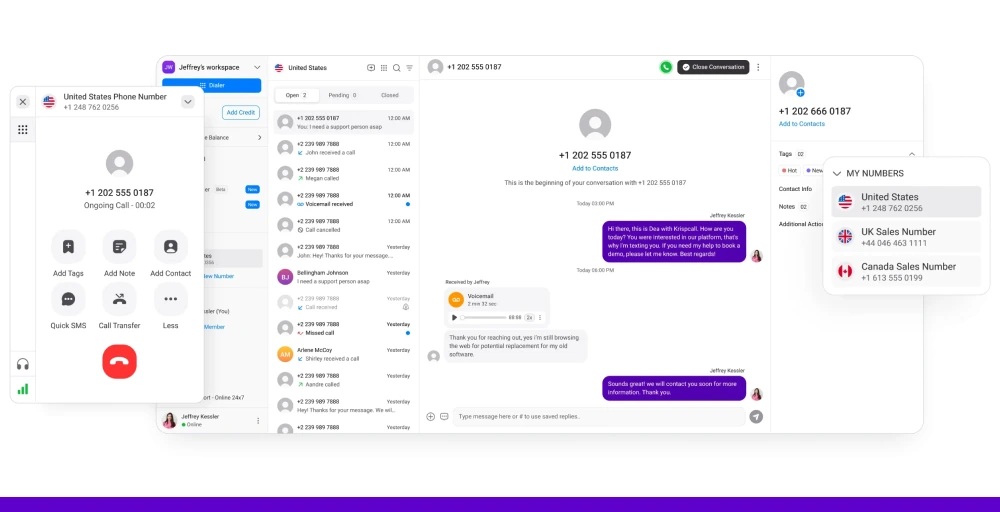
KrispCall is an AI-powered cloud telephony platform ideally suited for BPO call centers seeking to streamline workflows, maximize agent productivity, and deliver exceptional customer service.
Whether you’re running an inbound, outbound, or virtual BPO call center, KrispCall provides you with the tools to interact with your customers more effectively.
With features like the Unified Callbox, agents can access call logs, voicemails, SMS messages, and team conversations from a single dashboard, making it easier to stay organized, informed, and responsive.
Ready to take your BPO communications to the next level? 👉 Get a free demo and see how KrispCall can transform your call center operations.