


Customer expectations now include quick, uninterrupted, personalized support across various channels like phone call, email, chat, and social media. Failing to meet these preferences leads to frustration and loss of loyalty.
An omnichannel contact center software helps solve these problems by unifying all communication channels into one platform, making it easier to deliver faster, more consistent, and more informed support experiences.
Let’s explore the omnichannel contact center, its features, benefits, and setup process.
✨ Key Takeaways
- An omnichannel contact center unifies and manages customer interactions seamlessly across multiple communication channels.
- Features of an omnichannel contact center include a Unified interface, ACD, and CRM integration.
- Best practices for an omnichannel contact center cover monitoring, journey mapping, tech integration, strategy, training, and ROI evaluation.
What is an omnichannel contact center?
An omnichannel contact center is a customer service system that integrates all communication channels into one unified platform. The multiple channels include voice calls, email, text messaging, and social media.
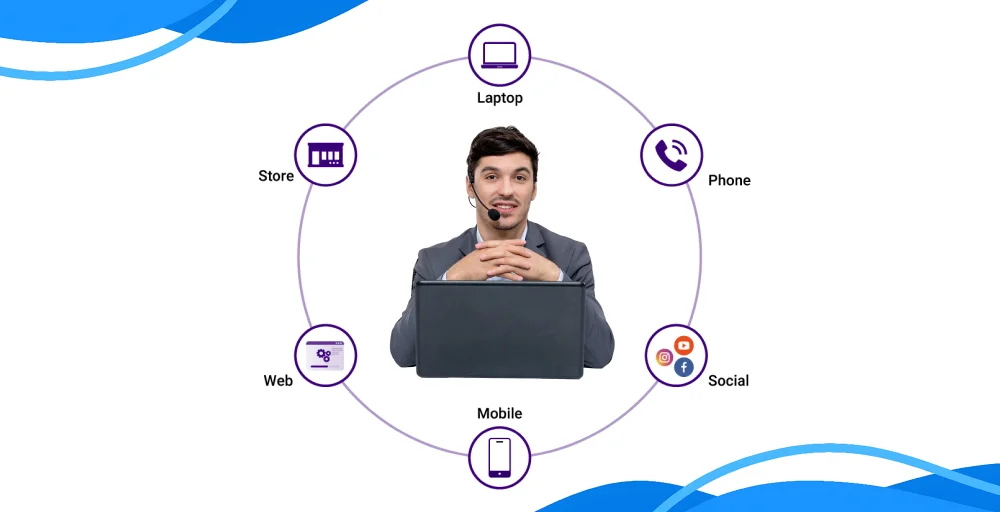
With an omnichannel contact center, businesses can offer an exceptional customer experience, no matter which channel they use to get in touch.
For example, a customer reaches out to an airline via live chat on the company’s website to inquire about rescheduling a flight. The chat agent provides partial assistance but asks the customer to call for final confirmation. When the customer calls, the agent on the phone can instantly see the earlier chat history and continue the conversation without repeating questions.
Features of an omnichannel contact center
A modern omnichannel contact center provides multiple advanced features that make it easier for agents to handle customer queries and interact with them.
The following are some of the must-have features to look out for:
- Unified interface: Agents can handle all the conversations, calls, emails, chats, and social media without switching between platforms. It streamlines workflow and consistency of customer experience.
- AI and automation: Conversational AI, intelligent chatbots, and other AI tools enable automatic handling of repetitive inquiries, along with routing requests and performing automatic actions on CRM (Customer Relationship Management) records.
- Intelligent routing: With skills-based routing and automated call distribution (ACD), customers’ requests are routed to the best available agents based on their availability, skills, or past interactions with customers.
- CRM integration: The CRM integration provides agents with instant access to customer information like past interactions, account details, and open tickets, facilitating personalized service and better decisions.
- Performance management & analytics: Real-time analysis and reporting provide data on agent performance, customer satisfaction, and service efficiency. Managers can monitor key call center metrics and improve processes accordingly.
- Self-service capabilities: An effective omnichannel contact center solution includes chatbots, knowledge bases, and FAQ sites, allowing customers to resolve fundamental problems themselves, which reduces call volume.
- Smooth channel integration: An effective omnichannel customer service ensures that all channels of communication are consolidated so that agents can view customer conversations within a single thread.
Omnichannel vs. Multichannel contact centers
Both omnichannel and multichannel contact center enables businesses to provide customer support via multiple channels (voice, email, live chat, and social media).
However, in a multichannel setup, each channel operates independently, often leading customers to repeat information when switching between channels. In contrast, omnichannel contact centers integrate all channels, ensuring that every interaction, with a call, chat, social media message, or email, has the same context and history.
In short, the key difference is integration: multichannel channels operate separately, whereas omnichannel ensures agents have a complete view of the customer’s history with integrated channels.
Benefits of an omnichannel contact center
An omnichannel, cloud-based contact center enables businesses to deliver seamless, effective, and personalized customer care across multiple communication channels.

Here are the benefits of an omnichannel contact center:
1. Seamless customer experiences
Omnichannel contact centers enable customers to transition seamlessly between channels like phone, email, chat, and social media without having to repeat their information.
This provides a smooth experience that minimizes wait times and accelerates responses. Customers enjoy a seamless, cohesive, and integrated experience.
2. Improved customer satisfaction & loyalty
When they can communicate through their preferred medium and still receive the same level of service, it builds their confidence. Each experience is rewarding and reinforces their relationship with your company. Ultimately, it means higher satisfaction and loyalty to the brand.
3. Increased agent productivity
Agents can access complete customer histories in CRM systems across all communication channels, enabling quicker and more accurate problem resolution. They no longer need to search for information. This enhances agent productivity and provides a more personalized service experience.
4. Enhanced customer insights
Omnichannel systems collect data on every customer interaction across all channels. Analysis of the data reveals behavioral patterns, customer preferences, and customer challenges. These relevant customer data points allow businesses to make better decisions and improve the customer experience.
5. Cost control
Most repetitive questions are automatically answered using resources such as knowledge bases, chatbots, and virtual assistants. This reduces call time for agents, enabling them to handle more complex issues. As a result, operational costs decrease without sacrificing quality.
6. Competitive advantage
A brand that consistently delivers an outstanding experience distinguishes itself. A robust omnichannel approach guarantees that customers enjoy excellent service across all interaction points. This not only offers a competitive edge but also enhances your reputation.
7. Improved flexibility
Omnichannel platforms can rapidly adjust to shifting demand, enabling efficient resource allocation during peak periods and proactive reductions when demand drops. This flexibility helps you remain adaptable and save costs year-round.
How to set up an omnichannel contact center?
With the right strategy, tools, and training, you can create a system that delivers seamless, consistent communication across multiple channels.

Here’s how you can begin to develop your scalable and effective omnichannel contact center platform:
1. Identify customer touchpoints and requirements
Begin by mapping out your customer journey to identify the preferred channel, such as phone, email, chat, or social media.
This helps determine the channel sequence and develop a seamless omnichannel experience that meets customer expectations.
2. Assess technology and integration needs
Before investing, assess different solutions and how well they integrate with your existing tools, such as CRM, ERP, and other key business platforms.
The system you choose should seamlessly handle all the channels you plan to offer, whether that’s voice and video calls, email, live chat, social platforms, or self-service portals.
3. Develop an omnichannel strategy
Align your call center strategy with both your business goals and technical capabilities. Decide which communication channels to provide, how they will connect, and what kind of customer journey you want to deliver.
Plan workflows to manage and route interactions across these channels so every customer receives a smooth, personalized experience.
4. Train your employees
Provide comprehensive training to contact center agents to navigate the new platform and manage interactions across channels effectively. They must handle conversations across multiple channels efficiently while maintaining a consistent, high-quality customer experience.
5. Evaluate budget and ROI
An omnichannel contact center requires more than just upfront spending; it’s a long-term commitment. Run a thorough cost-benefit analysis to weigh expenses against the expected gains, such as higher customer satisfaction, improved agent efficiency, and increased revenue.
Omnichannel contact center best practices
To get the best out of your omnichannel contact center, you should have strategies in place that will enhance agent productivity and omnichannel customer experience.
The following are the contact center best practices:
1. Streamline operations with AI and automation
AI and automation also significantly affect your contact center’s efficiency. Intelligent skills-based routing directs customers to the right agent right away, and bots and virtual assistants respond to routine inquiries in real time.
Predictive analytics helps customer service agents deliver more personalized service. With these tools, you automate processes and deliver faster, more accurate support.
2. Improve internal and external knowledge bases
An internal knowledge base is an easily accessible repository of information that your employees can use to quickly and efficiently answer customer problems. The easier agents can find exact answers, the less they’ll have to escalate issues to senior staff.
An external knowledge base does the same for customers, offering self-service options like guides, FAQs, and videos. This not only empowers customers but frees agents up to focus on more complex cases.
3. Identify service level agreements (SLAs)
SLAs set definitive expectations for how efficiently and rapidly your contact center handles customer requirements. These agreements can define response times, average handling times, and resolution percentages.
As omnichannel systems make you more efficient, you can tune SLAs to your improved capabilities. The challenge is setting targets that are realistic yet competitive for your support team.
4. Regular Monitoring and Optimization
Continuously track KPIs such as first-contact resolution, average response time, and customer satisfaction across all channels. Use analytics dashboards and call/chat monitoring tools to identify bottlenecks, agent performance gaps, and channel inefficiencies.
Regularly refine workflows, scripts, and routing strategies based on data trends to ensure your omnichannel system stays aligned with evolving customer expectations.
5. Customer Journey Mapping
Map out every stage of the customer journey, from first interaction to post-purchase support across all channels. Identify common touchpoints, potential friction areas, and opportunities for personalization.
A well-defined journey map supports agents in delivering consistent, context-aware service, reduces customer effort, and ensures a seamless transition between channels without losing conversation history.