

Customer expectations are rising, and they now expect to receive customer support even in the middle of the night.
Companies that fail to meet this demand risk falling behind in the long run. But providing after-hours service is challenging for every business. As such, leveraging AI helps companies to manage after-hours call routing and overflow management efficiently.
In fact, research shows that companies using AI-powered systems reduced their missed call rate from 23% to under 5%.
Let’s explore the definition, benefits, tips, and 6 essential AI strategies to use for after-hours call routing and overflow management.
What is after-hours call routing & overflow management?
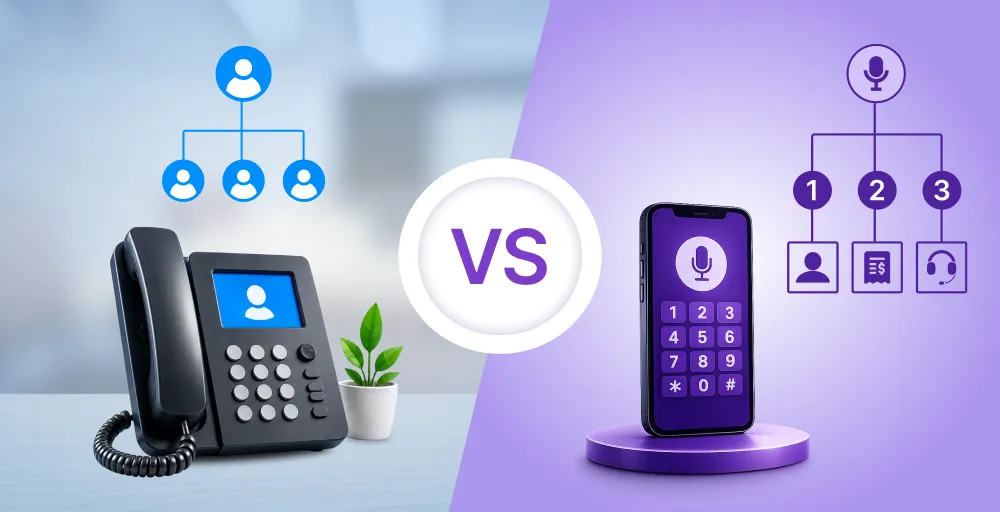
After-hours call routing involves directing incoming calls to the most suitable destination outside of regular business hours.
The calls can be routed to voicemail, an on-call representative, a backup call center, or an AI-powered automated system. Instead of letting customers face unanswered calls, intelligent call routing directs them to the right support channels based on urgency, intent, or customer profile.
Call queue overflow management, on the other hand, deals with the situations when inbound call volume exceeds what available agents can handle in real time.
All of the overflow calls are handled by AI voice agents or redirected intelligently to self-service options or callback options, resulting in reduced wait times, fewer abandoned calls, and balanced workloads across teams or backup contact centers.
6 Key ways AI assists in after-hours call routing & overflow management
Leveraging AI allows companies to direct incoming calls to the appropriate agent, department, or directly to voicemail, even after business hours.
Here are the 6 key ways AI assists in after-hours call routing and overflow management:
1. AI-powered call routing
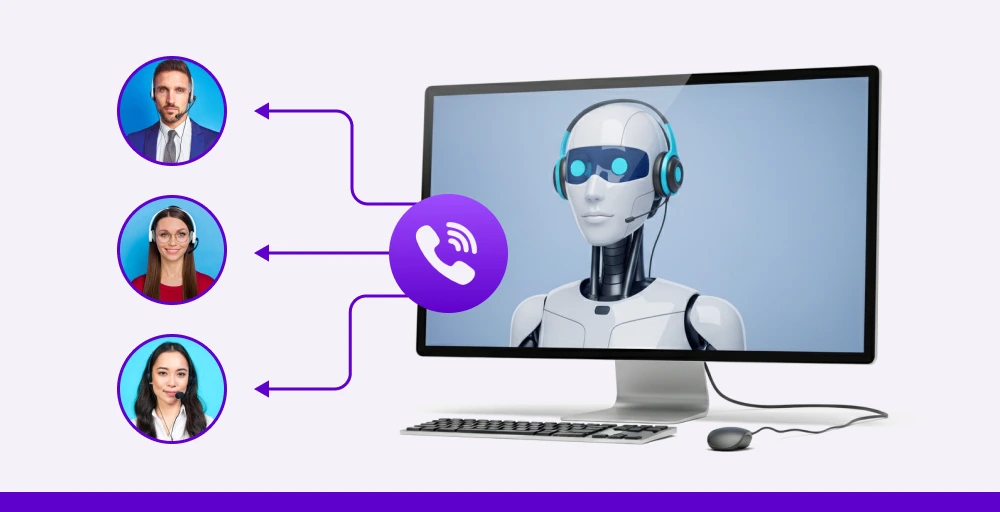
AI, or artificial intelligence, leverages advanced technologies such as natural language processing (NLP) and machine learning to understand caller input, whether spoken or entered via a keyword. Based on this analysis, it determines call input, urgency, and even sentiment.
An example of this is that if someone reports a service outage, the system can instantly escalate the call to an on-call technician. Meanwhile, a simple billing question can be handled instantly through a self-service menu or chatbot.
That means customers receive prompt resolution of their issues, creating a smoother customer journey.
2. Intelligent overflow handling
During weekends or peak season, companies receive a high volume of calls that can overwhelm customer support teams and lead to long wait times or missed calls during peak seasons.
But utilizing tools like AI voice agent, call centers can easily manage spikes in call volume and prevent queue congestion.
How it works:
- Dynamic call redirection: When call volume exceeds agent capacity, AI automatically routes excess calls to backup teams, virtual receptionists, chatbots, or self-service IVR menus.
- Prioritization: AI can identify urgent or high-value calls and ensure they are handled immediately while routine inquiries are addressed automatically.
- Automation technologies: Uses machine learning (ML), natural language processing (NLP), and analytics to understand call intent, predict peak loads, and optimize routing in real time.
3. 24/7 availability with AI
One of the major challenges for businesses is being available to customers outside of regular office hours.
However, AI-powered systems solve this problem, enabling 24/7 support. Even when your team is offline, you can use AI voice agents for after-hours support to answer calls, handle common questions, and guide customers to the right resources.
Companies can utilize an AI virtual receptionist to schedule appointments, provide product information, or direct complex inquiries to on-call staff.
Maintaining constant availability ensures your business remains responsive, professional, and ready to support clients at any time they reach out.
4. Automated voicemail & callback scheduling
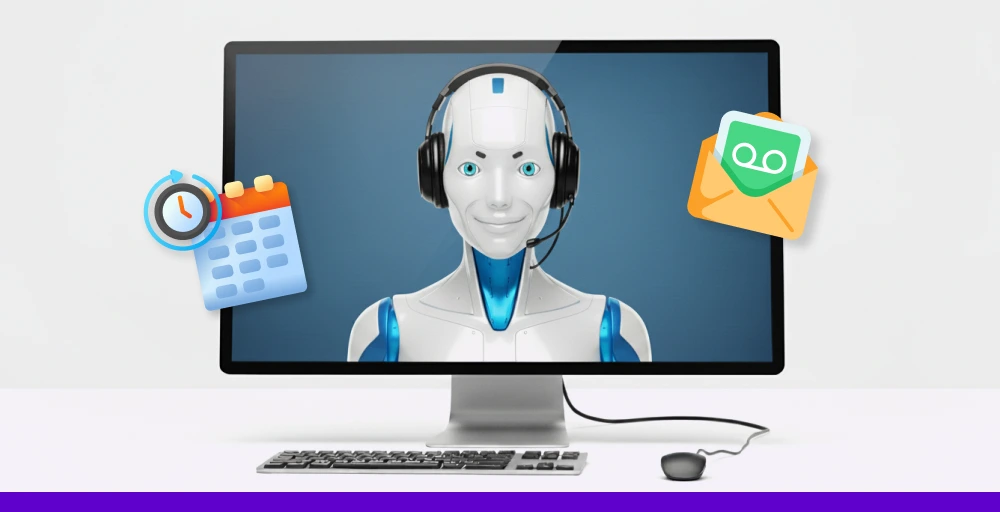
High call volume makes it challenging for businesses to respond to every customer promptly during certain events or seasons. But automated voicemail and callback scheduling options ensure no call goes unanswered.
During peak time, customers can leave a voicemail or schedule a callback, and the system takes care of the rest.
Integrating automated voicemail and callback tools, companies can keep customers engaged even during peak hours, improving satisfaction, retention, and overall efficiency.
5. CRM & system integration
AI-powered smart call routing works seamlessly with your CRM and business systems to ensure every after-hours call is handled efficiently. Integrating caller data, past interactions, support tickets, and customer history enables AI to intelligently route calls to the right team, even outside regular business hours.
How it helps:
- Informed routing: Calls are routed based on customer value, past interactions, or urgency, ensuring VIP clients or high-priority issues receive immediate attention.
- Automated follow-ups: Missed calls or messages are automatically logged in the CRM, enabling timely follow-ups without manual effort.
- Streamlined workflows: Integration reduces repetitive administrative tasks, allowing agents to focus on high-value customer interactions.
- Enhanced analytics: Businesses gain actionable insights from CRM data and call metrics to optimize after-hours routing strategies and prevent bottlenecks during high-volume periods.
6. Analytics & continuous optimization
Companies are required to continuously analyze and optimize their call center data to identify issues and make improvements in call flow management and after-hours call routing.
Analyzing call center metrics like call volumes, average handling times, and customer satisfaction scores helps to uncover patterns and inefficiencies in real time. These insights allow you to refine routing rules, adjust staffing levels, and anticipate customer needs more accurately.
How it works:
- Real-time data-driven call insights: Monitor performance metrics to understand how efficiently calls are handled.
- Data-driven decisions: Using analytics tools helps to adjust routing strategies, agent allocation, and self-service workflows.
- Predictive optimization: Leverage machine learning tools to predict peak call times and potential issues, enabling proactive adjustments.
Benefits of after-hours call routing and overflow management with AI
Implementing AI for after-hours call routing helps businesses manage calls and handle customer queries promptly.
Here are the major advantages of using AI for after-hours call routing and overflow management:
- Improve lead capture and conversion: Answering every call during peak hours or after business hours helps businesses reduce missed opportunities and capture more potential leads.
- Reduced operational costs: With the AI voice agent and other tools handling after-hours calls automatically, companies can reduce the expense of hiring additional staff for late shifts or peak periods.
- Increased customer satisfaction and brand perception: When customers receive a timely response and personalized support, they are more likely to do repeat business. Additionally, consistently providing after-hours service strengthens the brand’s reputation and trust.
- Enhanced scalability for peak call times: No matter the call volume, AI can dynamically route calls and prevent queue congestion. This ensures seamless support even when call volume spikes unexpectedly.
- Agent workload relief: Overflow handling eases the burden on internal call center staff, creating a more positive and sustainable work environment while also helping reduce employee turnover.
Tips for implementing after-hours call routing and overflow management with AI
Here are some of the best practices for implementing after-hours call routing & overflow management with AI:
1. Start with AI routing rules and fallback options
The first thing to do when you are implementing AI call routing is to set clear routing rules based on call type, urgency, or customer priority. Setting clear rules helps IVR systems, chatbots, and AI voice agents to manage inbound calls efficiently.
In addition, always include fallback options to redirect calls to a live agent or voicemail if the AI can’t resolve the customer query.
2. Integrate with CRM and ticketing systems
One of the most effective ways to maximize the benefits of AI call routing is to connect it with your existing CRM and ticketing platforms.
AI systems entirely depend on accurate and comprehensive data to determine the best agent or department for an incoming call. Without this integration, routing decisions may be based only on limited information like caller ID or IVR inputs.
3. Monitor analytics and optimize routing rules
You must continuously track call center metrics such as call volumes, wait times, and resolution rates using AI-driven analytics tools. These insights allow you to identify patterns, spot inefficiencies, and adjust routing rules accordingly.
For example, if a certain team experiences higher call volumes during specific hours, AI can reassign overflow calls to available agents or adjust skill-based routing to balance workloads.
4. Train AI on common customer queries and intents
Call center agents frequently encounter recurring questions and issues. To make AI more effective, you need to continuously feed the system with FAQS, common intents, and typical call scenarios.
Using natural language processing (NLP) and machine learning algorithms, the AI can better understand caller intent and prioritize high-value interactions.
Mistakes to avoid when implementing AI for after-hours call routing & overflow management
Businesses must be aware of common mistakes that can diminish call routing effectiveness and negatively impact the customer experience.
Here are the four common mistakes to avoid when implementing after-hours call routing and overflow management with AI:
- Relying solely on AI without human oversight: Depending entirely on AI leads to errors when customers raise unexpected issues or complex queries. In such a case, human agents are needed to handle sensitive cases or unusual situations.
- Ignoring overflow call analytics for continuous improvement: Analyzing data is important when your business receives a surge in call volume. This helps you to refine AI routing and improve customer experience over time.
- Poorly defined routing rules leading to misrouted calls: Setting incomplete routing rules causes calls to route to the wrong agents or departments. This negatively impacts your business as it results in longer wait times, frustrated customers, and missed opportunities.
- Not providing fallback options during high-volume periods: If AI cannot handle a call and no backup options exist, customers may be left waiting or disconnected. In this case, providing fallback options like live agents or voicemail ensures every call is addressed promptly.
Never miss leads with KrispCall
Managing customer calls after business hours can be a challenge for any company. That’s where KrispCall comes in. With its advanced AI-driven call routing, KrispCall ensures that no customer inquiry goes unanswered, even outside regular working hours.
Effortlessly manage after-hours calls with KrispCall’s IVR (Interactive Voice Response) and ACD (Automatic Call Distribution) system.
IVR allows customers to resolve routine queries instantly, while ACD routes calls to the right agent or team based on availability and priority. The result? No missed leads, lower operational costs, and seamless 24/7 support.