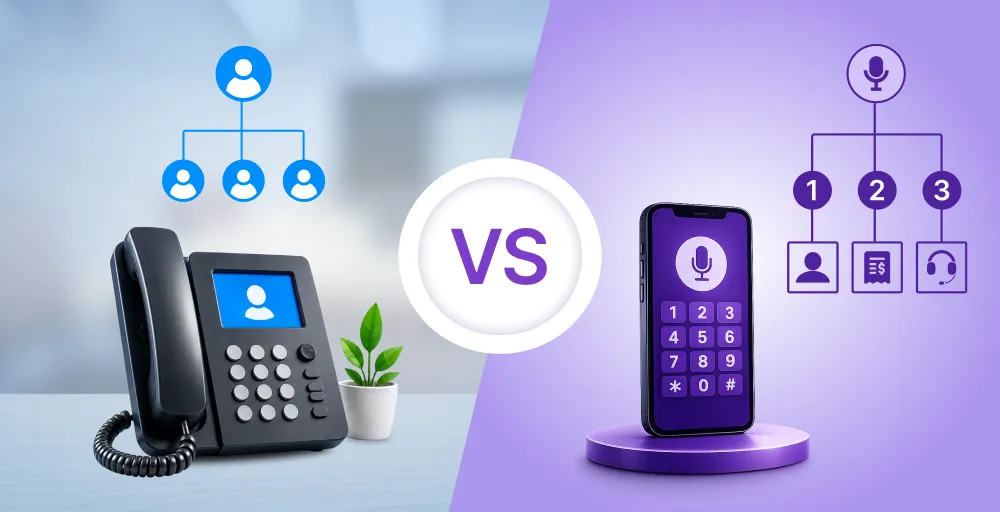



Customer service has evolved far beyond traditional call centers. Today, businesses interact with customers across multiple communication channels such as phone, email, live chat, social media, and messaging apps.
As customer expectations continue to grow, companies must ensure that support is not only available on different platforms but also delivers a consistent and connected experience throughout the entire customer journey.
To meet these expectations, many organizations adopt either a multichannel or an omnichannel contact center strategy. While both approaches allow businesses to communicate with customers across several channels, they differ significantly in how those channels are managed.
This guide will explain the difference between omnichannel and multichannel contact centers, their advantages, and how to choose the right one for your business.
What is an omnichannel contact center?
An omnichannel contact center is a modern customer engagement hub that integrates all communication touchpoints, such as voice, email, SMS, social media, and live chat, into a single, unified interface. Unlike traditional setups where channels operate in silos, an omnichannel framework ensures that data flows seamlessly between them.
This means if a customer starts a conversation via a WhatsApp message and later follows up with a phone call, the agent has immediate access to the previous interaction history. By eliminating the need for customers to repeat their issues, businesses can provide a frictionless, “continuous conversation” that significantly boosts first-call resolution (FCR) rates.
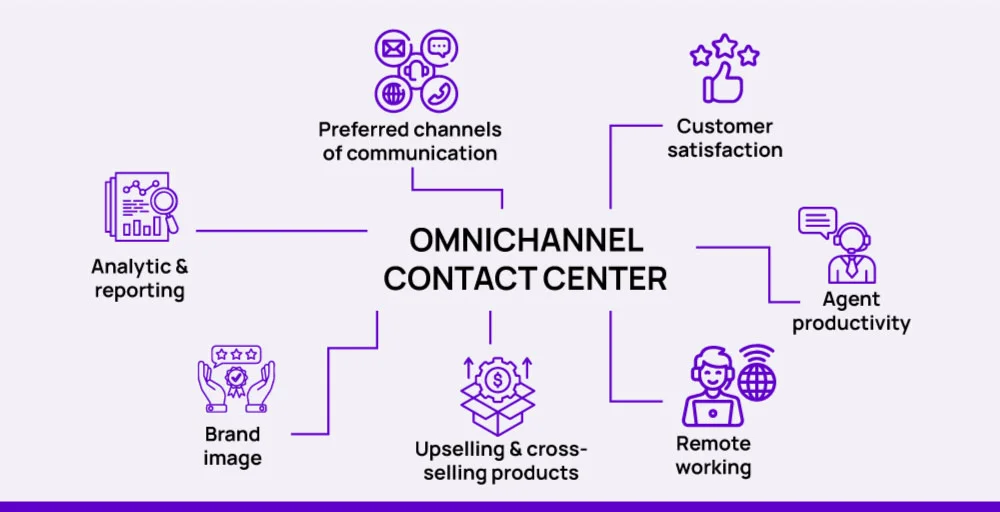
Beyond simple connectivity, the true power of an omnichannel approach lies in customer journey orchestration. It leverages real-time data and integrated CRM tools to deliver a hyper-personalized experience tailored to the user’s behavior.
For instance, an agent can see that a caller was just browsing a specific pricing page, allowing them to provide proactive support rather than reactive troubleshooting. For brands looking to scale, this strategy doesn’t just improve customer satisfaction (CSAT) scores; it turns customer service into a competitive advantage by building long-term loyalty through effortless, high-context communication.
Benefits of an Omnichannel Contact Center
An omnichannel contact center takes customer communication a step further by integrating all channels into a single unified system. Instead of operating independently, every channel is connected, allowing customer interactions and data to flow seamlessly between them. This approach helps businesses deliver a consistent and personalized experience throughout the entire customer journey.
1. Seamless Customer Experience Across Channels
One of the most significant advantages of an omnichannel contact center is its ability to provide a seamless customer experience. Customers often switch between communication channels during their interaction with a business. For example, a customer might start with a live chat conversation and then continue the discussion by phone.
With an omnichannel system, agents can access the entire interaction history across channels. This eliminates the need for customers to repeat their issues and ensures conversations continue smoothly regardless of the platform being used.
2. Complete View of Customer Interactions
Omnichannel contact centers provide a unified view of customer data and communication history. Every interaction, whether it occurs through phone, email, chat, or social media, is stored in a centralized system.
This holistic view allows support agents to understand the full context of a customer’s journey. As a result, agents can deliver more personalized service, identify recurring issues, and resolve problems more effectively.
3. Faster Issue Resolution
Because agents have access to the full history of customer interactions, they can quickly identify problems and provide solutions without asking customers to repeat information. This reduces handling time and speeds up issue resolution.
Faster resolutions not only improve operational efficiency but also enhance the overall customer experience. Customers appreciate quick responses and efficient service, which helps build trust and satisfaction.
4. Higher Customer Satisfaction and Loyalty
Customers value consistent and personalized experiences. An omnichannel contact center enables businesses to maintain continuity in communication, ensuring that every interaction feels connected and relevant.
When customers receive smooth and personalized support across multiple channels, they are more likely to trust the brand and continue doing business with it. This leads to stronger customer relationships and long-term loyalty.
5. Better Agent Productivity and Collaboration
Omnichannel systems simplify workflows for support teams by centralizing communication tools and customer data in one platform. Instead of switching between multiple applications, agents can manage interactions from a single dashboard.
This streamlined workflow improves agent productivity, reduces response times, and allows teams to collaborate more effectively when handling complex customer issues.
6. Data-Driven Insights for Business Improvement
An omnichannel contact center collects valuable data from every customer interaction across channels. Businesses can analyze this data to identify customer behavior patterns, common issues, and opportunities for improvement.
These insights help companies optimize their support strategies, enhance service quality, and make better decisions about customer experience management.
What is a multichannel contact center?
A multichannel contact center is a customer service model that allows businesses to interact with their audience across several different communication platforms, such as phone, email, SMS, and social media. While it offers customers the flexibility to choose their preferred method of contact, each channel typically operates as an independent “silo.”
In a multichannel environment, the technology for managing live chat is separate from the system used for voice calls, meaning customer data and conversation history are not automatically shared between them. This approach is often the first step for growing businesses looking to expand their digital footprint beyond a traditional voice-only call center.
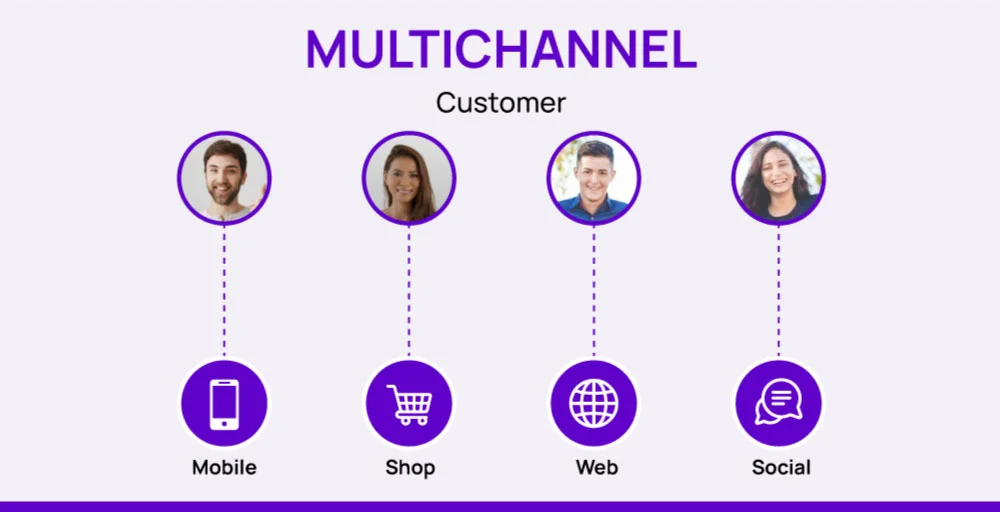
From an operational standpoint, a multichannel strategy excels at handling high volumes within specific channels through agent specialization. Because the systems are decentralized, managers can assign dedicated teams to master one or two platforms, ensuring fast response times for email or high efficiency on the phones.
However, the trade-off is often a fragmented customer journey; if a client moves from an unresolved email thread to a live phone call, they usually have to repeat their entire story to a new agent. For budget-conscious organizations or those with a straightforward service model, a multichannel contact center provides a cost-effective way to scale accessibility without the complexity of a fully integrated backend.
Benefits of a Multichannel Contact Center
A multichannel contact center allows businesses to interact with customers through multiple communication channels such as phone, email, live chat, social media, and SMS. Instead of relying on a single support method, companies can meet customers where they are most comfortable. While these channels operate independently, a multichannel setup still provides several important advantages for businesses seeking to improve customer accessibility and service efficiency.
1. Greater Customer Reach Across Multiple Channels
One of the biggest advantages of a multichannel contact center is the ability to reach customers through different communication platforms. Customers today use a variety of channels depending on their preferences and situations. Some may prefer phone calls for urgent issues, while others may choose live chat, email, or social media for convenience.
By offering multiple channels, businesses can connect with a wider audience and ensure customers can contact support through the method they find easiest. This flexibility improves customer satisfaction because users do not feel limited to a single communication option.
2. Improved Customer Accessibility and Convenience
A multichannel contact center improves accessibility by giving customers the freedom to choose how they want to interact with a business. For example, a customer who is unable to make a phone call during work hours might prefer sending an email or starting a live chat session.
Providing these alternatives removes barriers to communication and allows businesses to respond to customers in ways that suit their lifestyles and schedules. As a result, companies can deliver faster support and make it easier for customers to get help when they need it.
3. Higher Customer Engagement
When businesses communicate with customers through multiple channels, they create more opportunities for engagement. Customers who interact with a brand on different platforms are more likely to stay connected and build stronger relationships with the business.
For example, a customer may first discover a company on social media, ask questions through live chat, and later contact support via email. A multichannel contact center supports this journey by enabling businesses to maintain communication across several platforms, ultimately improving customer loyalty and brand trust.
4. Flexibility for Customer Support Teams
Multichannel contact centers allow support teams to manage different types of inquiries through specialized channels. For instance, complex technical issues may be handled through phone support, while simple questions can be answered through chat or email.
This flexibility helps businesses allocate resources more effectively and ensures that each communication channel is used for the type of support it handles best. As a result, agents can provide more focused and efficient assistance.
5. Easier Implementation Compared to Omnichannel Systems
Another benefit of multichannel contact centers is that they are generally easier to implement. Businesses can gradually add new communication channels as they grow without needing to integrate all systems into a unified platform.
For many small and mid-sized businesses, this approach offers a practical starting point. Companies can expand their customer support capabilities step by step while maintaining manageable operational complexity.
Detailed key difference between multichannel and omnichannel contact center
To understand how omnichannel vs. multichannel support works, let’s examine key differences between these CCaaS platforms.
The difference shows how they handle customer interaction and how each one affects the overall experience.
| Criteria | Omnichannel Contact Center | Multichannel Contact Center |
| Channel Integration | All channels are connected through one platform | Channels work separately with no shared system |
| Customer Experience | Offers a smooth and connected experience on every channel | Experience changes from one channel to another |
| Customer Context | Keeps customer history and interactions across all channels | Context is not shared between channels |
| User Interface | Agents use one system to manage all channels | Each channel needs its own tool to manage |
| Real-Time Insights | Provides up-to-date insights across all customer touchpoints | Only shows past performance and lacks real-time tracking |
| Ticket Handling | One support team manages all incoming requests from any channel | Separate teams are required for each communication channel |
| Personalization | High-level personalization based on full customer journey | Personalization is limited to one channel at a time |
| Cost and Investment | Requires more investment but offers better long-term results | Lower cost but less effective for future growth |
| Best For | Businesses focused on customer satisfaction and loyalty | Businesses focused on volume and cost savings |


Which is better for your business? omnichannel or multichannel
Choosing between omnichannel and multi-channel customer support depends on your business goals and how your customers like to interact.
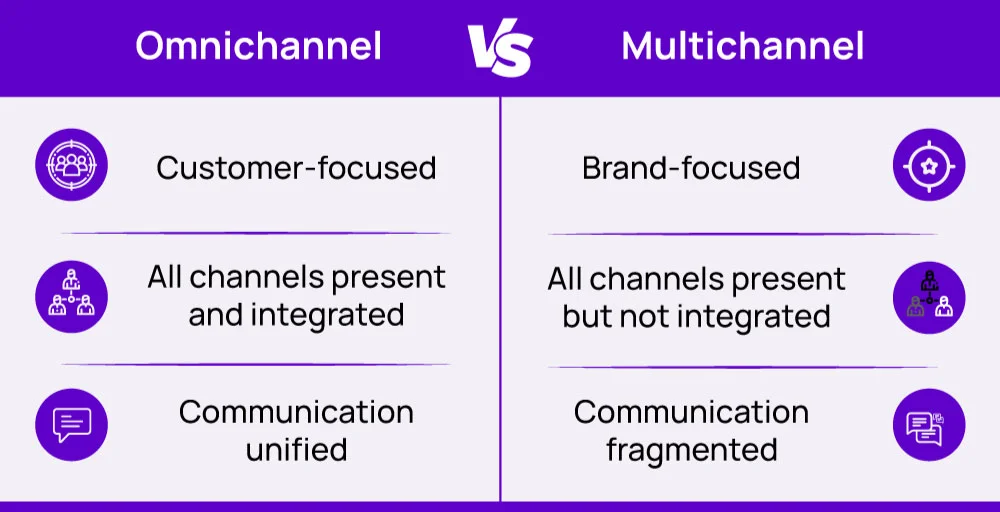
If you want to provide customers with an effortless experience across all channels, an omnichannel contact service is a great option. It helps your customer support team understand the full context of each conversation, which leads to better and faster responses.
If your business is just starting out, a multichannel contact center might be a better fit. It still allows customers to reach you on various platforms, even though those channels aren’t directly connected.
Therefore, there’s no all-in-one answer in the multichannel vs omnichannel debate. You must first assess your current tools, team capacity, budget, and what your customers expect.
In many cases, companies start with multichannel support and transition to omnichannel as they expand. In the long term, omnichannel support provides greater value by enhancing the customer experience.
Therefore, select the one that aligns with your goals and facilitates customer service for both your team and your customers.