


Today’s customers don’t rely on just a product or service to choose a brand. They analyze every interaction or customer touchpoint, whether in physical stores, on a support call center, or on social media, before trusting a company.
Therefore, delivering consistent positive experiences across all diverse interactions is crucial to building strong relationships with customers. And, this is where customer experience management, or CXM, comes in.
In this blog, we’ll explain what customer experience management is, how it differs from CRM, and its benefits and features for a digital customer experience management strategy.
✨ Key Takeaways
- Customer experience management (CXM) optimizes every customer interaction to create positive and consistent experiences across all touchpoints.
- Sometimes “CRM” and “CXM” are used interchangeably. CRM prioritizes internal processes, while CXM focuses on the whole customer journey.
- Creating a seamless customer journey involves optimizing omnichannel, proactive support, keeping onboarding simple, and a shareable information system.
- Common challenges of CXM include limited tech, poor data quality, lack of omnichannel consistency, and much more.
What is customer experience management (CXM)?
Customer Experience Management (CXM or CEM) is a framework that involves detailed tracking, overseeing, and refining of every single interaction between a consumer and a business through the entire customer lifecycle journey.

It is an ongoing process rather than a single one, which is designed to check whether every customer touchpoint contributes to a consistent, positive, and memorable experience for the customer. The primary goal of CXM is to design the customer interaction journey to meet or exceed expectations, leading to customer satisfaction and loyalty.
Why is investing in CXM important?
The importance of customer experience management (CXM) goes beyond just customer satisfaction scores. This practice directly impacts your business’s bottom line and long-term viability, as investing in CXM helps in building a powerful engine for sustainable revenue and market leadership.
The significance of customer experience management strategy relies on various industries, including financial service institutions. As per a study, many financial services are implementing data-driven CXM strategies such as leveraging big data analytics, artificial intelligence (AI), and machine learning to personalize their offerings, resulting in improved customer interactions and loyalty.
What’s the difference between customer relationship management CRM and CXM?
People often get confused between CRM and CXM. The CRM, which stands for Customer Relationship Management, mainly optimizes the internal business processes like sales pipeline and marketing.
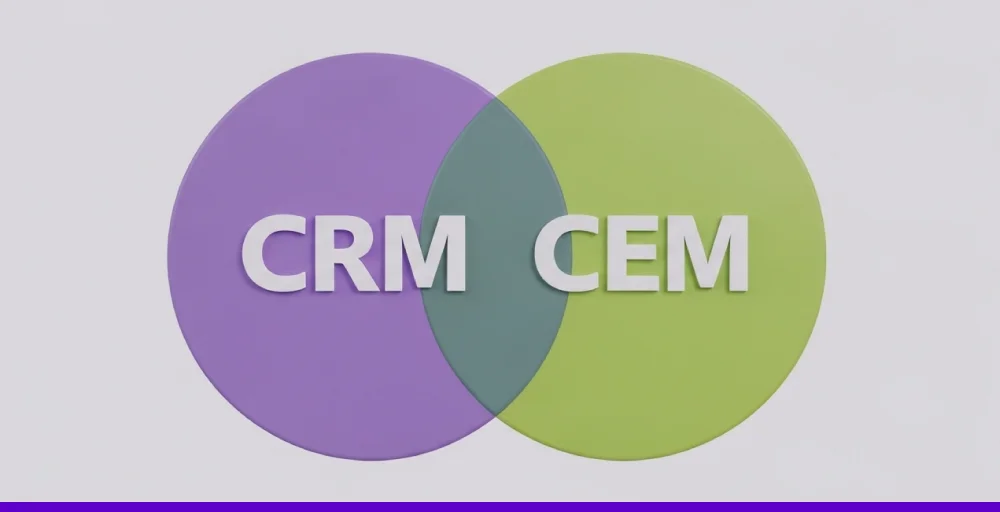
On the other hand, CXM, which stands for Customer Experience Management, focuses on optimizing the entire customer journey to improve customer engagement, satisfaction, and loyalty.
That said, you can interchangeably use CEM or CXM as Customer Experience Management, just like Adobe and Microsoft do. Here are some of the key differences between these two entities ‘CRM and CEX to know:
| Factors | CRM (Customer Relationship Management ) | CXM (Customer Experience Management ) |
| Perspective | It represents the customer behaviours such as sales history, lead status, and contact details | It refers to the business behaviours like ease of use, emotional connection, and responsiveness |
| Data type | The data entry can be manual or batch-processed and consists of data such as sales figures, demographics, and interaction logs. | Emphasizes real-time and qualitative data such as feedback, user sentiment, and behavioral patterns |
| Goal | Focuses on streamlining sales and marketing to enhance operational efficiency | To drive advocacy, anticipate customer needs, foster deep loyalty, and deliver personalized experiences |
| Scope | Managing the customer relationship from a business operations standpoint. | Focusing on all the customer touchpoints and perception that form the overall customer journey |
| Relationship | CRM works as a foundational data source. Where CRM ends, CXM begins to leverage organized data | CXM extends CRM data, making it into actionable insights to build customer loyalty and satisfaction |
| Technology role | Serve as a system of record to manage customer information and interactions | Leverage AI, real-time data, and advanced analytics to deliver a personalized experience across channels |
| Example | A CRM helps to manage follow-up, track sales leads, and log a customer’s query | A CXM uses real-time data, such as recent browsing, to personalize website content |
5 Benefits of customer experience management
Implementing a robust customer experience management strategy offers various advantages to businesses. Here are the 5 most notable importance of customer service management, each related to key customer experience components.
Acquiring a stronger product-market fit
An effective customer experience management helps in meeting the needs of your customer base. Doing consistent engagement and collecting feedback provides you with insights to fine-tune your offering, anticipate the customer needs, and create a solution that perfectly aligns with the particular customer segments.
Boosting employee morale and productivity
The advantages of CXM (customer experience management) aren’t confined to customers alone. Your employees also benefited from it. The positive consumer interactions reduce frustrated customers and escalate the issues, which creates a more pleasant and supportive work environment among the agents. Moreover, the happier employee will deliver a better customer service experience.
Significantly reduce the customer churn
The robust customer experience management solutions cultivate deeper and more meaningful relationships between consumers and your business. A brand that consistently meets the customer expectations or even surpasses them will build a profound trust among the customers. Moreover, the CXM software helps in offering a personalized experience for long-lasting connections.
Cultivate more profitable customer segments
The CXM strategy helps businesses to identify and nurture the most profitable customer segments. CXM offers advanced analytics tools that offer qualitative and quantitative metrics of customers’ data. Examining the engagement patterns, reviewing the customer feedback, and analyzing data allows businesses to pinpoint segments with higher lifetime value.
Improved operational efficiency
Having customer insights helps in finding redundant processes and inefficiencies. This finding leads to shaping more streamlined and agile operations. Moreover, with consumer experience management, you can transform your customer loyalty into a routine business function.
Common challenges with CXM
Despite having numerous benefits, CXM has some drawbacks to consider. Identifying these challenges helps in building an effective digital customer experience management strategy:
Fragmented or insufficient customer data
Since CXM is heavily dependent on comprehensive data, a lack of customer information or robust data can cause disparate systems and make it impossible to gain a unified customer view. Similarly, a fragment or inaccurate data can cause problems in measuring sentiment or personalizing customer experience.
Lack of true omnichannel support
Most of the customers interact with the brand using a multitude of communication channels, from email and social media to web chat, mobile apps, and phone calls. If the business fails to engage or assist with customers across the channels, the consumer might feel unheard and undervalued. This can lead to inconsistency in omnichannel support and customer dissatisfaction.
Overlooking qualitative insights
The client experience management tool often provides the quantitative metrics, such as customer satisfaction scores, leaving the qualitative insights, like customer feedback or nuances from chat conversations. These comments can provide deeper insights into emotional drivers for improving the overall customer journey experience.
Inadequate technology and trends
Businesses should ensure they have the sophisticated tools and CX technology before implementing the CXM strategy. Lacking those tools limits the ability to respond in real-time, create effective customer journey maps, or measure customer loyalty. In the same way, an outdated CXM tech stack can hinder agility and growth.
How to make the customer journey seamless?
To deliver a better customer experience, you need to create a seamless customer journey. An effective journey requires a strategic approach to every customer touchpoint. Here are the steps to consider when making a seamless customer journey:
Step 1: Optimize omnichannel experiences
Nowadays, people are using numerous platforms to interact with the brand. Instead of relying on one medium, businesses should provide consistent support and services across all communication channels. Be sure your customers receive the same level of information and attention whether they’re on social media, mobile app, website, or talking with a live contact center agent.
Businesses should integrate with CRM or other business tools so that they can get access to every customer interaction using a unified platform. For instance, when a customer starts a chat with the brand on the website, they should be able to continue their interaction with the agents on the phone call without needing to explain the previous conversation.
Step 2: Spot and support customers at risk
Acquiring a new customer is more costly than retaining an existing one. So, it’s crucial for a brand to actively identify and engage with consumers who show signs of dissatisfaction with the product or services. This can be done by continuously monitoring the customer feedback, VoC (Voice of Customer), and behavior for early warning signals.
Step 3: Keep onboarding simple
A hassle or confusing onboarding process can create customer abandonment. Before creating the process, make sure you provide clear and concise instructions, guiding them through the first steps. Moreover, you can ask about their experience once they are onboarded to mitigate the potential issue.
Step 4: Share information across teams
Most of the cloud-based customer experience management software has built-in features that freely transform customer insights across various departments. Make sure that everyone from sales and marketing to support and product development has access to a unified customer experience. You never know how a marketing team’s conversation data can benefit the sales team, or vice versa.
5 Most important features in CXM tools
When choosing a customer experience management tool, it is crucial to analyze its essential features. Here is the list of 5 important features of CXM tools to consider:
1. Omnichannel integration
A top-tier CXM tool has an omnichannel customer engagement medium. That means the customer can interact and share data across all communication channels, such as mobile apps, web, social media, email, live chat, and phone calls. This will ensure a cohesive and consistent brand experience, leading to stronger brand loyalty and reduced customer churn rate.
Benefits of omnichannel engagement
- Offer richer customer experience insights by combining data from diverse sources.
- Unified the customer interaction management
- Make sure a cohesive brand experience across all touchpoints
2. CRM integration
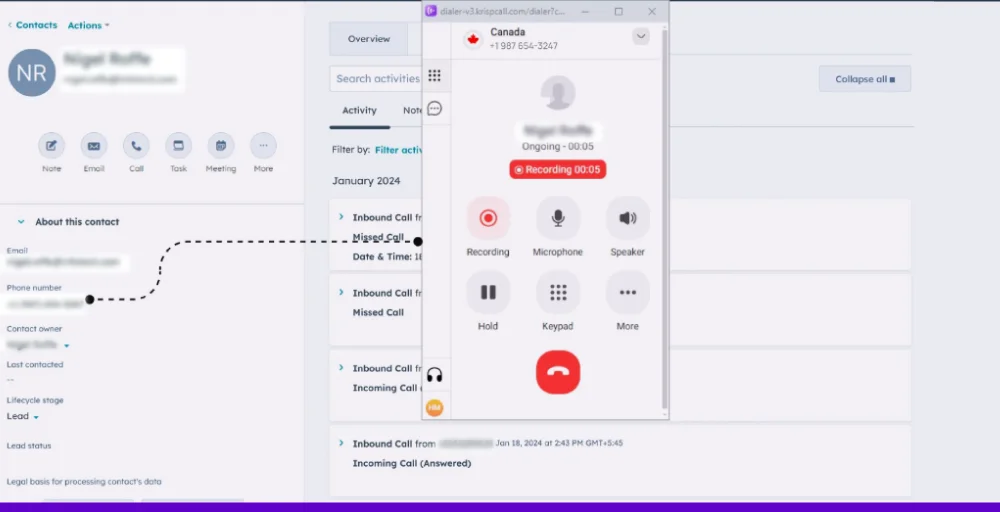
A robust CRM integration platform is vital for tracking interactions, storing customer information, and managing relationships. If you enable the seamless CRM integration with your CXM tools, then your teams will have a single and comprehensive view of every customer. This will help in building personalized service and informed decision-making.
Benefits of CRM Integration
- Syncs all the customer data into a unified system for a holistic view
- Offer comprehensive access to historical data
- Include workflow and marketing automation
3. Analytics and reporting
Modern CXM goes beyond traditional reporting capabilities by incorporating elements like AI and machine learning to create an accurate customer journey map and forecast customer behavior. The analytics tools have easy-to-read visualizations and offer real-time metrics which is easily shareable across teams.
Benefits of analytics and reporting
- Anticipate future customer behaviors and predict outcomes
- Gather granular data on customer personas, profiles, and behaviors
- Offer shareable real-time metrics
4. Customer journey mapping
Most of the time, customers interact across multiple stages. With CXM solutions, businesses can design the customer journey path from discovery to post-purchase. Moreover, with CXM, you can identify the key touchpoints, milestones, and customer behavior within the sales funnel.
Benefits of customer journey mapping
- Analyze the customer’s perspective on service and sales experiences
- Mapping the customer journey from initial interaction to conversion and retention
- Predict customer behaviour through the sales funnel
Call Pop
CXM allows businesses to use the call pop features that rely on CTI (Computer Telephony Integration). Call pop automatically displays the customer’s detailed information on the agent’s computer while receiving an incoming call. Knowing the customer’s data, such as contact details, payment history, interaction history, and even sentiment scores, helps to deliver remarkably personalized conversations.
Benefits of call pop
- Agents can personalize a greeting by calling the customer’s name
- Reduce handle time by spending less time searching for information
- Real-time data helps to examine relevant upsell/cross-sell chances
Improve your customer experience using KrispCall
Mapping an effective customer experience management is vital for businesses of all sizes to thrive. Likewise, choosing the right tools for your CXM is crucial to deliver the desired customer experience that makes customers feel truly understood, appreciated, and eager to return for more. That’s where KrispCall comes in.
KrispCall offers an innovative customer experience management platform that empowers businesses to use a robust multi-channel environment, ensuring customer engagement and overall customer experience to stand out in the marketplace.
Moreover, KrispCall has a unified platform offering features for brand awareness to customer interaction analysis. Features like automatic call distribution (ACD) help you to route the call to specific departments or agents, enhancing the first call resolution, and call analytics that provide real-time insights, such as call details, agent activity, logs, etc.