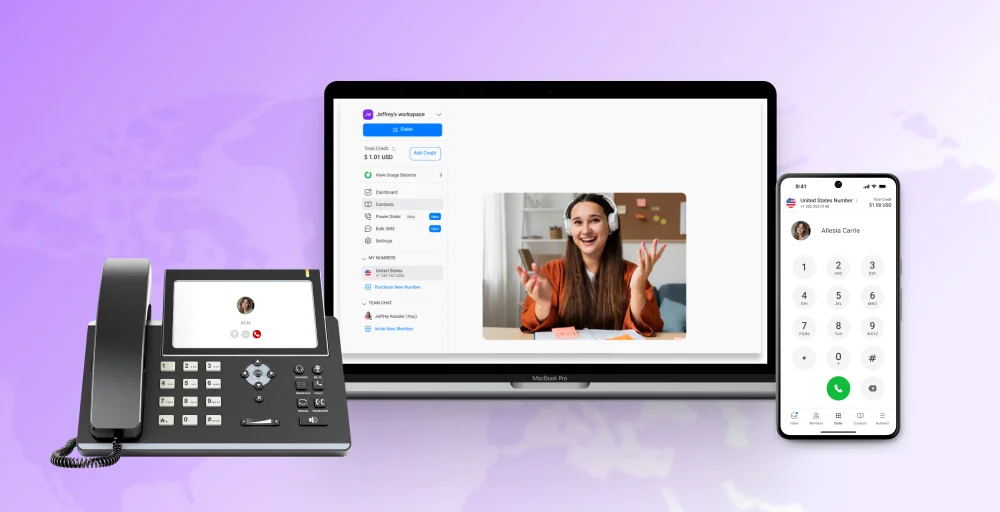


Switching to VoIP can save businesses 30 to 50% on phone bills, but it’s only possible if you know what you’re paying for.
Understanding VoIP cost starts with knowing what you actually pay for. A typical plan includes the base subscription, usage-based charges, and add-ons such as extra numbers, advanced calling features, or integrations. Each provider structures these elements differently, which creates a wide range of pricing models in the market.
When you understand how each cost contributes to your final bill, choosing the right plan becomes far easier.
This guide will give you a clear view of VoIP pricing, from what you pay for to why prices differ, so you can compare options confidently and pick a plan that supports your daily operations without stretching your budget.
✨ Key Takeaways
- VoIP offers a far lower monthly cost than traditional phone systems, giving businesses a practical way to manage calling expenses.
- Factors influencing total VoIP pricing are the number of users, features, usage patterns, and add-ons, so a structured comparison helps you choose the right plan.
- Hidden fees like setup charges, international rates, hardware needs, and contract renewals can affect the final bill, so careful review is essential.
- VoIP pricing structure can be ongoing, like a monthly/annual subscription, per-user or per line, metered calling, feature add-ons, and upfront costs like VoIP equipment, number porting, installation & setup, and training.
How much does VoIP cost?
When comparing phone systems, most businesses quickly realize that the VoIP price is dramatically lower than traditional landline or PBX setups. On average, VoIP pricing ranges from $15 to $40 per user per month, depending on the provider and the features your team needs.

Small businesses typically stay on the lower end of the pricing scale, while companies needing enterprise-level customization or advanced call management tools may see monthly rates on the higher side.
VoIP vs. on-premises PBX: Cost breakdown
Let’s look at how business VoIP cost compares to traditional on-premises PBX setups:
| Cost Category | VoIP system | On-premise PBX |
| Initial setup | Usually free or very low (~$0 to $50 one time). | ~$1,000 to 1,500, depending on the business size and hardware requirements. |
| Hardware | Optional IP desk phones (~$50 to $200 each). | Requires dedicated PBX hardware (on-site servers, phones, cabling) (~1,000 to $10,000). |
| Monthly cost per user | $15 to $40+ per user per month | $50 to $150 |
| Software licensing | None. All features are included in the subscription. | Required. Separate PBX software licenses. (~$3000 to $4000) |
| Maintenance | Minimal. The service provider manages infrastructure. | Higher. On-site hardware upkeep. (~3k to $4k per year) |
| Support & upgrades | Vendor-provided support (often 24/7). | Typically, extra support requires paid support/ maintenance contracts or in-house IT. |
| Feature add-ons | Most advanced features (voicemail, IVR, conferencing, etc.) are included in the plan. | Adding features often requires costly add-ons or new hardware (each feature may cost extra). |
Understanding VoIP pricing structures
VoIP services typically break down into two major categories: ongoing costs and upfront expenses. Each category plays a key role in your total budget and should be factored in when evaluating providers.
I. Ongoing (recurring) costs
Recurring VoIP phone system costs are the regular monthly or annual fees that keep your phone system running. These changes vary by provider, plan type, and features included.
1. Monthly/annual subscription fees
Most VoIP providers offer plans ranging from $15 to $40 per user per month, depending on the features included. Entry-level plans cover basics like local calling and voicemail, while premium plans offer advanced tools such as video conferencing, CEM interactions, and call analytics.
Businesses that want flexibility can opt for monthly billing, but they may come at a slightly higher rate. Whereas those looking to reduce their overall VoIP phone system cost per month can choose annual plans.
2. Per-user or per-line fees
In addition to base subscriptions, another factor affecting your VoIP pricing is whether the provider charges per user or per phone line.
- Per-user pricing is ideal for businesses with team members who each need their own number, voicemail, or extension.
- Per-line pricing works best for call-heavy operations like support centers, where multiple agents share the same pool of lines like a call center.
Typical rates of both of these fall between $15 and $50 per user/line per month, depending on features and usage patterns.
3. Metered calling rates
Even with VoIP’s low cost structure, some calls may incur additional charges, especially international or toll-free calls. Many providers include unlimited domestic calling, but international rates vary.
Most common VoIP metered rates include:
- $0.01-$0.05 per minute for common international destinations
- $0.10-$2.00 per minute for remote or specialized regions
Businesses with regular cross-border communication may benefit from optional international calling packages or flat-rate global plans.
4. Feature add-ons
While core business features are bundled into most plans, many VoIP systems offer add-on upgrades. These optional add-ons allow companies to customize their phone system based on their operational needs.
Here are common add-ons and their typical price ranges:
| Add-on feature | Average cost | What it’s used for |
| Call recording | $5 to $10 per user/month | Compliance, coaching, and QA |
| Toll-free number | $2 to $30 per number | Customer support helplines |
| CRM integration | $10 to $300 per user/month | Sales & support automation |
| International calling | Pay-as-you-go/ $10 to $20 | Global communications |
| Video conferencing | $10 to 420 per user/month | Virtual meetings, remote collaboration |
Add-ons can significantly influence your business VoIP pricing, so it’s important to identify what’s essential from day one.
II. Upfront (one-time) costs
In addition to recurring fees, setting up a VoIP system involves some initial investment, through generally far lower than traditional PBX systems.
1. VoIP equipment
VoIP systems work on laptops, mobile devices, and softphones, but businesses that prefer physical hardware may invest in:
- IP desk phones: $50 to $500 per device
- Headsets: $20 to $150
- Conference phones: $150 to $600
Some VoIP service providers may let you rent hardware for a small monthly fee, reducing your overall upfront spending.
2. Number porting
If you’re transferring an existing business phone number, porting fees may apply. These vary by providers, as some include it for free and others may charge a small one-time fee.
3. Installation & setup fees
Most cloud VoIP systems are easy to self-install. However, if your business needs help with configuration, network setup, or hardware deployment, expect one-time charges of $0- $200, depending on the provider’s support.
4. Training
Basic user training is often included. But larger teams or companies adopting complex systems may require custom onboarding, which can cost $500 or more, depending on the number of users and training depth.
Bottom Line: While both VoIP does have both ongoing and upfront costs, the overall investment is far more affordable than legacy systems, especially when you factor in lower international rates, minimal maintenance, and no bulky hardware.
Related 👉: Understanding VoIP Basics
How should different businesses evaluate VoIP pricing?
Businesses can create a clear VoIP service cost evaluation framework by reviewing their team size, usage patterns, and the level of flexibility they expect from their phone system. Each stage of growth brings its own priorities, so the way a small startup measures VoIP prices differs from how a multi-location enterprise reviews its total business VoIP cost.
1. Small businesses
Smaller teams usually focus on affordability, clarity, and quick setup. The cost of VoIP for a small business should feel predictable from day one, with simple per-user pricing and short-term contracts that support early growth.
Review the following when comparing VoIP phone system costs:
- Look for plans with clear monthly fees, minimal activation costs, and transparent number porting rules.
- Check international calling rates and ask whether taxes or 911 fees are added on top of your quoted VoIP price.
- Choose plans that include voicemail, call routing, mobile access, and follow-me features within the base VoIP cost per month.
- Use softphone apps for mobile and desktop to avoid equipment expenses and keep your overall VoIP phone service cost low.
This approach gives smaller companies an inexpensive business VoIP service without compromising essential features.
2. Mid-sized teams
Mid-sized teams often need more capabilities for internal coordination and customer-facing conversions, so their VoIP pricing review should focus on value across multiple functions.
Key points to consider:
- Choose a provider that offers CRM, helpdesk, and productivity tools integrations within the standard VoIP pricing tiers.
- Confirm that the platform supports hybrid or remote teams with mobile apps, voicemail-to-email, call analysis, and team-based routing.
- Review add-ons carefully. Features like call recording, virtual receptionists, or SMS may be charged separately and can change your monthly VoIP phone service cost.
- Check annual contract savings. Many VoIP providers offer discounts for annual billing, which can help stabilize your long-term VoIP pricing.
This structured review helps growing teams control expenses while gaining features that improve day-to-day operations.
3. Large enterprises
Enterprises need broad configurability, advanced management options, and pricing that stays predictable across hundreds of users. Their VoIP service cost evaluation must account for flexibility, compliance, and long-term planning.
Important areas to review:
- Look for platforms that provide centralized admin access, role-based permissions, API support, and UCaaS-level tools across offices and departments.
- Confirm whether the provider offers dedicated support, onboarding specialists, and migration services to reduce deployment challenges.
- Review pricing for international calling, toll-free routing, analytics storage, and data retention.
- Build a cost model based on projected growth. Many providers offer volume-based discounts once teams reach 50, 100, or more users.
This method helps large organizations maintain predictable business VoIP cost structures while supporting every department with the features they need.
Key factors that influence VoIP pricing
Several elements determine the overall VoIP phone cost, and reviewing these factors helps businesses compare plans with accuracy and build a pricing model that aligns with their needs.
1. Number of users and lines
Most providers charge on a per-user basis, so your total VoIP cost per month depends on how many seats you need. Larger teams often qualify for volume discounts, while smaller teams pay a flat rate per user. Businesses with shared lines or seasonal staff should confirm whether their provider supports flexible user assignments.
2. Call volume and usage patterns
Your daily traffic affects the overall VoIP price. High outbound calling, heavy support workloads, and frequent international calls raise monthly costs. Some platforms include unlimited domestic minutes, while others charge by the minute. Reviewing your calling patterns helps you choose a plan that matches your usage without unnecessary expenses.
3. Features included in each plan
VoIP pricing varies based on the tools included at each tier. Essentials like voicemail, mobile apps, IVR menus, and call routing usually appear in the base plan. More advanced options, like call recording, advanced analytics, or multi-level routing, may only be available in higher tiers. These features directly influence the overall business VoIP pricing.
4. Contract length or billing cycle
Pricing changes depending on whether you choose monthly or annual billing. Some providers also offer lower rates when businesses commit to longer contract terms. Reviewing both options helps you understand your true VoIP service cost over a full year, not just month to month.
5. Type of phone numbers needed
VoIP numbers like toll-free, local, and international come with different pricing structures. Some carriers include one free number per account, while others apply small monthly fees. If you plan to port existing numbers, ask whether there are porting fees or a waiting period.
6. Add-ons
Add-ons can influence the final VoIP phone service cost more than many businesses expect. Features like additional toll-free minutes, extended call storage, advanced analytics, SMS, fax, or additional integrations may be billed separately. Reviewing add-ons early prevents surprise expenses.
7. Support level and service tier
Support availability often changes across pricing plans. Entry-level tiers may only include ticket-based support, while higher tiers offer phone support, faster response times, or dedicated account managers. The support tier you choose plays a role in your overall VoIP price, especially for larger teams that require hands-on assistance.
VoIP hidden costs to watch out for
Some VoIP expenses don’t appear in the initial quote, so a careful review of potential charges helps you avoid budget surprises and keep your long-term VoIP cost predictable.
1. Set-up or onboarding fees
Some providers apply one-time fees for account activation, number porting, installation assistance, or guided onboarding. These charges may be small for a single user, but they can add up when you’re setting up multiple lines or migrating from an older system.
2. Extra charges for advanced features
Tools such as call recording, extended analytics, multi-level routing, virtual receptionists, or additional queues may sit outside the base VoIP price. These features often appear as add-ons billed per user or per month, so review them closely when estimating your actual monthly VoIP cost.
3. International calling rates
Even if domestic calling is included, international minutes usually come with separate rates. Pricing varies by country and carrier, and some destinations can cost significantly more. If your team works with partners or customers overseas, review the rate sheet before committing to any plan.
4. Device upgrades or desk phones
VoIP systems support both softphones and hardware. If you choose physical desk phones or headsets, you may face hardware purchase fees or rental charges. These device costs can affect your initial VoIP pricing, especially for larger teams that require multiple physical units.
5. Contact renewal increases
Some platforms offer discounted introductory pricing for new customers. When the contract is renewed, the monthly rate may rise. Review the renewal terms, pricing adjustments, and the length of any promotional period so you understand your actual long-term business phone system cost.
6. Early termination fees
Ending a contract ahead of time can lead to cancellation fees, especially if you signed an annual or multi-year agreement. These fees may reflect the remaining months on your contract or a fixed percentage of your total commitment. Understanding these terms helps you choose a billing cycle that matches your confront level.
Price comparison of top VoIP Providers
Here’s a VoIP cost comparison of the most popular VoIP providers:
| VoIP provider | Charged monthly | Charged annually | Pricing plans |
| KrispCall | $15 to $40+ per user per month | $12 to $32+ per user per month | 3 plans: Essential, Standard, Custom |
| Vonage | $19.99 to $39.99 per month per extension | $13.99 to $27.99 per month per extension | 3 plans: Mobile, Premium, Advanced |
| Dialpad | $27 to $35+ per user per month | $15 to $25+ per user per month | 3 plans: Standard, Pro, Enterprise |
| Go To Connect | Quote-based pricing | Quote-based pricing | 3 plans: Phone System, Connect CX, Contact Center |
| Grasshopper | $18 to $79 per month | $14 to $55 per month | 3 plans: True solo, Solo plus, Small business |
| Nextiva | $23 to $75 per user per month | $15 to $75 per user per month | 3 plan: Core, Engage, Power suite CX |
| Quo (formerly OpenPhone) | $19 to $47 per user per month | $15 to $35 per user per month | 3 plans: Starter, Business, Scale |
| RingCentral | $30 to $45 per user per month | $20 to $35 per user per month | 3 plans: Core, Advanced, Ultra |
| Quo (Openphone) | $19 to $47 per user per person | $15 to $35 per user per month | 3 phone system: Starter, Business, Scale |
How to choose the right VoIP plan for your business?
Selecting the right VoIP plan becomes much easier when you review your core needs, calling habits, and long-term goals before comparing providers.
1. Identify your essential features
Create a clear list of must-have tools such as voicemail, IVR menus, mobile apps, call routing, recording, analytics, or SMS. This helps you narrow down plans that match your workflow without paying for features you don’t need.
2. Estimate call volume and usage
Review your inbound and outbound traffic. Teams that handle support tickets, scale VoIP calls, or international outreach may require plans with unlimited calling minutes or favorable global rates. Accurate usage estimates make your monthly VoIP cost more predictable.
3. Compare pricing models
VoIP phone pricing can be based on per-user, per-line, or usage-based structures. Evaluate which model aligns with your team size and calling patterns. This step helps you understand your true VoIP cost per month across different providers.
4. Check scalability options
Your needs may change over time. Check whether the system allows you to add or remove users quickly, upgrade feature tiers, or support new locations. Flexible scaling keeps your business VoIP pricing consistent as your team grows.
5. Review integration requirements
Confirm that the platform connects with your CRM, helpdesk, productivity tools, or ticketing systems. Strong integration support improves workflow efficiency and reduces the need for third-party add-ons.
6. Evaluate customer support level
Review the support tiers included in each pricing plan. Response time, available channels, onboarding assistance, and account management options all influence your overall VoIP service cost and your long-term experience with the provider.
7. Read even the fine print on fees
Carefully check the contract renewals, international rates, add-on prices, number porting charges, and early termination rules. Understanding these details protects you from unexpected increases and keeps your VoIP cost comparison accurate.
Is it worth switching to VoIP for businesses?
Switching to VoIP offers practical advantages for businesses of every size, especially when cost control, mobility, and better calling experiences matter.
When VoIP is worth it
- Teams that want lower monthly phone system expenses gain clear benefits because VoIP pricing is usually more predictable than traditional phone lines.
- Companies that rely on mobile or hybrid work models enjoy flexible access through desktop and mobile apps.
- Growing teams benefit from features such as call routing, analytics, queues, and voicemail tools that help them manage customer conversations.
- Organizations with high call volume appreciate the ability to handle more VoIP calls without adding extra physical lines.
- Businesses that use CRM or helpdesk platforms gain better coordination when their phone system connects with their daily tools.
When VoIP may not be ideal for
- Companies in areas with unstable internet connections may face call quality challenges because VoIP requires a steady connection.
- Organizations with strict security rules or legacy systems may need extra review before replacing their current setup.
- Businesses that depend heavily on analog devices, such as fax machines or older desk hardware, may require adapters or upgrades, which can add to costs.
For most companies, VoIP offers a more flexible and cost-efficient phone system, especially when internet reliability and internal workflow support the transition. Businesses with specific technical constraints can still use VoIP, but they should plan their setup carefully and review hardware or network requirements in advance.
Conclusion
Understanding VoIP service cost guides you toward a phone system that matches your team size, calling habits, and long-term goals. A clear review of features, usage patterns, contract terms, and potential hidden fees helps you choose a plan that fits your budget without limiting day-to-day operations.
For businesses that want reliable calling with access to virtual numbers across countries and regions, KrispCall delivers a strong balance of pricing and features. It offers plans that suit different business types and provides tools that support both local and international communication needs.
Start reviewing your VoIP options and book a demo with KrispCall and understand what it can bring to your business.