

Contact centers are often the primary point of communication between your customers and your business. But if you’re only focusing on delivering sufficient customer support, you’re already on the verge of losing customers.
Nowadays, most customers prefer customer support that goes beyond just providing services, but also personalizing it for a better experience. Whether it’s a call, a live chat, or a social media DM, customers expect seamless, personalized, and efficient interactions.
And to deliver that, your contact center must be equipped with the right tools, processes, and strategies.
In this guide, we’ll dive deep into what exactly a contact center experience is, the benefits, its must-have features, and discuss a few best practices to help you provide positive experiences to your customers.
✨ Key Takeaways
- Contact center experience is the perceived impression of a customer when they interact with a contact center across different touchpoints.
- Positive customer experience is essential for customer retention, positive brand reputation, increased revenue, and overall business growth.
- To build a positive contact center customer experience, prioritize the customer experience, collect feedback, hire skilled employees, offer them training, use modern tools to simplify work, and personalize support.
What is contact center experience?
Contact center experience is the sum of quality interaction between a customer and the support agent, spanning across different touchpoints in the customer journey. It determines how customers feel about your business based on the quality of service that they receive.

A positive interaction goes beyond simply resolving issues, but also involves the emotional feeling that customers associate with your brand. There are many aspects that influence the experience, such as waiting times, service/interaction quality, resolution time, etc.
A good contact center experience covers all bases, not only providing quality customer service but also strengthening the bond with the customer.
🔥 Note: Contact center experience for customers and employees is quite different. For customers, the contact center experience involves how quickly and efficiently they receive the problem resolution. In contrast, contact center agent experience refers to the operational process, tools, and software that directly help to improve their workflow efficiency.
Benefits of contact center experience
Making your contact center experience positive has multiple benefits, such as improved customer satisfaction, increased sales, and better contact center operational efficiency. More specifically, it helps to:
I. Improve customer experience
Omnichannel support, intelligent call routing, AI tools, CRM integration, and other key features help to improve a contact center’s operational efficiency. This means faster responses, effective problem resolution, personalized services, and a better digital contact center experience.
Culminating good experiences focused on the customer’s needs will make them feel like they are prioritized and cared for. Ultimately, this will reduce churn and increase the retention rate.
II. Increase sales
Businesses can increase and sustain long-term revenue growth through good contact center customer experience. In fact, Deloitte suggests that customers who have a perceived positive experience are likely to spend more and remain loyal to a business as compared to customers with a negative experience.
Agents in outbound contact centers can use channels like phone calls, email, and social media messages to promote your products or services. And by delivering a good experience, leads and prospects have a higher probability of becoming a new customer.
Inbound centers, on the other hand, can focus on delivering an excellent customer service experience to build loyalty and maintain consistent revenue.
III. Lower operational costs
A good customer care experience relies on fast, efficient processes supported by AI-powered tools that automate tasks not requiring human involvement. This improves average handling time, reduces call volume, and lowers hiring costs.
In return, businesses can then invest in retaining skilled employees with better pay, ensuring long-term service quality.
Furthermore, keeping an existing customer through a positive experience is far more cost-effective than acquiring new ones. In fact, Harvard Business Review reports that customer acquisition is 5 to 25 times more expensive than retaining the existing ones.
IV. Build brand reputation
With the rising competition, customers now prefer businesses that provide convenience, personalized service, and an overall better experience. If your contact center can deliver a better experience than your competitors, the customer will feel more confident in doing business with you, helping build a positive reputation.
Over time, these customers can also turn into brand advocates, spreading positive word-of-mouth and boosting your marketing efforts, which is why it’s quite essential to build a positive contact center experience.
How to build a positive contact center experience?
If you’re looking to build an overall positive experience for your contact centers, it is vital to implement proper strategies. A good strategy is often the difference between loyal customers and lost opportunities.
Here are some best practices you can implement to deliver a positive customer experience.
1. Prioritize on customer experience

Customer experience is the most important aspect of any contact center or organization that involves customer interaction management and engagement. Regardless of whether you operate a small help desk or a large contact center, you need to make sure the interaction is seamless, consistent, and always customer-centric.
As for the customer’s sentimental aspects, it is important to maintain positivity in every interaction. While communicating with angry customers, your agent should show empathy, be calm, and deliver swift problem resolution.
Here, incentives and other forms of compensation can play a vital role in mitigating the frustration and improving their experience.
2. Equip agents with the right skills
Although being emphatic is key to improving the customer experience, that alone isn’t enough to make the contact center experience positive. Agents should also possess the technical expertise, critical thinking, and problem-solving skills to handle customer issues promptly.
For instance, if the problem is too complex for quick resolution. The agent should be able to offer temporary alternatives or workarounds that should help lessen the frustration of the unresolved issues. This kind of proactive thinking is critical to win the customer’s trust.
Moreover, fostering collaboration between skilled agents and like-minded individuals can further enhance the effectiveness and efficiency of your support team. Ultimately, this leads to a strong contact center capable of delivering exceptional service.
3. Conduct training programs
Even if you hire highly capable agents, training is still necessary to maintain service quality. To standardize performance across your team, it’s important to conduct regular workshops, coaching sessions, or role-playing exercises.
These programs not only improve the agents’ skillsets but also help with the overall professional growth. Focusing on soft skills like active listening, emotional and conversational intelligence, and professional communication is essential for creating a supportive, customer-first environment.
Moreover, these training programs can also help to update your entire team on product changes, company policies, or new technologies. This ensures service delivery is consistent across all teams.
4. Utilize technology

With the rise of modern call center technologies, there are now many tools that can help to make contact centers more efficient and make the customer experience positive.
Here’s a practical example,
- Automatic call distribution systems (ACD) can transfer incoming phone calls to the most appropriate agent based on the different pre-defined criteria. This ensures customer issues are promptly addressed and resolved effectively.
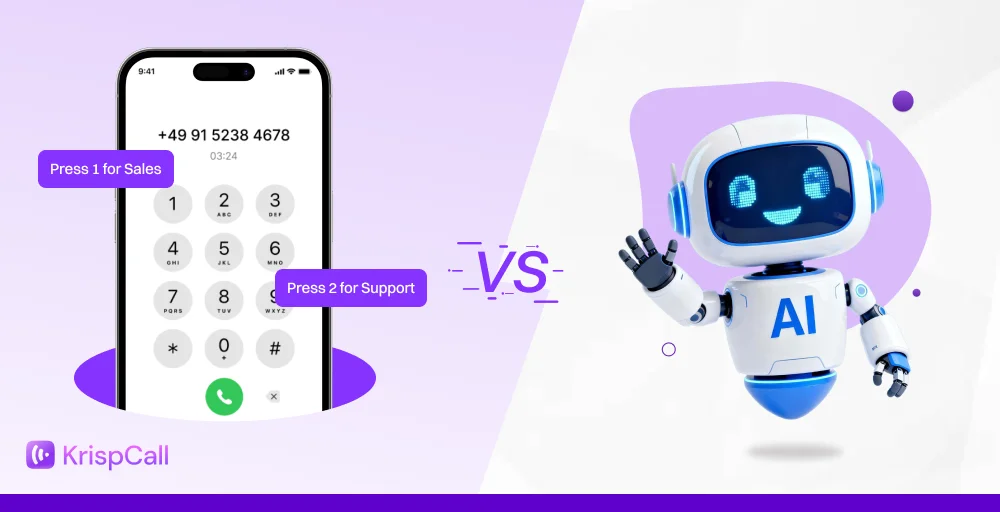
- Interactive voice system (IVR) cuts down on waiting times by automatically responding to incoming calls and allowing the customer to reach the desired department for further assistance.
These are just a few examples; there are many other tools that further simplify the workflow of contact centers and help to improve the overall experience. Beyond these tools, many AI-powered and automation tools can handle menial tasks like ticketing, follow-up, queries, etc.
This frees up agents, allowing them to focus on more meaningful or complex issues that require human intervention.
5. Personalize the experience
Personalizing the experience is what makes the customer keep coming back to your business. It makes your customer feel like they are not just talking to a big faceless corporation, but a business that prioritizes and truly cares for their customers.
To give a personal touch to every interaction, you need to utilize CRM platforms. They help collect and access relevant customer data, including their identity details, interaction history, purchase history, etc. This helps to create a complete customer profile that your agent can later use as context for future interaction.
By remembering past interactions in conversation, you can emphasize the customer’s importance rather than branding them as just a statistical number.
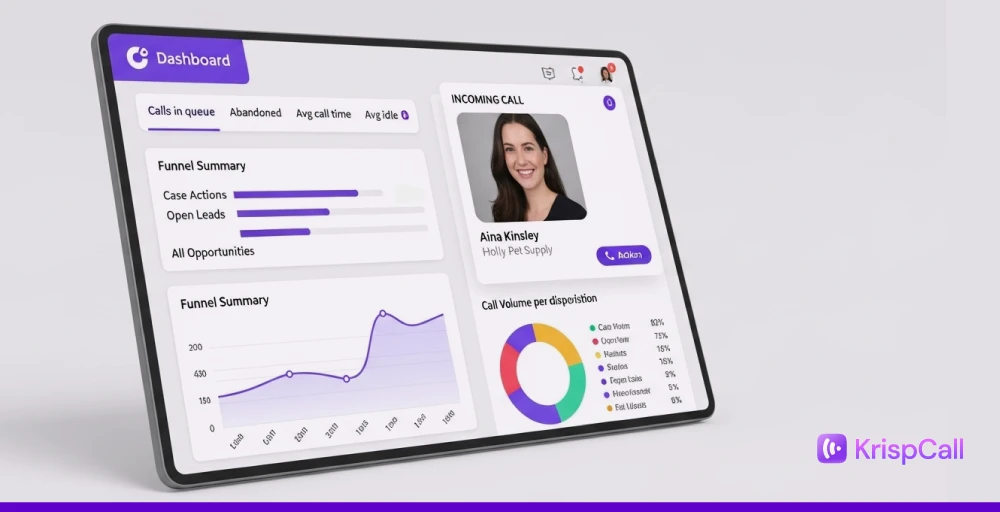
For instance, when you receive a phone call from a customer, they will receive all the relevant information as a screen pop. This helps your agents tailor the service accordingly. Agents should also know when a warm or cold transfer is appropriate, as it can make the interaction feel smoother and more personalized.
6. Monitor performance
To make improvements to the contact center experience, it is essential to understand the current performance and efficiency. You need to analyze the specific call center KPIs to gain insight about the weaknesses and areas of improvement.
Some of the important metrics include:
- First Call Resolution (FCR)
- Customer Satisfaction Score (CSAT)
- Average Handle Time (AHT)
- Net Promoter Score (NPS)
- Resolution effectiveness
- Customer Effort Score (CES)
With this data-driven approach, you can identify trends and fine-tune contact center operations to create positive experiences for the customers.
7. Collect feedback
You can’t improve the experience if you don’t know what customers are thinking. You will need to understand their needs and preferences. And what better way to get this insight than asking them yourself? Your customers are end-product users, so their feedback and opinions are critical for improving the overall experience.
There are various ways to gather your customer opinion, such as contact center experience surveys, rating systems, feedback forms, social media listening, etc.
That being said, it can be difficult to get responses from the customers. To increase your chance of engagement and responses, you can add small incentives and compensation for their efforts.


How to measure contact center performance?
As good customer experience often hinges on how well a contact center performs, it is quite important to measure and evaluate its performance.
The most viable way to get insight into your contact center’s performance is via monitoring KPIs. (i.e. metrics that tracks agent’s performance, contact center’s efficiency, customer experience).
- First Contact Resolution (FCR): This is one of the most important metrics as it measures how effectively and quickly your support team is able to resolve the customer’s issue in the first attempt.
- Average Handle Time (AHT): AHT or often known as Average Reply Time measures the total time that your agents take to resolve a customer issue from start to finish.
- Customer Effort Score (CES): CES indicates how much effort or how easy it is to use your service and get their support assistance.
- Customer Satisfaction (CSAT): CSAT measures how satisfied are your customers with your services. This is one of the most important KPIs to keep track of as it helps to retain customers, foster loyalty and minimize potential churn.
- Net Promoter Score (NPS): This metrics indicates how likely your customer will recommend your product or service to others. High satisfaction and positive experience directly influences this metric.
Must-have technologies for positive contact center experience
To maintain a positive experience, contact centers need various key features like omnichannel support, smart call routing, CRM integration, IVRs, reporting tools, etc. They help to improve the overall efficiency of contact centers, ultimately improving the customer’s experience and satisfaction rate.
Let’s take a quick look at some of the essential technologies;
- Text analytics and speech analytics: The speech and text analytics technology utilizes AI to analyze customer conversations across different channels. It helps businesses understand emerging trends, customer sentiments and generate actionable insights.
- Live chatbots and AI-powered virtual agents: AI virtual agents and chatbots empower contact centers by making call handling more efficient. It assists customers with simple queries and problems, taking the burden off a live agent, while also improving the response rate.
- Knowledge base: A good knowledge base organizes all essential company information into a centralized library, helping both your agents and the customer. It ensures that agents can find accurate details quickly, speeding up issue resolution. At the same time, customers can use it for self-service, reducing the need to contact support.
- Customer relationship management (CRM) system: CRM integration gives the agent instant access to complete information about the customer. This helps them to improve the resolution time and deliver a more personalized service for better experience.
- Workforce management (WFM): With a workforce management system, contact centers can anticipate customers’ needs and optimize the workforce for availability. This ensures customers get quick responses and problem resolution, enhancing their satisfaction.
- Interactive voice response (IVR): IVRs help to improve first contact resolution (FCR) by automating common interactions/inquiries. It lowers the response time via quick resolution and smart call routing, enhancing the digital contact experience.
Wrapping up!
Contact centers have become more than just a communication/support hub; it has also become an effective way to foster customer loyalty, build a positive reputation, and drive business growth. Every small interaction affects customer experience, so it’s important to handle them with utmost care.
From conducting training programs to improve skillset to using modern tools for simplifying workflows, there are multiple ways to improve the efficiency of contact centers.
Combine this with skilled agents who can make your customer feel valued, and you have a contact center that’s more than capable of delivering a positive customer experience.
Remember, good customer experience isn’t just about offering support, it’s also about making stronger emotional connections with them to increase the customer lifetime value.