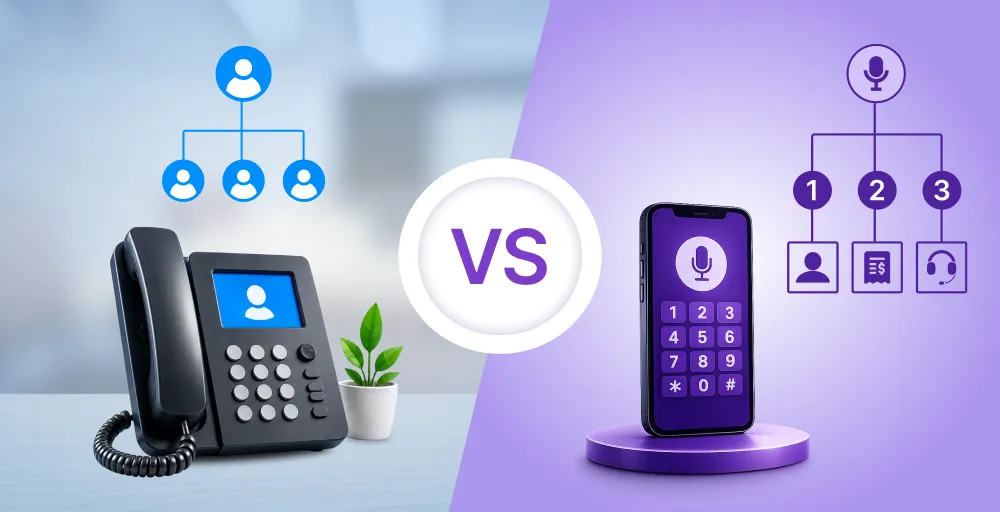



Every call is a great opportunity for business, whether it is solving customer issues efficiently or building long-term relationships. But what if you lose those calls in long waits or endless transfers?
That’s where intelligent call routing comes in, ensuring every call reaches the most suitable agents or departments. Most companies are now leveraging intelligent call routing to provide customer service and enhance agents’ productivity.
In this blog, we will explore the meaning of intelligent call routing, how it works, how it differs from traditional call routing, and the best tips for improving call routing.
✨ Key Takeaways
- Intelligent call routing is a call center technology that automatically directs calls to the best-suited agent or department.
- ICR offers benefits such as faster call resolution, shorter wait times, increased agent productivity, and cost efficiency.
- ICR best practices include integrating with a reliable IVR system, leveraging advanced routing tools, and carefully assessing agents’ skills to assign calls effectively.
What is intelligent call routing?
Intelligent call routing is an advanced telephony feature that automatically transfers inbound calls to the most appropriate agent or department. It routes calls based on predefined criteria such as caller data, query type, agent skills, or customer priority.

Connecting customers with the right agents who possess the necessary skills and knowledge to meet their needs helps provide faster call resolution.
For instance, let’s say a customer calls an online store because their package hasn’t arrived yet. Normally, they’d have to sit through a bunch of menu options, maybe get transferred once or twice, and explain the issue all over again. But with intelligent call routing, it’s a totally different experience. The call is directly routed to dedicated agents.
How does intelligent call routing work?
Intelligent call routing uses a data-driven approach to connect each customer’s calls with the appropriate agent or department. The system goes beyond IVR systems by leveraging data analysis and possibly machine learning to direct the call.
1. Data collection: ICR collects information about customers, including their previous conversation history, Caller ID, location, IVR inputs, and CRM data.
2. Analysis and matching: After collecting data, the intelligent call routing system analyzes customers’ data to understand their intent and match it with the appropriate agent.
3. Routing and connection: After identifying the right agents, the call is automatically routed and connected. The agent also receives a screen pop-up with the customer’s details to handle the call more effectively and personally.
Intelligent vs traditional call routing: Key differences
The purpose of both intelligent and traditional call routing is to direct calls to the appropriate agent or department.
However, there is a vast difference between how they handle and route incoming calls. Intelligent call routing leverages modern technology like AI or machine learning to analyze real-time data from previous interactions to direct incoming calls to the most appropriate agent or department.
In contrast, traditional call routing directs incoming calls to agents or departments according to predefined rules, typically within an automatic call distribution (ACD) system. Even though it is simple and effective for basic call management, it may result in lengthy queues, multiple transfers, and ultimately customer frustration.
Here is the comparison table of intelligent and traditional call routing:
| Feature | Intelligent call routing | Traditional call routing |
| Routing criteria | Based on real-time data (e.g., previous interactions, agent skills, sentiment) | Based on predefined rules (e.g., time of day, dialed number) |
| Customer experience | Delivers personalized and context-aware service | Often feels generic and repetitive |
| Agent assignment | Connects callers to the most suitable available agent | Random or fixed agent assignment |
| Operational efficiency | Increases first-call resolution and reduces call handling time | May lead to longer wait times and more transfers |
| Analytics & insights | Real-time reporting, predictive analytics | Basic call logs and reports |
Pros of intelligent call routing
Some of the benefits of an intelligent call routing are:
1. Improve call resolution
No one likes to be transferred multiple times or repeat the same topic to different agents. So, with ICR, calls are automatically directed to the best-suited agents to solve the problems without repeating them.

Connecting to the right agents with specific expertise ensures that customers’ issues are solved in the first call. This helps to reduce customers’ frustration and builds trust, which leads to strong relationships between the company and callers.
2. Reduced wait times
Long waits can irritate customers, and some customers might even hang up before joining the conversation. This can lead to a negative impact on your company’s reputation.
ICR solves these issues by directing incoming calls automatically to the available agents without any delay. This ensures that customers’ time and efforts are valued. Agents can work without juggling calls and spend more time handling customer issues.
As a result, it improves both customer experience and increases the agents’ productivity.
3. Enhanced agent efficiency
The agent handles the call based on their skills and strengths, like technical expertise to handle technical issues, and the sales team handles sales and support services. By directing calls to qualified agents, it solves customers’ problems promptly and increases efficiency.
When ICR routes calls by aligning with agents’ knowledge, it boosts their confidence and effectiveness in their roles. This results in better performance and higher job satisfaction.
4. Cost saving
Effective intelligent call routing connects callers directly to the appropriate expertise, helping to resolve issues on the first call. This reduces callbacks and call transfers, which lowers operational costs. Additionally, fewer agents handle more calls effectively and efficiently. There is no need to hire extra staff for managing the call center, saving labor costs.

5. Optimized resource allocation
Leveraging ICR helps businesses to balance workloads between agents by distributing incoming calls evenly across available agents. Instead of fewer agents overwhelmed with multiple calls, ICR analyzes agent availability, skill sets, and current call queues to route calls in a way that maximizes productivity.


Cons of intelligent call routing
While intelligent call routing benefits businesses with cost savings and optimized resource allocation, it also has some drawbacks that companies must consider:
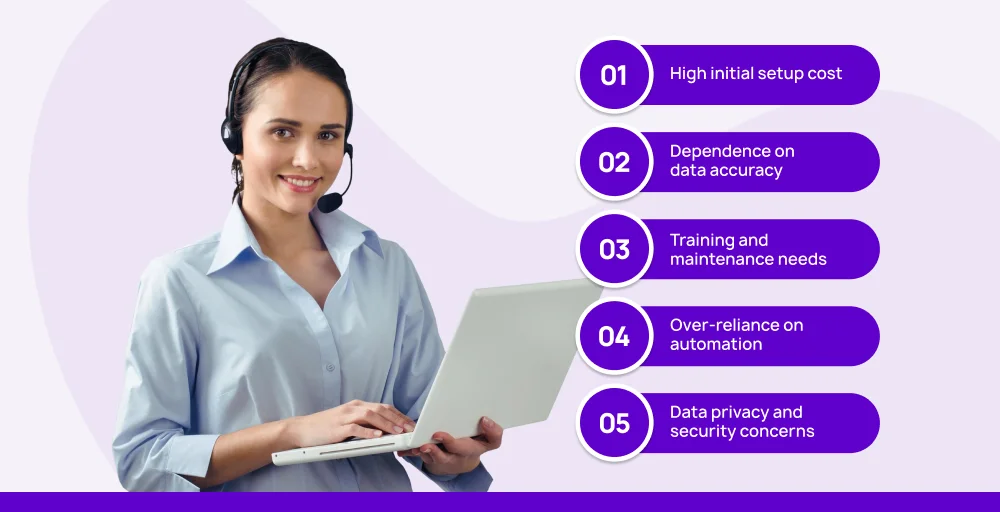
1. High initial setup cost
Implementing intelligent call routing requires a substantial initial investment. It demands dependable software, system integration, and IT support for smooth operation. Additionally, skilled agents and specialized IT professionals are essential to manage ongoing tasks.
For small businesses with limited budgets, the cost can be a big burden.
However, for long-term sustainability, it is a worthwhile investment that leads to efficiency and customer satisfaction.
2. Dependence on data accuracy
Providing accurate and current data and information is quite challenging. If customers’ information is outdated or incorrect, it can cause longer wait times and increased frustration. Therefore, CRM systems need to be updated regularly; otherwise, they can lead to mistakes like transferring calls to the wrong agent.
Inaccurate or outdated information can lead to a poor customer experience, negatively impacting call center performance.
3. Training and maintenance needs
For effective ICR, training facilities need to equip agents with the necessary skills to provide accurate information to customers. Providing the right tools and training ensures they can manage issues efficiently and with ease. This approach boosts their confidence to resolve complex problems promptly and on the first call.
ICR systems need to be updated and upgraded to maintain smooth performance and to adapt to changing technologies.
4. Over-reliance on automation
ICR is beneficial, but it must be used appropriately and designed well. Relying too much on automation can weaken the relationship with customers. When customers face urgent or complicated issues, robotic responses and a lack of human understanding can frustrate customers.
5. Data privacy and security concerns
Intelligent call routing requires large amounts of customer data to make accurate routing decisions. This can raise significant privacy and security challenges, especially when you have a cloud-based call center.
Handling sensitive information such as personal details, call histories, and payment data requires strict adherence to data protection regulations like GDPR, HIPAA, or CCPA.
Organizations must implement robust encryption, secure access controls, and regular security audits to prevent data breaches and unauthorized access.
Tips for intelligent call routing
Maximizing the impact of intelligent call routing needs advanced technology with a thoughtful strategy. Here are some key tips to ensure your system performs at its best:
1. Integrate with a strong IVR system
Integrate with a strong IVR software to maintain efficiency while interacting with the customer. Keep the IVR menus simple and easy to understand. Avoid complex instructions; they might confuse and annoy callers.
An IVR system helps to gather information about callers and routes calls to the relevant call agent.
For example, when setting up an ICR system, the IVR can prompt callers with options like “Press 1 for Sales and Support, Press 2 for Technical Issues,” ensuring callers are quickly directed to the right team without unnecessary transfers or delays.
2. Optimize advanced reporting and analytics
For effective improvement of call routing, it is essential to use sophisticated reporting and analytics tools. Track call center metrics such as customer satisfaction score (CSAT), first call resolution (FCR), and average call handle time to evaluate the performance of the call center.
These tools help to provide depth and clarity into call patterns, agent performance, and customer satisfaction. This minimizes wait times and improves first-contact resolution.
3. Evaluate and assign agent strength and skills
Track agents’ strengths and skills to pinpoint areas needing improvement. This allows calls to be directed to the most suitable agent based on customer issues. Such a strategy enhances customer service and increases agents’ confidence in providing their best performance.
4. Align routing strategies with business goals
Don’t use ICR solely to speed up customer service; it should also be strategically aligned with your broader business goals. Make sure your routing rules and logic support key objectives such as reducing operational costs, enhancing service quality, or boosting sales conversions.
By tailoring your ICR strategy to your organization’s evolving needs, you can maximize both customer satisfaction and overall business performance.
5. Promote a culture of continuous learning
Encourage ongoing training and upskilling sessions for your agents. As technology and customer expectations evolve, so should your team’s ability to adapt. Equip the agent team to handle different customers’ attitudes efficiently.
A knowledgeable, agile team strengthens the overall effectiveness of intelligent call routing. Make the ICR system more effective and smoother over time.
Easily route your calls intelligently with KrispCall
Easily route your calls intelligently with KrispCall’s powerful Automatic Call Distribution (ACD) software, designed to handle high volumes of incoming calls seamlessly.
KrispCall automatically directs calls to the right agents based on skill sets, availability, and custom routing rules, ensuring efficient issue resolution and reducing customer wait times. With support available in over 100 countries, flexible call queuing, and smart IVR integration, KrispCall helps you prioritize urgent calls and optimize agent utilization to boost customer satisfaction.
Get started today and transform your call management – Book a Free Demo!
Frequently Asked Questions
What is the application of intelligent call routing (ICR)?
Intelligent call routing (ICR) is used to automatically direct incoming calls to the most suitable agents or departments based on criteria like caller information, query type, or agent skills. This application improves customer experience by reducing wait times and increasing first-call resolution rates.