

As a growing and developing industry, healthcare faces numerous challenges, including increasing patient demands, administrative overloads, and clinical burnout.
So, addressing and resolving such issues, AI voice agents act as one of the most powerful tools that change the way communication occurs between patients and healthcare providers.
From reducing documentation time to assisting with patient engagement and automating routine tasks, voice-powered AI offers both efficiency and accessibility.
In this blog, we’ll explore what AI voice agents in healthcare are, their key features, the roles they play in patient care and operations, their benefits, and also the limitations that need to be addressed.
✨ Key Takeaways
- AI voice agents are new, advanced software systems that use natural language processing (NLP) and machine learning to understand and respond to spoken language.
- Consider the key features like NLP, text-to-speech, 24/7 customer support, and scalability for voice AI healthcare.
- It helps to reduce operational inefficiencies, enhance patient experiences, alleviate administrative burdens, and increase documentation efficiency.
What are AI voice agents in healthcare?
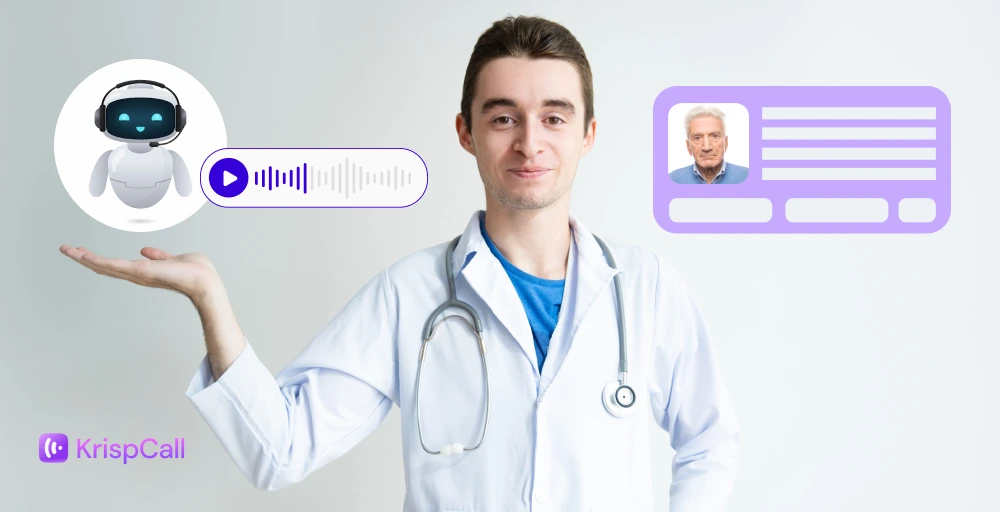
AI voice agents in healthcare are advanced software systems that utilize natural language processing (NLP), natural language understanding (NLU), and machine learning to understand and respond to spoken requests in real-time.
These agents help to facilitate tasks such as prescription refills, appointment scheduling, answering billing inquiries, and providing post-discharge follow-ups.
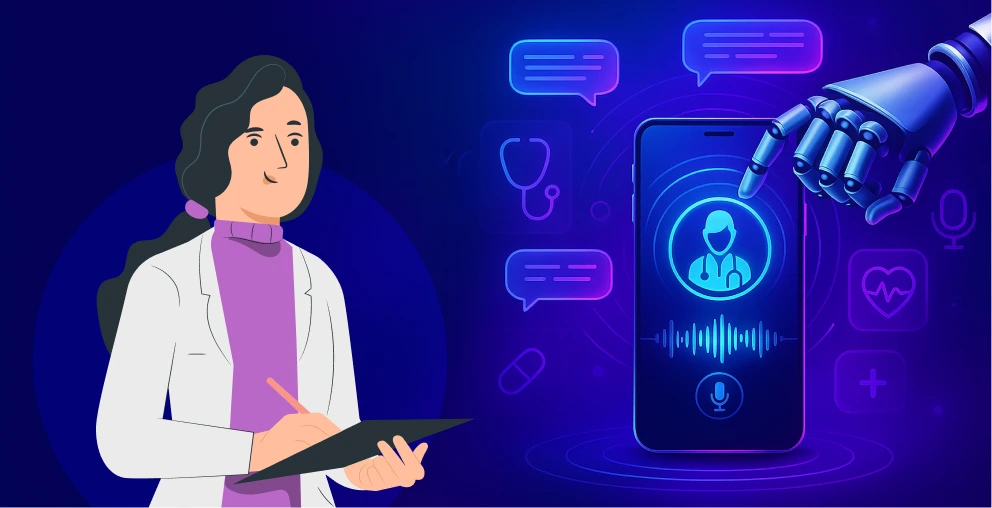
The use of voice assistants in healthcare is growing quickly. The market for conversational AI, which includes voice assistants, is expanding significantly.
Approximately 80% of hospitals are now utilizing AI to enhance patient care and streamline their workflows, often by integrating with CRMs, IVR systems, and IoT devices to create more connected and intelligent healthcare ecosystems.
Key features of healthcare AI voice agents
AI voice agents are designed to support every industry, including healthcare, retail, and IT. So, some of the major features that AI voice agents must have while implementing them in the healthcare sector are:
- Natural language processing (NLP): Understands the language spoken by patients, like their intent, emotions, sentiments, and entities, including dates, times, doctor names, and services.
- Natural language understanding (NLU): This interprets the meaning behind user statements, maps to actionable remarks or intents, and extracts structured data.
- Automated task handling & workflow automation: Executes end-to-end tasks without human intervention, such as scheduling, rescheduling, reminders, and patient data collection.
- Text-to-speech (TTS) to talk like a human: With this, you can convert generated text into natural-sounding speech like the way humans speak, with appropriate emotion, tone, pace, sentiment, and clarity.
- Scalability & 24/7 availability: AI voice agents handle a high volume of calls and conversations and provide 24/7 customer support.
- Learning & adaptation over time: Improves accuracy and expands capabilities through continual learning from conversations, feedback, and outcome data.
Role of AI voice agents in healthcare
AI voice agents play a significant role in healthcare. Starting from the appointment scheduling of patients to prescribe refills, scheduling a personalized reminder date, and monitoring patient data.
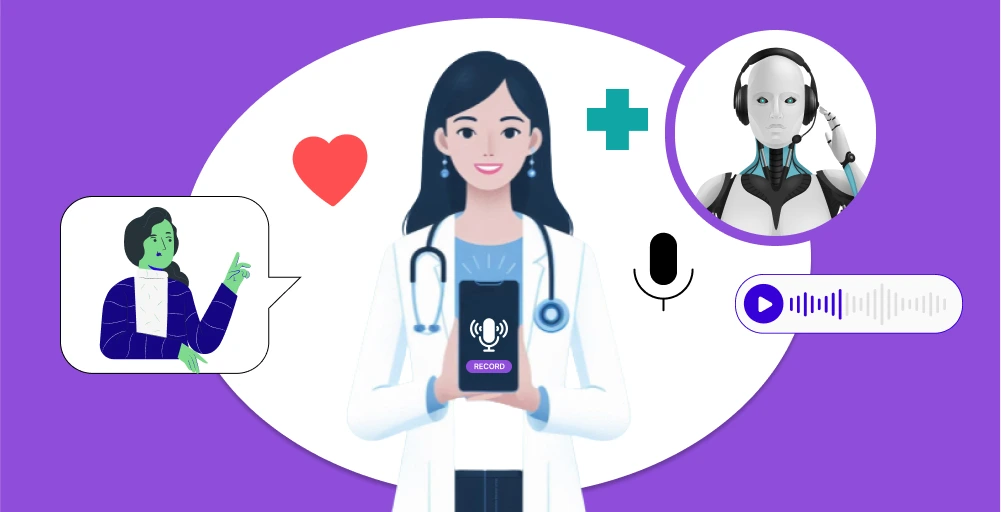
Here are some of the roles of voice AI agents in healthcare:
1. Enhancing patient engagement
AI voice agents in healthcare help enhance patient engagement by facilitating intuitive appointment scheduling and reminders, as well as initiating natural voice interactions related to medication.
They offer 24/7 access to information and answer frequently asked questions about the clinic or patients’ conditions.
2. Supporting clinicians
For the supporting clinicians, AI voice agents reduce the burden of administrative tasks. Clinicians can use tools for taking patient notes, keeping real-time patient histories, and managing prescriptions to transcribe and organize the information into an electronic health record (EHR) with the help of AI.
3. Improving operational efficiency
While improving operational efficiency, these agents automate the routine and repetitive tasks, which help reduce the workload of call centers and administrative staff.
With this, agents can easily handle multiple calls simultaneously and send appointment reminders automatically, making the healthcare system more effective. Integration with CRMs and IVR systems ensures smooth communication management.
4. Expand accessibility and inclusion
AI voice agents can significantly improve accessibility and inclusion for a diverse range of patients. For patients with mobility issues or visual impairments, they provide voice-based interaction to provide more user-friendly healthcare services.
As most of them are multilingual, this breaks language barriers and provides service even to non-native speakers as well.
5. Facilitating proactive care and monitoring
AI voice agents facilitate proactive care and regular monitoring with patients, specifically those patients with chronic conditions. They continue to monitor symptoms, record real-time data, and detect subtle changes that may indicate potential health risks.
Such plays a major role in the automated follow-up, mainly after hospital discharge or procedures, to ensure patient care continuity and reduce the risk of readmission.
Related 👉: Best Health Care Call Center Software for Patients
Benefits of voice AI in healthcare
Voice AI in healthcare offers numerous benefits, like enabling hands-free operation of medical devices, facilitating remote monitoring, and streamlining administrative tasks.
Some of the major advantages of voice AI in healthcare are given below:
- Enhanced patient experience: Patients get 24/7 support without waiting, get easy appointment scheduling. Integrating a business phone system for healthcare ensures smooth communication.
- Operational efficiency: Voice AI automates routine tasks, reducing costs and streamlining workflows. Tools like cloud telephony and AI-powered call center software help maintain high-quality care.
- Increased documentation efficiency: The integration of voice AI technology enhances documentation efficiency, as staff can use voice commands to dictate notes, thereby reducing the time spent on handling paperwork and typing.
- Accurate and up-to-date patient records: Ensure precise transcription of medical terminology, reducing errors and improving documentation reliability and patient outcomes.
- Reduce administrative burden: Automated appointment scheduling, insurance verification, and follow-ups free staff for patient care. Virtual call center software makes patient engagement seamless.
Use cases of voice-AI in healthcare
The applications of voice AI in healthcare span patient care across various areas of the healthcare industry. Below are the use cases of voice AI in healthcare, like how they transform the communication in healthcare systems:
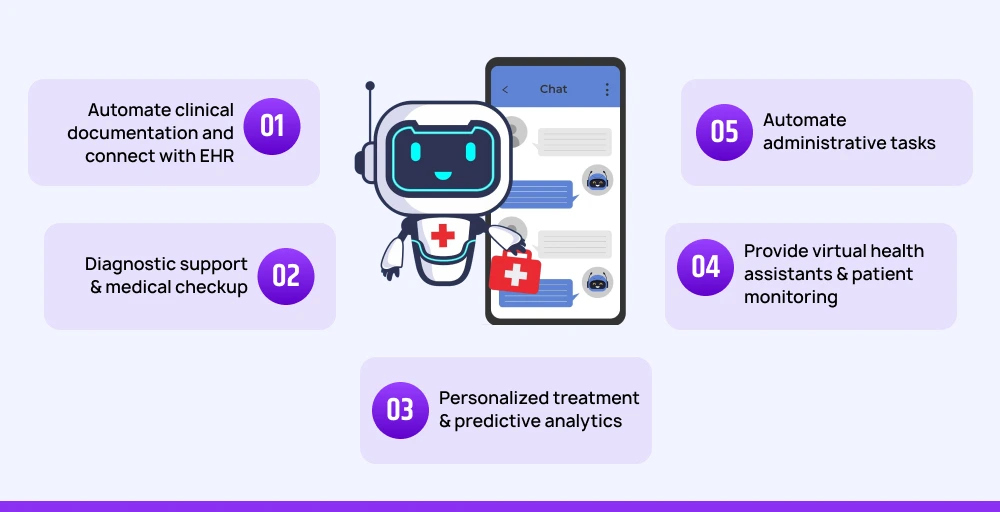
1. Automate clinical documentation and connect with EHR
Voice AI can transcribe conversations during patient visits into clinical notes and automatically sync them with electronic health records (EHRs). This saves clinicians time, reduces the burden of manual data entry into private practice EHR software, and ensures patient information is accurate and up-to-date.
Such Voice AI technology has a voice-enabled AI assistant that listens to patient encounters, generates clinical notes, and integrates bi-directionally with major EHRs. It has slowed down to reduce documentation time by up to 72% and significantly cut after-hours charting for physicians.
2. Diagnostic support & medical checkup
Voice AI can listen to what patients say about their symptoms, past health, and examination results. It helps doctors by suggesting possible health issues or next steps for checking their health. This technology allows doctors to make decisions hands-free, speeding up accurate evaluations.
Patients can openly share their symptoms, and the system will ask them a series of simple questions to help guide them. This process offers initial health information and helps direct them to the right level of care.
3. Personalized treatment and predictive analytics
Voice AI can analyze a patient’s speech and health information to personalize therapies. It can also predict how a patient might respond to a specific treatment, helping to create tailored care and make proactive changes to treatment plans.
This technology is not only useful for treatment but has also been applied in research. It can help predict and track conditions like depression and Parkinson’s disease. Examining vocal patterns and emotional states provides insights that support personalized care in mental health and neurology.
4. Provide virtual health assistants & patient monitoring
Voice-powered virtual assistants can answer patient questions, remind them about medications, and monitor symptoms or vital signs over time. They enable continuous, convenient care outside traditional in-person appointments.
These voice-enabled assistants can provide personalized recovery instructions, send medication reminders, and answer common questions for patients recently discharged from the hospital, helping to reduce readmissions and improve post-care adherence.
5. Automate administrative tasks
Voice AI can handle tasks such as scheduling appointments, triaging calls, and routing messages to the right staff, which reduces desk work for clinicians and front-desk staff. This helps clinics run more smoothly and supports a clinic appointment management system, freeing up more time for patient care. NEMT dispatch software integrated with voice AI helps simplify scheduling and improve care coordination.
These AI agents can handle tasks such as booking or canceling appointments, processing requests for medical records, and answering patient questions, all while adhering to HIPAA privacy rules. This automation helps to cut down on wait times and improve overall patient satisfaction.
Limitations of AI voice agents
AI voice agents in healthcare face limitations such as challenges with accuracy and understanding complex terminology, a lack of empathy, and risks to data privacy.
These issues can hinder personalized care, particularly in sensitive situations requiring nuanced communication.
1. Accuracy challenges in noisy environments
In noisy places, AI voice assistants struggle to understand speech accurately because background sounds interfere with their recognition. Different accents, speaking styles, and dialects can also make understanding more difficult.
This highlights the need for robust models and efficient noise-canceling technology. Ambient noise can lead to incorrect commands being recognized or missed completely, which affects the reliability of these interactions in daily life.
2. Handling complex medical terminology
Many medical terminologies are complex, rare, domain-specific acronyms, and multisyllabic names that are either mispronounced or misrecognized.
Such misunderstandings are the reason behind the incorrect recommendations or documentation and pose safety concerns. Continuous updating of medical lexicons and pronunciation profiles is necessary, but resource-intensive and slow to deploy.
3. Latency and conversational flow issues
Processing delays can disrupt the flow of conversation, making interactions feel awkward or frustrating. High latency limits how quickly people can respond, which is especially concerning in urgent situations.
Interruptions, misunderstood prompts, and endless confirmation loops can build up, worsening the overall user experience.
4. Safety and clinical risk
Wrong interpretations or bad advice can harm patients or delay their diagnosis. AI voice agents may struggle to manage sensitive information, privacy issues, or data rules.
People may depend too much on automated help and ignore the judgment of clinicians and the needs of patients.
5. Integration & acceptance hurdles
Interoperability with existing healthcare IT systems (EHRs, LMS, scheduling) can be complex and costly. Workflow misalignment may create new friction rather than streamline processes. Stakeholder trust, regulatory compliance, and user training are essential for adoption but can slow deployment.
The future of AI voice in healthcare
Looking ahead, voice AI will expand beyond administrative support into clinical decision-making, remote monitoring, early diagnostics, and patient empowerment.
Innovations include voice-guided systems for stroke assessment and AI stethoscopes that can detect heart conditions in seconds, bringing advanced diagnostics to frontline providers.
By combining conversational AI with IoT devices like wearables and smart monitors, healthcare teams will be able to track patient vitals in real time, automate follow-ups, and even detect subtle changes that indicate emerging health issues.
Multimodal, ambient systems may one day passively capture patient–clinician dialogues, suggest diagnoses in real time, manage care pathways, and seamlessly orchestrate interventions across wearables, EMRs, and smart devices.
Conclusion
AI voice agents are essential in global healthcare, automating tasks and improving patient access. They work with CRMs, IVR systems, and IoT devices to handle voicemail transcription, call routing, appointment reminders, and prescription refills. However, challenges such as HIPAA compliance, noisy environments, medical terminology comprehension, and EHR integration persist.
Tools like KrispCall help address these issues by providing a HIPAA-compliant platform that ensures patient data safety with a Business Associate Agreement (BAA). Its AI technology enhances call clarity by eliminating background noise and accommodating different accents.


With features like call recording and analytics, KrispCall demonstrates how AI can enhance safety and efficiency in healthcare.
👉 Explore AI-powered communication for your healthcare business with KrispCall and transform patient interactions.