


Sending an email requires a lot of time and effort. However, the results are not as expected. It’s disappointing, isn’t it? That’s exactly where outbound calling comes which changes the game.
Outbound calling isn’t just another sales technique; it’s a powerful way to engage, persuade, and close more confidently. Unlike digital channels, a phone call allows real-time interaction, immediate feedback, and a personal connection with prospects.
In this blog, we will explore what an outbound calling strategy is, its challenging, requirements for building a successful outbound sales team, and how to build an innovative outbound calling workflow.
✨ Key Takeaways
- An outbound calling strategy is a technique for connecting with potential customers, receiving immediate feedback, and maintaining engagement.
- Building smart outbound calling requires setting clear goals upfront, researching your leads, adapting call scripts, and strategically planning your call sequence.
- For best practices to strengthen outbound sales strategy, accelerate lead response times, automate repetitive, low-impact tasks, and track key performance indicators regularly.
What is an outbound calling strategy?
An outbound calling strategy is a business’s plan to make phone calls to potential and existing customers to achieve its goals and objectives. The primary goals of this strategy are to expand into the global market, generate high-quality leads, boost sales conversion, and strengthen customer relationships.
Moreover, it also enables businesses to proactively share updates, gather feedback, follow up on inquiries, and create personalized interactions that drive long-term customer loyalty.
Why is outbound calling challenging?
Outbound calling can be an effective way to reach new customers and drive sales, but it also comes with its own set of hurdles. Many companies struggle with issues. Some of the challenges are described below:
- Low connection rate: Outbound calls might not always be answered by recipients. This makes it difficult for agents to engage the right contact consistently.
- List quality: Inaccurate or outbound contact may lead to wasted calls, lower conversion, or inefficient use of resources.
- Agent burnout: When callers do not respond to calls, it can lead to low morale among sales agents. This can directly affect productivity, call quality, and overall team performance.
- Carrier/labeling issues: Sometimes calls may be blocked, flagged as spam, or mislabeled due to telecom provider restrictions. This reduces call reach and affects the success of the outbound calling.
Key requirements for building a successful outbound sales team
To build a successful outbound sales team, you need to develop a range of techniques and methods. Some of the essential requirements are explained below:
1. Proactive compliance with laws and regulations
One of the foremost requirements is that, when running outbound sales, you must follow laws and regulations. You must have a thorough understanding of regulations such as TCPA and PCI-DSS. In case you fail to comply, you will face fines and sales restrictions.
Some compliance practices include obtaining prior consent, recording communication details, ensuring data privacy, and following do-not-call lists.
2. Reliable calling infrastructure
To connect smoothly and effectively, a reliable phone system is required. The success depends upon the quality of the call, connectivity, and system uptime. With a stable calling infrastructure, your team can reduce dropped calls, improve response rate, and deliver more professional conversations.
3. Insightful and reliable customer data
Collecting the correct information about customers is a powerful weapon for companies to target the right audience. You can use tools like CRM to identify customers’ behavior, interests, and demographics to strengthen your calling and increase sales.
Ensure you have clean, up-to-date, and well-organized data so your team doesn’t waste time calling the wrong leads or repeating old conversations.
4. Call analytics and monitoring tools
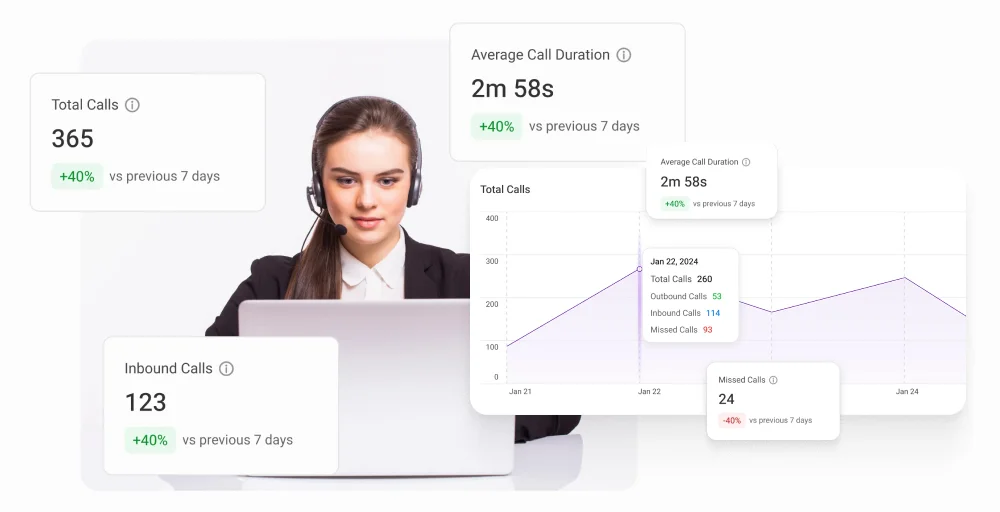
Use tools such as sentiment analysis, average handle time tracking, and a performance dashboard. These tools allow managers to understand customer reactions, customer engagement patterns. Moreover, these insights enable managers to identify strengths, fix weaknesses, and refine the overall outbound strategy.
How to build a smart outbound calling workflow?
To maximize the impact of your outbound sales team, you must design a smart, structured workflow that guides every call with clarity and purpose.
1. Plan your call sequence strategically
To make communication effective and efficient, timing matters. So, focus on the call sequence, ensuring which leads must be contacted at what time, the timing of each call, and how many follow-ups are appropriate. Proper sequencing prevents missed opportunities and reduces the risk of overwhelming or irritating potential customers.
2. Set clear sales goals upfront
Setting clear goals and objectives shows directions for the company. Goals can include metrics such as the number of calls per day, scheduled appointments, or closed deals. When team members know the goals, they feel motivates and encouraged to achieve them.
Similarly, tracking these goals allows managers to measure performance and identify areas for improvement.
3. Develop persuasive and adaptive call scripts
Call center scripts are crucial for consistency; however, they must be adaptable to support real-time conversation. A good script includes key points, questions, and responses to common objections.
Adaptive scripts enable sales representatives to respond to diverse customer needs and personalities. This enhances more engagement and persuasive conversations.
4. Research your leads for personalized outreach
Research your leads before making any calls. Use tools like CRM systems, social media, and the company website to gather valuable insights. AI assist in lead qualification can help you prioritize the most promising prospects by analyzing behavioral data, firmographics, and engagement signals before your team picks up the phone.
Personalized outreach demonstrates professionalism and builds trust. This creates a high likelihood that leads will engage with your offer.
5. Follow through with consistent outreach
For successful sales, it is essential to be persistence in follow-up. This ensures that no lead is forgotten and shows your commitment to solving their problem. It’s important to vary the messaging, provide new value in each interaction, and respect the lead’s preferred communication channel and timing. Consistent, thoughtful outreach increases leads into customers without overwhelming them.
Inbound vs outbound sales calls: A side-by-side comparison
Understanding the key differences between these two strategies can help you choose the right one for your business. Here’s a side-by-side comparison of inbound vs outbound sales calls.
| Aspect | Inbound Calls | Outbound Calls |
| Initiator | Customer | Business/Agent |
| Purpose | Respond to inquiries, support, and orders | Lead generation, promote products, follow up |
| Lead Type | Warm/Interested | Cold or warm |
| Focus | Customer service, problem-solving | Persuasion, sales, relationship-building |
| Timing | Customer-driven | Business-driven |
| Challenge | Handling high call volumes efficiently | Low connection rates, call rejections, compliance issues, and agent burnout |
| Cost | Generally lower per call | Higher per call due to preparation, outreach, and lead research |
| Communication Style | Reactive, solution-focused | Proactive, persuasive, goal-oriented |
| Conversion Rate | Typically higher (interested callers) | Can be lower; depends on targeting & approach |
Best practices to optimize and strengthen your outbound sales strategy
To maximize results and ensure consistent growth, it’s essential to follow best practices that optimize and strengthen your outbound sales strategy.
1. Accelerate lead response times
Responding quickly to potential customers can significantly increase engagement and conversion. Team members should contact prospects as soon as they show interest in their products and services. Businesses can use advanced tools such as CRM alerts and automated notifications to ensure no prospects are missed.
2. Automate repetitive, low-impact tasks
Use tools like CRM automations, email sequences, or dialers to free up time to handle repetitive tasks such as data entry, follow-up, and scheduling calls. This action reduces agents’ hassle and allows them to focus on essential activities such as building relationships with clients and closing deals.
3. Track key performance indicators regularly
Monitor metrics to evaluate performance and identify areas for improvement. Key performance indicator tracking enables data-driven decisions and ensures your outbound strategy stays effective and efficient.
4. Boost call effectiveness with live coaching
To improve agents’ communication skills and increase agent conversion rates, provide real item feedback. Live coaching can include listening to calls, offering guidance on objections henling and sharing best practices to ensure consistent performance across the team.
5. Stay ahead of compliance requirements
Outbound calling is subject to strict regulations like Do Not Call lists, telemarketing laws, and privacy rules. Staying compliant protects your business from legal issues and reputational damage. Implement compliance training, use automated tools to filter restricted numbers, and regularly review regulatory updates.
Crafting a powerful outbound calling strategy with KrispCall!
A well-planned outbound calling strategy is essential for achieving company goals and connecting with the right prospects. For a smooth conversation, you can choose KrispCall, which offers advanced features such as call listening to ensure quality standards, a power dialer to reduce manual work, and CRM integration to keep customer data organized and up-to-date. Also, it provides multiple phone numbers to reach different markets effectively.
Whether you want to expand and scale your sales team, improve customer outreach, or boost productivity, KrispCall delivers the dependable tools you need to upgrade your outbound calling strategy.
Ready to upgrade your outbound calling game? Switch to KrispCall and experience a smarter, faster, and more streamlined way of reaching your customers.