


Lead qualification helps sales teams focus on prospects that are most likely to make a purchase, rather than pursuing every lead. Traditionally, the sales team is required to ask predetermined questions to assess whether the lead has financial means, decision-making power, a genuine need, and urgency to buy.
But now, AI is transforming lead qualification by rapidly analyzing large volumes of customer data, uncovering patterns, and identifying high-potential leads with far greater speed and accuracy.
According to McKinsey, 90 percent of business leaders plan to use generative AI solutions “often” in the next two years.
In this blog, you can get to know more information about lead qualification, AI for lead qualification, and ways to assist in AI in lead qualification, as well as best practices.
What is lead qualification?
Lead qualification is the process of evaluating whether a prospect is a good fit for your product or services and has the potential to become a paying customer. This process helps the sales team identify potential leads based on factors such as clients’ requirements, needs, or other relevant criteria.
In the sales funnel process, B2B lead qualification plays a crucial role, as it enables the sales team to identify their best leads and focus on those most likely to convert into paying customers. This helps to save time and resources by focusing on only those who are likely to buy your product or service.
What is AI in lead qualification?
AI-driven lead qualification involves leveraging natural language processing (NLP), predictive analytics, and machine learning (ML) to automate the process of identifying and prioritizing potential customers for business.
It analyzes data from multiple sources to assess a lead’s buying readiness and assign a score based on their likelihood to convert.
The core technologies involved in AI lead qualification are:
- Machine learning: Involves training algorithms on historical data to identify patterns that correlate with successful conversions.
- Conversational AI (chatbots, AI voice agents): Engages with prospects in real-time, automating the initial stages of lead qualification.
- Predictive analytics: Analyzes a wide range of data points to predict a lead’s likelihood of converting.
- Behavioral modeling: This technology tracks and analyzes a lead’s digital footprint to build a profile of their behavior and intent.
Most businesses are rapidly adopting AI-powered lead qualification tools due to increased accuracy, efficiency, and the ability to identify high-converting leads.
In fact, companies using AI-powered lead scoring have seen up to 30% higher conversion rates and more than 50% faster lead response times, proving its value in modern lead qualification workflows.
6 ways AI helps businesses in lead qualification
AI is transforming how businesses qualify leads by providing a more efficient, accurate, and scalable approach to lead qualification.
Instead of manual guesswork, AI-scored leads sales strategies rely on data-driven insights to identify and prioritize prospects with the highest potential.
Here are six ways AI helps businesses in lead qualification:
1. AI-powered lead scoring
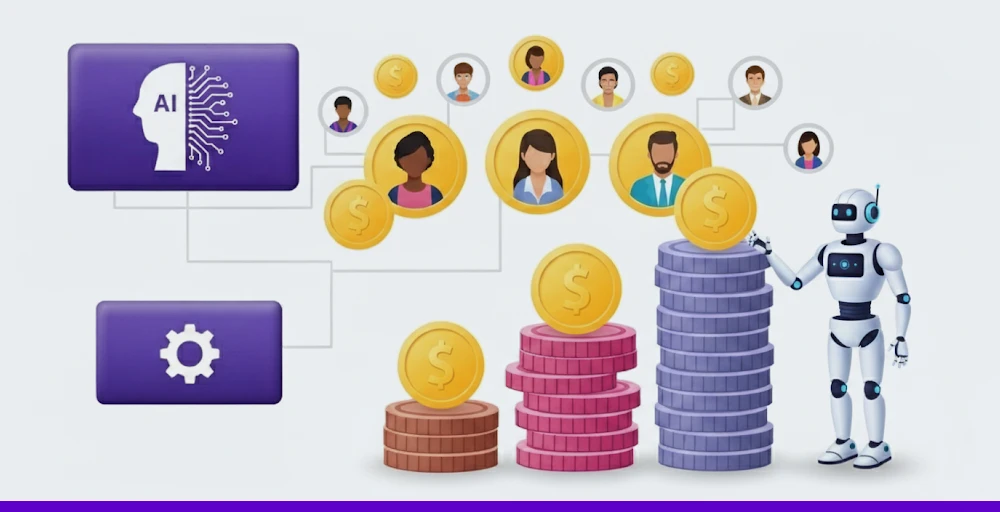
AI helps businesses prioritize their prospects by using predictive analytics to score leads based on their likelihood of conversion. Instead of treating every lead the same, AI analyzes behavioral data, demographics, and past interactions to assign a score in real time.
This enables sales teams to concentrate their efforts on high-quality leads with the most substantial potential, thereby improving efficiency and boosting conversion rates.
2. Real-time engagement with AI voice & chat agents
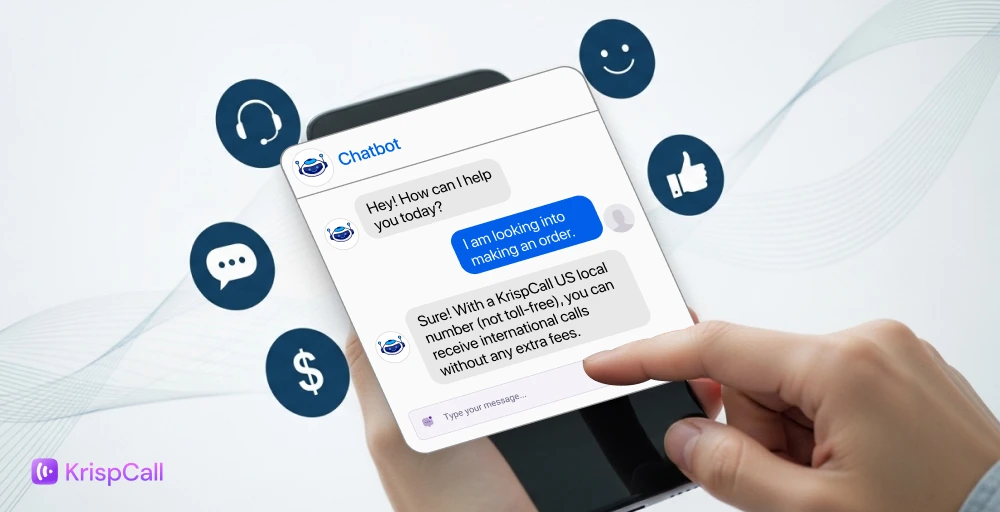
Engaging leads instantly is critical, and AI-powered virtual receptionists, chatbots, conversational AI, and voice agents make this possible. These systems provide real-time responses to inquiries, ensuring potential customers never wait for assistance.
With 24/7 availability, AI-driven engagement reduces response time, builds trust with prospects, and captures interest in real time.
3. Intelligent call routing & CRM integration
AI call center software improves customer experience by automatically directing incoming calls to the right representative or team.
Leveraging tools like IVR and ACD, businesses can direct the call as per customer input. For example, businesses can utilize IVR to provide menu options like “Press 1 for sales,” and “Press 2 for support.” This ensures that prospects always speak to someone who can help with their specific needs.
In addition to routing calls, AI can be integrated with customer relationship management (CRM) systems. It keeps lead information updated and easy to access. This helps sales teams provide more personalized follow-ups and reduces the chances of miscommunication or data loss.
4. Automated data enrichment
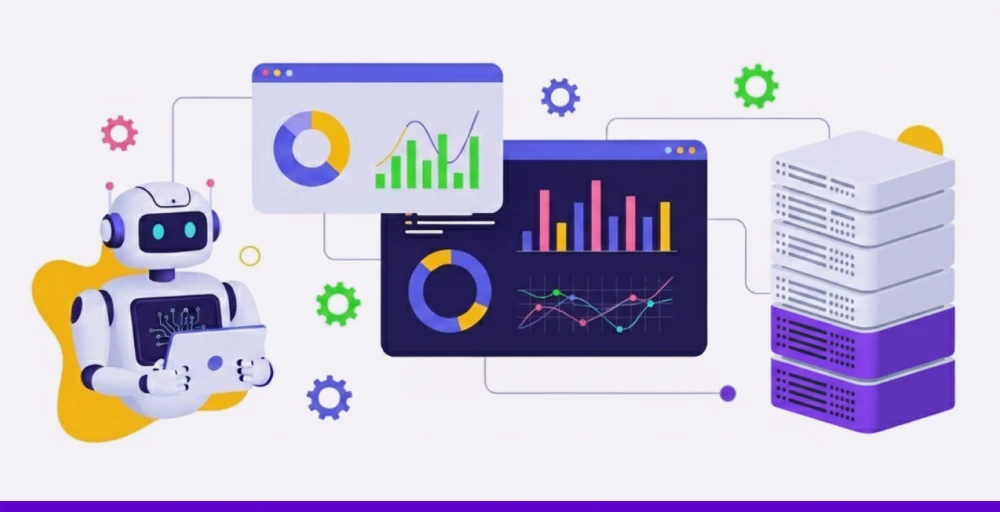
AI significantly enhances the quality of lead data by extracting information from external sources, including firmographics, intent signals, and social media insights. This process fills in missing details and enriches incomplete profiles, giving sales teams a deeper and more accurate understanding of each prospect. Combining this with LinkedIn automation software can help streamline how enriched data is used for timely and relevant outreach.
With richer data at hand, businesses can tailor their outreach strategies and make better-informed decisions about lead prioritization.
5. Personalized conversations with conditional logic
Not all leads are alike. AI helps by using intelligent call analytics tools to create personalized interactions through conditional logic. By asking clear, step-by-step questions and changing the conversation based on answers, AI keeps each interaction relevant and engaging.
This personalization, based on industry, intent, or lead type, helps build relationships and increases the chances of moving prospects further down the sales funnel.
6. Automated follow-ups & meeting scheduling

Follow-up is a key in lead qualification, and AI makes sure nothing falls through the cracks. Through automated reminders and nudges, AI enables marketers to keep prospects engaged without intimidating sales teams.
AI can even place meetings directly into calendars without the bothersome coordination back and forth that always seems to delay conversions. This automatic system lets you save time, minimize manual labour, and keep leads becoming potential buyers.
Benefits of using AI for lead qualification
By automating routine tasks, analyzing data in real time, and personalizing interactions, AI not only streamlines the lead qualification process but also unlocks measurable benefits that drive sales efficiency and business growth.
Here are the key advantages businesses see when using AI for lead qualification:
- Increased speed & efficiency: AI can analyze vast amounts of data in real-time, instantly scoring and routing leads to the right sales representatives. This eliminates the manual, time-consuming process of sifting through leads, allowing sales teams to respond to prospects much faster.
- Improved accuracy and less bias: AI algorithms can evaluate leads based on objective data points, such as a prospect’s online behavior, job title, and company size, without being influenced by human biases. This leads to more precise lead scoring and a better-prioritized pipeline.
- Scalability without extra headcount: AI can handle a massive volume of leads simultaneously, a task that would be impossible for a human team without significant expansion. This allows businesses to scale their lead generation efforts without needing to hire additional staff, saving on operational costs.
- Higher conversion rates: By identifying and focusing on the leads most likely to convert, AI helps sales teams use their time more effectively. This targeted approach leads to more productive conversations and a higher percentage of qualified leads turning into paying customers.
- Better customer experience: AI-powered chatbots and voice assistants can provide instant responses to customer inquiries 24/7. They can also personalize interactions and provide relevant information based on a lead’s behavior, making the initial engagement feel more helpful and seamless.
AI vs manual lead qualification
The main difference between AI and manual lead qualification lies in their approach to data, speed, and scalability. Manual qualification requires sales team members to actively engage with potential customers through research and direct interaction, and perform evaluation of leads based on their discretion and predefined criteria (BANT framework).
This process can also be long and laborious, as well as subject to human bias and variability.
AI qualification, on the other hand, leverages machine learning to interpret large, multi-source data sets in real time, scoring and prioritizing leads by behavioral signals and predictive analytics, which enables companies to qualify leads in seconds at higher levels of accuracy.
Some other key differences between AI and manual lead qualification are:
| Feature | Manual lead qualification | AI lead qualification |
| Speed | Slow, labor-intensive, and limited by human work hours. | Instant and continuous; operates 24/7. |
| Accuracy | Subjective and prone to human error and bias. | Highly accurate; uses objective, data-driven analysis to identify patterns. |
| Scalability | Limited; requires hiring more staff to handle increased lead volume. | Highly scalable; can handle thousands of leads without additional headcount. |
| Data analysis | Relies on limited data points and human interpretation of information. | Analyzes vast amounts of data from multiple sources across the web, social media, CRM, etc. |
| Cost | Higher operational costs due to salaries, training, and overhead. | Lower overhead; initial investment in technology, but more cost-effective at scale. |
| Personalization | High-touch, personal interaction is possible but not scalable. | Automated and data-driven personalization at a large scale. |
Best practices for implementing AI in lead qualification
Effective implementation of AI for lead qualification requires a strategic, data-driven approach that goes beyond simply adopting new technology. It’s about integrating AI into your existing workflow to create a more efficient and intelligent process.
The following best practices will help you get the most out of your AI-powered system in lead qualification:
I. Start with CRM integration
The very first step is to start connecting your AI system with your existing CRM (Customer Relationship Management) platform. This will help to ensure that your AI has access to all your relevant lead data and that its insights are automatically updated and visible to your sales and marketing teams, creating a single source of truth.
II. Use AI voice/chat for top-of-funnel engagement
Next, use AI-powered chatbots or voice assistants on your website or in your initial outreach. These tools will engage with your new leads, providing them 24/7 customer support, answering the qualifying questions, gathering all the essential information, and providing immediate responses to leads.
This will help to ensure that no potential lead is missed and that they are qualified instantly.
III. Train AI with quality data
The effectiveness of your AI model depends entirely on the quality of data you use to train it. While training your AI, ensure you provide it with clean, accurate, and comprehensive historical data on both cases, either while converting leads into customers or while disqualifying leads.
This will enable the AI to learn to identify the most relevant patterns and signals associated with success.
IV. Continuously monitor & optimize scoring models
AI-voice agents are not a one-time setup; it needs continuous monitoring and optimization of scoring models. So, try to keep regular check-ups on how well your AI lead scoring model is performing. Also, pay attention to which leads are converting and which are not.
Use this information to update and improve the model. This helps keep it accurate and in line with changing market trends and business goals.
Ready to transform your lead qualification with KrispCall?
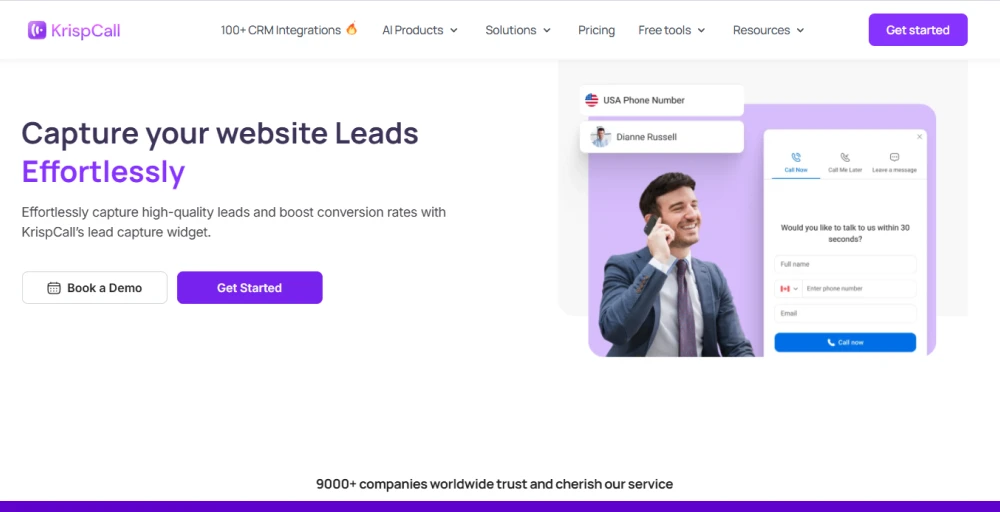
Eliminate manual lead sorting. KrispCall’s AI-powered lead qualification analyzes behavior, engagement history, and interaction patterns to instantly score and prioritize your highest-converting prospects.
No more wasting time on cold leads, your sales team focuses only on those most likely to close. This means faster response times, more personalized outreach, and a shorter sales cycle.
- Smarter lead scoring
- Seamless CRM integration
- AI voice agents & chat for faster engagement
- Scale without adding headcount
Ready to see how KrispCall can help? Book a demo with KrispCall today and start qualifying your leads faster and smarter.