


Most businesses are limiting their growth by not prioritizing customer sentiment aspects. Even without direct complaints, customers can express subtle dissatisfaction through reviews, support interactions, or social media comments. When these hints go unnoticed, it leads to increased churn and reduced customer loyalty.
This is where customer sentiment analysis comes in. It helps understand customers’ emotions, thoughts, and opinions, and makes the necessary improvements for a better experience and loyalty.
In this guide, we’ll answer what customer sentiment analysis is, the benefits it brings, and a few practical ways to measure and improve it for overall business growth.
✨ Key Takeaways
- Customer sentiment analysis involves analyzing customers’ emotions, thoughts, and impressions to enhance their experience.
- With sentiment insight, businesses can enhance customer experience, build loyalty, and increase reputation.
- There are various methods to measure sentiment, such as feedback or survey forms, sentiment analysis software, online reviews, and social media monitoring.
What is customer sentiment analysis?
Customer sentiment analysis is the thorough examination of customers’ thoughts, underlying emotions, and attitudes towards a business. Its main goal is to get the customer’s perspective about your business (whether it’s positive, negative, or neutral) and identify the areas for improvement.
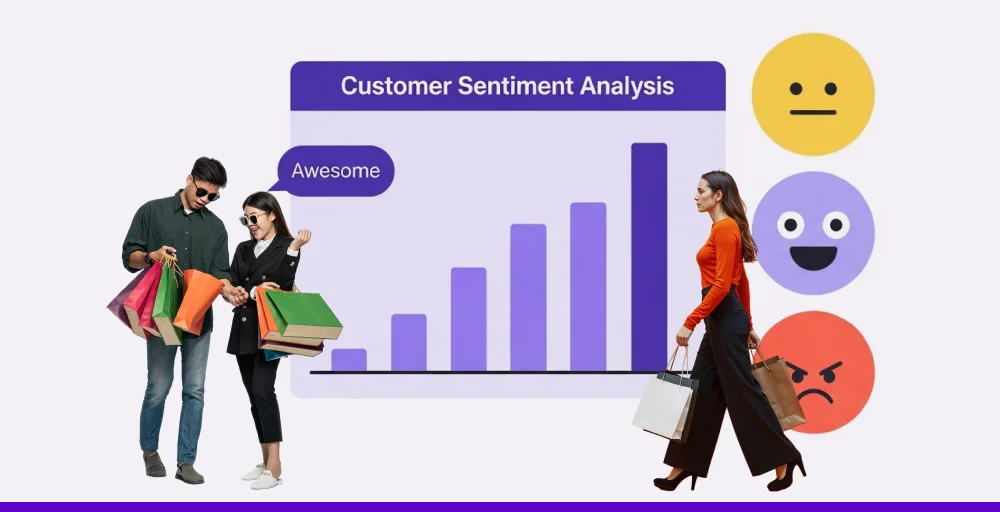
The sentiment analysis involves processing vast volumes of customer data from different sources, such as emails, chats, call transcripts, and reviews, to get insights. With it, businesses can make the necessary adjustments to enhance their service and drive overall growth.
Benefits of customer sentiment analysis
Understanding customer sentiments is essential to reducing customer churn and improving your offerings. It helps to increase customer satisfaction rate, build a positive reputation around your business, and drive steady revenue growth.
Here are some of the notable benefits of consumer sentiment analysis:
- Better customer experience: It is crucial to understand their preferences to improve customer satisfaction and deliver personalized service. Sentiment analysis helps to interpret their emotions, giving you insight into their likes and dislikes. This removes the guesswork, allowing your team to deliver highly effective services and improve customer experience.
- Improved offerings: When you gain an idea about what customers prefer or like, you can make minor upgrades and improvements to your offerings accordingly. These adjustments ensure that your business can fulfill the customer’s needs better than your competitors, giving you a slight competitive edge.
- Reduce churn and drive business growth: A sentiment analysis report not only reveals a customer’s likes but also their dislikes or pain points. It helps identify potential bottlenecks in your business. With this understanding, you can proactively address underlying issues to lower and promote growth.
- Increase revenue: When customers have a good experience and are satisfied with your business, they are more likely to stay loyal to your company over a longer period. This means sustained revenue for the business. Moreover, the study suggests that satisfied customers spend more than non-satisfied customers, thus driving revenue growth.
- Better reputation: Satisfied customers are not just a source of sustained revenue; they are also advocates for your brand. They help to spread positive word-of-mouth of your business and often recommend it to others. Ultimately, this helps to build a positive reputation and bring in new customers.
How to measure customer sentiment?
There are multiple ways to measure customers’ emotions, ranging from using customer sentiment analysis tools to feedback surveys, online reviews, and social media platforms. Many businesses often use a combination of multiple approaches to get a more accurate result.
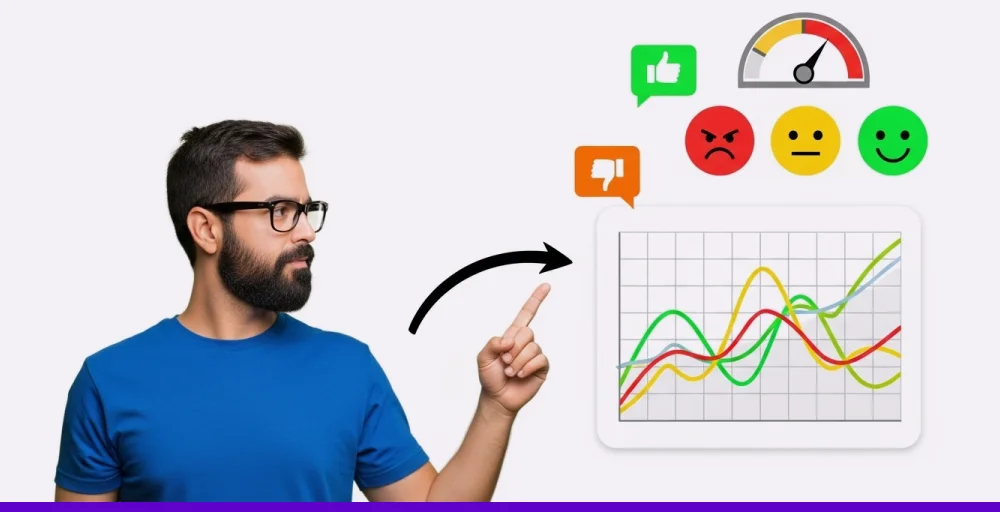
Let’s briefly go over some of the methods to measure consumer sentiment:
1. Via feedback forms and surveys
Voice of customer sentiment analysis is the most straightforward way to understand the customer’s sentiment. You can gather feedback from customers about your business or services. Then, analyze them using various call center metrics to determine the overall sentiment. It includes:
- Net Promoter Scores (NPS): It involves asking the customer how likely they will recommend your business to others (usually on a scale of 0 to 10). Then, using the score as a way to determine loyalty.
- Customer Satisfaction Score (CSAT): This indicates how satisfied a customer is with your business. Here, customers are asked to rate service, interaction, or product on a scale of 1 to 5. The higher the number, the more satisfied your customers are.
- Customer Effort Score (CES): It measures the effort required by the customer to resolve or complete a specific task. Unlike other customer metrics, a lower CES number means better usability and customer experience.
2. Using sentiment analysis software
Sentiment analysis tools typically use artificial intelligence (AI), machine learning models, and Natural Language Processing (NLP) to get valuable sentiment insights from customer data. These tools analyze customer data across different touchpoints and categorize them as positive, neutral, or negative sentiment.
Some tools can even go further to provide a more in-depth sentiment analysis with Fine-Grained Sentiment Analysis, Aspect-Based Sentiment Analysis (ABSA), emotion detection, and more.
3. Via social media
With social media monitoring, businesses can keep track of what customers are saying about their products and services and analyze their sentiment in real-time. You can rely on metrics such as likes and comments to gauge the customer’s reaction and emotion.
There are also third-party tools, such as Sprout Social or Brandwatch, that offer built-in sentiment tracking features. They categorize customer emotion based on the interaction, helping you identify the current trends and act on them.
4. Through online review sites
Another viable way to gain insight into sentiment is via customer-submitted reviews on various review platforms. Many sites, such as Google, G2, Yelp, and Trustpilot, allow customers to voice their honest thoughts and opinions on different subjects. By reading the reviews, you can get an idea of what customers are thinking about your business.
How to improve customer sentiments?
Customer sentiment includes their emotions, impressions, and opinions about your business. To improve it, companies must create an environment that addresses feedback and fosters a positive experience for customers.
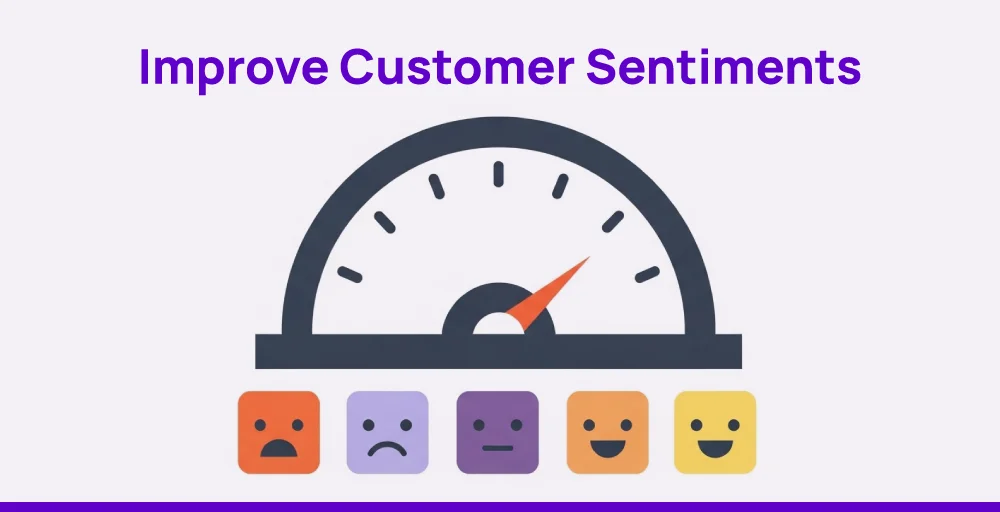
- Spot trends & prevent crises: Customer sentiment analysis helps to spot trends and identify potential issues. By addressing these issues early on, before they become a crisis, businesses can focus on creating positive experiences for the customers.
- Show empathy & respond quickly: By showing empathy when dealing with customers’ issues, you can show that they’re being heard and cared for. This, combined with prompt responses, helps to mitigate negative sentiments.
- Provide training to support teams: Customer service sentiment analysis insight can be used to train the support teams. It helps your agents understand what exactly the customer wants and deliver personalized service that improves their experience across all touchpoints.
- Improve products & services: The feedback from customer sentiment analysis can be used to enhance your products or services and tailor them according to their needs. This ensures that your customers are happy with your offering, leading to a better experience and loyalty.
Conclusion
Businesses that truly understand their customers are the ones that achieve lasting success. Customer sentiment analysis plays a key role in this by revealing the emotions, perceptions, and opinions customers hold about your brand. It provides a deeper view into how they feel and think, allowing for more informed and strategic decisions.
With these insights, teams can enhance the customer experience, deliver personalized services, refine products and services, and address potential issues before they escalate. This proactive approach helps reduce churn, strengthen loyalty, and drive long-term business growth.