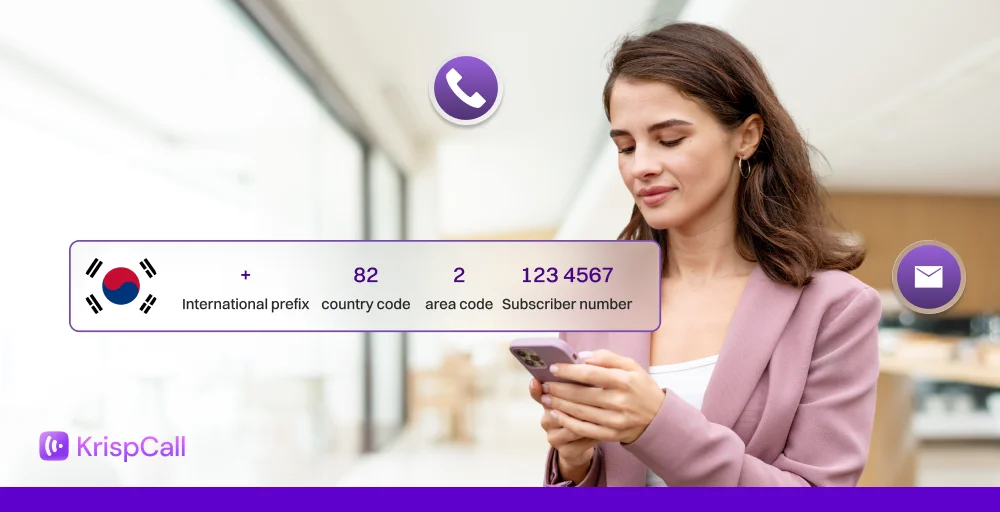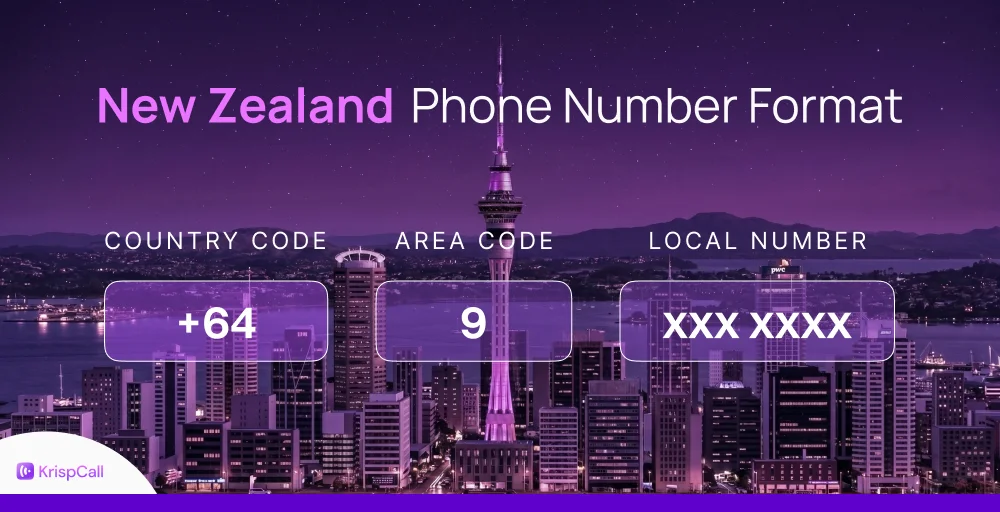



When dialing across countries or storing phone numbers in databases, using the international phone number format ensures that your calls connect correctly, no matter where your contact is. This globally recognized format starts with a plus sign (+) followed by the country code and the subscriber number, making it the standard for international communication.
One of the most widely adopted systems for this is the E.164 format, a global standard recommended by the ITU (International Telecommunication Union).
Whether you’re integrating contacts into a CRM, setting up automated dialers, or configuring phone numbers for messaging apps like WhatsApp, following the international format avoids common issues like call failures, formatting errors, or region-specific blocks.
In this guide, you’ll learn:
- What the international phone number format is
- How to write numbers correctly using E.164
Real-world examples from countries like the US, South Africa UK, India, and more - Common formatting mistakes and how to avoid them
- Tips for using this format in CRMs, VoIP platforms, and API integrations
Let’s start by breaking down what the international format looks like and why it’s crucial for modern communication systems.
✨ Key Takeaways
- An international phone number starts with a plus sign (+), followed by a 1–3 digit country code, then the area or network code, and the local subscriber number.
- In E.164 storage format, you remove spaces, brackets, and dashes. Example: +1 408 555 1234 is stored as +14085551234.
- Using this format ensures that your calls, SMS, and integrations work reliably across countries and providers.
What is the international phone number format?
The international phone number format is a standardized way of writing phone numbers so they can be dialed correctly from any country. It begins with a plus sign (+) followed by the country calling code, and then the subscriber number, excluding any local or national dialing prefixes (like leading zeros or trunk codes).
For example, an international phone number generally follows this format:
+ [Country Code] [Area Code/Network Code] [Subscriber Number]
US number:
Here, A represents the area code, and N represents the local number.
United States (US)
- Format: +1AAA NXX-XXXX | Example: +1 415 123 4567
UK number:
- Format:+44 AAA NXX XXXX | Example: +44 20 7946 0958
India number:
- Format: +91 AAA NNNN NNNN |Example: +91 98765 43210
Australia number:
- Format: +61 A XXXX XXXX | Example: +61 2 9374 4000
Canada number:
- Format: +1 AAA NXX XXXX | Example: +1 416 555 0199
France number:
- Format: +33 A XX XX XXXX | Example: +33 1 45 67 8901
Germany number:
- Germany Phone Number Format: +49 AA NNNNNNN | Example: +49 30 1234567
Brazil number:
- Format: +55 AA 9XXXX XXXX | Example: +55 11 91234 5678
Japan number:
- Format: +81 A XXXX XXXX | Example: +81 3 1234 5678
South Africa number:
- Format: +27 AA XXX XXXX | Example: +27 21 123 4567
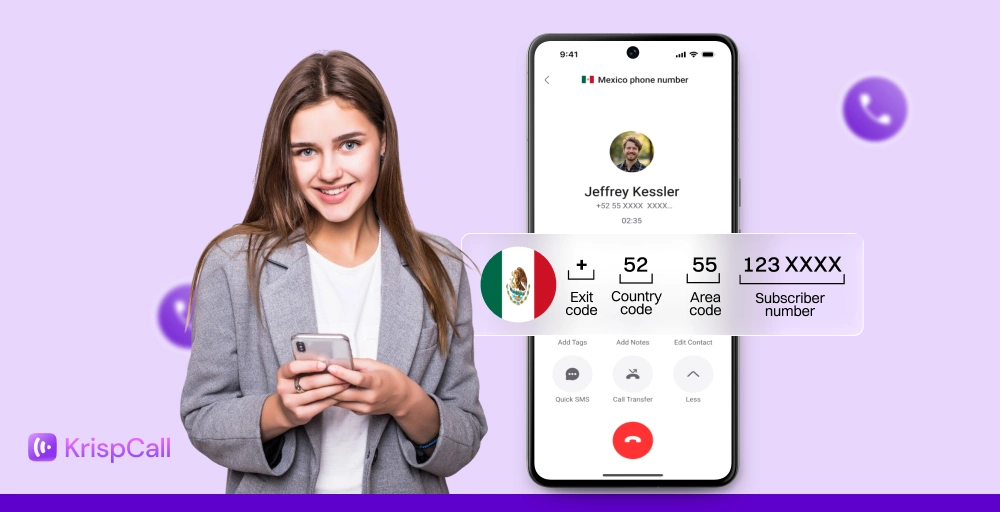
Mexico number:
- Format: +52 AA XXXX XXXX | Example: +52 55 1234 5678
Italy number:
- Format: +39 AA XXX XXXX | Example: +39 06 123 4567
China number:
- Format: +86 AA XXXX XXXX | Example: +86 10 1234 5678
Russia number:
- Format: +7 AAA XXX XXXX | Example: +7 495 123 4567
- Format: +34 AAA XX XX XX | Example: +34 912 34 56 78
United Arab Emirates (UAE) number:
- Format: +971 AA XXX XXXX | Example: +971 50 123 4567
Indonesia number:
- Format: +62 AA XXXX XXXX | Example: +62 21 1234 5678
As shown in the examples above:
- The + symbol indicates that the call is international.
- The country code is specific to each nation (for example, 1 for the US and 44 for the UK).
- The area or network code differs by region within a country.
- The subscriber number identifies the individual’s local phone line.
This format eliminates regional ambiguity and makes the number universally valid for:
- International calling
- Global messaging platforms (e.g., WhatsApp, iMessage)
- SMS number in the international standard format
- Cloud telephony and VoIP systems
- CRM and contact management databases
- Automated number validation tools
The global standard behind this format is the E.164 numbering plan, created by the International Telecommunication Union (ITU). It defines how international phone numbers should be structured, with a maximum of 15 digits, starting with the country code and excluding non-numeric characters (except “+”).
💡 Tip: Always remove any leading zeros or national trunk prefixes (like “0”) from the local number when converting it to international format. These are used only for domestic dialing and can cause errors when stored or dialed internationally.
Display format vs E.164 storage format
There are two ways you’ll usually see international numbers:
Human-friendly display format
- Uses spaces, hyphens, or brackets to make the number easier to read.
- Example: +1 (408) 555-1234 or +44 20 7946 0958.
E.164 storage format
- Used inside CRMs, phone systems, and messaging APIs.
- Contains only a leading + and digits (no spaces, dashes, or brackets).
- Example: +14085551234, +442079460958.
For your databases and tools, always store the E.164 version. For your UI, you can display the readable version.
Why is the correct international phone number format important?
Using the correct international phone number format is not just about “writing it nicely.” It directly affects how reliably your business can reach people around the world.
1. Successful call and SMS delivery
- Carriers and phone systems rely on standardized formats to route calls and messages correctly.
- A missing country code or an extra trunk prefix can cause dropped calls, failed SMS, or connections to the wrong destination.
2. Clean, consistent CRM data
- When numbers are stored in different formats, it becomes hard to search, filter, or deduplicate contacts.
- Using a single standard format (E.164) keeps phone numbers consistent across your CRM, helpdesk, and marketing tools.
3. Better reporting and automation
- Consistent formatting makes it easier to segment customers by country or region.
Workflows, sequences, and auto-dialers run more reliably when they don’t have to “guess” the right way to dial a number.
4. Compliance and professional image
- Many industries and regions have strict rules around customer communication and data handling.
- Properly formatted numbers help reduce errors, customer complaints, and compliance risk.
E.164 The format accepted internationally
The E.164 format is the international standard for telephone numbers. It ensures a globally unique and consistent numbering plan. This format is crucial for telecommunications to function effectively across borders, enabling direct dialing, seamless communication, and the use of international reverse phone verification services worldwide.
Suppose you are sending a letter to another country, you need to add the country code before the address so it reaches the right place. The E.164 phone number format does the same thing by putting the country code at the start of the phone number.
In E.164 format, every country has its own phone number roles and lengths that differ by location. For example:
- North America: Phone numbers have 10 digits, a 3-digit area code plus a 7-digit local number.
- Europe: Countries like France and Germany have different-length codes and often need the city code for making local calls.
- Asia: Many different formats, Japan has area codes of different lengths, while India uses standard area codes.
The E.164 format follows this structure: + [Country Code] [Local Area Code] [Subscriber Number].
For example, a U.S. phone number like (555) 456-7893 in E.164 format is written as +1555 456-7893. Similarly, a UK mobile number 07442 954275 becomes +447442954275, where the leading zero in local format is dropped.
Standardized way
The standardized way to write an international phone number format E 164-compliant number typically includes:
- Country code (CC): Identifies the country or region.
- National Destination Code (NDC): Often corresponds to an area code or mobile network prefix, or international call prefix.
- Subscriber number (SN): The individual’s unique local number.
By following this standardized structure, E.164 ensures interoperability between networks, enabling seamless international communication, whether it’s a voice call, SMS, or digital messaging service.
Advantages of standardizing phone numbers
The advantages of standardizing international format phone numbers are:
- The E.164 standardized format eliminates confusion over local dialing conventions, making numbers readable and usable worldwide for users.
- Mis-dials, wrong routing, and failed connections are significantly reduced when all numbers follow the same format.
- Regulatory compliance is crucial as many countries mandate adherence to E.164 for telecommunications operations, making it essential for legal functionality.
- Using standardized contact numbers enhances credibility and makes businesses more accessible to international clients and people worldwide.
- E.164-compliant numbers work with software solutions, VoIP services, CRM tools, and global communication platforms, ensuring efficient management of international contacts.
How to write different countries’ phone numbers in international format?
Writing a phone number in international format is simple once you understand the key components, but getting it wrong can lead to call failures or validation errors in CRMs, VoIP platforms, and messaging apps.
Here’s a step-by-step guide to formatting any phone number correctly using the international standard:
1. United States (US)
In the United States, a standard phone number includes a three-digit area code followed by a seven-digit local number.

To convert a U.S. phone number to an international format, follow these simple steps:
- Add the country code “1” at the beginning of the area code or local number.
- Remove any leading “0” if present.
General format of the US international phone number format: +1 XXX XXXX XXX.
For example, if you are dialing the Alaska number (907) 456 7890, then its international phone number format will be +1 907 456 7890, where,
- +1 stands as the US country code
- 907 is the area code of Alaska
- The remaining digits are the local phone numbers that you are calling.
But, US territories like Puerto Rico and Guam also use the country code “1” for their phone numbers. When making international calls, always include the correct area code and local number after the country code to reach the right location.
2. United Kingdom (UK)
In the United Kingdom, phone numbers usually start with the digit 0, followed by an area code and a local number.

To write a UK number in international format, you:
- The first “0” is removed from the area code.
- Country code “+44” is added at the beginning.
General format of the UK international phone number: +44 XX XXXX XXXX (for landlines) or +44 7XX XXXX XXXX (for mobile numbers starting with 07).
For example, if you are dialing the UK phone number 20 7946 0958, its international format will be: +44 20 7946 0958, where,
- +44 stands as the UK country code
- 20 is the area code for London.
- The remaining digits 7946 0958 form the local phone number.
The “+44” represents the UK, which should always be included when dialing a UK number from abroad to ensure the call is properly routed. This format applies to both landline and mobile UK numbers, where the leading zero is dropped in international dialing.
3. Canada
Canadian phone numbers have a similar structure to those in the United States. They consist of 10 digits: a three-digit area code followed by a seven-digit local number.

To convert a Canadian phone number into the international format, follow these simple steps:
- Simply add the country code “+1” before the area code and local number without changing anything else.
The general format of a Canadian international phone number is: +1 XXX XXX XXXX.
For example, if you are dialing a Toronto number (416) 555 7890, its international format will be:
+1 416 555 7890 where,
- +1 represents the Canadian country code
- 416 is the area code for Toronto
- 555 7890 is the local number
The “+1” indicates Canada (and also the U.S.), and you must include it when calling Canadian numbers from another country. This format ensures your call connects accurately within Canada.
4. Australia
In Australia, phone numbers usually begin with a 0, followed by a 2-digit area code and an 8-digit local number. When converting an Australian phone number to international format, the leading 0 is removed and replaced with the country code +61.
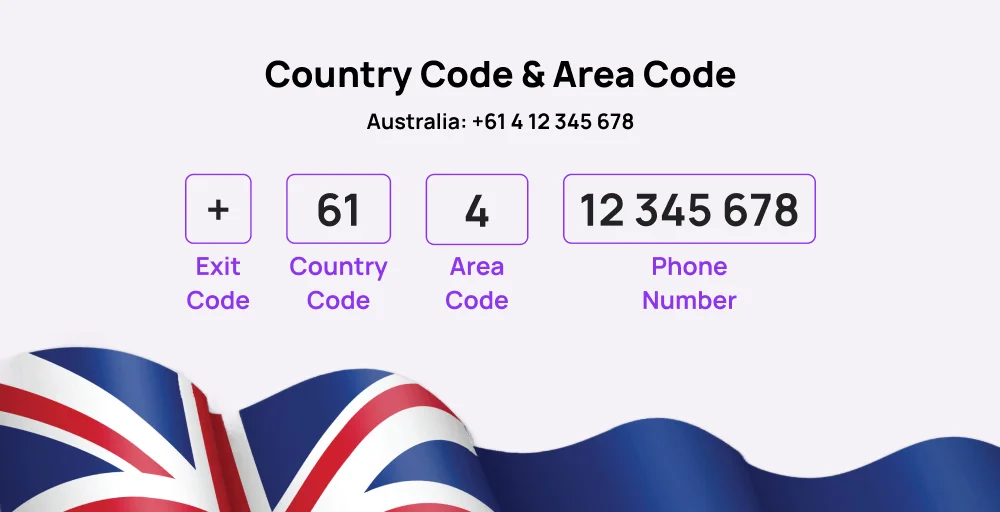
You can convert an Australian phone number into the international format by following these steps:
- Add the country code “61” at the beginning of the area code and local number.
The general format of the Australian international phone number is +61 X XXXX XXXX (for landlines) or +61 4XX XXX XXX (for mobile numbers starting with 04).
For example, if you are dialing the Australian mobile number 04 12 345 678, its international format will be: +61 4 12 345 678, where,
- +61 stands as the Australian country code
- 4 indicates it’s a mobile number (replacing the local “04”)
- 12 345 678 is the local phone number
When calling an Australian number from another country, always include the country code “61” followed by the area code (without the 0) and local number to ensure your call connects properly.
5. India
Indian phone numbers usually have 10 digits, which include a three-digit area code followed by a seven-digit local number. When writing Indian numbers in international format, the leading 0 is removed and replaced with the country code +91.

To write an Indian phone number in international format, follow these simple steps:
- Add the Indian country code: 91 in front of the area code and the local number, without changing the rest.
The general format of the Indian international phone number is +91 XX XXXXXXXX (for landlines) or +91 9XXXX XXXXX (for mobile numbers starting with 9, 8, 7, or 6).
For example: If you are dialing the Indian mobile number 09876 543210, its international format will be +91 9876 543210, where,
- +91 represents the Indian country code
- 9 indicates it’s a mobile number (replacing the local “09”)
- 876 543210 is the local phone number.
When calling from another country, always include “+91” before the number to ensure your call connects properly within India. This format applies to both landline and mobile numbers, with mobile numbers sometimes not having an area code but still needing the “+91” prefix.
6. Italy
Italian phone numbers have a 2-digit area code and an 8-digit local number. In Italy, phone numbers usually start with a 0 for landlines, while mobile numbers start with 3. When writing Italian numbers in international format, the leading 0 of landlines is retained, unlike in many other countries, and is followed by the country code +39.

To convert an Italian phone number into the international format, follow these simple steps:
- In the beginning of the area code or local number, add the country code “39”.
The correctly formatted Italian international phone number is +39 0XX XXXXXXX (for landlines) or +39 3XX XXXXXXX (for mobile numbers).
For example, if you are dialing the Rome landline number 06 12345678, its international format will be +39 06 12345678, where,
- +39 represents the Italian country code
- 06 is the area code for Rome
- 12345678 is the local phone number.
When writing Italian numbers in international format, the leading 0 of landlines is retained, unlike in many other countries, and is followed by the country code +39.
7. South Africa
In South Africa, phone numbers typically start with a 0, followed by an area code (for landlines) or a mobile prefix (for mobiles). When writing South African numbers in international format, the leading 0 is removed and replaced with the country code +27.

In South Africa, phone numbers typically start with a 0, followed by an area code (for landlines) or a mobile prefix (for mobiles). When writing South African numbers in international format, the leading 0 is removed and replaced with the country code +27.
Follow the steps below to convert a South African phone number into the international format:
- Add the South African country code: 27.
- Remove the leading 0 from the area code or mobile number.
The general format of the South African international phone number is +27 XX XXX XXXX (for landlines) and +27 7XX XXX XXXX (for mobile numbers starting with 07).
South Africa phone number example, if you are dialing the South African mobile number 079 123 4567, its international format will be +27 79 123 4567, where,
- +27 is the South African country code
- 79 is the mobile prefix (replacing the local “07”)
- 123 4567 is the local phone number
When calling a South African number from abroad, always include “+27” before the number without the first zero to ensure your call is correctly connected. This format applies to both landline and mobile numbers in South Africa and follows the international E.164 standard.
Country-specific rules and regulations
When making international calls or sending SMS, it’s important to remember that rules and regulations vary by country. Some nations impose restrictions on messaging services, require opt-in consent, or enforce limits on message length. Similarly, mobile operators may have specific protocols for international phone calls, including network routing preferences or blocked numbers.
Understanding these local rules ensures that your messages reach the intended recipient and comply with regulatory requirements. For businesses, this is particularly crucial to avoid legal issues and maintain a professional image, and to access the right audience worldwide.
Is the international phone number format the same for mobile numbers?
Yes, the international phone number format stays the same for mobile and landline phone numbers. It includes the country code, the area code (if applicable), and the same phone number structure. For instance, a mobile phone number in Japan with the country code “+81” follows the same international dialing format as a landline number.
Mobile numbers often don’t have separate area codes like traditional landline phones do; instead, the mobile number itself includes digits that direct the call within that country’s mobile network. However, using the country code is the crucial first step to ensure calls connect correctly, regardless of whether the destination is a mobile or landline number.
Conclusion
Understanding and using the correct international phone number format is key to effective global communication. Including the right country code, area code, and local number not only prevents dialing errors but also ensures your contacts can easily reach you from anywhere in the world.
The E.164 standardized format is essential for businesses to operate internationally, customer support centers, and individuals who frequently travel or communicate across countries. By following these simple rules, you demonstrate professionalism, improve accessibility, and make global connections seamless and reliable.