


A landline is a traditional telephone service that stays connected through physical wiring instead of wireless signals. When you make a call on a landline, your voice is converted into electrical signals that travel over cables connected to a large network called the Public Switched Telephone Network (PSTN). This setup delivers clear voice calls and stable connectivity in homes or offices.
So, what is a landline number? A landline number is the unique telephone number assigned to a fixed-line phone. It is tied to a specific location, unlike mobile numbers that move with a device. This number routes calls through the wired network so others can reach you.
Despite the rise of mobile phones, landlines remain relevant for businesses. Studies show about 22% of consumers in 17 countries still use landlines, and in the United States, roughly one in four households maintains a connection — highlighting their continued importance for reliable communication.
In this guide, you’ll learn the meaning of landline phone numbers and how they work, why some people and businesses still keep them, and how they compare with mobile and internet-based calling options.
How do landline numbers work?
Landline numbers function by linking a phone call to a fixed network and a fixed location. Here’s the flow in plain terms:
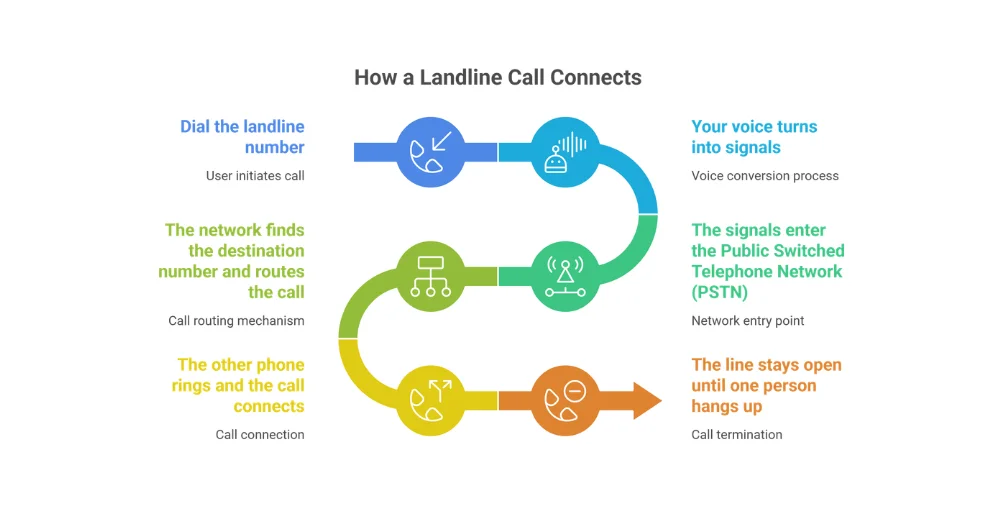
1) Voice transmission (voice → signals)
When you speak into a landline phone, your voice turns into electrical signals. These signals move through physical wires, such as copper lines or fiber optic cables. This wired path keeps the voice clear and stable, even when mobile signals are weak.
2) The call travels through the PSTN
Your call enters the Public Switched Telephone Network (PSTN). This is the main phone network that connects landlines across cities and countries. Inside the PSTN, switches and network routes guide your call to the correct area.
3) The number routes the call to the right place
The area code and the rest of the digits tell the network where the phone is located. The PSTN sends the call to the local exchange near the receiver’s address, then down the final wires to their phone.
4) Direct and dependable connection
Landlines use a dedicated circuit during your call. This keeps the line steady from start to end. Since the call runs on physical lines, landlines can keep working during power cuts (with a basic wired phone) and don’t rely on mobile towers or internet quality.
5) Useful in emergencies and outages
During service outages or natural events, landlines may still work when mobile networks or internet calling fail. This gives a direct line to emergency services, which is why some homes and many businesses keep a landline.
Different types of landline numbers in 2026
Landline numbers may look simple, but they come in different forms based on where the number belongs, how people reach you, and how businesses use the number for calls and support. These options shape how customers contact homes and companies.
Here is the table to understand more clearly about the types of landline phone numbers and their usage
| Type of Landline Number | Description | Example |
| Geographical area code numbers | Linked to a specific region via area codes, routed through the PSTN. Shows local presence and trust. | 212-555-1234 (New York) |
| Local landline numbers | Assigned to a town or city; may not always highlight the area code. | 408-555-6789 (California) |
| Toll-Free numbers | Callers can reach the business without paying; business pays for the call. Common codes: 800, 888, 877, 855, 866. | 1-800-123-4567 |
| Vanity numbers | Customizable numbers that spell words, names, or acronyms for branding. Easy to remember and ideal for marketing. | 1-800-PAINTING (painting service) |
| Virtual landline numbers | Appear as regular landlines but not tied to physical lines; calls can ring on multiple devices using VoIP. | 415-555-4321 (routes to mobile & desk phone) |
| VoIP landline numbers | Digital version of landlines; uses internet instead of copper wires but maintains the standard landline format. | +1-408-555-8765 (digital IP line) |
1. Geographical area code numbers (traditional landlines)
These landline numbers link to a real region using an area code. The area code shows where the phone line is registered, and routes calls through the Public Switched Telephone Network (PSTN).
People and businesses still use it because it shows a local presence and builds trust for nearby callers. But it also has limitations; it cannot easily move the number to another city.
2. Local landline numbers
Local landline numbers are assigned to a specific town or city, but may not always include a prominently recognised area code. They are the most common type of landline and often preferred for personal or residential use.
3. Toll-Free numbers
Toll-free numbers allow callers to contact a business without paying for the call. These numbers often start with codes like 800, 888, 877, 855 or 866. The business pays for the incoming call instead of the caller.
4. Vanity numbers
Vanity numbers are customised landline numbers that spell a word, name, or acronym using letters on a phone keypad. They are designed to be easy to remember and promote the brand. It is easy to remember, strengthens brand recognition, and is ideal for ads and promotions
Examples:
- 1-800-PAINTING: a painting service
- 1-800-CLEANER: a cleaning service
5. Virtual landline numbers
Virtual numbers look like normal landline numbers but are not tied to a physical phone line. Instead, calls can ring on multiple devices, such as mobile phones, desk phones, or softphone apps, using the internet. These numbers often rely on Voice over Internet Protocol (VoIP) technology for routing calls.
6. VoIP landline numbers (digital landlines)
VoIP landline numbers are digital versions of traditional landlines. They use internet connections instead of copper wires while keeping the number format of a landline. Calls travel over IP networks but can still connect with regular landlines or mobile phones.
Both a virtual landline number and a VoIP landline number look similar, but their functions differ.
A virtual landline number isn’t tied to a physical line and can ring on multiple devices anywhere, while a VoIP landline number is a digital replacement of a traditional fixed line that runs over the internet, often used in offices or call centres with advanced features.
Virtual numbers are more flexible for remote use, whereas VoIP numbers are designed for structured office setups.
What are the pros and cons of landline phone numbers?
Landline phone numbers may seem outdated compared to mobile and internet calling, but they still offer some advantages and drawbacks for businesses. They provide reliable communication and a professional image, but their use is declining.
The commercial landline phone market was valued at $3.165 billion in 2025 and is expected to decline at a -2.3% CAGR through 2033 as more businesses switch to mobile and VoIP solutions.
Pros of landline phone numbers
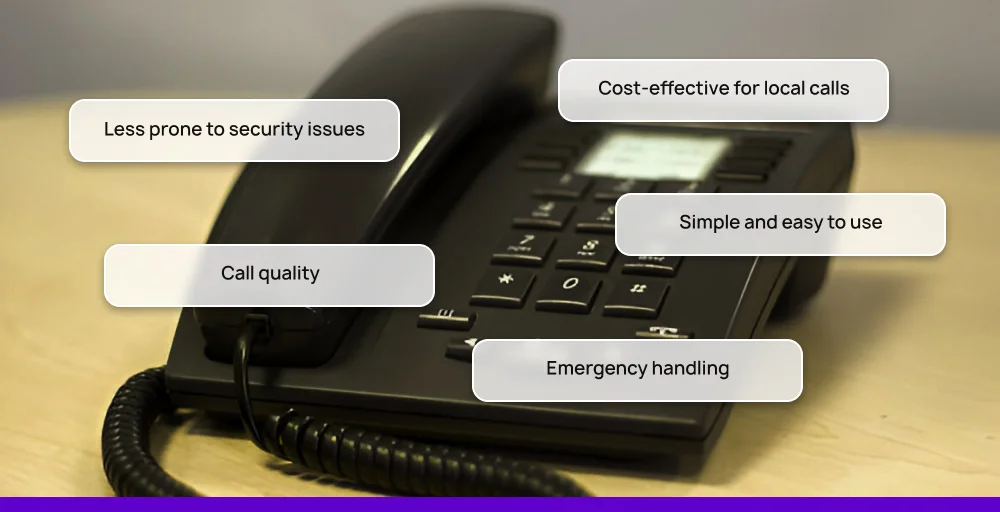
1) Stable call quality
Landline calls pass through the cables and physical copper wires, which makes the sound quality clearer and steadier without drops caused by weak mobile signal or busy towers. Homes and offices get consistent call quality for long conversations and daily use.
2) Works during power cuts
Traditional copper landlines have their own power from the phone line. They can keep working when the internet is down or during power cuts with a basic corded phone. This helps call centres, shops, and homes stay reachable during blackouts.
3) Helpful for emergency calls
A landline number is registered to a fixed address, which helps emergency services identify your location right away. This reduces delays when calling local emergency numbers. For families and offices, this adds a layer of safety during urgent situations.
Cons of landline phone numbers
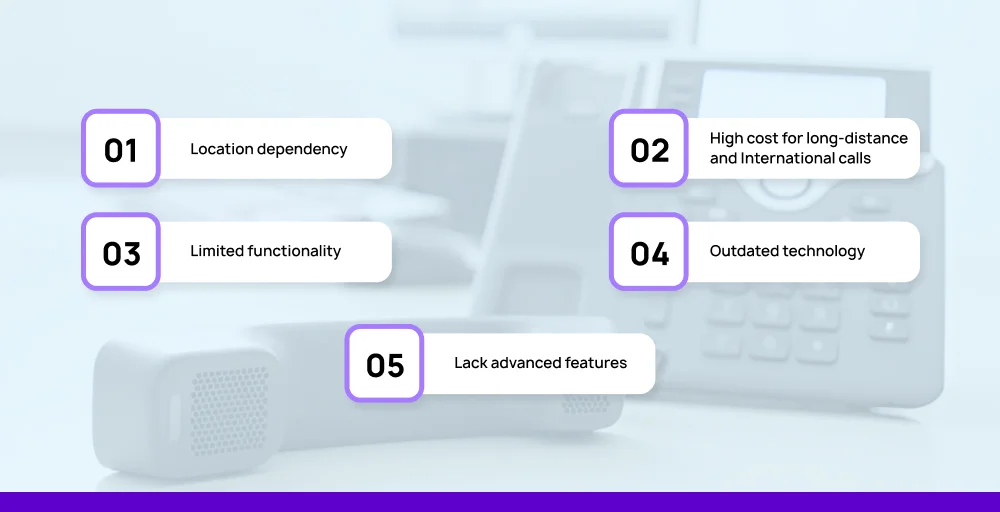
1) Tied to one location: A landline number stays tied to a phone jack at a single address. Even cordless phones only work within the home or office range. This limits use for remote teams or people who move often.
2) Fewer modern features: Landlines focus on basic voice calls only. They don’t support shared numbers, CRM links, desktop apps, or business texting. Teams that rely on software tools often move to digital calling built on Voice over Internet Protocol (VoIP).
3) Higher cost for long-distance calls: Long-distance calls on landlines are usually more expensive, especially when calling other cities or countries. For teams that make frequent long-distance calls, costs can add up quickly. Internet-based calling plans are often more affordable for this purpose.
How are landline numbers formatted?
Landline numbers use a standard structure that shows the country, area, and local number. This format helps phone networks route calls to the right place.
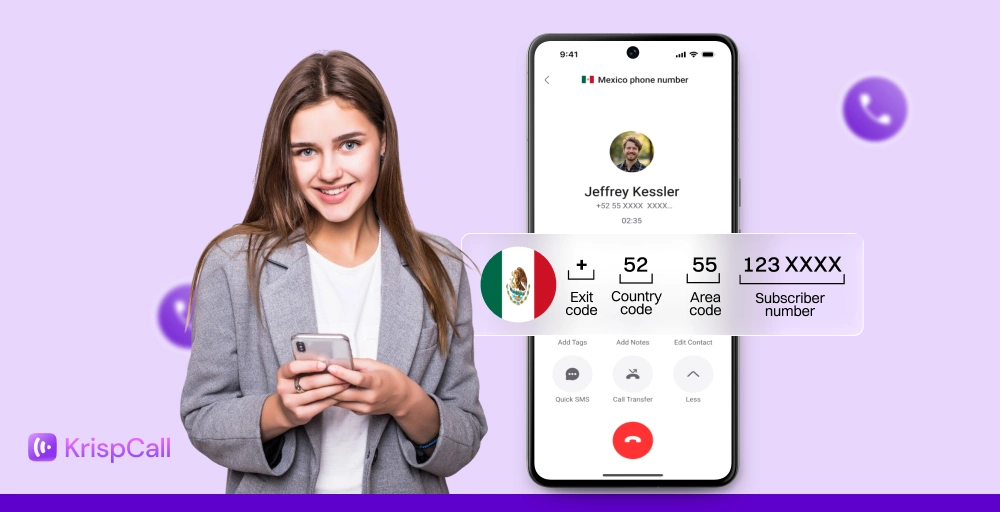
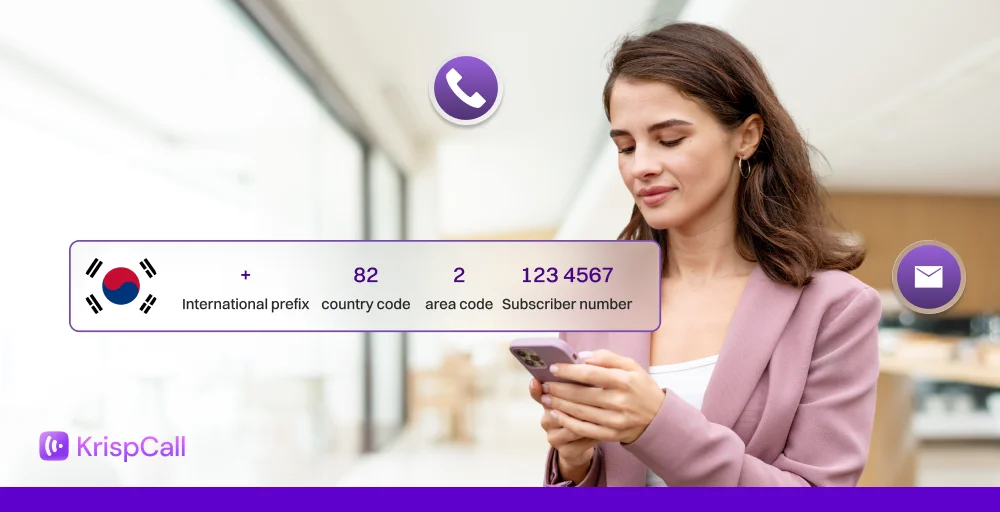
1. Country code
Each country has its own country code to identify it in international calls. For example, the United States uses +1, the United Kingdom uses +44, and India uses +91. When calling from another country, the country code sends your call to the right nation.
2. Area code
An area code points to a specific city or region inside a country. In the United States, 212 is used for Manhattan, while the 408 area code covers San Jose. Area codes help businesses and people show a local presence in a certain location.
3. Local phone number
This is the unique number for a home or office within the selected area. The length of this part changes by country and region. For example, a landline in Mumbai may look like 022-12345678, while a number in London can look like 020-12345678.
4. E.164 Format (international standard)
For global calling and systems, phone numbers follow the E.164 format set by the International Telecommunication Union. This format uses + country code + area code + local number, with no spaces or dashes, so systems across countries can read the number correctly. A UK number in E.164 format would appear as +442071838750, ready for calls from anywhere in the world.
5. National dialing format
Different countries have their own rules for dialing numbers locally or within the country. Example: In the US, calls within the same area code may only need the 7-digit number. In India, however, you must dial a ‘0’ before the area code for calls outside your region (e.g., 011-12345678).
How do VoIP phones differ from landline phones?
Understanding the differences between VoIP phones and traditional landlines helps businesses choose the right system. Here is the comparison table:
| Feature | Landline Phones | VoIP Phones |
| Connection | Uses copper/fiber cables via PSTN | Uses internet (VoIP) to transmit voice |
| Mobility | Fixed location; tied to phone jack | Works anywhere on desktop, laptop, or mobile app |
| Features & Integrations | Basic calling, limited extras | CRM integration, voicemail-to-email, call forwarding, conferencing, video calls, messaging |
| Cost | Monthly line rental + per-minute charges, higher for long-distance | Lower rates, especially for international calls |
| Dependability | Reliable during power or network outages | Requires stable internet; may need backups for uninterrupted service |
1. Connection type
Traditional landline phones rely on physical copper or fiber cables connected to the Public Switched Telephone Network (PSTN). VoIP phones, on the other hand, use the Voice over Internet Protocol (VoIP) to send voice signals over the internet. This makes VoIP flexible and allows calls to be made from any device connected to the internet.
2. Mobility and flexibility
Landline numbers are tied to a fixed location, which means you must be near the phone jack to receive or make calls. VoIP phones can be used anywhere, on a laptop, desktop, or mobile app, without changing your number. This is ideal for remote teams, home offices, and businesses with multiple locations.
3. Features and integrations
Landlines offer basic calling with a few extra features. VoIP phones can integrate with Customer Relationship Management (CRM) software, provide voicemail-to-email, call forwarding, video calls, conferencing, and messaging, all from the same system.
4. Cost structure
Landlines often have monthly line rental and per-minute charges, especially for long-distance calls. VoIP services usually charge lower rates, particularly for international calls, because they route voice over the internet rather than expensive physical lines.
5. Dependability
Landlines are highly reliable during power outages and network failures because they draw power from the phone line itself. VoIP depends on a stable internet connection and backup power, so it may stop working if the internet is down or electricity fails, unless paired with alternative solutions like mobile routing.
VoIP vs. landline: Which is right for you in 2026?
Choosing between a VoIP phone and a landline phone depends on how you make calls, where you work, and what features you need. Both have good points, but they serve different needs in 2026.
| Feature | Landline Phone Number | VoIP Phone System |
| Technology | Uses copper wires over PSTN (POTS) | Uses the internet to transmit voice calls |
| Setup | Needs a phone jack and wiring | Works on any internet-connected device |
| Mobility | Fixed to one location | Can be used anywhere with internet access |
| Call Quality | Very stable and reliable | Good (depends on internet connection) |
| Cost | Usually more expensive (hardware + service) | More affordable, lower call rates |
| Features | Basic calling | Advanced tools: call recording, shared numbers, CRM integration |
| Scalability | Hard to scale quickly | Easily add or remove users anytime |
| Emergency Access (911) | Better location tracking for emergencies | May require setup to share your location |
| Best for | Traditional homes, rural areas, and emergency backup | Businesses, remote teams, and tech-savvy users |
1. Team collaboration
VoIP phones are built for teamwork. Multiple employees can share one number, route calls to the right person, and even chat internally while on a call. Features like call tagging, desktop apps, and unified inboxes let teams handle customer issues together without relying on meetings or long call chains.
Landlines, by contrast, are tied to a single handset. Each call goes to one person, and coordinating with colleagues requires extra steps, like calling back or passing notes, which can slow down response times and reduce efficiency.
2. Messaging and customer interaction
Text messaging has become a vital communication channel for businesses. With VoIP, teams can send SMS and MMS messages, schedule texts, use pre-written templates, and share media files. This allows businesses to respond quickly, even outside office hours, and maintain consistent customer engagement.
Landlines do not support messaging features, limiting communication to voice calls. Companies that want to offer multi-channel support or build stronger customer relationships will find VoIP far more flexible.
3. Automation and productivity
VoIP systems offer automation tools that save time and reduce manual work. For example, calls can be recorded, transcribed, and logged directly into a Customer Relationship Management (CRM) software, while AI features can summarize key details, highlight trends, and categorize calls automatically.
Landlines have no built-in automation, meaning teams must manually track calls, take notes, and update records, a process that can be time-consuming and prone to errors.
4. Cost and scalability
Landlines generally have fixed monthly fees and can be expensive for long-distance or international calls. Expanding a traditional landline system for a growing business may also require the physical installation of additional lines.
VoIP systems usually have lower call costs, especially for international calls, and scale easily. Adding new users is simple and doesn’t require extra physical wiring, making it ideal for remote teams or expanding offices.
If you’re thinking about making the switch, you can get rid of your landline but keep your number without losing your existing contacts or business identity.
5. Reliability and security
Landlines provide extremely reliable call quality because they use the Public Switched Telephone Network (PSTN) and often work during power outages. This makes them a dependable choice for businesses that must stay reachable at all times.
VoIP depends on internet connectivity, so reliability can vary based on network speed and stability. However, many VoIP providers include backup options and encryption to ensure security and uptime.
The future of landline phone numbers
Landline phone numbers are declining but remain relevant, especially for businesses and areas with unreliable mobile coverage. In the United States, about 1 in 5 households still uses a landline in 2026, mainly for reliable voice quality and emergency access, even though 78% of adults live in wireless-only homes.
Globally, providers are modernizing networks, shifting copper lines to digital or hybrid systems, allowing businesses to combine traditional landlines with VoIP for both dependability and flexibility.
KrispCall as best VoIP alternative to landlines
KrispCall offers a flexible VoIP phone system that works over the internet, unlike traditional landlines tied to physical locations. It supports calls, SMS, MMS, voicemail, call recording, and team collaboration from mobile apps, desktop, or web.
With local, toll-free, and international numbers, CRM integrations, and easy scalability, KrispCall helps businesses replace landlines while improving productivity and communication efficiency.