


People are more likely than ever to share their positive or negative experiences online, in addition to telling friends and family.
As a result, online customer reviews have become a powerful influence on consumer behavior. In fact, about 95% of consumers regularly read reviews before making a purchase or hiring a company. [Source]
Since your business can’t avoid online ratings, it’s smarter to embrace them. You can make positive customer reviews a key part of your customer experience strategy by learning how to ask for and earn great feedback.
This guide will explain the importance of customer reviews, highlight popular review platforms, show you how to build a customer review strategy, and teach you how to get customer reviews.
✨ Key Takeaways
- Customer reviews are information, ideas, positive impressions, and complaints about products or services.
- To get an honest customer review, create a review strategy, use multiple channels to request reviews, provide incentives to customers, and many more.
- Some of the common customer review platforms include G2, Capterra, Amazon Customer Reviews, Facebook Ratings, and Software Advice.
What are customer reviews?
Customer reviews are the customers’ opinions that they write about a company or product so that others can read them. Generally, these reviews are published on websites, review-specific or social sites, e-commerce platforms, or YouTube videos.

These reviews can be both positive and negative, helping buyers make informed decisions and enabling businesses to manage their reputations effectively. They also offer insights into product performance, service quality, and customer satisfaction.
Different types of customer reviews
There are different types of customer reviews available, and they are:
1. Aggregators: Aggregators are those sites that collect the reviews of a single product or service from different customers and collect all of them in one place. Some of the most popular aggregate review sites known for SaaS or B2B business are G2, Capterra, and TrustPilot.
2. Ratings: Customer ratings are one of the most common types of customer reviews. Typically, it ranges from one to five-star ratings that often include a brief explanation of a product or service.
3. Videos: Video reviews are usually done by or with happy customers. Customers or influencers shoot such review videos on how they use that product or service and share their experience while using it.
4. Testimonials: Testimonials are those reviews that are usually shown on business websites, their social media channels, or in brand marketing. They can be either multimedia images, videos, or written text. Usually, these are positive reviews, which are further useful in a customer case study.
Why are customer reviews important for businesses?
Nowadays, people are usually influenced by the people around them, whether they are their family, friends, influencers, or industry experts. A study shows that reviews influence 93% of consumers’ purchasing decisions.
Here are a few reasons why customer reviews are important for businesses.
I. They help establish trust and enhance credibility
Customer reviews are way more than just words; they are powerful solutions that act as social proof for businesses. When a buyer gives authentic customer feedback to a business, it helps to get more leads as their review shows the brand’s authenticity and credibility for making a purchase.
II. They shape buying choices and accelerate the sales process
Consumers nowadays heavily rely on reviews when deciding whether to purchase a product or service. For this, positive reviews play a significant role, as they shorten the decision-making process and reassure buyers that they are making the right choice.
This enhances the user’s purchasing options and streamlines the sales process, converting prospects into customers.
III. They boost conversion rates and drive higher revenue
Customer reviews not only influence the choice for leads but also increase conversion rates and enhance revenue. Suppose a product or service has a higher number of positive reviews, then there are high chances of it attracting more buyers, which leads to high sales and revenue.
IV. They help enhance social proof and build customer trust
In present times, people believe in their family, friends, or influencers more than advertisements.
As they share their firsthand shopping experiences and reviews, it creates trust and loyalty among existing and potential customers. It will encourage customers to make repeat purchases and foster long-term advocacy.
V. They help improve search engine rankings and SEO
Search engines prioritize businesses with more reviews, as it is perceived as having a better ranking and frequent reviews. This will lead to attracting more organic traffic and increasing the online visibility of your business. It will ensure that an increasing number of customers discover the brand more easily.
VI. They help gather genuine feedback to refine products and services
Collecting customer reviews provides insights for businesses to know about what customers actually like and what needs to improve. This will enable enterprises to refine their products and services, ultimately enhancing the customer experience. It leads to showing customers that the business values their opinions as well.
VII. They help reduce customer acquisition costs
Customer reviews reduce the advertising campaigns’ expenses. The positive experiences of customers and the positive reviews they share serve as free marketing, which reduces the cost of acquiring new customers. It converts reviews into a cost-effective way to grow a loyal customer base.
How to get honest customer reviews?
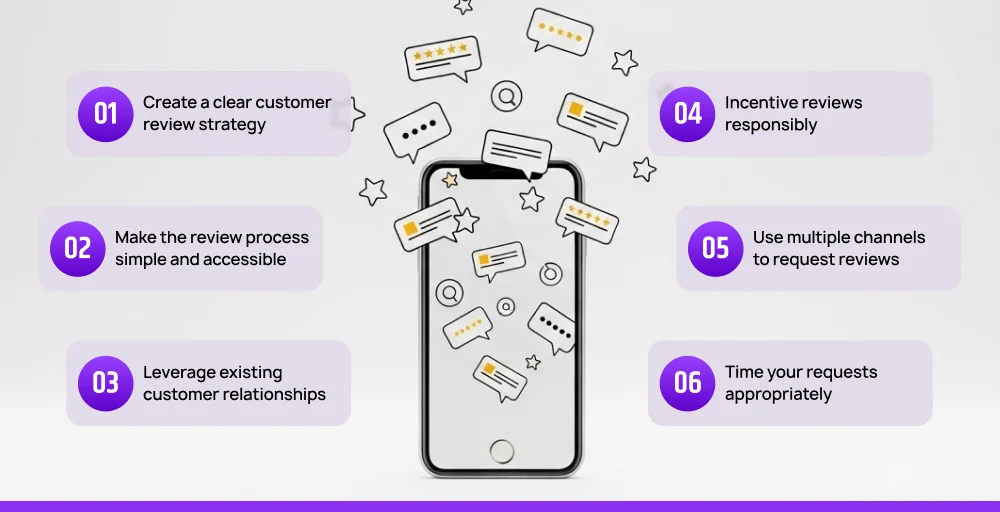
Getting customer reviews is the main priority of business owners and marketing teams. Here are some common ways to get honest customer reviews:
1. Create a clear customer review strategy
Start with a clear view of the customer journey and make a strategy based on it, like when you will ask for your customer’s review, and what messages you will use to ask.
Apart from these, consider which review sites you want to drive traffic to and how you will ask for reviews via business texting or email.
2. Make the review process simple and accessible
Next, try to make the review management process easy, simple, and accessible for customers.
Try to use one-click rating options, direct links, or QR codes so that they can give a review and remove unnecessary steps. If they face fewer issues, they will share more genuine and honest feedback. You can also include a vCard QR code generator so customers can instantly save your support contact details and quickly reach out or share feedback with just one tap.
3. Leverage existing customer relationships
One of the most effective ways to get positive customer reviews is to have happy and loyal customers.
So, keep in touch with your loyal customers or existing ones, reach out personally to them, and let them know that their voice matters to your business. This personal touch strengthens relationships while increasing the likelihood of authentic reviews.
4. Incentive reviews responsibly
Sometimes offering small incentives, rewards, or tokens of appreciation like loyalty points, discount vouchers also motivates customers to leave a review for your business.
But while providing such incentives, don’t be biased with reviews; be compliant with the policies of your review site. Providing fair and meaningful rewards will encourage honest participation.
5. Use multiple channels to request reviews
No need to limit your review request to just one platform; try to use multiple channels. Some of the effective ways are live, email, social media, in-app notifications, and many more.
Using multiple channels will diversify your business reach and increase the likelihood of receiving more reviews from diverse customer segments.
6. Time your requests appropriately
Last but not least, always ask customers for their feedback, especially right after their successful purchase, delivery, or positive interaction. But try to avoid asking when their issues have not been resolved or right after the inquiry.
Asking at the right time will ensure that customers share their experiences more freely, as they are willing to share them themselves.


How to use and manage customer reviews effectively?
Using and managing customer reviews effectively can help build trust, improve your reputation, and provide insights for growth. Here are some strategies:
1. Display reviews on your website and product pages
Display reviews of your website and product pages where customers make purchasing decisions, which will boost the credibility of your business.
There is a high chance that customers will likely trust the opinions of other customers than the marketing claims of companies.
2. Monitor reviews across multiple platforms
For the reputation management of your business, it is necessary to keep monitoring and tracking reviews across all of the platforms that are listed on them.
You can use specialized software or create a simple spreadsheet to monitor reviews on various platforms such as Google, Yelp, Amazon, and social media sites.
3. Respond to both positive and negative reviews
Always reply to reviews, whether they are good or bad. This shows customers that you value their feedback. Like if a customer leaves a positive review, simply reply “Thank you for your Kind words! We are so glad you like our product.”
This encourages customers to make repeat purchases and leaves them with a positive impression. However, when responding to a negative customer review, be attentive, show empathy, and offer a solution.
4. Act on feedback to improve the customer experience
Reviews are the outcomes of your business strategies and your marketing plans. So, whenever a customer leaves a review on your site, analyze it, find patterns, and try to identify the areas that need to be improved in your product or service.
Like, if multiple customers have left review text like “long wait times,” then you need to implement a proper ordering system or hire more staff to reduce waiting time.
5. Automate review management for efficiency
Managing a large number of reviews can be overwhelming for businesses. Automating parts of the process can save time and ensure consistency.
For example, businesses can set up automatic alerts for new reviews, use tools to analyze the sentiment of the reviews, or send follow-up emails to customers after a purchase to encourage them to leave a review.
Top platforms for customer reviews
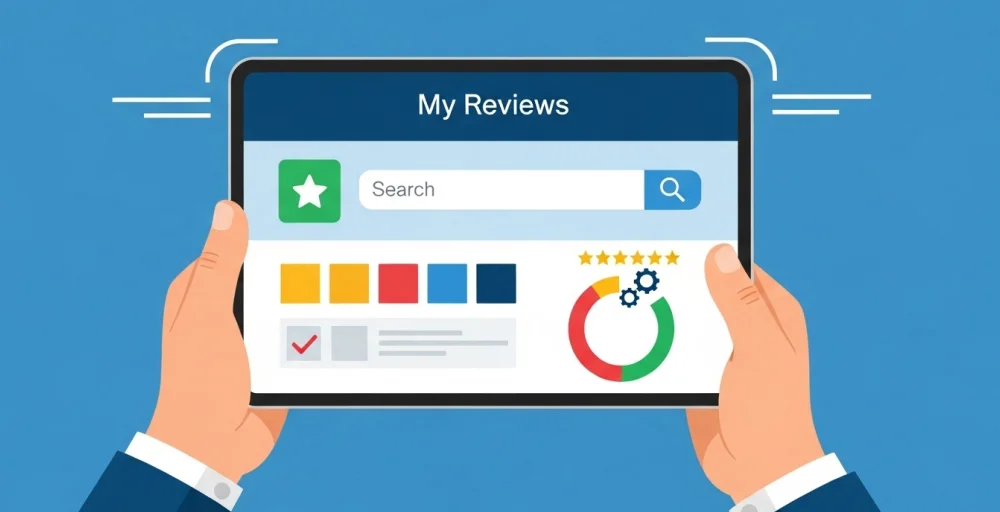
To feature reviews on your website, make profiles on popular customer review platforms that help you expand your business reach, boost visibility, and enhance credibility. These review sites will focus on your targeted audience and industry.
Here are some of the most popular customer review platforms:
- G2: G2 is one of the most popular customer review platforms in the software industry. This draws 5 million visitors monthly and is ideal for comparing competing business software solutions.
- Facebook ratings: One of the world’s largest social networks, Facebook, can work as a review platform for the entire industry. With 2.9 billion visitors, Facebook allows businesses to display ratings directly on their business profiles.
- Amazon customer reviews: Amazon customer reviews is a customer review platform especially for e-commerce products. It has approximately 3.8 billion monthly visitors, where most customers find, research, and often read reviews here if they have purchased from anywhere else.
- AppExchange: If you want to search for a review site for an enterprise software solution, consider AppExchange. It is developed by Salesforce, which attracts 801,800 visitors monthly. Here, verified user reviews carry significant weight for B2B buyers.
- Software advice: Online platforms for reviews to help customers make better decisions on purchasing software, and there comes software advice. This platform attracts 1.2 million monthly visitors, offering detailed reviews and product comparisons.
- Better Business Bureau (BBB): Covering all industries, this consumer advocacy group gives information and recommendations about member companies, with 13.2 million visitors. Any business can have a profile, and customers use the platform to research small businesses they’re considering.
- Zomato: For food and beverage, check Zomato to search and discover services focusing on cafes, hotels, deliveries, and food. It has 14.6 million visitors, which means it is regularly used by diners.
- Google Maps & Search: Google Reviews is a service from the most popular search engine that helps businesses improve their visibility. They provide complete contact information and user ratings. With 89.3 billion visitors each month, Google Reviews are crucial for local businesses and their SEO efforts.
- Capterra: Capterra is considered one of the best sites for finding verified software reviews. It has 3.5 million visitors and 675,000 verified user reviews, offering verified professional and customer reviews for software solutions.
- Consumer reports: For getting reviews for B2C and eCommerce sites, try using consumer reports. It is a non-profit organization that also acts as a magazine and predates the internet. This provides unbiased product tests and comprehensive reviews of various consumer goods.
- Home Advisor: An online platform that provides reviews of home services and products for residential customers. With this, you can find home handymen, contractors, and landscapers.
- Yelp: Yelp is a platform for searching and rating local services, relying on crowd-sourced reviews. This encompasses various restaurants, as well as plumbing and electrical services, and healthcare providers. The emphasis of the reviews is primarily on the businesses rather than specific products.
- Edmunds: Edmunds is an online rating and review site that mainly focuses on automobiles. This is primarily researched by automotive buyers seeking car reviews, safety ratings, and pricing information.
- TripAdvisor: Travel and tourism customer review platform is TripAdvisor, which provides users with reviews and recommendations for their travel experience.
Final thought
Generating, managing, and using customer reviews is a powerful way to grow your business. When you use the words of satisfied customers to attract new ones, it directly impacts your bottom line.
Positive reviews can increase leads, accelerate buying decisions, boost brand awareness, and drive more revenue. They are a vital part of your business’s reputation.
Additionally, tools can assist you in managing customer reviews, which can be quite useful. Many of these tools allow you to create profiles on various platforms and consolidate all your reviews into a single, easy-to-read dashboard.
They may also utilize AI to help you analyze customer sentiment, send automated responses, and track customer satisfaction scores across multiple sites.
And if you want to deliver an exceptional customer experience, why not consider using KrispCall to interact with your customers?
With KrispCall, you get all the needed tools and features that your business wants. Book a personalized tour today.