

Did you know that 90% of text messages are read within 3 minutes of being received? (Source) That’s incredible engagement, but there’s a catch. Send too many messages, and your customers will hit “unsubscribe” faster than you can say “limited time offer.”
Finding the right SMS frequency is like walking a tightrope. Send too few texts, and you miss opportunities. Send too many, and you annoy your audience. The challenge? Every business is different, and every customer has their own preferences.
In this guide, you’ll learn exactly how to find your perfect SMS frequency. We’ll cover industry benchmarks, common mistakes to avoid, and practical strategies to keep your customers engaged without overwhelming them.
✨ Key Takeaways
- SMS frequency directly impacts engagement and opt-out rates, making it essential to find the right balance between too few and too many messages.
- Most businesses perform best with 2–6 SMS messages per month, though ideal message frequency varies by industry, audience, and campaign purpose.
- SMS frequency mistakes that affect engagement are over-messaging, ignoring engagement signals, or using a one-size-fits-all approach.
- To test your SMS frequency, perform A/B testing, establish a baseline, track key metrics, and provide feedback.
What is SMS frequency?
SMS frequency is the frequency with which you send text messages to your subscribers or customers. It is important in business SMS marketing because it directly affects whether people stay subscribed or hit the unsubscribe button. Whether you’re using AI SMS or traditional SMS, frequency plays a critical role in how your audience responds.
| SMS frequency | Email frequency |
| Typically, 2-4 messages per month. | Can be daily or multiple times per week |
| Immediate delivery and read rates. | Often checked once or twice daily. |
| Short, urgent messages work best. | Longer, detailed content is acceptable. |
| Higher opt-out rates occur when overused. | More tolerance for frequent messages. |
| Personal and intrusive if overdone. | Less intrusive, easier to ignore. |
| Best for time-sensitive information. | Suitable for newsletter and long-form content. |
Suppose a friend texts you 10 times a day about their business; you would probably stop responding. But if they sent one helpful message per week, you’d be likely to stay engaged with them. This same concept lies in SMS marketing.
Why SMS frequency matters?
Getting your SMS marketing frequency right isn’t just about sending messages; it’s about building relationships that last and deliver an exceptional customer experience.
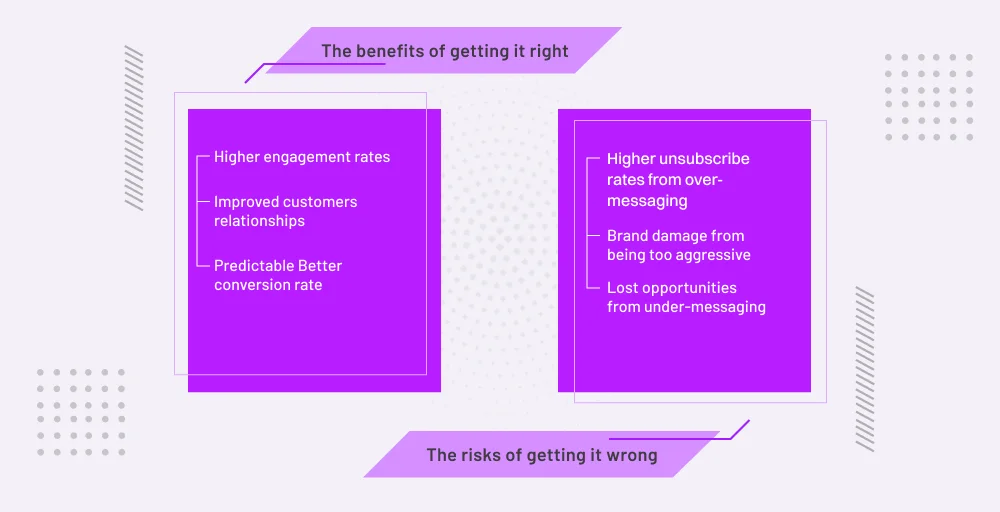
The benefits of getting it right
- Higher engagement rates: SMS has a 98% open rate, nearly 4x higher than email’s 27%, which means your messages actually get seen. When you send the correct number of messages at the right time, people don’t just open them; they respond.
- Improved customer relationships: Respectful messaging shows you value your customers’ time and attention. When you’re not bombarding them with mass texting campaigns, they’re more likely to trust your brand and stay loyal.
- Better conversion rates: Messages sent at the right frequency convert better because they reach customers when they’re ready to take action, not when they’re annoyed by your fifth text this week.
The risks of getting it wrong
- Higher unsubscribe rates from over-messaging: Send too many texts, and people will opt out immediately. Klaviyo research shows that 75% of consumers will unsubscribe from SMS lists if they receive too many messages.
- Brand damage from being too aggressive: Nobody likes spam. Aggressive texting can harm your brand reputation and make customers view your business negatively, even if they wanted you before.
- Lost opportunities from under-messaging: On the flip side, sending too few messages means missed sales, abandoned carts, and lost engagement. Your customers might forget about you entirely.
SMS frequency benchmark: How often should you send SMS
Most successful SMS campaigns send between 2-8 messages per month. That breaks down to roughly 1-2 texts per week. However, the SMS frequency varies significantly based on your industry, customer expectations, and campaign goals.
General SMS frequency benchmark by industries
- Retail/Ecommerce: Send weekly sales alerts and promotions, with 2 to 6 texts per month. Retail customers expect regular updates on sales and new products. Weekly promotional texts sent via automated messaging are effective, especially during holiday seasons.
- Healthcare: Patients in healthcare prefer 1 to 4 messages per month. They want fewer but more critical messages. Focus on appointment reminders, prescription refills, and health tips. These messages have high open rates because they offer valuable information and actionable steps.
- Hospitality: Hotels and restaurants should send 2 to 5 texts per month. Use texts for booking confirmations, special offers, and event notifications. Timing is essential; send reservation reminders 24 to 48 hours before the appointment.
- Financial Services: Banks and financial institutions should send 2 to 6 texts per month. Focus on account alerts, payment reminders, and security notifications. Customers expect these messages, and they appreciate relevant information.
- Real Estate: Clients prefer 1 to 3 texts per month. Send occasional updates on new listings, open houses, and market insights. Too many messages can feel pushy in this industry, so keep the communication limited.
Customer preferences
According to recent surveys, 40% of consumers prefer receiving 2-3 marketing texts per month. Only 10% want weekly messages, and just 2% are open to daily texts. This shows that less is often more in SMS marketing.
Generational Differences
- Gen Z and Millennials (ages 18-40): More open to frequent texts, especially for brands they love. They can handle 4-8 messages per month.
- Gen X (ages 41-56): Prefer 2-4 messages per month, focused on deals and important updates.
- Baby Boomers (ages 57+): Want minimal messaging, typically 1-2 texts per month, and only for essential information.
B2B vs. B2C Preferences
- B2B customers typically prefer fewer messages (1-3 per month) with more professional, information-focused content.
- B2C customers are more tolerant of promotional messages and can handle 3-6 texts per month when the content is relevant.
Factors that determine your ideal SMS frequency
The ideal SMS frequency determines subscriber engagement and helps avoid message fatigue. The optimal SMS frequency statement depends on the following factors:
Industry and business type
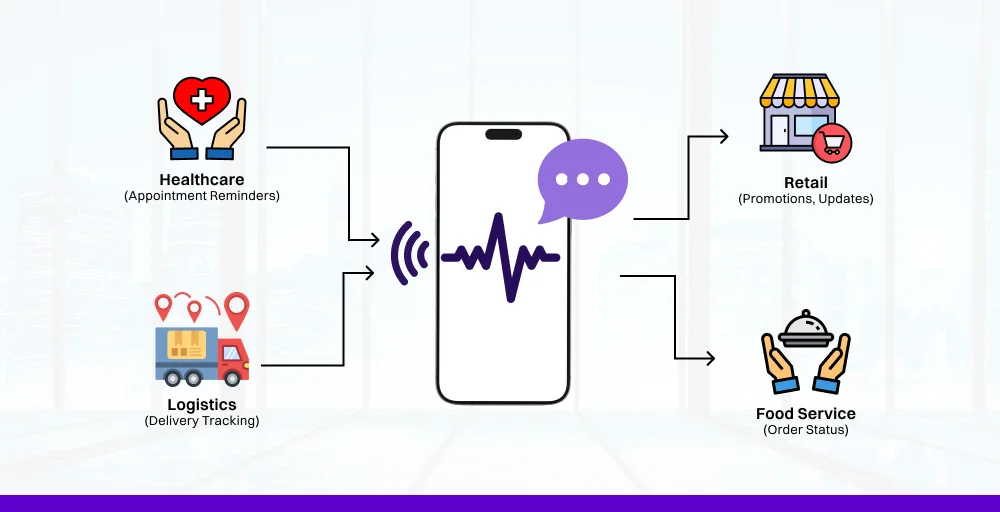
Not all businesses are the same; customers’ or users’ expectations may vary by industry. As in the healthcare industry, patients prefer fewer vital messages, such as appointment confirmation, reminders, or follow-ups. In the same way, retail or e-commerce business customers expect to receive regular text messages about promotional offers, new launches, and other updates.
Campaign type and purpose
SMS campaigns serve a diverse range of purposes, from driving immediate sales to building long-term customer loyalty and ensuring excellent service. Whether using bulk SMS for promotional campaigns or MMS for visual content, different campaign types require different frequencies:
- Promotional campaigns: 2-4 times per month for sales and offers.
- Transactional messages: As needed, such as order confirmations, shipping updates.
- Informational updates: 1-2 times per month for news and tips.
- Reminders: As required, like appointments, renewals, abandoned carts.
Customer lifecycle stage
The customer lifecycle stage refers to the predictable journey a person takes from first hearing about your brand to becoming a long-term, loyal advocate. The type and frequency of SMS messages should be tailored to the customer’s current stage.
Here are the key stages of the customer lifecycle and the corresponding SMS strategy:
- Awareness stage: Introduce your brand with 1-2 welcome messages.
- Consideration stage: Send 2-3 messages per month with helpful information.
- Conversion stage: More frequent messages (3-5 per month) with offers and incentives.
- Retention stage: Regular but not overwhelming (2-4 per month) to maintain engagement.
- Advocacy stage: Occasional messages (1-2 per month) with exclusive perks for loyal customers.
Message value and relevance
The value and relevance of SMS/text messages are essential for maintaining subscriber engagement. Highly relevant and personalized messages, such as exclusive discounts, appointment reminders, or customized recommendations, can justify a higher frequency.
Frameworks like PASTA (Prize, Accessibility, Suggestion, Teaching, Amusement) help ensure every SMS provides real value, making customers more tolerant of frequent communication.
Subscriber preferences
Subscriber preferences are a critical factor in SMS frequency. Allowing customers to choose their preferred frequency during sign-up, whether daily updates, weekly digests, monthly newsletters, or only essential messages, increases satisfaction and reduces opt-outs.
Segmenting your audience by engagement levels and stated preferences enables you to tailor your messaging cadence to different groups, further improving relevance and engagement.
Time and timing
Timing and consistency are vital for SMS success. The best time to send marketing text messages is between 10 AM and 8 PM in the recipient’s local time zone, avoiding early mornings and late nights.
While Midweek (Tuesday–Thursday) generally yields the best engagement, Sundays should be avoided unless your industry specifically requires it. Consistent scheduling builds trust and sets clear expectations, reducing subscriber fatigue and increasing long-term loyalty.
5 SMS frequency mistakes that affect engagement
SMS frequency can significantly impact engagement. These issues can weaken brand connection and reduce the effectiveness of SMS campaigns.
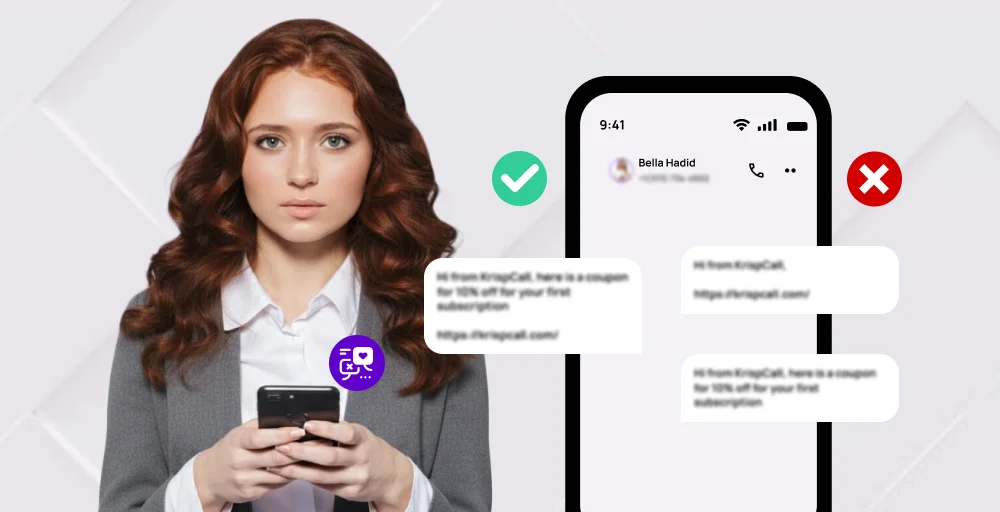
Here are the SMS frequency mistakes that affect engagement:
1. Sending too many messages too quickly
The fastest way to lose subscribers is by bombarding them with messages. Sending 5 texts in one week, then nothing for a month, creates an inconsistent, annoying experience. So, create a content calendar and stick to a predictable schedule. Spread your messages evenly throughout the month.
2. Ignoring engagement signals
If people aren’t opening your texts, clicking links, or responding, that’s a clear signal you’re sending too many messages or your content isn’t relevant. Try to monitor your metrics closely. If engagement drops below 10%, reduce frequency or improve your content quality immediately.
3. One-size-fits-all approach
Treating all subscribers the same is a huge mistake. Your most engaged customers might want weekly updates, while others prefer monthly check-ins. Segment your audience based on engagement levels, purchase history, and stated preferences. Send different frequencies to different groups using personalized messaging strategies.
4. Inconsistent messaging schedule
Sending 4 texts one week, then disappearing for a month, confuses your audience. They don’t know what to expect, which often leads to opt-outs. To improve this, establish a regular cadence that you can maintain long-term. Consistency builds trust and sets proper expectations.
5. Failing to improve and optimize
If you set your SMS frequency once and never adjust it, you’re missing opportunities to improve. Customer preferences change, and so should your strategy. Continuously test different frequencies, analyze results, and adapt based on what works. Make optimization an ongoing process, not a one-time setup.
The importance of relevant SMS marketing
Relevance is the secret ingredient that makes higher frequency acceptable. When your messages provide real value, customers tolerate more frequent communication.
Use the PASTA framework to ensure every text message delivered to customers matters:
- Prize texts (P): Messages that offer something valuable, discounts, early access, exclusive rewards, or VIP perks. These keep subscribers excited and engaged.
- Accessibility texts (A): Messages that make things easier for the customer: appointment reminders, order updates, login codes, or store hours. These are practical and highly appreciated.
- Suggestion texts (S): Personalized recommendations based on customer behavior or preferences, like “You might also like…” or “Don’t forget to reorder.”
- Teaching texts (T): Helpful content such as tips, how-tos, care instructions, or expert advice. These build trust and position your brand as a resource.
- Amusement texts (A): Lighthearted, fun messages, such as jokes, holiday greetings, or playful brand moments. These humanize your brand.
6 SMS frequency best practices for 2025
The following are some of the best practice that helps you to understand what your customers want and how to tailor your SMS frequency:
Set clear expectations from the start
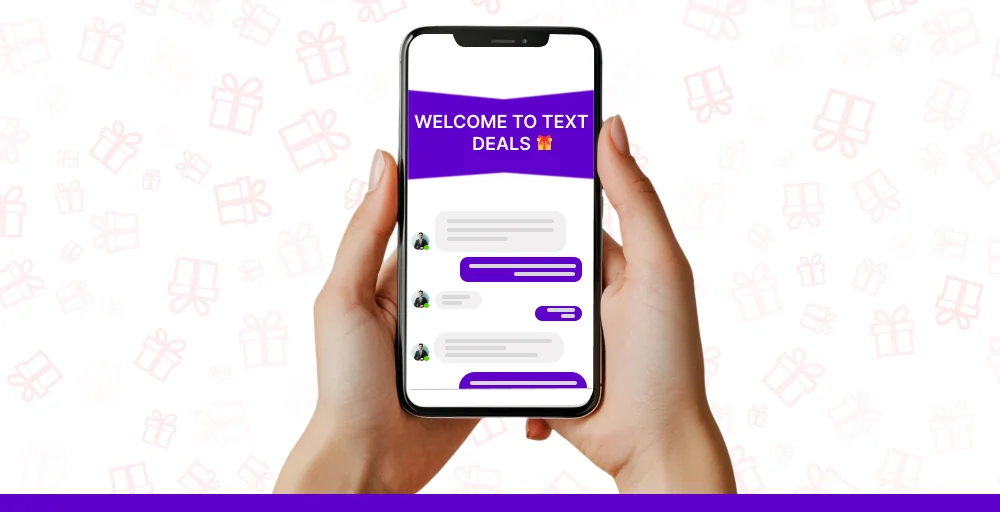
When a customer opts in, the confirmation message should clearly state the expected frequency (e.g., “Get 2 texts/week with exclusive deals. Reply STOP to cancel”). This transparency manages expectations and increases retention.
Offer opt-in frequency preferences
Allow new or existing subscribers to choose their desired cadence (e.g., “Text WEEKLY for regular deals” or “Text MONTHLY for major updates only”). Giving them control reduces the feeling of intrusion and lowers opt-out rates.
Think about timing
Be hyper-aware of time-of-day and time-zone best practices. Avoid sending messages too early (before 9 AM) or too late (after 8 PM) to respect quiet SMS hours. Mid-day and early evening often yield the highest engagement.
Segment your audience based on preferences
Use customer data (purchase history, engagement levels, stated preferences) to create segments. Send higher-frequency messages to VIPs or recent buyers, and lower-frequency messages to less engaged subscribers, to maximize relevance and minimize fatigue. This personalized messaging approach enhances the overall customer experience.
Watch for signs of text message fatigue
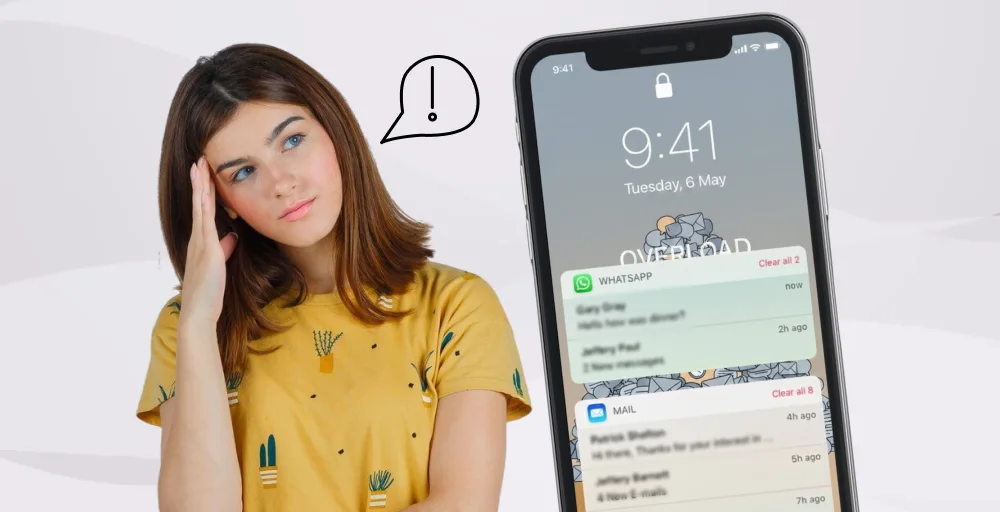
Continuously monitor key SMS metrics, especially the opt-out rate. A sudden spike in unsubscribes is a clear signal that your frequency or content relevance is too high and needs to be adjusted down.
Let SMS subscribers hit snooze
Provide an easy-to-use option for subscribers to temporarily pause messages (e.g., “Reply PAUSE to skip texts for 30 days”). This is a highly effective way to prevent a permanent opt-out during busy periods or when they just need a break.
How to test your SMS frequency
Testing your SMS frequency is the only reliable way to find the optimal balance between engagement and fatigue.
Establish a baseline
Start by documenting your current performance to create a crucial baseline. You need to record key figures for each campaign, including your current monthly message volume, average open rate, average click-through rate, conversion rate, and, most importantly, the opt-out rate.
Such dataset is crucial, as it establishes the benchmark against which you can evaluate whether any changes to your SMS frequency enhance or negatively affect your overall results.
Condust A/B testing
To zero in on the perfect frequency, A/B testing is mandatory. You should segment your total audience into two or more distinct groups. Group A, the Control Group, will continue to receive your current, established message frequency (for example, two texts per week).


Group B, the Test Group, will receive a slightly modified frequency, such as three texts per week or just one text per week. It is crucial to run this test for a substantial period, ideally 4 to 6 weeks, to effectively account for natural cyclical consumer behavior patterns.
Track key metrics
Throughout the A/B testing period, you must closely monitor specific Key Performance Indicators (KPIs) to determine which frequency is superior.
- Opt-Out Rate: This is the most direct indicator of message fatigue; a lower rate is the goal.
- Click-Through Rate (CTR): It measures how relevant your texts are; a low rate often signals that you’re creating too much noise.
- Conversion Rate: the percentage of recipients who complete the desired action, directly measuring the campaign’s success.
- Revenue Per Message (RPM) is a powerful metric that shows your total revenue per message sent, indicating how efficient and profitable your chosen frequency is.
Be open to feedback and adapt
To optimize your messaging frequency, create continuous feedback loops with your subscribers. Implement short quarterly surveys to inquire about their preferred message frequency. Monitor direct replies, customer service inquiries about SMS, and social media comments.
Conduct focus groups with loyal customers for deeper insights. Use this feedback to refine your approach, staying flexible and customer-focused for long-term success.
Conclusion
Finding the right SMS frequency is crucial for maintaining engagement without overwhelming subscribers. Most businesses do well with 2–6 marketing texts per month, but your ideal frequency depends on your audience, industry, and the value you provide. Maintain balance between consistency and relevance by sending meaningful content that enhances the customer experience.
SMS marketing frequency isn’t a fixed rule but an ongoing optimization process. Test different frequencies, monitor unsubscribe rates, and pay attention to engagement signals. By respecting SMS hours and allowing subscribers to control how often they receive messages, you build trust and loyalty. Ultimately, listen to your customers. Adjust your message cadence based on their preferences to keep your audience engaged and opt-out rates low.