

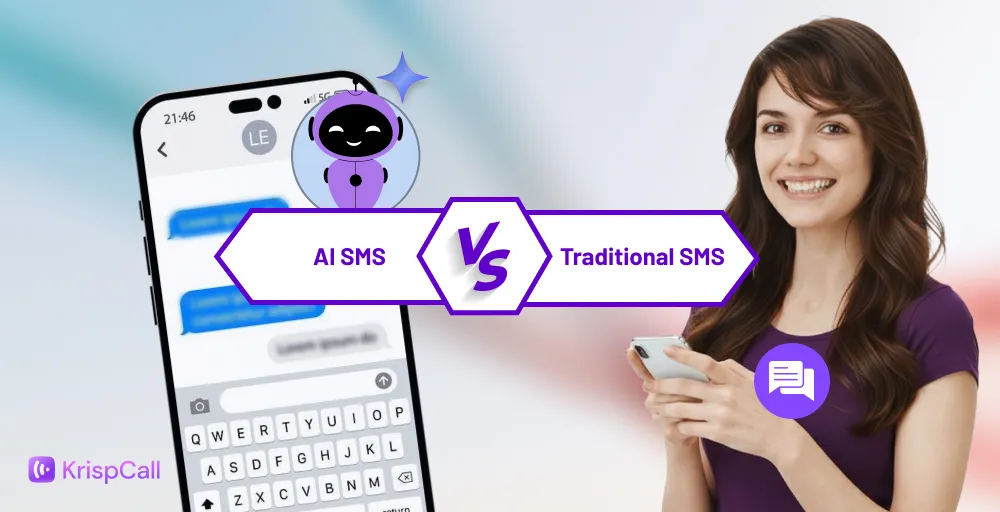
If you are running a business, you have likely asked yourself whether to use AI-powered SMS or stick to traditional SMS. They serve different purposes, and both have their own advantages.
Traditional SMS is simple and dependable for basic communication, whereas AI-powered SMS transforms messaging into a smarter experience. It can reply instantly, personalize messages, and handle interactive conversations automatically.
In this blog, we will discuss the definitions of AI SMS and traditional SMS, their differences, and when to use each platform.
✨ Key Takeaways
- AI-powered SMS is generally more expensive than traditional SMS, as it includes advanced features, personalized messaging, and intelligent handling of replies.
- Traditional SMS provides basic metrics such as delivery and clicks, which require manual analysis.
- AI SMS provides advanced insights, predicts customer behavior, and suggests optimizations to improve campaign effectiveness.
What is AI SMS?
AI SMS is the use of artificial intelligence to automatically send messages and improve business text messaging. It allows businesses to send personalized messages, manage automated text messaging, respond to customer inquiries, and run campaigns more effectively.
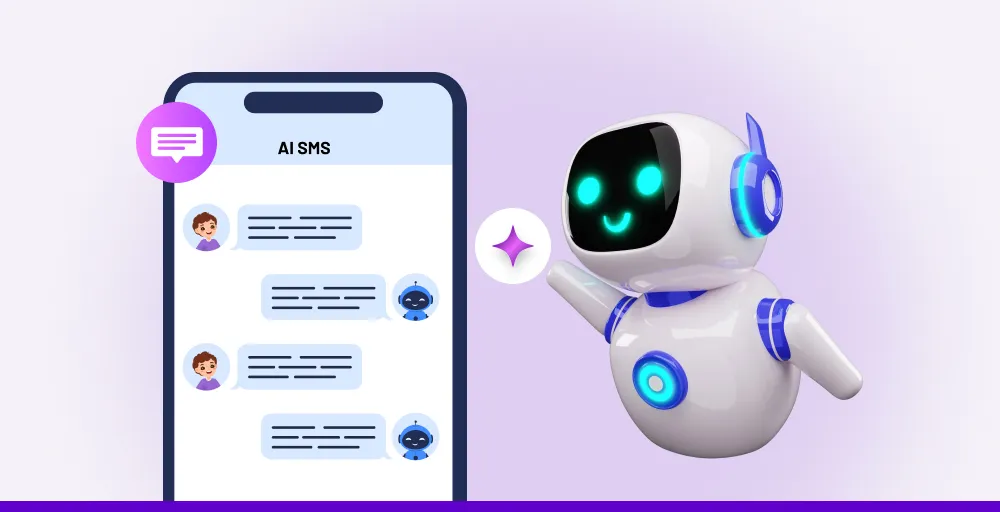
With AI SMS, businesses can analyze customers’ intentions, behaviors, and preferences from past purchase history or engagement data. This enables businesses to send highly personalized messages that resonate with each recipient, increasing the chances of engagement and conversion and building strong customer relationships.
What is traditional SMS?
Traditional SMS, also known as short message service, delivers messages up to 160 characters over a mobile network without an internet connection. It is a simple messaging service that allows users to send and receive short text messages, often bulk SMS, using predefined templates, fixed schedules, or rule-based triggers.
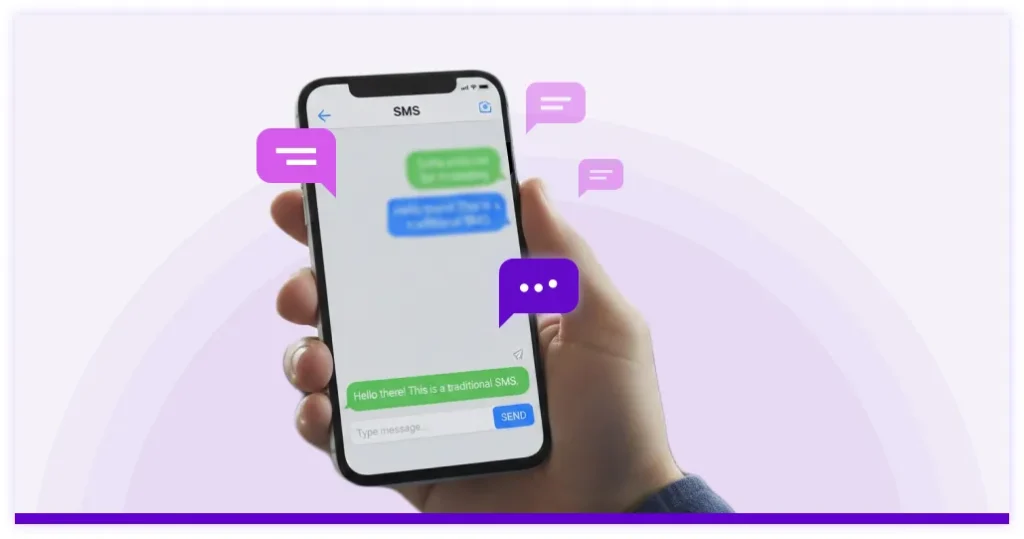
Traditional SMS is usually one-way communication, meaning messages are sent to recipients without dynamic responses or conversational engagement. It relies on manual setup and does not adapt to customer behavior or preferences.
Head‑to‑head comparison between AI SMS and traditional SMS
AI SMS focuses on smart, adaptive, and personalized communication, while traditional SMS delivers straightforward, reliable messaging for simple notifications and alerts. This means that AI SMS and traditional SMS are quite different; each offers its own strength depending on business needs.
| Feature | AI SMS | Traditional SMS |
| Setup | Slightly more complex initially due to AI configuration, but often guided with templates and automation tools | Simple, manual setup; mostly just requires entering recipient numbers and composing messages. |
| Automation | Highly automated; can send messages based on triggers, behaviors, or AI predictions | Minimal automation; mostly manual sending or basic scheduling |
| Personalization | Advanced personalization using customer data, behavior patterns, and AI insights | Basic personalization, usually limited to name or basic details |
| Cost Efficiency | More cost-effective long-term; fewer wasted messages due to optimized targeting and timing | Costs accumulate with each message sent; less optimized targeting |
1. Message personalization & targeting
Traditional SMS platforms target only a limited set of sectors, such as age or location. The personalized messages are often generic; they may not be personal or relevant.
AI identifies customers’ preferences and interests by analyzing past purchase history or customer engagement. So, they segment customers based on factors such as customer type, behaviour, demographics, and preferences to deliver personal and relevant messages.
2. One‑way vs two‑way communication
Traditional SMS is mostly one-way; businesses send messages to customers and wait for customers to respond manually. This takes time and can also limit customer engagement.
AI SMS offers two-way communication. It also provides advanced features for automated responses and conversational flow. Customers can reply to messages and receive instant, relevant responses, making interactions smoother and more engaging.
3. Setup & maintenance effort
In traditional SMS, setting up is quite simple; however, it requires ongoing manual work. This includes updating contact lists, segmenting audiences, and scheduling automated text messages.
Setting up AI SMS is complex, as it requires integration with machine learning and automation. However, after setup, it requires no ongoing maintenance, as it automatically manages lists, segments, and audiences and optimizes campaign performance.
4. Analytics, insights & optimization
Traditional SMS platforms provide basic data, such as delivery rates, opens, and clicks. Marketers often need to analyze data manually to make decisions.
AI SMS offers advanced analytics, such as trend identification, customer behavior prediction, and optimization suggestions. This allows campaigns to continuously improve, targeting the right audience with the right message at the right time.
5. Scalability and volume handling
Traditional SMS can reach large numbers of customers, but scaling campaigns efficiently is challenging. Managing lists, personalization, and timing requires more manual effort as the volume grows.
AI SMS can handle large-scale campaigns with ease. It automatically segments audiences, schedules sending times, and ensures that high volumes do not compromise personalization or engagement.
6. Cost structure
Traditional SMS often charges per message, making costs predictable but potentially high at scale.
AI-powered SMS may have a higher upfront cost due to advanced features, but it reduces waste by targeting only the right audience. This improves return on investment (ROI) and often makes campaigns more cost-effective over time.
7. Risk, compliance & deliverability
Traditional SMS relies on manual compliance checks and may struggle with deliverability if contact lists contain invalid or inactive numbers.
AI SMS helps reduce these risks by predicting optimal send times, filtering out inactive numbers, and automatically monitoring compliance rules. This leads to higher deliverability and safer, more reliable campaigns.
When to use traditional SMS?
Traditional SMS is used for different purposes. Some are explained below:
- OTP and verification codes: When messages must be delivered instantly and don’t require personalization. Traditional SMS is fast, reliable, and perfect for quick authentication.
- Delivery or service updates: When you need to send simple notifications like “Your package is arriving today” or “Your service is scheduled. They just need quick, consistent delivery.
- Appointment reminders: When short reminders are straightforward, from doctor visits, salon bookings, and meetings. You can use traditional SMS, as it doesn’t require complex targeting or automation.
- Emergency or urgent notifications: For critical situations such as system outages, safety alerts, or important notices. Traditional SMS is ideal because it’s simple and gets the message out immediately.
- Basic internal communication: Teams can use traditional SMS to share quick updates with employees without needing advanced features or segmentation.
When to use AI SMS?
AI SMS is used for multiple tasks to make the conversation effective and smooth. Some of the common applications are explained below:
- Personalized marketing campaigns: AI helps tailor each message to the customer’s interests, past purchases, and behavior. This makes promotions more relevant and boosts conversion rates.
- Lead nurturing & customer retargeting: For abandoned carts, inactive users, or follow-up campaigns, AI can send the right message at the right time to bring customers back.
- Automated customer support: AI chatbots can reply instantly to customer questions, handle common inquiries, and guide users without needing human involvement.
- Large-scale messaging: AI can easily manage large contact lists, automatically segmenting users, filtering invalid numbers, and sending at the best times to maximize engagement.
- Data-driven optimization: AI analyzes customer behavior and campaign performance to improve messages over time. It helps businesses understand what works and what doesn’t.
Final recommendation: Which should your business use?
Choosing the right SMS solution to connect with customers really depends on your company’s goals and objectives.
For instance, if your main tasks are sending appointment reminders, delivering service updates, and issuing emergency notifications. Traditional SMS is a perfect fit for your business. It is simple, reliable, and delivers messages instantly, with no complex setups or automations required.
However, if your goal is to build a strong connection with customers, boost engagement, or run smart marketing campaigns. Then go for AI-powered SMS. It helps you understand customer behavior, personalize messages at scale, automate support, and create conversational experiences.
For businesses looking for smooth, efficient conversations, KrispCall is an excellent option. It offers AI-powered SMS with a balanced solution for companies ready to move beyond traditional SMS. It combines intelligent segmentation, personalized campaigns, mass texting, and automated two-way conversation into one platform.