

Every second counts in a call center. A few minutes of delay, a missed follow-up, or one frustrated prospect can quickly snowball into bigger issues. If your team is constantly racing the clock, chances are productivity is taking a hit, and so is customer satisfaction.
The good news is that you don’t need a massive change to fix it. Just understanding about call center productivity, tracking the right metrics, and making a few smart changes using call center best practices can turn daily chaos into consistent performance.
In this guide, we’ll explain the core concept of productivity in a call center, outline the most valuable center metrics to track, and offer call center best practices to help your team work smarter, not harder.
✨ Key Takeaways
- Call center productivity refers to the evaluation of how an agent interacts with customers, resolves their problems, and ensures higher customer satisfaction.
- First-Call Resolution (FCR), Average Handle Time(AHT), Call Abandonment Rate, and Customer Satisfaction Score are the best call center productivity metrics.
- There are several ways to boost call center productivity, such as having the correct number of staff, providing training facilities, and equipping the right tools and resources.
What is call center productivity?
Call center productivity measures how effectively and efficiently agents interact with customers and resolve their issues. It is evaluated using various core metrics like first call resolution (FCR), average handle time (AHT), and customer satisfaction score (CSAT). These Key Performance Indicators (KPIs) help assess the agents’ productivity and provide insights into their performance.

To maximize call center productivity, businesses should start by developing a call center strategy. That involves investing in the right call center software, providing ongoing training, and utilizing modern tools. This enables agents to work more efficiently.
Why is call center productivity important?
Call center productivity offers numerous clear and measurable benefits to the business, including satisfied customers and agents striving for performance.
Here are some key points why call center productivity is important :
- Reduces operational and overload stress: The right tools and resources allow agents to handle their tasks efficiently, reducing stress and preventing burnout. That means fewer feelings of burnout, a healthier work environment, and a team that’s motivated to perform their best and work harder.
- Shorter wait times: No customer likes to keep waiting. A productive call center can serve customers more efficiently and effectively, maintaining hold times low and minimizing frustration. This makes customers feel appreciated and valued.
- Leads to higher customer satisfaction: Call centers’ productivity ensures that customers receive prompt and accurate responses, which eventually boosts customer satisfaction levels. When agents respond quickly, customers feel valued, helping to build stronger loyalty.
- Offers training and growing opportunities: Productive call centers provide training facilities to enhance the skills and knowledge of the agents. This improves the team’s performance and also provides agents to grow their careers.
- Improves performance visibility and recognition: Tracking key metrics like first call resolution and customer satisfaction score helps to understand team performance. Recognizing and rewarding top performers can boost the team’s confidence and encourage everyone to contribute to improvement.
- Reduce frustration: Efficient systems help cut down delays, mistakes, and misunderstandings. This makes it easier for both agents and their customers. When service is quick and accurate, it leads to a better experience with fewer problems.
How to measure call center productivity?
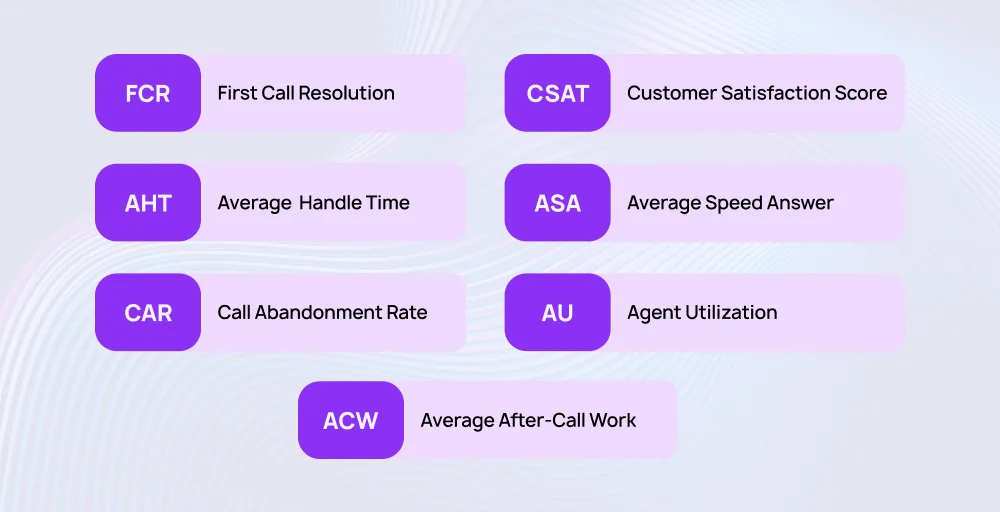
There are specific metrics that every call center should track to measure call center productivity and identify areas for improvement. Some of them are discussed below:
First call resolution (FCR)
First-call resolution rates (FCR) ensure that customers’ issues are resolved during their first interaction. When customers do not need to call back to resolve their inquiries, it saves agents time, reduces customer frustration, and improves customer satisfaction. It also strengthens the relationship between the customer and the brand, building trust and long-term loyalty.
FCR is calculated by dividing the number of calls resolved in the first contact by the total number of calls and then multiplying by 100%. A higher FCR indicates a higher level of customer satisfaction.
Average handle time (AHT)
AHT measures the total time spent on a customer interaction, including hold and talk time. Keeping average handle time at a healthy pace, not too slow or rushed, allows agents to stay clear, focused, and responsive. This balance helps contact center agents manage more calls while maintaining communication quality.
AHT is calculated by adding the total talk time, hold time, and after-call work for all calls, then dividing by the number of calls. Lower AHT indicates that agents can resolve the customers’ inquiries promptly, improving productivity.
Call abandonment rate
The call abandonment rate indicates the number of callers disconnected before reaching a customer service agent. A low abandonment rate shows well-managed staffing and smooth call flow. When customers don’t have to wait long, they feel respected and valued, which leads to higher customer satisfaction.
Call abandonment rate is calculated by dividing the number of calls that were disconnected by the total number of incoming calls, then multiplying by 100.
Customer satisfaction score
Customer satisfaction score (CSAT) measures how happy customers are with a company’s products or services. High CSAT scores reflect an agent’s ability to communicate clearly and resolve issues effectively. When customers have positive interactions, they’re more likely to stay loyal and recommend the brand to others.
CSAT is calculated by dividing the number of customers who reported being satisfied with the product and services by the total number of responses and then multiplying by 100.
Average speed answer (ASA)
Average speed answer measures the speed at which calls are answered. When agents pick up promptly, customers tend to feel appreciated and valued. Quick response times also improve agent productivity, confidence, and motivation, setting a positive tone for the entire interaction.
ASA is calculated by dividing the total wait times of all answered calls by the number of answered calls.
Agent utilization
Agent utilization measures the percentage of an agent’s logged-in time spent on productive customer tasks. The goal is to keep agents engaged but not overworked. When this balance is right, agents stay energized and focused, leading to better conversations and less burnout.
It is calculated by dividing the time an agent spends on productive tasks by their total logged-in time, then multiplying by 100.
Average after-call work (ACW)
Average after-call work (ACW) measures how much time agents spend on tasks after a call, like writing notes or sending emails. When it takes less time, agents can get to the next customer sooner, without rushing. It keeps their workflow smooth and makes the day less stressful.
ACW is calculated by dividing the total time spent on post-call tasks by the number of calls handled.
How to improve call center productivity?
There are various strategies to enhance productivity and quality across the call center, like ensuring the right number of staff, providing the correct tools and resources.
1. Ensure the correct number of staff
The correct number of staff is essential in order to balance customer demand with agent availability. If you have limited staff, customers face longer waiting times. And agents may experience burnout due to the increased workload. In contrast, overstaffing causes unproductivity and leads to unnecessary operational costs.
Therefore, it is important to establish clear goals and performance metrics, which help in evaluating staffing effectiveness. Use real-time call center monitoring and metrics like first call resolutions, Customer Satisfaction Score, and average handle time. These tools help you to make smart decisions about correct staffing, training sessions, and process improvements.
2. Provide the right tools and resources to the agent
Providing the right tools and resources enhances contact center productivity. With advanced call center features like call routing, recording, and IVR, agents can handle inbound call centers or outbound call centers efficiently.
Additionally, tools like customer relationship management (CRM) systems help agents to view information quickly during customer calls.
These tools ultimately help call center representatives provide exceptional, high-quality customer service.
3. Automate repetitive tasks
Not every task requires human involvement. Automating repetitive work or inquiries helps agents focus on more critical or sensitive customer issues. AI-driven chatbots and virtual assistant systems handle routine tasks like order status or password resets, reducing the risk of human error.
AI-powered tools can automatically categorize and prioritize incoming tickets, ensuring that urgent issues are addressed promptly.
Furthermore, automating post-call tasks such as data entry and follow-up emails can help to reduce average after-call work (ACW) time. This enables agents to seamlessly transition from one customer to another, smoothly between calls.
4. Provide training facilities
Providing continuous training sessions for agents is crucial for maintaining high performance in call centers. Regular training facilities in communication skills and customer service, with product knowledge, allow agents to handle diverse customer inquiries.
Implementing AI-driven coaching tools is also an effective way to provide real-time feedback during calls, helping agents improve their communication and problem-solving skills.
5. Enhance employee retention
To retain employees, you need to create a positive work environment. Offering fair compensation, career opportunities, and recognition motivates employees to stay.

High turnover rates are expensive. It requires significant time and resources to train a new agent. That’s the reason you need to offer options that keep existing employees happier and satisfied. Provide remote work facilities and recognize top-performing employees, ensuring agents feel valued and supported.
6. Recognition and reward
When workers feel recognized for their work, they tend to work their best. Recognizing and rewarding agents for meeting performance metrics like FCR and CSAT can motivate them to maintain high standards.
Similarly, providing incentives like bonuses, public recognition, or additional time off can reinforce desired behaviors. Creating a culture of appreciation through regular feedback and acknowledgment of achievements can boost agent performance, morale, and encourage continuous improvement.
Implementing peer recognition programs allows customer support agents to appreciate each other’s efforts, creating a supportive and collaborative work environment.
7. Improve the work environment and foster open communication
A healthy and open work environment is crucial for enhancing contact center productivity. When agents feel comfortable opening communication, it can lead to the identification of challenges and collaborative problem-solving.
Regular feedback sessions and team-building activities can strengthen relationships and increase productivity.
Providing agents with decision-making authority and empowering them to resolve issues can lead to faster resolutions and increased job satisfaction. For instance, implementing a decision-making process for agents allows them to resolve customer issues and concerns promptly and enhance customer satisfaction.