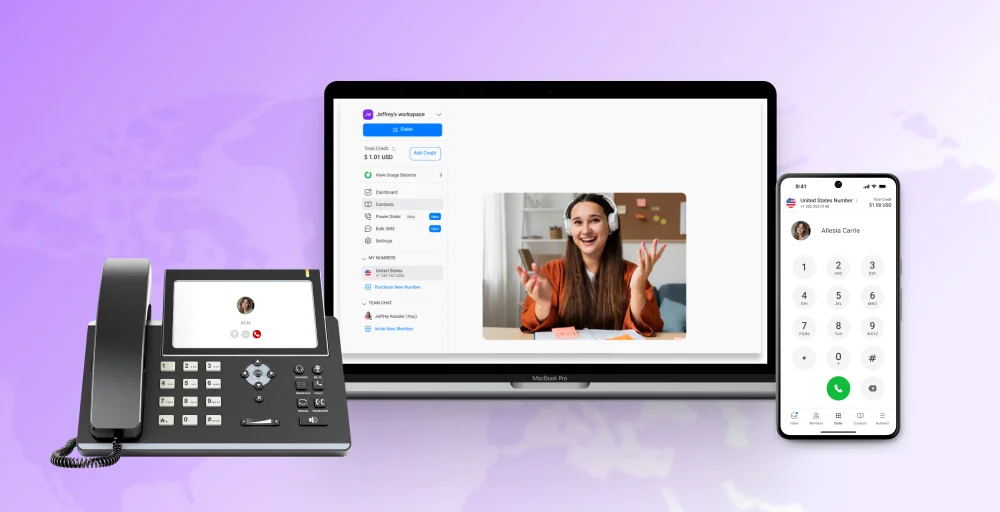


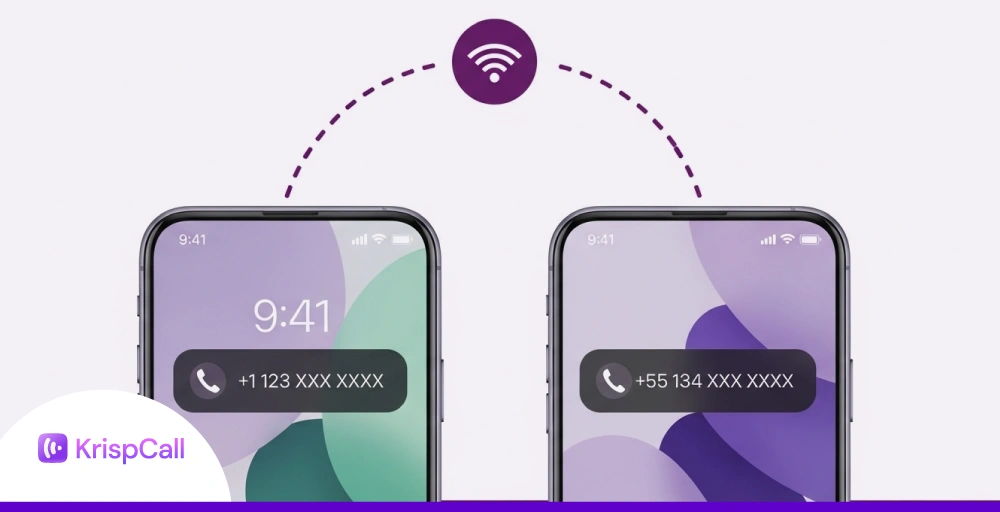
Switching phone service providers used to mean giving up your existing number, but not anymore. You no longer have to compromise on call quality just because your existing provider does not support advanced features.
With VoIP number porting, you can easily switch service providers without sacrificing the number your customers already know. This means you don’t need to reprint business cards, update directories, or notify every client.
In this blog, we will discuss what VoIP number porting means, why businesses port numbers to VoIP, how VoIP porting works, along with porting requirements, challenges, and things to consider while choosing the right provider.
✨ Key Takeaways
- VoIP number porting is a convenient way to keep your existing number while efficiently switching the provider to stay competitive and take advantage of better features and pricing.
- Businesses usually port numbers to save cost, maintain brand recognition, integrate with advanced features, and avoid system downtime.
- Porting involves making a porting request from the old provider and providing all the necessary account details of the existing numbers to the new provider.
What is VoIP number porting?
VoIP number porting is the process of transferring your existing phone number (landline, mobile, or VoIP) from one provider to another while keeping the same number active.
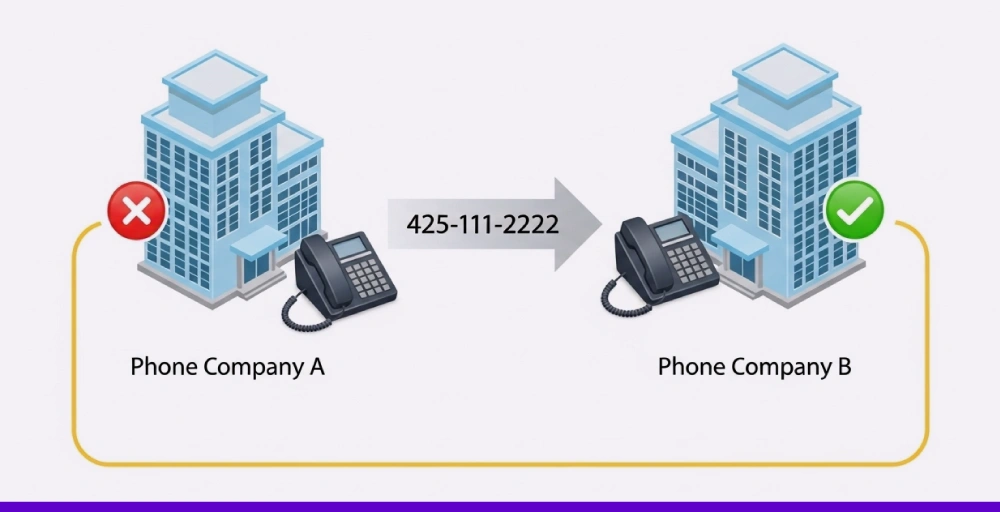
In simple terms: You change your phone system, not your number.
This means:
- You don’t need to update customers
- You don’t lose inbound calls
- Your business identity stays intact
Even if you’re switching from a traditional landline to VoIP, you can still keep your number.
What types of numbers can you port to VoIP?
VoIP number porting is flexible, allowing you to transfer different types of numbers based on your business needs. Here’s a clear breakdown:
- Landline Numbers: These are the most commonly ported numbers when businesses move from traditional phone systems to VoIP. You can keep your existing business number while upgrading to a cloud-based system, avoiding any disruption for customers.
- Mobile Numbers: Mobile numbers can be ported to VoIP to centralize communication. This is useful for business owners and teams who want to manage calls and messages from one platform instead of multiple personal devices.
- VoIP Numbers: If you’re already using a VoIP provider but want better features or pricing, you can transfer your existing VoIP number to a new provider without changing your number.
- Toll-Free Numbers: Toll-free numbers can also be ported, allowing businesses to maintain a professional and consistent presence across regions while upgrading their communication system.
Why businesses port numbers to VoIP
Businesses don’t actually change their phone numbers when they upgrade their communication system. They simply move the number to a better, more flexible platform. This is exactly what VoIP number porting allows, and it solves several practical business challenges at once.
1. Save costs without compromising communication
VoIP helps businesses significantly reduce communication expenses by routing calls over the internet instead of traditional phone lines. This lowers the cost of local, long-distance, and especially international calls.
At the same time, businesses no longer need to invest in expensive hardware or maintenance, making it a cost-efficient solution as teams grow and call volumes increase.
2. Keep brand recognition and customer trust intact
A phone number is more than just a contact detail. It is tied to your brand identity across websites, ads, listings, and customer databases. Changing it can confuse customers and reduce trust.
By porting your number to VoIP, you keep the same number active, ensuring customers can continue reaching you without any disruption or need for updates.
3. Scale operations easily without changing numbers
As businesses expand, their communication needs also grow. VoIP allows you to scale without changing your existing number.
You can add new team members, departments, or even operate in different locations while still using the same number. This creates a seamless experience for both your team and your customers.
4. Access advanced features that improve productivity
Porting your number to VoIP unlocks modern communication features that traditional systems cannot offer. Businesses gain access to tools like call recording for quality checks, AI transcription and summaries for faster follow-ups, CRM integrations for automatic logging, and call analytics for performance tracking.
These features help teams work smarter, not harder.
5. Avoid missed calls during the transition
Switching phone systems can lead to missed calls and lost opportunities if not handled properly. VoIP number porting ensures your number remains active throughout the transition, so customers can still reach you without interruption.
This minimizes downtime and protects your business from losing leads or damaging customer experience.
How to port a Phone Number to VoIP (Step-by-Step)
Porting your phone number to VoIP is a structured process handled between your current provider and your new VoIP provider. While the technical work happens in the background, your responsibility is to follow each step carefully and provide accurate information to avoid delays or failures.
1. Check number portability
The first step is to confirm whether your number is eligible for porting. Not all numbers can be transferred due to geographic limitations, provider restrictions, or number types.
Most VoIP providers offer a portability check where you can enter your number and instantly verify if it can be moved. This step is important because it sets the foundation for the entire process and helps you avoid unexpected issues later.
2. Choose your VoIP provider
Once your number is confirmed as portable, the next step is selecting the right VoIP provider. This is a critical decision because the provider will manage the entire porting process and your future communication system.
You should evaluate providers based on their features, pricing, integration capabilities, and support quality. A reliable provider ensures not only a smooth porting experience but also long-term efficiency in managing your business communication.
3. Gather Required Information
Before submitting the porting request, it is essential to collect all the necessary account details from your current provider. This ensures that the request goes through without delays or rejection. Typically, you will need:
- Account holder name (exact match)
- Account number
- Service or billing address
- Phone number(s) to be ported
- PIN or passcode (if applicable)
- A recent phone bill for verification
Even small mismatches in this information can cause the request to fail, so accuracy is extremely important at this stage.
4. Submit the porting request
After gathering all the required information, you can initiate the porting request through your new VoIP provider. This usually involves filling out a form with your details and specifying the numbers you want to transfer.
Once submitted, your new provider takes over the process and communicates with your current provider to begin the transfer. This step officially starts the porting process.
5. Authorize the transfer (LOA)
To proceed with the transfer, you will need to sign a Letter of Authorization (LOA). This document is a formal approval that allows your new provider to request and manage the transfer of your number on your behalf.
It confirms that you are the rightful owner of the number and that you agree to move it. Without this authorization, the porting process cannot move forward.
6. Verification by current provider
After the request and authorization are submitted, your current provider reviews the details. They verify whether the information provided matches their records and check if the account is active and in good standing.
If everything is correct, they approve the request. If there are discrepancies, such as incorrect details or unpaid balances, the request may be delayed or rejected until the issue is resolved.
7. Porting process and waiting period
Once approved, the actual transfer process begins between the two providers. This stage takes time because it involves coordination and validation on both ends. The typical timeline ranges from a few days to a few weeks, depending on the number type and provider efficiency.
During this period, your number remains active with your current provider, ensuring that your business continues to receive calls without interruption.
8. Porting day
On the scheduled porting date, your number is transferred to the new VoIP system. This is known as the cutover phase. During this time, there may be a brief downtime where calls are temporarily unavailable, but this usually lasts only a short period.
Preparing your team in advance and setting up your VoIP system beforehand helps ensure a smooth transition.
9. Port completion and activation
Once the porting process is complete, your number becomes fully active on your new VoIP provider. At this stage, all calls are routed through the new system, and you can start using its features.
It is important to test your number by making and receiving calls, checking voicemail, and ensuring everything works as expected.
10. Cancel old service
After confirming that your number is successfully ported and functioning properly, you can proceed to cancel your old service.
While some providers automatically close the account after porting, it is still recommended to confirm cancellation manually. This helps you avoid unexpected charges or billing issues.
⚠️ Important Tip
Never cancel your existing service before the porting process is fully completed. If the number becomes inactive before the transfer is finalized, the porting request can fail, and recovering the number may become difficult.
11. Post-port setup and optimization
Once your number is active on the VoIP system, take time to configure and optimize your setup. This includes setting up call routing, assigning numbers to team members, enabling features like call recording or analytics, and integrating with your CRM or other tools.
This step ensures that you are not just transferring your number but also improving how your communication system works.
VoIP number porting requirements
To successfully port your phone number to a VoIP provider, you need to meet a few essential requirements. These ensure that your number can be verified, authorized, and transferred without delays or rejection. Most porting issues happen not because the process is complex, but because one of these requirements is incomplete or incorrect.
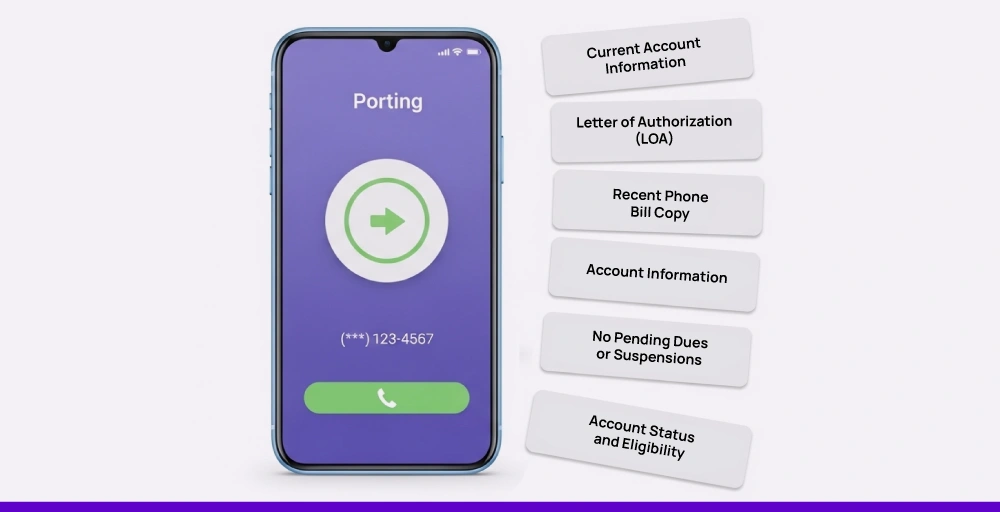
1. Accurate account information
The most important requirement for VoIP number porting is providing accurate account details that exactly match the records with your current provider. Even small differences, such as spelling errors, abbreviations, or outdated addresses, can lead to rejection or delays in the porting request.
You will typically need to provide:
- Account holder name (exactly as registered)
- Account number
- Service or billing address
This information is used by your new provider to verify ownership and request the transfer from your existing provider. If anything does not match perfectly, the request may be denied, and you’ll need to correct and resubmit it.
2. Letter of authorization (LOA)
The Letter of Authorization (LOA) is a mandatory document required to initiate the porting process. It serves as your official consent, allowing the new VoIP provider to act on your behalf and request the transfer of your number.
By signing the LOA, you confirm that:
- You are the rightful owner of the number
- You approve the transfer
- The new provider is authorized to communicate with your current provider
Without a valid LOA, the porting process cannot begin. In some cases, businesses may also need to provide additional verification documents depending on the provider and region.
3. Recent phone bill
A recent phone bill is required as proof of ownership and account validity. It helps your new provider confirm that the number belongs to you and is currently active under your account.
The bill usually needs to:
- Be from the last 30 to 60 days
- Display your name, number, and billing address
- Match the account information provided
This document is especially important because it acts as a reference point for verifying all submitted details. If the information on the bill does not match your porting request, it can cause delays or rejection.
4. Active account status
Your phone number must be active at the time of the porting request. If your number is suspended, disconnected, or has unpaid dues, the current provider may block the transfer.
To ensure a smooth process:
- Keep your account active until porting is complete
- Clear any outstanding balances
- Avoid making changes to the account during the process
An inactive or restricted account is one of the most common reasons porting requests fail, so maintaining a clean and active account status is essential.
5. Eligibility check
Before initiating the port, it’s important to confirm that your number is eligible for transfer. Not all numbers can be ported due to technical, contractual, or geographic limitations.
You should verify:
- There are no contract restrictions or lock-in periods
- Your number type (landline, mobile, VoIP, toll-free) is supported
- The number is within a portable geographic region
If any of these conditions are not met, the porting request may be rejected. Checking eligibility in advance helps you avoid unnecessary delays and ensures that your number can be transferred successfully.
Common challenges in VoIP porting and how to avoid them
VoIP number porting is generally smooth, but a few common issues can delay or block the process. The good part is that most of these problems are easy to prevent if you prepare in advance and follow the process carefully.
1. Incorrect information
Porting requires your account details to match exactly with your current provider’s records. Even small differences in name, address, or account number can lead to rejection or delays.
Fix: Double-check all details before submission and match them with your latest phone bill.
2. Outstanding bills
If your account has unpaid dues, your provider may not release the number for porting. This is a common reason for failed requests.
Fix: Clear all pending balances and confirm your account is in good standing before starting the process.
3. Geographic restrictions
Some numbers are tied to specific regions and cannot be ported outside those areas, especially if the new provider lacks coverage.
Fix: Check number portability with your new provider early to avoid surprises.
4. Contract limitations
Certain providers have lock-in periods or early termination fees, which can delay or increase the cost of porting.
Fix: Review your contract terms beforehand and plan your porting accordingly.
5. Service Cancellation Too Early
Cancelling your current service before porting is complete can cause the transfer to fail, and you may even lose your number.
Fix: Keep your service active until the port is fully completed and confirmed.
How to choose the right VoIP provider for porting
Not all VoIP providers handle number porting with the same level of efficiency. Since your provider will manage the transfer and power your communication system afterward, choosing the right one directly impacts both the porting experience and your long-term operations.
Call quality & reliability
The first thing to look for is consistent call quality. A good VoIP provider should offer clear audio, minimal latency, and reliable uptime so your business conversations are never disrupted. Frequent call drops, delays, or poor sound quality can directly affect customer experience and sales performance. Look for providers with strong infrastructure, proven uptime records, and positive user feedback.
Features that fit Your workflow
Beyond basic calling, your VoIP system should support how your team actually works. The right provider will offer features that simplify communication and improve productivity. These often include:
- Call forwarding to route calls efficiently
- CRM integration to log interactions automatically
- Call analytics to track performance and improve decisions
Choosing a provider with relevant features ensures that you’re not just porting your number, but upgrading your entire communication workflow.
Transparent pricing
Pricing should be clear and predictable. Some providers advertise low base costs but include hidden charges for porting, additional features, or usage limits.
This can lead to unexpected expenses over time. A reliable provider will clearly explain their pricing structure, including any porting fees, subscription costs, and add-ons.
Strong customer support
Porting issues can arise at any stage, from verification delays to technical errors. When that happens, fast and responsive customer support becomes critical.
A good VoIP provider should offer multiple support channels and quick resolution times, especially during onboarding and porting. This ensures that any issue is handled without affecting your business communication.
Scalability
Your communication system should grow with your business. The right VoIP provider allows you to add users, numbers, and features without needing to change your setup again.
Whether you’re expanding your team, entering new markets, or increasing call volume, scalability ensures your system adapts without disruption.
Port your number with KrispCall
VoIP number porting is meant to make switching easier, not harder. The goal is simple: keep the number your customers already trust while upgrading to a better system behind it.
With KrispCall, the process feels straightforward from the start. You get guided, end-to-end support that handles everything from checking eligibility to completing the transfer, so you don’t have to worry about the technical side. Your number stays active during the transition, which means your business keeps running without disruption or missed calls.

Once your number is live, the real value kicks in. You’re not just moving your number, you’re moving to a smarter system. KrispCall brings all your calls, SMS, and voicemails into one unified callbox, while AI-powered transcription and summaries help your team stay on top of every conversation without extra effort. And with access to global numbers in 100+ countries, you’re set up to grow without changing how customers reach you.
In the end, it’s not just about porting. It’s about making your communication simpler, faster, and more reliable, all in one place.
And in case you have any queries or need help with the number porting request, feel free to contact our support team. Email: porting@krispcall.com | support@krispcall.com