

Conversational marketing is more than asking questions or talking with customers or leads. It’s about creating ongoing, meaningful telephony conversations that move leads toward decisions.
But what is conversational marketing really, and how do you apply a conversational marketing strategy without losing relevance or trust?
Many teams use conversational marketing techniques but struggle with inconsistency, rushed automation, or poor timing. This leads to customers feeling unheard rather than engaged.
In this blog, you’ll explore real conversational marketing examples, uncover the do’s that build connections, and avoid the don’ts that sabotage them, giving you practical clarity to apply in your own approach.
✨ Key Takeaways
- Conversational marketing uses two-way, real-time interactions across live chat, chatbots, messaging apps, and social platforms to guide customers at their own pace.
- The do’s include keeping human tone alive, personalizing interactions, prioritizing value, using data, and giving customers control.
- The don’ts of conversational marketing are avoiding aggressive selling, excess automation, spammy messages, unresolved chats, and over-personalization.
What is conversational marketing?
Conversational marketing is a marketing approach that involves two-way interactions in real time across channels like social media, live chat, email, and messaging applications.
It focuses on customer-driven timing, personalized exchanges, and genuine phone conversations that guide people toward the next step in their buying journey.
This approach creates natural touchpoints that fit the customer’s pace and preferences, setting the stage for practical examples of how businesses use it effectively.
3 best conversational marketing examples
A conversational marketing strategy can take many forms, depending on how customers prefer to interact.
Brands commonly use 3 conversational marketing tools like live chats, chatbots, and social media messaging to guide visitors, answer questions instantly, and keep conversions moving toward a decision.
1. Live chat
Live chat is one of the communication channels that lets customers interact directly with a human agent while browsing a website or app. It connects visitors to a support or sales team the moment they need help, reducing delays and keeping the conversation focused on the customer’s intent.

Many brands and businesses use live chat for product questions, checkout assistance, troubleshooting, onboarding new clients, and even lead qualification.
Real-world example
Drift live chat, a feature within the Salesloft platform, connects website visitors with sales reps instantly.
When someone browses pricing or feature pages, the live chat window appears, allowing them to ask questions and even book a meeting on the spot. This turns high-intent visitors into qualified leads without requiring back-and-forth.
2. Chatbots
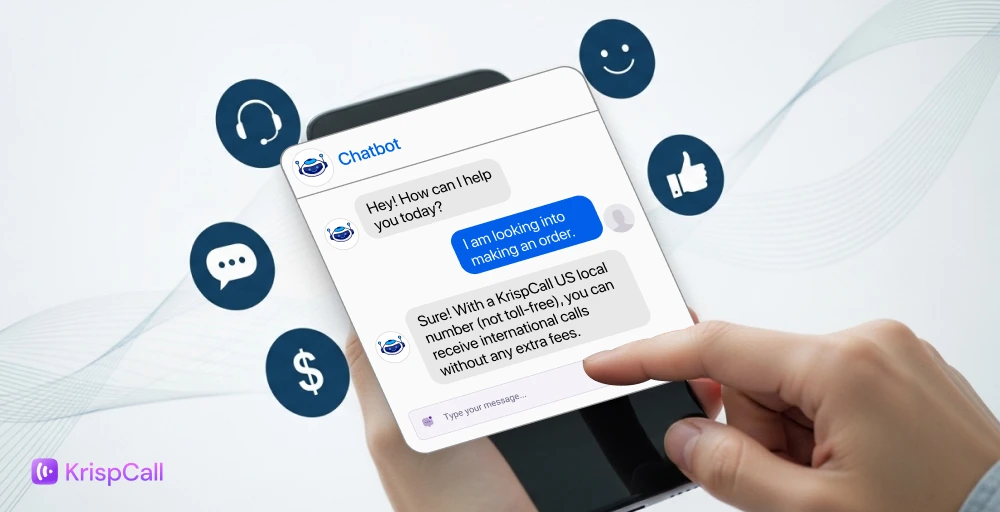
Chatbots are automated conversational tools powered by conversational AI that guide users through prompts, answer FAQs, and complete simple tasks. They work by using predefined flows or AI-driven responses to understand customer input and deliver the next best answer.

Chatbots use AI to help companies with onboarding, product recommendations, order tracking, customer support, and lead capture.
Real-world example
Sephora’s conversational AI chatbot offers personalized product suggestions to its users after a quick question about skin type and preferences. This interaction helps shoppers discover the right items quickly and boosts conversions without requiring a human advisor every time.
3. Social media messaging
Social media messaging uses platforms like Facebook Messenger, Instagram DMs, WhatsApp, and X (Twitter) messages to talk directly with customers. It works by allowing brands to reply instantly, automate basic responses, and handle inquiries within channels people already use daily.

Many contact center solutions follow this format to make customer support, order updates, appointment scheduling, and product inquiries more accessible.
Real-world example
Domino’s “AnyWare” messaging system lets customers order pizza through Messenger, WhatsApp, and even Twitter DMs. Users simply send a message, and the system guides them through placing an order, checking delivery status, or recording their usual meal, all inside the social platform itself.
Benefits of conversational marketing
A conversational marketing strategy helps you enhance your customer experience with personalized, two-way interactions that feel natural and timely. Let’s understand some of the core advantages it brings to everyday customer journeys.
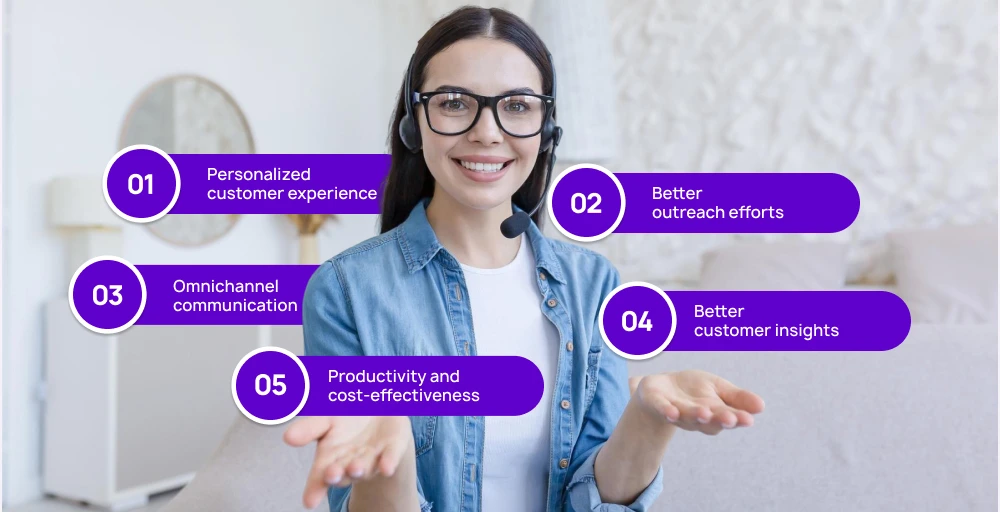
Personalized customer experience
When you are present on the channels customers prefer, whether live chat, chatbots, or social media messaging, you will set the tone for a smooth interaction from the start.
It shows that your brand is ready to help at their pace and convenience. Customers can get the information they need instantly, in a format that feels tailored to them.
Better outreach efforts
With conversational marketing software, you can see how visitors behave across apps, websites, and social media platforms. These insights help you understand common patterns, like frequently visited pages, drop-off points, and hesitation moments. This allows you to modify your effort to be more relevant and timely.
Omnichannel communication
Implementing AI bots and automations, virtual agents, and connected systems ensures customers can move from one channel to another without repeating themselves. Whether the conversation starts on a website chat, social messaging, or a chatbot prompt, the experience stays consistent and uninterrupted.
Better customer insights
When customers trust the interaction, they share clearer details about their questions and challenges. This gives human agents the context they need to resolve issues faster, while AI-driven flows can analyze customer needs early and support them with more accurate responses.
Productivity and cost-effectiveness
AI-enhanced conversational marketing helps teams handle large volumes of conversations without expanding staffing costs. Automated flows, virtual agents, and smart routing free human reps to focus on complex cases, raising overall productivity while reducing operational expenses.
The dos and don’ts of conversational marketing
The do’s and don’ts of conversation marketing that help you approach outreach effective and consistent across every channel are:
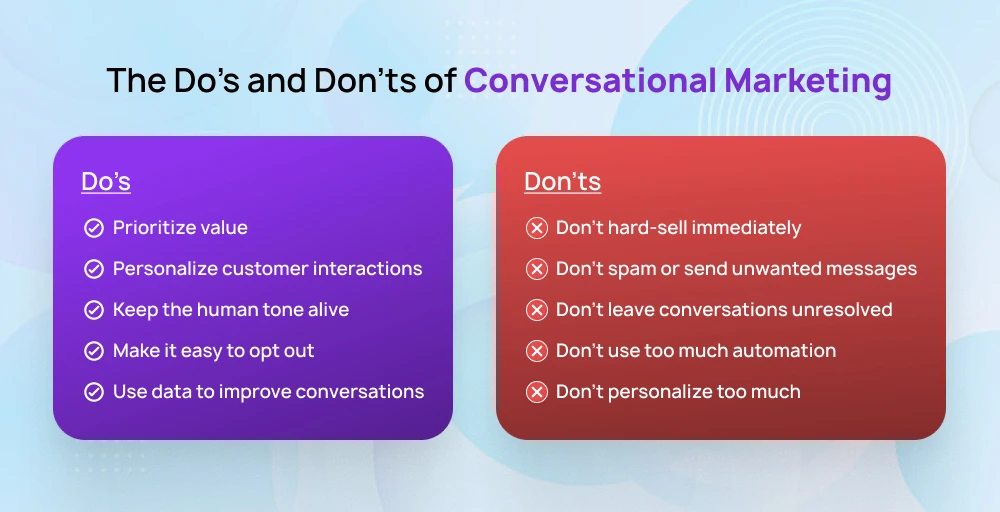
Do’s
- Prioritize value: You need to prioritize value over anything else and make every interaction genuinely helpful. Share clear answers and practical guidance instead of steering customers toward a sale. When people feel supported, they trust your brand more and stay engaged longer.
- Personalize customer interactions: Your past interactions with your customers are the goldmines of context, so dig deeper into them and tailor your responses accordingly. Even if you are just acknowledging what they’re looking for or referencing earlier questions can make the whole conversation feel relevant and intentional.
- Keep the human tone alive: The key here is to keep the tone friendly, empathetic, and direct, like how humans talk, even when you use AI bots or automated flows. Train chatbots to acknowledge their concerns, respond naturally, and also make it easy to switch to a human agent whenever the conversation needs a personal touch.
- Make it easy to opt out: Give customers control over the interaction. Provide simple options to exit a chat, stop notifications, mute updates, or request a human agent. This respects their comfort level and keeps the experience stress-free.
- Use data to improve conversations: Pay attention to the insights your tools collect from common questions, drop-off points, browsing patterns, and feedback. Use this information to refine scripts, improve responses, and create smoother conversions across every channel.
Don’ts
- Don’t hard-sell immediately: When you immediately jump into a sales pitch, the new visitors are bound to be overwhelmed. Let your conversation unfold naturally, answer questions, offer guidance, and understand their needs before suggesting a product or service. This keeps the interaction comfortable and builds trust.
- Don’t spam or send unwanted messages: Don’t send messages your customers didn’t ask for. Unwanted outreach or too many updates feels intrusive and can easily push people away. Keep each of your text messages relevant, timely, and tied to the customer’s action or requests.
- Don’t leave conversations unresolved: Never drop a chat halfway or ignore follow-ups. Use reminders or automated prompts to check in and make sure the customer got the help they needed. A simple follow-up can close information gaps and prevent frustration.
- Don’t use too much automation: Automation helps, but relying on it entirely can make interactions feel stiff or repetitive. Balance conversational marketing chatbot with easy access to human agents, especially when the issue requires empathy or a detailed explanation.
- Don’t personalize too much: Too much personalization can give off a stalker vibe and can make your customer uncomfortable. Avoid overly specific details or referencing information they didn’t directly share during the conversation. The goal is to enhance their experience, not drive them off.
Maximize customer engagement and boost your marketing efforts with KrispCall!
A well-built conversational marketing approach makes every interaction feel timely, personal, and purposeful. When supported by the right tools, it strengthens customer engagement, drives consistent brand visibility, and helps your team make more conversions with less effort.
But without the right platform, these interactions can quickly become disjointed, overly automated, or disconnected from what customers actually need.
KrispCall ensures your conversions stay meaningful. Its unified callbox, virtual numbers, AI-assisted feature, and multi-channel capabilities help you answer faster, understand customer intent clearly, and deliver personalized support without losing the warmth of human interaction. It blends efficiency with authenticity, so every message, call, or chat reflects your brand’s reliability and care.
See how KrispCall can strengthen your marketing conversions and enhance every customer touchpoint. Book a demo and experience the difference for yourself.