

Modern businesses are ditching traditional phone lines and embracing more innovative communication solutions.
VoIP texting has emerged as a game-changer, enabling companies to send SMS to customers instantly through an internet connection. Whether you’re confirming appointments, closing deals, or keeping customers informed, VoIP texting delivers the speed and flexibility businesses demand.
So, let’s look at use cases of VoIP texting across different industries.
What is VoIP texting?
VoIP texting uses the internet to send and receive SMS messages, using a VoIP number rather than a traditional cellular network. With this, you can make calls using smartphones, computers, and tablets using a VoIP messaging app.
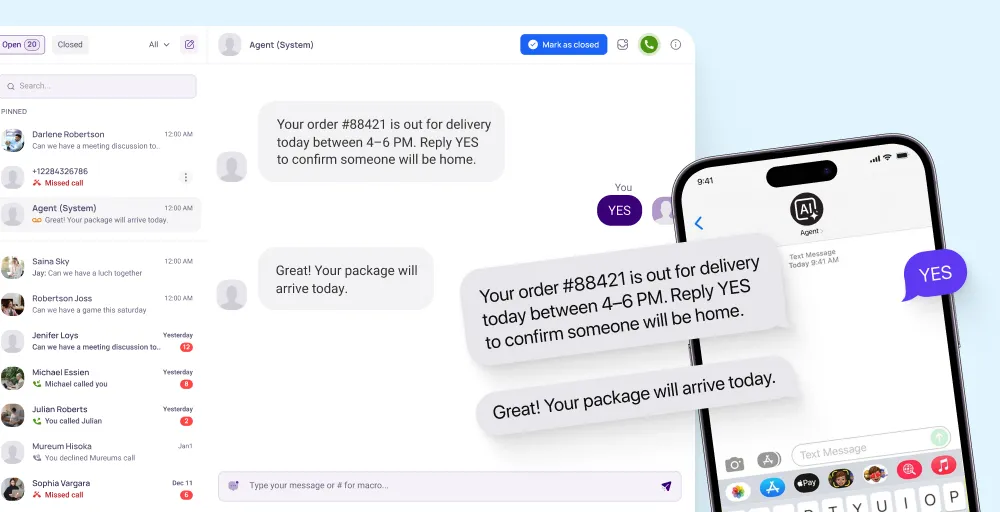
It converts your text messages into digital data packets that travel through your internet connection to reach recipients. VoIP texting is known for its versatility: you get features like automated responses, scheduled messages, shared numbers, and seamless integration with business tools, all at a fraction of the cost of traditional texting.
For businesses, VoIP benefits mean professional communication without being tied to a desk phone or personal mobile number. Your team can respond to customers from anywhere, automate messages, and maintain a consistent brand presence across all communications.
Top 10 industry use cases for VoIP texting
VoIP texting is used across various industries to enhance business communication and customer engagement.
Here’s a quick overview of the use cases of VoIP texting to enhance their operations:
| Industry | Specific use cases |
| Customer support & service | Appointment reminders, order updates, issue resolution, support ticket notifications |
| Sales and marketing | Order confirmations, shipping updates, promotional campaigns, and product launches |
| Healthcare & medical | Appointment scheduling, prescription reminders, test result notifications, and patient follow-ups |
| Real estate | Property inquiries, viewing confirmations, lease updates, open house notifications |
| Hospitality & Travel | Booking confirmations, check-in reminders, travel updates, and guest experiences messages |
| Financial services & insurance | Claim status updates, payment reminders, account alerts, policy change notifications |
| Education & Online Learning | Class reminders, assignment deadlines, course updates, and parent-teacher communication |
| Marketing & lead generation | Campaign updates, special offers, feedback survey, promotional messages |
| Event management | Event reminders, schedule changes, ticketing information, and attendee coordination |
| Logistics & transportation | Delivery updates, route changes, tracking notifications, and driver coordination |
1. Customer support & service
VoIP texting enables customer support teams to respond to inquiries faster and more efficiently than via phone or email. Customers can quickly text their concerns, and support staff can reply in real-time or use automated responses to provide updates. This helps reduce wait times and ensures more timely responses.
It’s also valuable for sending proactive updates, such as appointment reminders, order confirmations, or issue-resolution notifications. These quick messages help prevent misunderstandings and reduce the need for repeat follow-ups. Customers appreciate the convenience of being kept informed through simple text alerts.
By shifting common inquiries to VoIP-based messaging, companies can reduce call volumes and operational costs. The system also improves customer satisfaction by giving them a communication method that feels natural, fast, and accessible.
2. Sales and marketing
Sales teams rely heavily on speed, timing, and personalization, all of which VoIP texting supports. By using VoIP texting, marketing teams can send real-time order confirmations, shipping notifications, discounts, and promotional offers. These quick touchpoints increase customer engagement and create opportunities for recurring sales.
Businesses can also use SMS automation to nurture leads at different stages of the sales funnel. For example, texting prospects about limited-time offers, new arrivals, or scheduled follow-ups can significantly boost conversion rates. Personalizing these messages further enhances engagement and customer loyalty.
VoIP texting offers marketers a more reliable, responsive channel than email. Customers are far more likely to open and respond to SMS messages, allowing businesses to deliver targeted marketing with better overall results.
3. Healthcare & medical
Healthcare providers benefit greatly from VoIP texting because it simplifies administrative communication with patients. Clinics and hospitals use it to send appointment reminders, follow-up instructions, medication alerts, and wellness check-ins. These automated text messages reduce missed appointments and improve overall patient engagement.

For secure communication, VoIP texting platforms can support HIPAA-compliant messaging. This ensures that sensitive medical information is protected while allowing doctors, nurses, and administrative staff to communicate quickly and safely with patients.
The ability to send fast and accurate updates enhances patient satisfaction and reduces administrative workload. Healthcare providers also gain a more organized, predictable communication system, improving the overall efficiency of the medical workflow.
4. Real estate
Real estate professionals rely on strong communication to convert leads into clients, and VoIP texting helps close that gap quickly. Agents can instantly respond to property inquiries, send bulk SMS, photos, or listing details, and coordinate with buyers or tenants without delays. This responsiveness often leads to faster deal closures.
VoIP texting also streamlines reminders for property showings, open houses, and lease renewals. Instead of manually following up with each client, realtors can automate these notifications to ensure consistent communication.
By maintaining timely contact through texting, agents improve their chances of keeping prospects engaged. VoIP texting ultimately strengthens client relationships, reduces manual workload, and enhances the overall buying or renting experience.
5. Hospitality & Travel
The hospitality and travel industry depends heavily on timely and clear communication. VoIP texting enables hotels, resorts, travel agencies, and airlines to send booking confirmations, check-in instructions, travel alerts, and itinerary updates to customers in real time. This ensures guests feel informed and supported throughout their journey.
Here, personalized messages also play an important role. Like, hospitality businesses can use texting to recommend room upgrades, share local attractions, or send exclusive offers. These thoughtful touchpoints significantly enhance the guest experience and increase the likelihood of repeat visits.
By automating routine personalized messaging, staff can focus on providing direct assistance where needed. Overall, VoIP texting helps elevate guest satisfaction and streamline service delivery.
6. Financial services & insurance
Financial institutions and insurance companies use VoIP texting to streamline customer communication, especially for high-priority updates. Texting allows these businesses to send secure alerts about account changes, policy renewals, payments, or claim statuses. By keeping customers informed, they help maintain trust and reduce confusion.
Many financial organizations also use VoIP texting for appointment scheduling or verification purposes. Automated reminders help minimize missed meetings and streamline customer service operations. Clients appreciate receiving timely updates that help them manage financial matters more efficiently.
The security and speed of VoIP messaging make it ideal for sensitive industries. It improves operational efficiency, speeds up transactions, and enhances overall customer loyalty.
7. Education & Online Learning
Educational institutions use VoIP texting to maintain clear communication between students, teachers, and administrators. SMS/Text messages can be sent for class reminders, schedule changes, assignment deadlines, and campus announcements. This ensures students stay informed even when they’re away from email or school portals.
Online learning platforms also rely on texting to improve engagement. Instructors can send follow-up messages, feedback notifications, and updates about course material. Students are more likely to see these messages compared to traditional communication channels.
By adopting VoIP texting, institutions simplify communication, reduce administrative burdens, and increase student engagement. It becomes a key tool for improving educational outcomes and supporting digital learning environments.
8. Marketing & lead generation
VoIP texting is highly effective for lead generation because it supports both automation and personalization. Businesses can use it to deliver special offers, personalized messages, promotional codes, survey links, campaign updates, and review requests that encourage customers to take immediate action. These business text messages create meaningful customer touchpoints without overwhelming marketing teams.
SMS automation also helps companies nurture leads through regular check-ins and follow-ups. Instead of manually sending messages, businesses can schedule them based on customer behavior or predefined workflows. This improves consistency, enhances customer loyalty, and increases conversion rates.
9. Event management
Event planners use VoIP texting to ensure smooth communication before, during, and after events. Texting is ideal for sending reminders about event schedules, ticket information, and venue details. This keeps attendees informed and reduces confusion.
During the event, real-time texting lets organizers notify guests of schedule changes, speaker updates, or last-minute instructions. Instant communication helps maintain order and ensures that guests have the information they need when they need it.
After the event, VoIP texting can be used to send follow-up messages, surveys, or thank-you notes. This strengthens attendee engagement and supports continuous improvement for future events.
10. Logistics & transportation
The logistics and transportation industry relies on precise coordination between drivers, dispatch teams, and customers. VoIP texting enables companies to send timely updates about delivery statuses, route adjustments, or unexpected delays. Customers appreciate real-time order tracking information that keeps them informed throughout the process.
For internal operations, VoIP texting helps drivers receive updated instructions without needing to make calls while on the road. This improves safety and reduces the chance of miscommunication. Also, dispatch teams can automate specific alerts to streamline workflows and provide real-time customer support.
By using VoIP texting, logistics businesses improve overall efficiency, speed up deliveries, and create better communication channels with customers and team members alike.
Key advantages of VoIP texting across industries
VoIP texting for businesses offers several key advantages across industries, such as enhanced efficiency and the ability to use an internet connection.
Here are some of the advantages of texting:
- Speed and efficiency: VoIP texting allows instant communication, eliminating email delays and the time of phone calls. It lets your team manage multiple conversations at once, boosting productivity and response capability.
- Cost savings: Reduce costs by eliminating per-message fees and international texting charges. VoIP texting can be 40-70% cheaper than traditional SMS, especially for businesses with global operations or high message volumes.
- Automation and integration: Integrate your VoIP texting platform with CRMs, scheduling tools, and e-commerce. Automate reminders, follow-ups, and notifications to free your team for more complex tasks.
- Unlimited scalability: Whether you’re a solo entrepreneur or managing a team of hundreds, VoIP texting scales effortlessly with your business. Add users, phone numbers, and message volume without infrastructure investments or carrier negotiations.
- Professional brand presence: Use business phone numbers rather than personal mobile numbers to maintain professional boundaries while building brand recognition. Share numbers among team members so customers always reach someone who can help.
- Comprehensive analytics: Track message delivery rates, response times, and conversation outcomes to continuously improve your communication strategy. Data-driven insights help you understand what messaging resonates with your audience.
Why businesses prefer KrispCall for VoIP texting
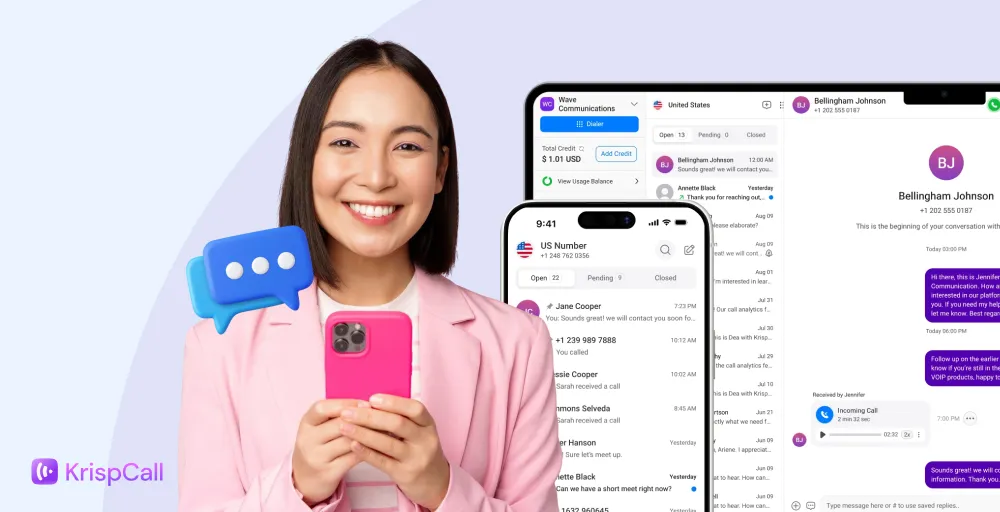
KrispCall stands out as a leading VoIP platform for combining powerful texting features with a clean, user-friendly interface. Businesses can manage calls, SMS, and team collaboration in one unified dashboard.
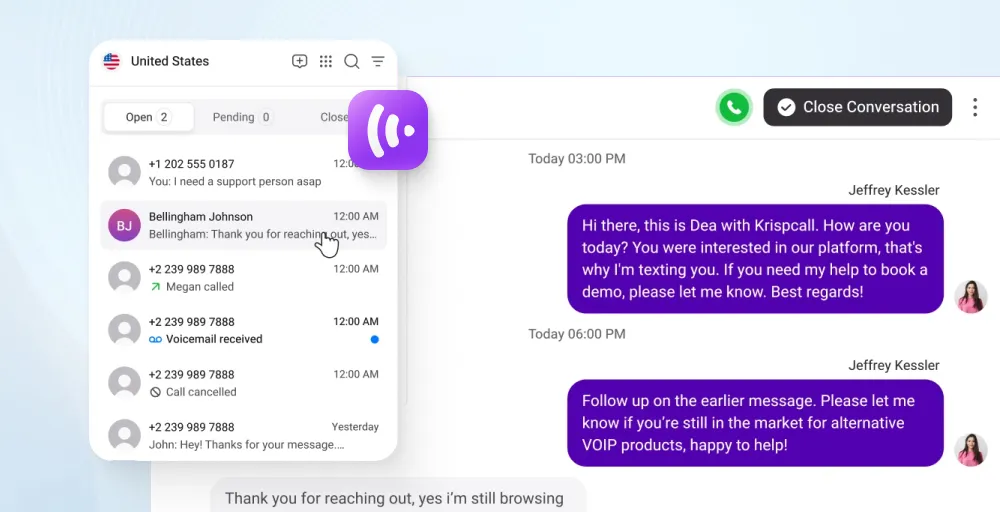
Its automated texting services allow companies to schedule messages, set triggers, and run SMS campaigns with ease. Whether you’re sending reminders or marketing offers, KrispCall ensures high deliverability and reliable performance.
Get started with KrispCall today and experience faster, smarter customer interactions!