


Getting better at anything requires more than just effort. It demands the right guidance and consistent support. This is especially true in a contact center, where agents face complex situations every day that test their skills and patience.
For that personalized guidance, effective coaching helps agents build confidence and sharpen their abilities. Its quality helps them turn challenges into opportunities for agent development. Without this support, even the most capable agents may struggle to deliver top-quality customer experiences.
In this article, you’ll learn why call center coaching is essential, discover proven techniques, and get practical tips to build a coaching program that truly motivates your team.
✨ Key Takeaways
- Call center coaching is a process where supervisors or trainers help agents improve their skills to do their jobs better.
- Coaching in a call center improves agents’ skills, builds their morale, and reduces their stress and burnout.
- Follow best practices like building a knowledge base, using call center technology, tracking progress, and more to get the best out of contact center coaching.
What is call center coaching?
Call center coaching is the process of providing feedback, immediate guidance, and ongoing support to agents. Its main goal is to enhance customer service quality and elevate agent performance to the highest level.
In simple terms, call coaching is a call center strategy used to train new hires or upskill existing agents with new skills and techniques. However, it’s not just about equipping agents with the required knowledge and abilities to meet a set benchmark.

It’s an ongoing behaviour-driven process that helps agents uncover their hidden potential over time to develop sustained improvement.
A great call center coaching example is the live call whisper feature used by the sales team at Atmosphere.tv. During sales conversations, Atmosphere’s sales managers guide agents on setting objectives, positioning the product, and closing the conversation effectively.
What is the goal of a call center coaching manager?
The main goal of a call center coaching manager is to help agents perform at their best while delivering excellent customer service. This starts with spotting performance gaps through call monitoring and then providing focused one-on-one or group coaching to close those gaps.
To make it happen, coaching managers focus on these three key areas:
- Customer service soft skills: They strengthen agents’ skills like active listening, empathy, and problem-solving. With these skill developments, agents can handle every interaction with care and professionalism.
- Product or service knowledge: Coaching managers equip agents with a deep understanding of the product they are selling. It helps agents answer any question with confidence.
- Phone etiquette: They teach agents professional phone etiquette. It includes the right way to greet, transfer, place on hold, and wrap up calls. It leaves customers with a positive impression.
Benefits of coaching in call centers
Coaching in call centers offers numerous benefits for both agents and the organization. On the one hand, it helps agents develop their skills and build confidence. On the other hand, it provides the organization with a way to boost agent engagement and retention.
Let’s look at the advantages of a call coach in detail:
1. For agents
Call center agent coaching benefits agents in the following ways:
- Improved agent skill and performance: Call center coaching software helps agents polish and develop their problem-solving, technical, and call handling skills. A well-coached agent can quickly resolve customer complaints. It then results in a lower average call handle time and higher first-call resolution.
- Increased confidence and morale: Call coaching allows managers to give constructive feedback and positive guidance. They can set goals and support real-time conversations to meet SLAs efficiently. All this results in positive team morale and high agent confidence.
- Reduced stress and burnout: Coaching agents in a call center involves agents handling challenging situations. Situations like high turnover and onboarding pressure, balancing soft skills and technical knowledge, handling escalation, and more. This high-intensity training helps agents to overcome stress and burnout during real conversations.
2. For organization
Organizations can use various call center coaching tools to achieve benefits like:
- Improved employee engagement and retention: Coaching in a call center allows businesses to focus on every agent’s strengths and areas for improvement, individually. On top of that, it works as a medium for open interaction between agents and supervisors. This signals to agents that they are heard and valued, which results in agent commitment and trust.
- Improved customer satisfaction: A well-coached call center agent has the knowledge, confidence, and skill to handle customer interactions. Well-trained agents learn to listen actively and respond with empathy to provide a personalised solution to individual customers. These agents’ response leaves a lasting impact on the customer, leading to higher customer satisfaction and loyalty.
Effective techniques for call center coaching

There are many ways to coach call center agents. Coaching techniques differ as agents’ skills and responsibilities change. So, here are some top contact center coaching techniques used by modern businesses:
1. One-on-one coaching sessions
One-on-one coaching is a private session between an agent and a supervisor. In this call coaching strategy, agents can talk openly about challenges, ask questions, and share concerns.
This approach encourages honest communication, which makes agents more willing to accept feedback and guidance. The direct interaction also means feedback is timely and easy to act on.
Agents can quickly apply the tips and insights from these sessions to future customer calls. This often results in faster performance improvements and better service quality.
2. Role-playing
Role-playing coaching sessions are one of the most effective call center coaching techniques. It lets agents turn theory into practice in a safe and controlled setting.
Agents can test different approaches and interaction styles. This helps them strengthen their skills and boost their confidence.
By acting out real customer service situations, agents get a clear idea of the challenges they might face. It also prepares them to handle a variety of scenarios in live calls.
3. Customized coaching
Customized coaching focuses on the unique needs of each agent. The call coach starts by assessing their own performance through reviews, call reports, surveys, and one-on-one sessions. Then it helps identify skill gaps and areas for improvement.
This coaching plan basically sets clear goals, outlines specific activities, and provides the right resources. For goals, it follows the SMART rule (Specific, Measurable, Achievable, Relevant, and Time-bound). It focuses on resources and supports for the agent to complete each task and reach each goal successfully.
4. Data-driven feedback
Data-driven feedback uses call analysis to improve agent performance. To do that, supervisors review specific factors like script adherence, problem resolution, and emotion control. This makes evaluations fair and consistent in coaching contact center agents.
Then the supervisor gives feedback that is specific and easy to act on. Means agents know exactly what to improve and how to do it. This helps them focus on the right skills and see steady progress over time.
5. Real-time coaching
Real-time coaching is when supervisors guide agents during live calls. It is one of the most direct call center coaching methods. Call center managers listen as agents speak to customers, prospects, or other audiences.
Because this involves real conversations, it can feel challenging for agents. That is why it works best for those who already have some training. It also shows how agents perform under pressure.
Supervisors often listen to calls in the background and give instant tips. If a team has many active calls, call center managers may spend a few minutes on each call and rotate. This way, every agent gets feedback while still on the line.


5 Call center coaching best practices
Other than technique, you also need to follow best practices to get the optimal result. So, here are the top call center best practices followed by many businesses:
1. Build a reliable knowledge source
Start by giving your agents quick access to the information they need. A clear knowledge base, like an FAQ or help center, helps them find answers fast without wasting time.
You can also encourage your most experienced agents to share what they know. Meaning hosting short group sessions or ask-the-expert meetings with an experienced agent. It keeps knowledge flowing and helps everyone improve steadily.
2. Prepare new agents
When onboarding new agents, focus on preparing them well for real calls. For that, use techniques like role-playing coaching sessions. It lets them practice without pressure and build confidence.
Pairing them with a mentor adds another layer of support. By shadowing experienced agents and asking questions, new hires learn valuable new skills faster and feel more ready to handle live calls.
3. Leverage call center technology to target training needs
Technology can make coaching easier and more effective. Tools like call center analytics dashboards highlight where agents struggle, so you can personalise training where it’s most needed.
Also, implement call center automation like interactive voice response for simple or repetitive coaching tasks. It frees agents to focus on complex calls.
4. Support agent well-being
Agents face a lot of pressure, so supporting their well-being is essential. For that, you must provide stress management resources and provide flexible work options. They help to reduce burnout.
On top of that, use call center software to support remote or hybrid work. This flexibility lets agents take breaks when needed and work in call center environments where they feel comfortable.
Even in-office teams benefit from regular breaks and off-call activities. These small changes keep energy high and motivation strong throughout the day.
5. Track progress and keep improving
Finally, make tracking performance a regular habit. Call center KPIs give you clear data to guide targeted coaching efforts and spot what really needs attention.
This way, coaching isn’t based on guesswork. Instead, you create a culture of steady improvement that helps agents grow and your call center succeed.
Common coaching challenges & how to overcome them
Coaching agents isn’t always easy. You’ll face some common challenges, but there are clear ways to overcome them.
- Time constraints: Supervisors often struggle to find enough time for one-on-one coaching with large teams and busy schedules. But with AI-powered coaching tools, you can identify coaching opportunities, so time is spent more effectively.
- Continuous improvement: After meeting initial coaching goals, it can be hard to maintain progress. Therefore, you must build a culture that encourages ongoing learning and celebrates wins, which helps keep motivation high.
- Monitoring progress: It’s challenging when performance data is scattered or hard to access. So, it is best to choose platforms with real-time insights and quality scores. This makes coaching faster and more accurate.
- Maintaining morale and engagement: Coaching sometimes feels negative and lowers agent morale. So, you must focus on positive feedback and make sessions interactive to boost engagement and link coaching to personal growth.
Elevate your team with KrispCall call center software
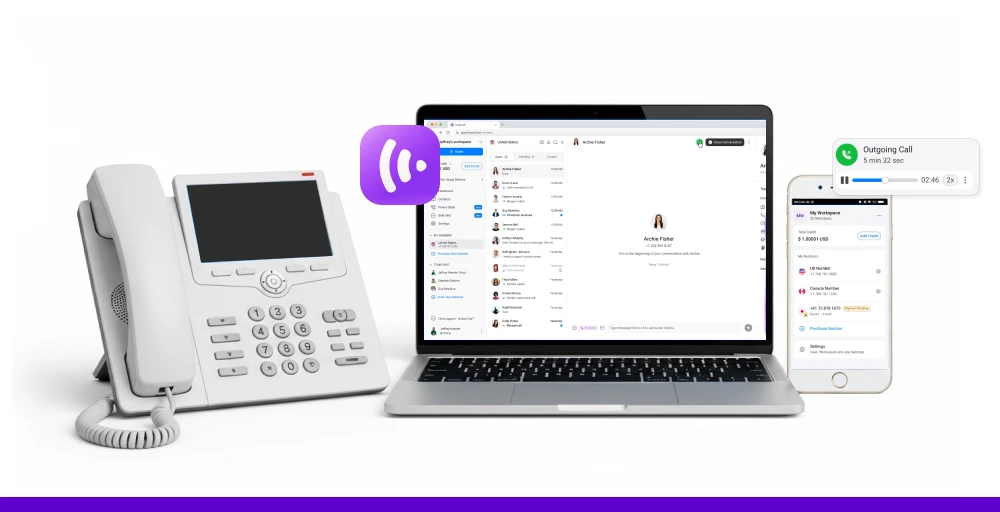
Coaching your agents is a continuous journey, not a one-time event. KrispCall’s cloud call center software supports this by giving your team the right tools every step of the way.
With KrispCall, you get smart call flows that route customers to the best agent for their needs. This helps agents focus on what they do best and makes your whole team more efficient.
KrispCall also offers easy call recording and live call monitoring features. This empowers coaches to review calls quickly and provide valuable feedback, helping agents improve fast.
Ready to boost your call center’s performance? Try KrispCall today and see the difference it makes for your team and customers.