

Making phone calls is still one of the most direct ways to connect with customers, close deals, and build relationships in business. But have you ever wondered what exactly happens when you initiate a call from your mobile device?
Understanding what an outgoing call is, how it works, and why it matters can help you leverage this communication channel more effectively.
According to Cognism’s 2025 State of Cold Calling Report, the success rate for having a conversation from an outgoing call reaches 65.6%. Whether you’re running a sales team, managing a customer service hotline, or simply trying to improve your business communication strategy, mastering outgoing calls is essential in today’s competitive landscape.
In this comprehensive guide, we’ll break down everything you need to know about outgoing calls, from the basics to advanced strategies that can transform how your business connects.
✨ Key Takeaways
- An outgoing call is initiated by the caller to reach someone else, unlike incoming calls, where the other person contacts you.
- There are three types of outgoing calls: manual, automated, and international, which vary depending on purpose, method, or target audience.
- Outgoing calling boosts sales conversion rates, improves customer trust, enables proactive problem-solving, & provides detailed information that emails or messages cannot deliver.
What is an outgoing call?
An outgoing call, also known as an outbound call, is a telephone call initiated by the caller to reach/contact another person or entity. It occurs when someone dials a number to establish a connection, such as for personal calls, customer service outreach, or sales campaigns.
In personal life, outgoing calls are simple, calling friends, family, or colleagues. In business, outbound calls are often strategic tools used by sales teams, customer support agents, or marketing professionals to engage clients, follow up on inquiries, or provide updates.
Example: A sales representative calling a potential client to discuss a product is making an outgoing call. Similarly, a customer service agent checking if an issue has been resolved is another form of outgoing call.
Reasons for making outgoing calls
Outgoing calls are made for a wide range of business, personal, or emergency purposes. The success and nature of these calls are often influenced by various factors, such as timing, recipient availability, and the communication medium used.
Here is a breakdown of the primary purposes for outgoing calls:
- Reaching out to potential prospects to introduce products or qualify interest.
- Seeking specific data, clarification on the project, or answers to unanswered questions.
- Checking in with clients or loved ones to maintain rapport and build trust.
- Confirming appointment times, rescheduling meetings, or syncing calendars.
- Addressing customer complaints, troubleshooting technical problems, or rectifying billing errors.
- Providing status reports on ongoing tasks or notifying stakeholders of a completed milestone.
- Communicating time-sensitive information that requires an immediate response rather than sending a message or email.
How do outgoing calls work?
Making calls is a fundamental aspect of both mobile and landline telephony. Caller IDs are essential for outgoing calls, as they show the caller’s number to recipients, whereas incoming caller IDs disclose the caller’s identity when a phone call is answered.
Here’s how outgoing call works:
1. Initiating the call
An outgoing call starts when the caller inputs the recipient’s phone number, which can be done manually, by selecting a contact, using speed dial, or through voice commands. The phone then establishes a network connection to route the call to the recipient.
2. Set up the connection
After dialing, the phone connects to the network to set up the call. For cellular calls, the signal is routed through the nearest cell tower and the carrier’s switching system. For internet-based calls, like those on VoIP platforms, the call is sent as digital data over the internet and reassembled for the recipient.
3. Ring and wait for an answer from the recipient
When the network identifies the recipient’s device, the recipient’s phone starts ringing. The caller hears a ringing tone while the recipient can answer or ignore the call. If the call is canceled before being answered or due to technical issues, the connection ends. If the recipient is unavailable, the caller may reach voicemail or hear a busy signal.
4. Start the conversation
When the recipient answers, the call enters the active communication phase. At this point, the parties can interact via voice, video, or text, depending on the platform. In cellular calls, communication occurs via radio signals through the network, whereas in VoIP calls, digital data packets carry the conversation over the internet, enabling real-time interaction between the two ends.
5. Terminate the call
The call concludes when either participant decides to hang up or disconnects through the call interface. This signals the network to terminate the connection, freeing both devices to make or receive additional calls. Afterward, call logs are usually updated to reflect the time, duration, and other details of the call, providing a record for reference.
Outgoing vs incoming calls
The main difference between incoming and outgoing calls lies in who initiates the calls. An outgoing call is one you initiate by dialing a number and pressing the call button to reach someone, while an incoming call occurs when your phone rings or vibrates, notifying you that someone or a business is trying to reach you.
Cost-wise, outgoing calls are generally the caller’s responsibility; depending on your service plan, they may incur per-minute charges or be deducted from a monthly allowance. While receiving an incoming call is typically free in most regions, users should be aware of roaming charges that apply when answering while traveling outside their home network.
Both types are crucial for customer engagement and business growth. Incoming calls often reflect demand or issues requiring resolution, whereas outgoing calls enable businesses to drive initiatives, nurture relationships, and generate leads.
Types of outgoing calls
There are different types of outgoing calls, each with its own purpose and method. Its common types include the following:
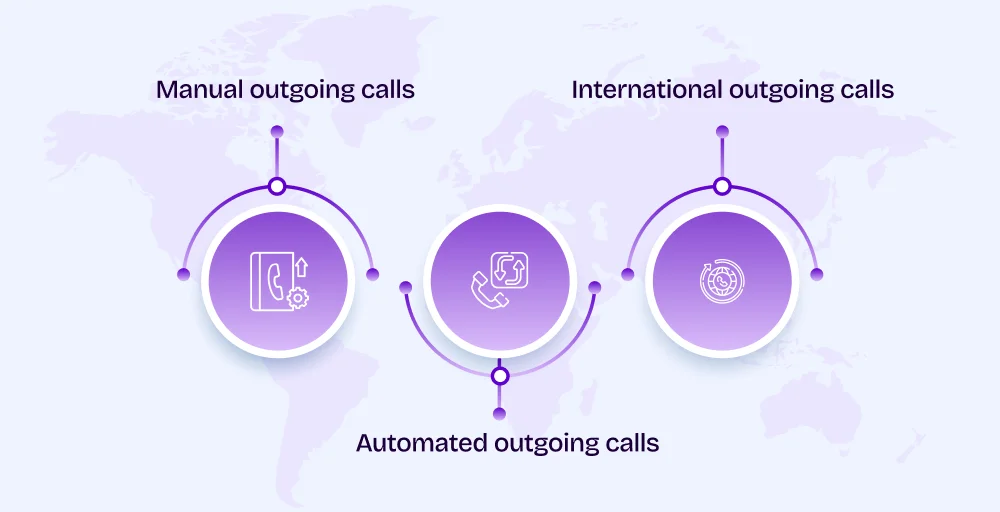
1. Manual outgoing calls
Manual outgoing calls refer to phone calls made directly by a user, without automation or integration into a predefined campaign or queue. These are typically initiated manually by dialing a number and pressing call, often used by sales or support teams to follow up with customers, return missed calls, or handle ad hoc communications.
2. Automated outgoing calls
Automated outgoing calls streamline outbound calling by using software to dial numbers, reducing manual effort and improving agent efficiency. This technology is widely used in call centers for sales, service, and outreach campaigns, enabling faster reach and consistent messaging.
It often integrates with CRM systems and supports features like call scripting, call history, recording, and post-call analytics. While increasing productivity, it must comply with regulations such as the TCPA to avoid legal issues. Automated outbound calling enhances scalability and enables teams to focus on high-value interactions rather than repetitive dialing.
3. International outgoing calls
International outgoing calls are phone calls initiated by a caller from one country to another, connecting to recipients in different nations. These calls typically incur higher charges than domestic calls due to international telecommunication fees and network routing costs.
Businesses use these calls to expand client reach globally, while individuals may use them to stay connected with friends or family abroad. Cost and quality vary depending on the service provider, the internet connection, the destination country, and the calling method (e.g., mobile phones, VoIP, or landline).
Why are outgoing calls important for businesses?
Outgoing calls remain a cornerstone of effective business communication despite the rise of digital channels. They offer unique advantages that emails, texts, and social media simply can’t replicate.
Let’s explore why such outgoing calls are important for businesses:
1. Higher conversion rates for sales teams
Sales professionals know that making phone calls can be crucial for closing deals. Outgoing calls let you have direct conversations where you can quickly address objections, answer questions, and help prospects make decisions.
The personal touch of a phone call creates urgency and helps move leads through the sales funnel faster than marketing alone.
2. Connecting with customers directly
Making outgoing calls helps you build a personal connection with your customers. Unlike emails or messages, phone calls happen in real-time. This allows for quick feedback, clarification, and building rapport.
Direct engagement makes your brand feel more human, builds trust, and strengthens relationships in ways that automated messages can’t. When customers hear a friendly voice addressing their needs, they feel valued and understood, which leads to loyalty and repeat business.
3. Proactive problem resolution
Waiting for customers to complain can hurt your reputation. Making outgoing calls lets you reach out proactively whenever you spot issues, check on customer information, or follow up after a service.

This approach shows that you care about your customers and want them to succeed. By solving problems before they escalate, you can prevent negative reviews, reduce customer turnover, and turn unhappy customers into brand supporters.
4. Better control over communication timing
With outgoing calls, you decide when to talk based on what works best for your business. You can reach out when you are ready, when your team is available, or when your audience is most likely to respond. This control over timing helps you work more efficiently and ensures your team performs well on every call.
5. Gather information and market research
Sometimes you need more detailed feedback than surveys can provide. Outgoing calls let you have real conversations with customers, learn about their challenges, and gain deeper insights into your products and services.
These talks can uncover valuable, detailed information that automated surveys might miss, helping you make better business decisions and stay ahead of market trends.
Difference between outgoing calls and cancelled calls
Understanding the difference between outgoing and cancelled calls clarifies what happens in different calling scenarios and can inform your communication strategies.
| Outgoing calls | Cancelled calls |
| Calls initiated by you to reach another party. | Calls that were started but terminated before completion. |
| Call ranges from seconds to hours, depending on the conversation. | Usually shows 0 seconds or just a few seconds. |
| The recipient sees a missed call if the call is unanswered. | The recipient typically receives no notification. |
| The call logs entry appears as “outgoing” with the call duration recorded. | Its call log entry appears as “cancelled” or “call ended” with minimal or no call duration. |
| May be charged depending on the carrier and whether answered. | Typically not charged as the connection wasn’t established. |
Tips for making outgoing calls for business
Effective outbound calling isn’t just about dialing numbers; it’s an art that combines preparation, timing, and genuine human connection. Here are proven strategies to make your outgoing calls more successful.
1. Prepare before you call
Before dialing, collect all relevant information you may need during the conversation. Being prepared helps you avoid unnecessary pauses, confusion, or incorrect details.
If you’re planning to contact a customer, review past interactions to understand their history and needs. For sales calls, have your key talking points, offers, and product details ready.
2. Communicate clearly and concisely
Clear, direct communication is essential for business calls. Avoid overly technical language or filler words that may confuse the listener. Stay on topic and get to the point quickly, especially for time-sensitive calls such as follow-ups, reminders, or support outreach.
3. Personalize each conversation
Automated, generic communication: personalization makes a difference. Address the recipient by name and refer to previous interactions whenever possible. Personal touches help build trust and show that you value the individual, whether you’re selling a product or providing support.
4. Maintain a professional and positive tone
Your tone sets the direction of the call. Stay polite, calm, and respectful, even in challenging situations. A positive and professional attitude reflects well on your business and can greatly influence the outcome.
5. Listen actively and understand needs
Give the other person space to speak and listen carefully to their concerns. Avoid interruptions and ask thoughtful follow-up questions. Active listening demonstrates genuine interest and leads to better solutions.
6. Offer solutions and value
Rather than simply sharing information, focus on how your product or service solves a problem or meets a specific need. Clear, practical solutions resonate more than generic explanations.
7. Follow up and improve continuously
If a follow-up is required, act promptly and professionally. Regularly review call performance, feedback, and outcomes to identify areas for improvement and continuously refine your approach.
Make your outgoing calls to the next level with KrispCall
Managing outgoing calls effectively requires more than just a phone; it demands a comprehensive communication platform designed for modern business needs. KrispCall delivers exactly that, transforming how your team connects with customers, prospects, and partners worldwide.
KrispCall is a cloud-based calling solution that enhances outbound operations with features like auto-dialing, call recording, and analytics. It integrates with CRM systems for better visibility into communication performance. Custom caller IDs, call forwarding, voicemail drops, call routing, and multi-level IVR ensure every call upholds your professionalism and brand standards.
With competitive pricing and flexible plans, you access enterprise-level features without the high costs. The platform enables international calling to over 100 countries, facilitating global expansion for small businesses.
Ready to see how KrispCall can transform your outbound calling? Grab a free Demo today and experience a wide range of calling features.