

If you run a business, you should know that a customer doesn’t suddenly leave; it often starts with a message that feels irrelevant or impersonal.
And on the flip side, a message that speaks directly to a customer’s needs can grab their attention and keep them for years. In fact, research shows that about 71% of customers expect brands to deliver personalized interactions, and when those expectations aren’t met, 76% walk away.
This highlights a simple truth: people stay loyal to brands that understand them.
In this blog, we’ll explore the role of personalized messaging in increasing customer retention, key messaging channels, and proven strategies to help you keep customers engaged longer.
✨ Key Takeaways
- Personalized messaging strengthens relationships by making customers feel recognized, valued, and understood, which directly improves loyalty and retention.
- Targeted messages delivered at the right moment help prevent churn, encourage repeat purchases, and increase customer lifetime value through deeper engagement.
- Track metrics like customer retention rate, CSAT score, customer lifetime value, repeat purchase rate, and open and response rates.
What is personalized messaging?
Personalized messaging is the practice of sending tailored content using customers’ data. In this approach, instead of sending the same generic messages to everyone, brands tailor each interaction to feel relevant, timely, and meaningful, which matches a customer’s individual preferences, behavior, purchase history, and journey stage.
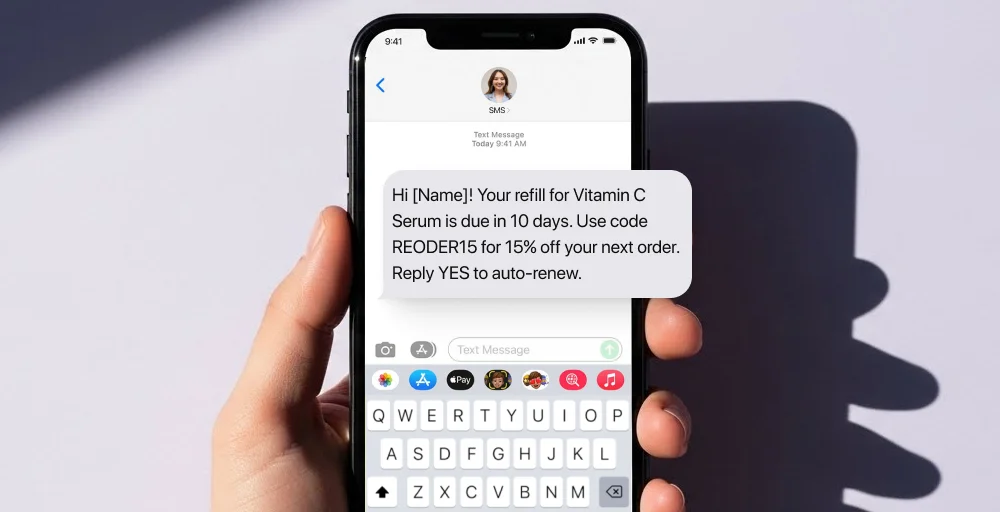
To make this easier, many businesses use personalized messaging tools to send targeted offers, reminders, and recommendations that connect with customers naturally.
- Some examples of personalized messaging are:
An e-commerce site notices items left in the cart and sends a reminder with a limited-time offer to complete the purchase. - After ordering skincare products, a customer receives a message with usage tips and more product recommendations for their next routine.
- A fitness app identifies a subscriber who hasn’t logged in for weeks and sends a reminder message along with a personalized workout plan to re-engage them.
Personalized messaging vs generic messaging
Personalized messaging tailors content to individual customers based on their data, while generic messaging uses a one-size-fits-all approach. Here are some key differences between them:
| Aspect | Personalized messaging | Generic messaging |
| Content relevance | Tailored to each individual’s preferences, actions, and interests | Same message sent to all customers |
| Customer experience | Feels recognized and valued | Feels impersonal and detached |
| Engagement level | Higher response and interaction rates | Often ignored or overlooked |
| Data usage | Uses customer behavior, history, and demographics | Minimal or no data usage |
| Goal | To strengthen loyalty and retention | To focus mainly on mass reach |
Why are personalized SMS messages more effective than generic ones?
Let’s take a look at 5 concrete benefits that show how personalized messages perform better and how they improve results across the customer lifecycle.
1. Higher click & open rates
When businesses send personalized sms messages, recipients are more likely to open, read, and respond because the content matches their interests or timing. SMS messages already achieve open rates up to 98%, and when personalized, they make 57% of customers less likely to unsubscribe because the content feels relevant and valuable.
2. Increased conversion rates
With personalized SMS marketing, messages become clear, actionable, and tailored to where customers are in the decision process, whether it’s booking, buying, or confirming. Businesses report conversion rates of up to 25% for tailored campaigns.
3. Improved customer loyalty
When brands continually personalize messages, recipients notice consistency and relevance. This builds trust and encourages customers to return. Nearly 79% of consumers are more likely to stay loyal to brands that provide personalized experiences.
4. Better customer insights
When SMS messages are personalized and segmented, businesses can track how different segments respond, such as which offers generate the most clicks, which messages lead to conversions, and which are ignored. This feedback helps refine future campaigns.
5. Enhanced customer experience
A well-crafted personalized text respects the recipient’s time, interests, and context. It feels helpful rather than promotional. Research shows that about 71% of customers expect personalized interactions, and 76% feel frustrated when brands fail to deliver them.
Key channels for personalization of customer messages
Here are some channels that enable brands to deliver tailored content, engage customers interactively, and provide personalized offers based on customer preferences and behaviors.
Email campaigns
Email is still one of the most effective channels for sending personalized messages to a mass audience. It allows businesses to use customer data, like purchase history, interests, or browsing behavior, to send tailored product recommendations, reminders, and loyalty updates.
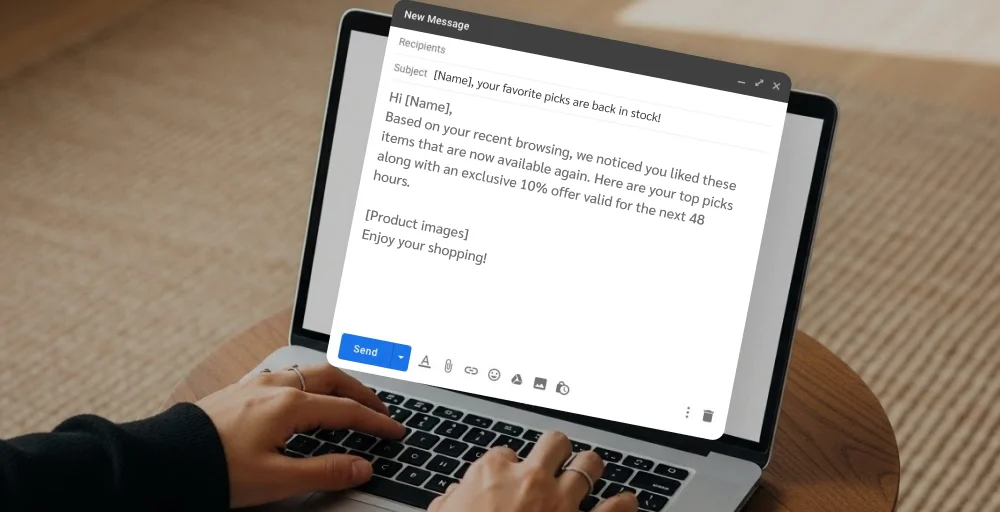
When done correctly, these emails feel helpful rather than promotional, guiding customers toward relevant actions.
Example email template
Subject: [Name], your favorite picks are back in stock!
HI [Name],
Based on your recent browsing, we noticed you liked these items that are now available again. Here are your top picks along with an exclusive 10% offer valid for the next 48 hours.
[Product images]
Enjoy your shopping!
Personalized SMS marketing
SMS delivers a quick, timely, and highly personalized customer experience. It works well for limited-time offers, reminders, confirmations, feedback requests, and service updates. Since SMS text messages feel more personal and direct, customers are more likely to open and respond.
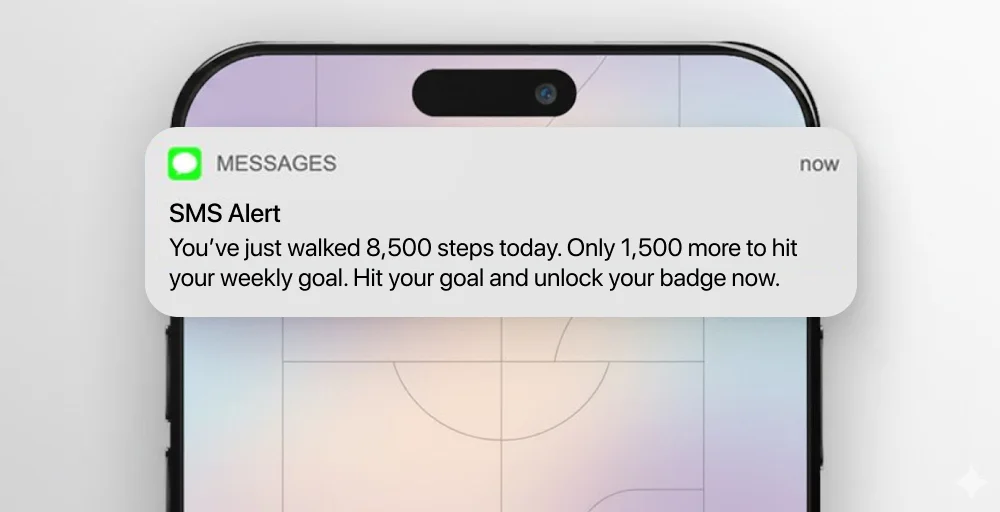
Example SMS template
Hi [Name]! Your refill for Vitamin C Serum is due in 10 days. Use code REODER15 for 15% off your next order. Reply YES to auto-renew.
In-app message and push notification
These messages reach users while they are actively using your website or app. They can highlight new features, tailored prompts, educational content, loyalty points, or reminders based on real-time behavior. When timed well, they gently nudge users to take meaningful actions without disrupting their experience.
Example in-app/push notification template
You’ve just walked 8,500 steps today. Only 1,500 more to hit your weekly goal. Hit your goal and unlock your badge now.
Chatbots and messaging platforms
Automated chat systems on websites, WhatsApp, Facebook Messenger, or support portals can deliver tailored conversions based on customer intent, FAQs, previous interactions, and purchase history. They help users find answers faster and make communication efficient and conversational.
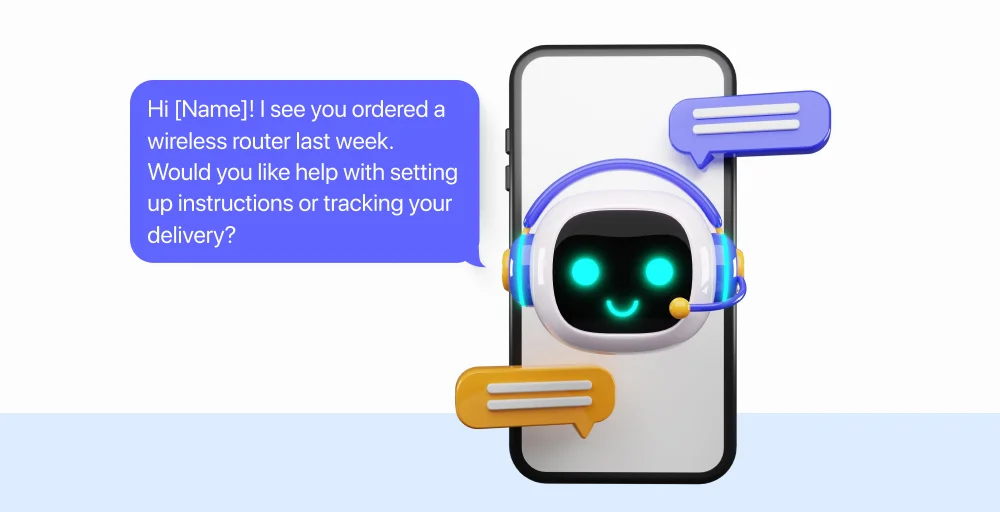
Example chatbot template
Chatbot: Hi [Name]! I see you ordered a wireless router last week. Would you like help with setting up instructions or tracking your delivery?
Click any of the buttons below to get the desired support you need.
Setup Guide | Track Order | Speak to Support
Related Article👉: Automated Text Messaging vs Manual Messaging: Key Comparison
How personalized messaging enhances customer retention
Personalized messaging creates a closer connection between your business and your customers. It helps every interaction feel intentional, timely, and relevant.
1. Increasing relevance and engagement
Personalized messages match the customer’s needs, interests, and behavior patterns. When a customer receives a message that aligns with what they’re looking for, it naturally captures attention.
This relevance turns into engagement. Customers respond more, interact more, and stay connected to your brand because the communication feels meaningful rather than generic.
2. Preventing churn with timely interventions
A well-timed message can guide customers when they’re losing interest or facing an issue. Quick reminders, check-ins, or helpful updates can pull them back before they drift away.
Quick and meaningful interventions show that you’re aware of their journey. That small sign of care often gives customers the push they need to continue using your product or service.
3. Improving trust and brand loyalty
When messages reflect a customer’s preferences and past actions, it creates a sense of recognition. Customers feel understood, and that understanding becomes the basis for trust.
Over time, this trust strengthens loyalty. Customers are more likely to stay with a brand that consistently speaks to them in a way that feels genuine and personal.
4. Increasing customer lifetime value and repeat purchases
Personalized messages guide customers toward products or services that fit their needs. This guidance encourages them to buy more often and explore higher-value offerings that interest them.
As customers continue to receive helpful suggestions, their long-term spending grows. Each positive interaction adds to their lifetime value and encourages repeat purchases.
5. Improving customer experience across channels
Customers interact through multiple touchpoints like email, SMS, social platforms, and more. Personalized messaging brings consistency across these channels, creating a smooth journey.
When every message feels aligned and relevant, customers move from one platform to another without confusion. This consistent experience keeps them engaged and satisfied.
6. Data-driven decision making and refinement
Personalization gives you data on what customers respond to, what they ignore, and what they want next. This information guides better decisions for future messaging.
As these patterns become clear, you can refine your approach. Each update strengthens your messaging strategy and contributes to long-term retention.
7. Encourage advocacy and referrals
Customers who feel valued often share their experience with others. Personalized messaging nurtures that connection and inspires them to talk about your brand.
Those shared stories turn into referrals. When customers recommend you based on real experience, it brings in new audiences and strengthens retention even further.
Effective personalized customer retention strategies
A retention marketing strategy depends on personalizing messages that help retain customers for a very long time. Some of the effective customer retention strategies are:
1. Tailored message campaigns
Tailored campaigns focus on sending messages based on customer preferences, purchase behavior, and lifecycle stages. Instead of broad promotions, the content aligns with specific needs, such as product recommendations, renewal alerts, or onboarding support. These campaigns build stronger engagement by making every message feel meaningful and timely.
2. Loyalty messaging and rewards
Loyalty messaging helps strengthen your emotional connection with customers by recognizing their milestones and offering rewards for their activity. This includes point updates, exclusive offers, member-only access, or anniversary messages. When customers feel appreciated, they are more likely to stay loyal and increase their long-term engagement.
3. Behavior-based engagement
Behavior-based messaging reacts to real-life customer actions. Messages are triggered by browsing behavior, cart abandonment, app inactivity, or recent purchases. These moments present ideal opportunities to remind, guide, or encourage customers, helping them continue their journey instead of dropping off.
Common triggers include:
- Abandoned carts
- Reorder reminders
- Post-purchase guidance
4. Win-back and re-engagement messaging
Re-engagement messaging focuses on reconnecting with inactive or lapsed customers. These messages acknowledge the gap, offer personalized incentives, or highlight new updates they may have missed. When designed with relevance and warmth, they rebuild interest without feeling pushy.
5. Personalized feedback and follow-up messages
Feedback and follow-up messages help keep the relationship active even after a purchase or service interaction. They may offer product usage tips, seek opinions, or provide helpful resources. This approach shows care, builds trust, and increases satisfaction, which leads to stronger loyalty over time.
Key metric to track to measure customer retention success
Tracking retention requires monitoring both behavioral and engagement indicators. These metrics reveal how customers interact, stay loyal, and contribute to long-term revenue.
1. Customer retention rate: Customer retention metric shows the percentage of customers a business keeps over a specific period of time. It helps assess loyalty, satisfaction, and long-term stability.
Formula:
Customer Retention Rate = [ ( E – N ) / S ] x 100
- E = Total customers at the end of the period
- N = New Customers acquired within a period
- S = Total customers at start of period
2. Customer satisfaction (CSAT) score: CSAT measures how satisfied customers are with a specific interaction, product, or service. It is commonly collected through surveys after an experience.
Formula:
- CSAT Score = (Number of satisfied responses / Total responses) x 100
3. Customer lifetime value: Customer lifetime value (CLV) estimates the revenue a customer is expected to generate for the business during the entire relationship.
Formula:
- Customer Lifetime Value = Average order value x Purchase frequency x Customer lifespan
4. Repeat purchase rate: Repeat purchase rate or also called the repeat customer rate metric, indicates how many customers return to make another purchase. It helps identify retention strength and buying loyalty.
Formula:
- Repeat Purchase Rate = (Number of customers who purchased more than once / Total customers) x 100
5. Open rates and response rates: Open and response rates are the metrics used to measure the success of messaging campaigns, like emails or texts. It measures the engagement with personalized messages.
Formula:
- Open Rate = (Number of opens / Total messages delivered) x 100
- Response rate = (Number of replies or action taken / Total message sent) x 100
Best practices to improve personalized messaging
Personalized messaging becomes far more effective when guided by thoughtful practices that respect customer expectations and deliver meaningful value.
1. Segment your audiences
Group customers based on their behavior, demographics, purchase history, and engagement levels. Segmentation helps send messages that reflect real needs instead of broad assumptions. This leads to higher retention and more relevant conversations.
2. Be relevant and timely
Send messages when they are most useful. For example, post-purchase guides, subscription renewal alerts, or reminders linked to previous actions. Timely and context-aware messaging keeps the customer journey smooth and prevents disengagement.
3. Maintain privacy and trust
Use customer data responsibly and be transparent about how it is collected and used. Trust is strengthened when data is protected, preferences are respected, and messages stay appropriate to customer expectations.
4. Provide a clear opt-out option
Give customers an easy way to manage their preferences or stop receiving messages. An accessible opt-out option shows respect, reduces frustration, and preserves a positive relationship even when the whole interaction pauses.
5. Be responsive
Personalization extends beyond sending business text messages. It also means listening. Respond quickly to questions, feedback, and concerns across all channels. This reinforces care and creates a steady flow of meaningful interaction.