

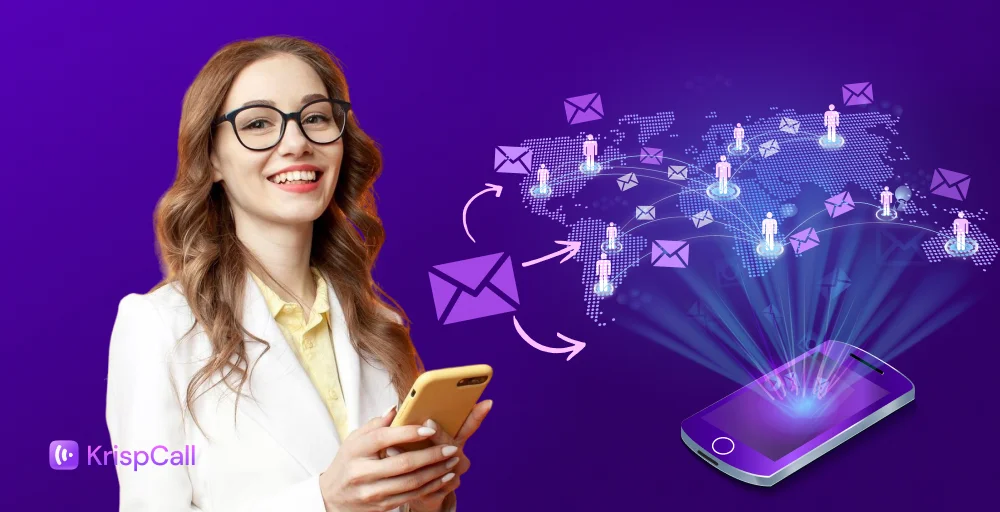
Mass texting has come a long way from its early days. When businesses sent basic one-way SMS blasts with no personalization and hoped for the best, the channel was still powerful. SMS open rates quickly climbed above 98%, and response times averaged just 90 seconds, making mass texting one of the fastest communication methods on the planet.
What began as a simple text delivery has grown into a foundation for real-time customer engagement.
In this blog, we’ll explore where the industry is heading next, from the rise of Rich Communication Services (RCS) to smarter mass texting automation, conversational AI, compliance considerations, and the tech trends redefining the future of messaging.
✨ Key Takeaways
- Mass texting is moving toward more interactive experiences supported by AI, real-time triggers, and richer message formats.
- Integrations with CRM and business tools help create smoother workflows and more consistent customer interactions.
- To be prepared for the future of mass texting, you need to choose the right platform, build a future-ready strategy, develop the team’s skills, and plan your budget and resources accordingly.
Why mass texting need a smarter future?
Customer attention is shrinking faster than ever, and now it has reached 8.25 seconds, which is even lower than that of a goldfish. With people juggling dozens of apps, notifications, and content streams at any given moment, capturing even a few seconds of focus has become a challenge.
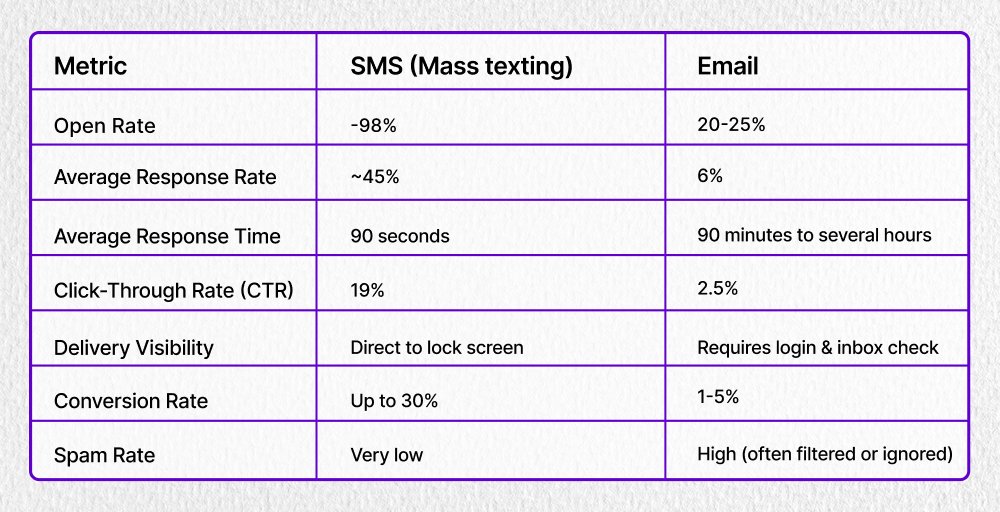
SMS delivers messages straight to the lock screen. This simplicity shows in the numbers: SMS maintains a 98% open rate and a 45% average response rate. Most of these messages are read within minutes, giving businesses an unparalleled window for immediate engagement.
But to keep performing at this level, bulk messaging must evolve. Customers expect relevance, speed, and personalization. That means businesses need smarter tools, from AI in mass texting to advanced texting automation, richer content through RCS, and a platform that turns bulk SMS into meaningful, two-way conversations. Let’s take a look at the metrics of SMS vs email to understand this better.
The current state of mass texting
With near-instant delivery and unmatched engagement rates, companies now rely on mass texting apps to reach customers quickly and consistently. Whether sending time-sensitive updates or high-impact campaigns, SMS remains the go-to channel for businesses that want guaranteed visibility.
Across industries, organizations use mass texting messages for a variety of purposes:
- Alerts & notifications: delivery updates, security alerts, account changes.
- Sales & promotions: flash deals, exclusive discounts, product launches.
- Reminders: appointments, billing reminders, renewals.
- Political outreach: voter mobilization, event invites, fundraising.
- Non-profit campaigns: volunteer coordination, donation drives, urgent calls to action.
Even with the rise of SMS text messages, its limitations are still huge. Many sms are still offering plain text with little to no room for rich interactive elements and basic automation. But, as the adoption increases, the compliance and carrier-filtering challenges also increase, which adds friction for businesses that rely heavily on texting.
The future of mass texting will be defined by AI-driven personalization, RCS messaging, and advanced mass texting automation, transforming simple text blasts into dynamic, intelligent, two-way conversations. These innovations will allow businesses to deliver richer content, automate at scale, improve compliance, and meet rising consumer expectations for fast, relevant, and engaging interaction.
Future trends of mass texting to look forward to
As customer expectations rise and technology continues to evolve, the future of mass texting messages is shifting from basic message blasts to intelligent, interactive, and deeply personalized conversations.
Let’s take a look at the key trends that will reshape how businesses connect with their audience in the coming years.
1. AI-powered personalization and automation
AI is already transforming the future of texting, and its impact on bulk texting will only accelerate. Instead of one-size-fits-all campaigns, businesses will deliver hyper-personalized mass texting messages that adapt to each user’s behavior, preferences, and timing.

What to expect from AI:
- Dynamic message personalization (name, interests, past purchases)
- Behavior-triggered SMS (cart abandonment, inactivity, repeat purchases)
- AI-assisted writing for tone, timing, and content optimization
- Automated responses that feel human, enabling true two-way conversations
- Smart segmentation for higher conversions
With AI SMS tools, bulk texting becomes not just faster but smarter, more relevant, and more effective.
2. Rich communication services (RCS) revolution
Rich Communication Services (RCS) is redefining what text messaging can look like. Instead of plain text, RCS brings multimedia, branding, and interactivity to the customer’s default messaging app.
What RCS introduces:
- High-quality images, videos, and GIFs
- Branded messages headers (your logo, brand colors)
- Read receipts and typing indicators
- Interactive buttons for purchases, bookings, and confirmations
- Carousels for product browsing
With SMS already outperforming email, the shift to RCS will make mobile messaging even more powerful, visually engaging, and action-driven. And RCS becoming the standard, brands are using Luma Labs to instantly generate cinematic video snippets for product teasers, delivering ‘app-like’ visual experiences directly to a user’s inbox without a film crew.
3. Advanced analytics and predictive intelligence
Data will guide the next wave of mass texting automation. Modern platforms will offer deeper analytics to help businesses understand not just what customers do, but why they do it, and what they’ll do next.

What to expect:
- Predictive send-time optimization
- AI forecasting for customer behavior
- Real-time campaign performance dashboards
- Conversion-driven message scoring
- Automated A/B testing for message content
4. Conversational commerce and two-way engagement
The future of bulk sms is not broadcasting, but a conversation that drives real-time interaction, engagement, and even purchase. Instead of pushing out one-way messages, businesses are shifting toward two-way communication that lets customers ask questions, complete transactions, schedule appointments, and receive support instantly.
What to expect:
- AI-powered chat agents handling FAQs, orders, and troubleshooting
- Two-way SMS for scheduling, rebooking, or requesting updates
- Click-to-buy links directly inside text messages
- Automated flows to guide users through decisions
- Instant customer service without requiring apps
5. Omnichannel integration and unified messaging
With the rise of convenience, customer journeys are increasingly spanning multiple platforms. So, in the future, mass texting relying heavily on omnichannel integrations is inevitable. So, businesses won’t treat SMS as a standalone tool anymore; instead, it will work alongside email, push notifications, chatbots, social messaging, and CRM systems.
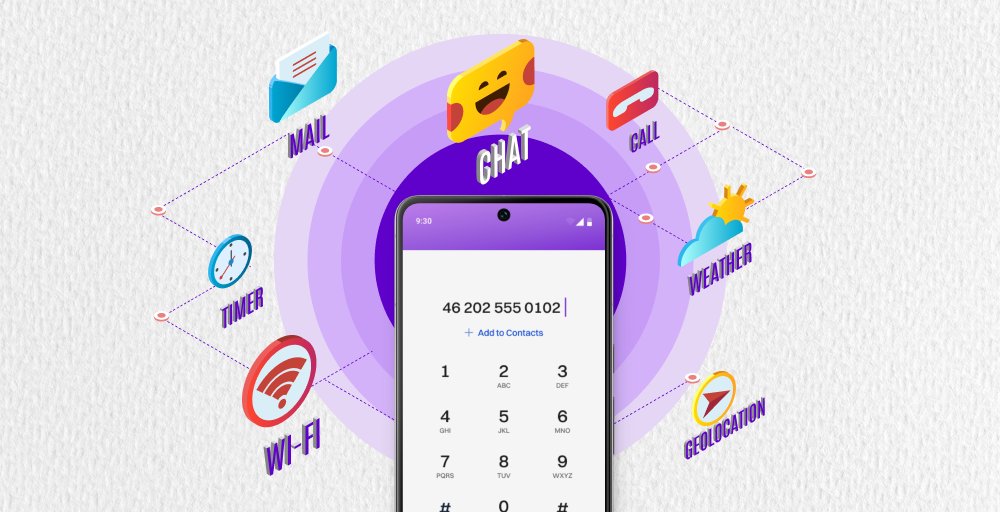
What to expect:
- Centralized customer profiles across all channels
- Consistent messaging, no matter where conversions start
- Intelligent routing from SMS, email, WhatsApp, to even live chat
- Automatic syncing of message history for context-rich support
- Cross-channel automation triggers (e.g., email follow-up if SMS isn’t opened)
This unification ensures a smooth customer experience and gives businesses full visibility into their communication ecosystem.
6. Enhanced compliance and privacy features
As mass texting expands, so do regulatory requirements. Business text messaging laws (TCPA, CTIA, GDPR, etc) are tightening, and carriers are increasing filtering measures. The future of bulk messaging will depend on smarter, automated compliance tools that protect both brands and consumers.
What to expect:
- Built-in opt-in/opt-out compliance flows
- Automated consent tracking and audit logs
- Real-time carrier compliance checks
- Fraud, spam, and phishing detection powered by AI
- Secure encryption and privacy-first data handling
7. Data-driven messaging decisions
While analytics are already important, the next era will take data-driven messaging to new heights. Businesses will leverage big data, machine learning, and behavioral insights to refine every part of their messaging strategy.
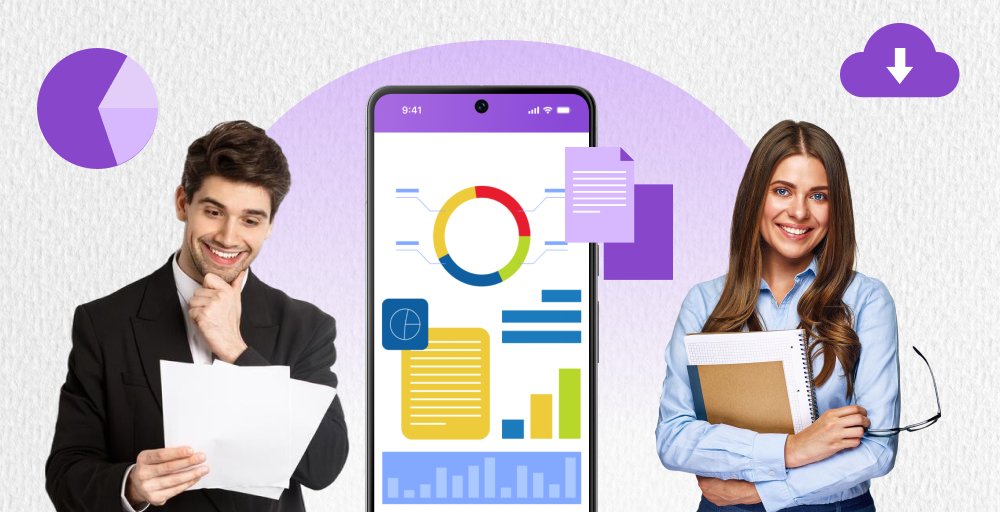
What this trend brings:
- Smart audience clustering based on behavior, demographics, and preferences
- Automatic message optimization using real-time performance data
- Predictive insights to identify high-value subscribers
- Engagement scoring to tailor messaging frequency
- Benchmarks comparing your performance with industry averages
8. Sustainability and responsible messaging
Consumers increasingly expect brands to communicate ethically and responsibly. This pushes mass texting toward more sustainable, respectful, and value-driven practices. This shift also fosters trust and positions brands as customer-first and environmentally conscious, which is an important differentiator in modern marketing.
What sustainable message will include:
- Reducing message overload to minimize annoyance and opt-outs
- Using data to avoid unnecessary or repetitive campaigns
- Prioritizing high-impact, value-based messages
- Transparent consent collection and respectful frequency control
- Replacing paper-based communications with digital SMS alternatives
9. 5G and technical infrastructure
The rollout of the 5G network is set to supercharge the future of texting. With faster speeds, lower latency, and more reliable connectivity enabled by stronger infrastructure, mass sms texting will become more dynamic, interactive, and capable of powering large-scale interaction without delays.
What to expect from 5G:
- Instant delivery of rich media messages (images, carousels, videos)
- Enhanced functionality of RCS messaging
- More stable, scalable messaging for high-volume campaigns
- Real-time interaction for conversational commerce
- Integration with IoT devices for automated alerts and updates
How to prepare for the future of mass texting?
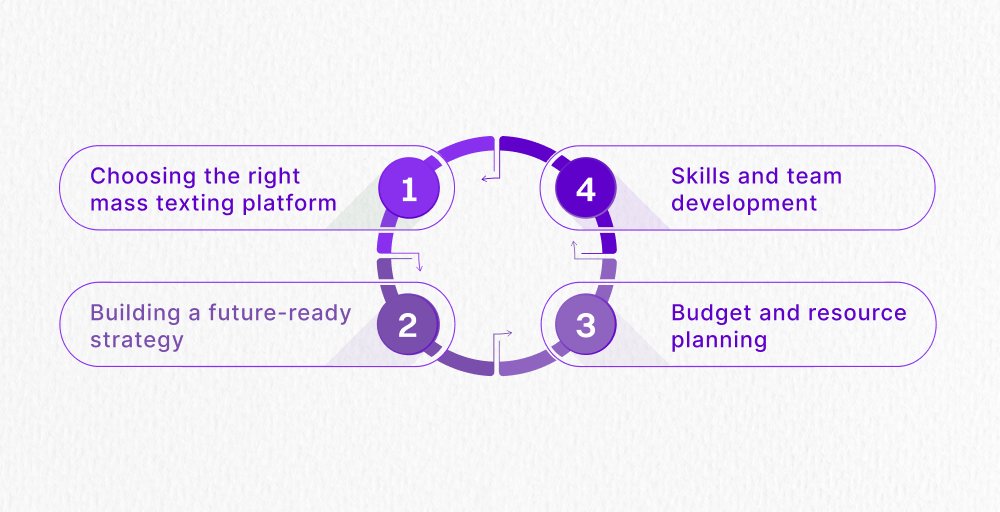
1. Choosing the right mass texting platform
A reliable platform shapes the entire messaging experience. Look for a system that supports high-volume delivery, flexible scheduling, audience grouping, and real-time reporting. Evaluate ease of use, workflow efficiency, and how well the platform fits your existing processes.
A well-chosen platform allows your team to send messages with confidence and maintain consistent output as your list grows.
2. Building a future-ready strategy
A future-ready approach blends automation, personalization, and compliance into a unified plan. Create message flows for welcome sequences, reminders, and follow-up prompts. Use behavioral triggers to respond to subscriber activity.
Keep your database clean by regularly maintaining lists. Prioritize clarity in message content and focus on value-driven interactions.
3. Skills and team development
Your team’s capabilities influence how effectively your program scales. Strengthen skills in audience research, content writing, analytics, and regulatory compliance. Encourage cross-training so each team member understands the full messaging workflow, from list building to campaign refinement.
4. Budget and resource planning
A clear budget ensures long-term stability. Estimate costs for message volume, platform subscription, team capacity, and any automation or integration needs. Review performance data quarterly to adjust spending toward high-performing segments and campaigns.
Additionally, allocate resources for testing new methods and tools that support growth. A structured budgeting plan helps maintain steady progress while keeping your messaging program efficient and predictable.
Why KrispCall stands out as the ideal platform for the future of mass texting?
KrispCall supports bulk SMS, MMS, two-way texting, and a shared inbox that helps teams manage replies efficiently. It offers scheduling tools, drip-style animation, templates, customizable sender IDs, and audience segmentation for targeted outreach.
KrispCall’s AI SMS feature helps generate context-aware messages, automate replies, and create consistent follow-up flows, helping teams maintain timely outreach without heavy manual effort. It also provides SMS-enabled virtual numbers across multiple regions, allowing businesses to handle global messaging from one dashboard.
Start building stronger connections today with KrispCall and set your mass texting strategy in motion.
Conclusion
Mass texting is entering a new chapter shaped by AI, richer message formats, smarter automation, and stronger compliance frameworks. What began as simple text blasts has evolved into a channel that delivers immediate visibility, interactive experience, and high-impact results.
As customer expectations rise, businesses must embrace tools that support personalization, two-way engagement, accurate targeting, and real-time decision-making. RCS, predictive analytics, omnichannel workflows, and 5G will all push messaging toward deeper connection and better outcomes.