

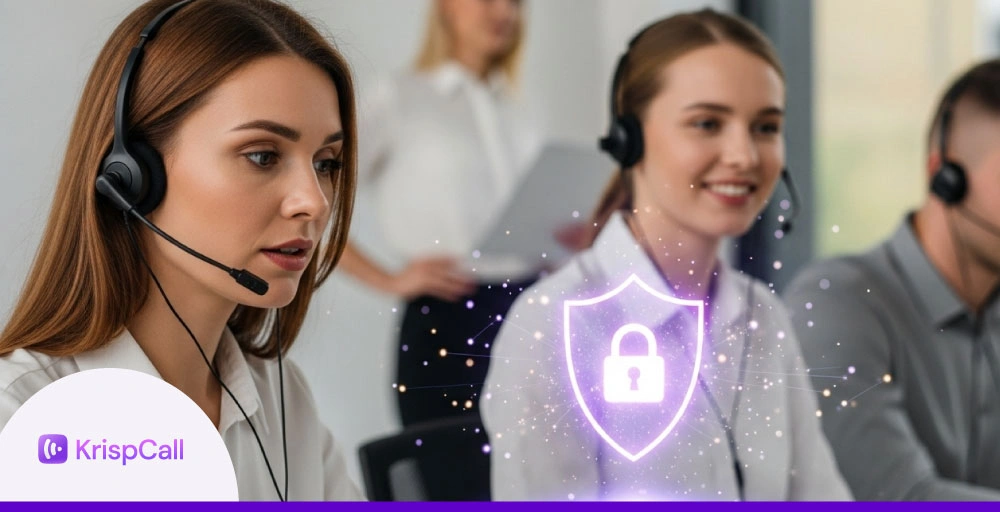
Call centers are moving to the cloud and are adopting hybrid or remote work models. With it, agents have to handle sensitive information, from protecting customer data to managing BYOD policies and VoIP security.
This introduces risk of fraud attempts, data breaches, and compliance issues. So, it is essential for call centers to secure every point of contact.
In this guide, we’ll cover the biggest call center security concerns and show you how to build a stronger, safer environment for both your agents and your customers.
✨ Key Takeaways
- Call center security is the practice used by businesses to safeguard customer information and ensure the secure functioning of call center activities.
- Security in call centers protects customer-sensitive information and mitigates increasing fraud attempts, data breaches, and compliance issues.
- Use a firewall and an intrusion detection system to filter traffic and detect unusual patterns in network traffic for call center security.
What is call center security?
Call center security refers to a set of protocols designed to protect customer data and prevent unauthorized access to systems. It covers everything from ensuring compliance, preventing fraud, to building trust and maintaining reputation.
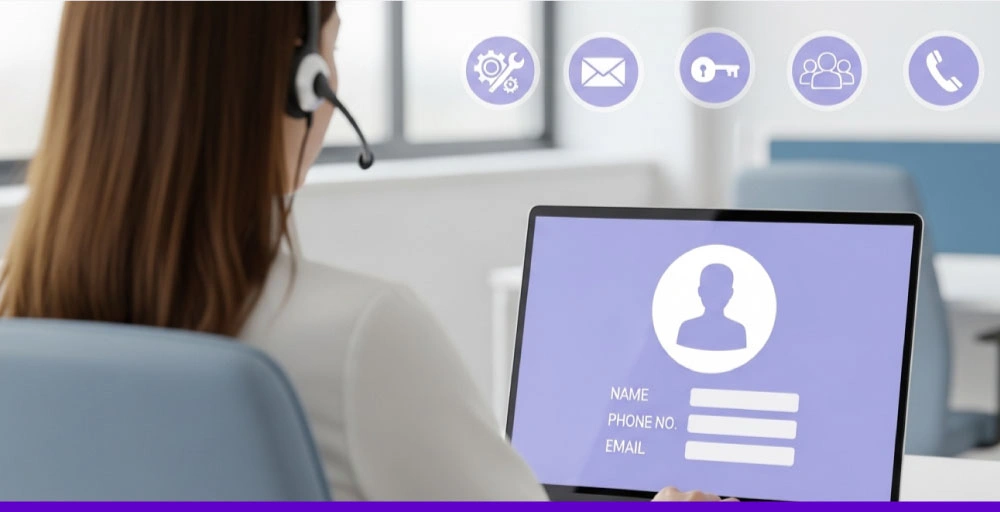
However, its core focus is to ensure that sensitive information stays confidential and untouched. To achieve that, call centers have to follow key security measures like access control, data encryption, employee training, and more.
Security concerns in a call center
Understanding the key security concerns is the first step toward protecting your call center from potential risks. So, here are the key security concerns in a call center:
1. Increased fraud attempts
Call centers face a growing number of fraud attempts each year. A recent TransUnion report states that call center fraud attacks have increased by 10%. Attackers often use spoofed phone numbers and stolen identities to bypass authentication and gain access to customer accounts.
And if you don’t have a strong identity verification in call centers, then even basic customer interactions can turn into major data breaches.
2. Data security breaches
Data security in call centers is constantly under threat due to system vulnerabilities, employee mistakes, or targeted cyberattacks. These breaches expose massive volumes of personally identifiable information (PII). Which triggers lawsuits, regulatory penalties, and long-term brand erosion.
A real-world example is the breach at Sepah Bank, where attackers stole 12 terabytes of data containing sensitive records of senior executives. After demanding a $42 million ransom in Bitcoin, the hackers began leaking the data when the demand went unmet.
3. Insider threats
Insider threats involve unauthorized access, misuse, or disclosure of sensitive data by employees with legitimate system access.
These incidents often arise from negligence, poor security training, or malicious intent.
For example, even sharing login credentials or avoiding call recording security can lead to major breaches.
Insider threats can cause financial losses, expose confidential records, and trigger compliance violations that damage brand credibility.
4. Compliance issues
Call centers have issues with strict compliance requirements to protect customer data and avoid legal consequences. Every call center has to follow set rules to collect, store, and share data. Depending on their industry, they have to follow HIPAA, GDPR, and industry-specific mandates.
A notable case involves Tiger Natural Gas, Inc., which paid $3.7 million in a class-action settlement for violating the California Invasion of Privacy Act (CIPA).
Over 27,000 customers were recorded without proper consent. This call center recording breaches California’s two-party consent law and triggers major legal action.
Why is call center security important?
We previously discussed that call centers handle large volumes of sensitive customer data. They store information like personally identifiable information (PII), payment details, and user authentication records. These valuable data points make call centers prime targets for cybercriminals.
A single data breach in customer data can lead to serious financial losses, reputational damage, and legal penalties. IBM’s 2024 Cost of a Data Breach Report revealed the average data breach now costs $4.9 million. It is a 10% rise from the previous year and the highest on record.
Therefore, weak security not only drains resources but also damages customer trust. Without strong security measures, businesses risk losing both compliance and credibility.
A strong call center security:
- Protects sensitive information: Call centers process highly sensitive data such as personal details, financial records, and health-related information. Without strong security controls, this data becomes vulnerable to theft, misuse, or unauthorized access.
- Avoids financial and legal consequences: Failing to comply with data protection laws like GDPR, CCPA, or PCI-DSS can result in serious fines and legal action. A secure call center helps ensure compliance to protect the organization from costly penalties.
- Mitigates insider threats: Employees can expose data through mistakes or malicious actions. With proper access control and regular call center training, these cybersecurity threats can be mitigated to reduce internal vulnerabilities.


Best call center security practices
Call centers must follow proven security practices that protect both customer data and daily operations and help to stay ahead of evolving threats. The following are some of the best practices:
1. Introduce call encryption
Call encryption in contact centers protects sensitive information from unauthorized access. It converts data into unreadable code, which can only be unlocked with the correct decryption key.
For maximum protection, encryption should be applied to data both at rest and in transit. On top of that, data in transit must also be encrypted as it moves between devices, systems, or cloud environments. It makes handling customer interactions easy for remote agents.
2. Impose data access controls
Employee access control in call centers is critical for preventing unauthorized data exposure. By limiting who can view or handle sensitive information, businesses reduce the risk of both accidental leaks and intentional misuse.
The most effective approach starts with the principle of least privilege. Employees should only have access to the data and tools required for their specific job responsibilities.
Role-based access control (RBAC) takes this further by assigning system permissions based on predefined roles. This simplifies access management and ensures each team member only interacts with the data necessary for their function.
3. Implement firewalls and intrusion detection systems
Firewalls and intrusion detection systems (IDS) are core components of a secure call center infrastructure. They help block external threats and detect suspicious activity before damage is done.
- A firewall creates a protective barrier between the internal network and external sources (Internet). It allows only safe data to pass by filtering traffic based on pre-set security rules. Call centers can boost security by combining firewalls with Web Content Filtering software to block unsafe websites and prevent external threats.
- Intrusion detection systems work alongside firewalls by monitoring network traffic for unusual patterns or unauthorized behavior. When threats are detected, they alert administrators instantly, so quick action can be taken.
Together, these tools provide a strong defense against external attacks and play a critical role in maintaining network integrity and customer data protection.
4. Identify relevant data privacy regulations
Understanding call center compliance requirements is essential for protecting customer data and avoiding legal penalties. Regulations vary by region and industry, so it’s critical to know which ones apply to your operations.
- HIPAA applies to call centers that handle healthcare data in the United States. It mandates strict safeguards for storing and sharing patient information.
- GDPR governs how personal data of EU citizens is collected, processed, and transferred, even if the call center is located outside the EU. Non-compliance can result in severe fines and reputational damage.
- CCPA gives California residents rights over how their data is used. Call centers serving this region must meet its transparency and consent requirements.
- PCI DSS applies to any call center that processes credit card information. It enforces strict technical and operational security standards to prevent payment data breaches.
5. Evaluate and revise your security policies and protocols
Call center security policies must evolve alongside changing threats and regulations. For that,
- Set a review schedule to assess policies, update compliance procedures, and address emerging risks. The frequency may vary based on industry, regulatory pressure, and the sensitivity of customer data.
- Stay informed with legal updates and cybersecurity trends that impact call center fraud prevention and container security. Regulatory bodies often release guidance that can inform policy adjustments.
- Also, keep your team aligned. Provide ongoing security awareness training so employees understand new requirements and follow updated protocols without gaps. Staying updated with recent changes in Social Security identity verification helps in mitigating fraud risks.