

A mobile device is the most valuable property for modern marketing. While overflowing email inboxes and endless social feeds compete for attention, text messages command it, direct, immediate, and personal.
According to G2 SMS marketing research, 91% of customers prefer receiving text messages from businesses, and 90% of consumers respond to SMS within 30 minutes of receiving it. This demonstrates that SMS marketing is a powerful tool for businesses of all sizes to enhance engagement and drive conversions.
Effective SMS marketing goes beyond generic blasts. Success comes from personalization, automation, and conversational approaches that build relationships, foster loyalty, and turn direct engagement into reliable revenue.
✨ Key Takeaways
- SMS text marketing involves sending marketing messages, promotions, coupons, and reminders to customers and prospects via text.
- Text marketing helps businesses achieve high open rates & conversions, cost-effectiveness, enhanced customer engagement, and direct communication.
- To launch text message marketing, build the opt-in subscriber list, craft compelling messages, schedule, and automate campaigns.
- While performing text message marketing, avoid over-messaging, ignoring mobile-first design, omitting an opt-out option, and failing to conduct A/B testing.
What is SMS text marketing?
SMS text marketing is a direct digital marketing strategy that uses text messages to promote products and brands to mobile users who have consented to receive text messages. Unlike intrusive advertising methods, SMS/text message marketing works on a permission-based model where businesses send promotional or transactional messages directly to customers’ mobile phones.
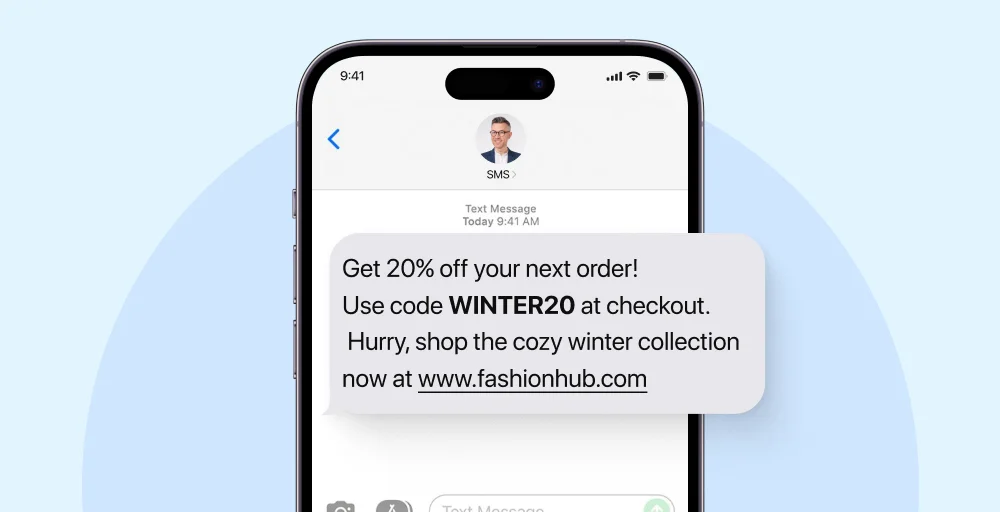
SMS marketing for small businesses levels the playing field. While large corporations may have bigger budgets, a local boutique or service provider can use text messaging to build intimate customer relationships that big brands simply cannot replicate. A personalized text from a neighborhood business feels like a message from a friend, not a faceless corporation.
Why text marketing works for small businesses?
Text marketing works for small businesses because it combines immediacy, affordability, and personalization in a way no other channel can match. It ensures your message is seen quickly, costs very little to send, and provides a direct line to customers without relying on algorithms or crowded inboxes.
1. High open rates & conversions
Text messages lead the way in marketing, boosting a 98% open rate and around 45% response rate, five times better than email (99firms). Most texts are read within 3-5 minutes, allowing for immediate action. This quick response makes SMS campaigns more effective at driving conversions, especially for limited-time offers and flash sales.
2. More cost-effectiveness
Compared to other forms of advertising, text message marketing is considered one of the most cost-effective ways of marketing. For small businesses watching every dollar, SMS marketing delivers exceptional return on investment. With this, your messages can reach large audiences without advertising or campaign spending.
3. Direct communication with the audience
SMS for small businesses provides a direct way for your business to communicate with customers. It sends messages instantly and helps avoid distractions from social media and email. This speed is essential for sharing time-sensitive offers or urgent updates.
For small businesses, engaging with customers in real time allows quick responses to market changes and customer questions. This improves the effectiveness of promotions and business results.
4. Better customer engagement
Text messages are short and to the point; they feel personal and prompt an immediate response. This makes business text messaging more personalized and easier to connect with the audience, enhancing customer engagement. Many marketers also use an AI humanizer to refine AI-generated SMS copy, making messages sound more natural and conversational before sending them to customers.
Small businesses can segment their audience by location, purchase history, or preferences, then craft targeted messages that feel personally relevant.
How to launch text message marketing for your small business
Before you plan to launch text message marketing, you need to understand three important things: your brand, your audience, and your message.
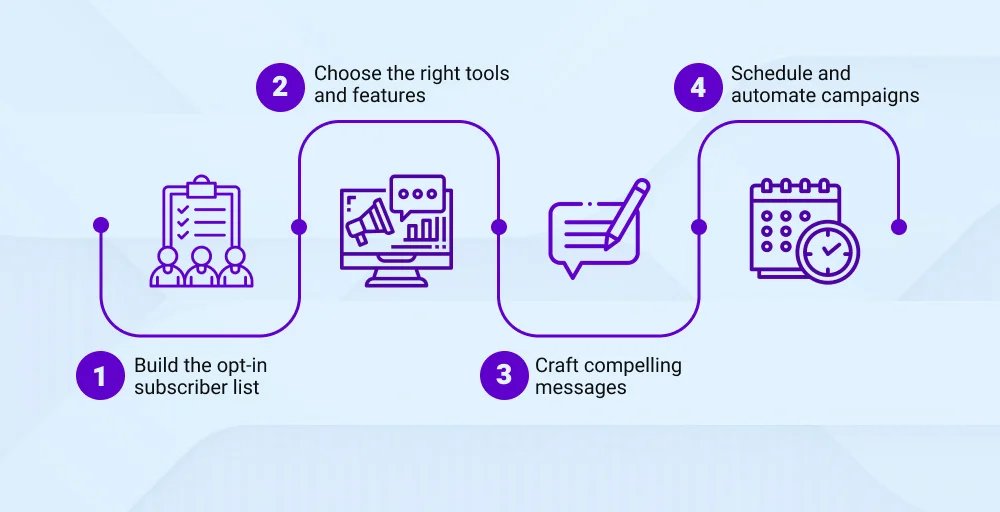
To launch text marketing for small businesses, start with these:
1. Build the opt-in subscriber list
Start by building a subscriber list, obtaining explicit customer consent, and choosing an SMS marketing platform to manage campaigns. Use incentives, clear expectations, and visible signup options to grow your list.
This transparency and simplicity will help small businesses to build trust and keep subscribers engaged from day one. It also sets the stage for effective retention marketing by encouraging long-term customer relationships through clear communication.
2. Choose the right tools and features.
Not all SMS platforms are suitable for small businesses with limited technical resources. Look for an all-in-one solution that manages bulk SMS campaigns, templates, two-way conversations, and integrates with your business tools to reduce workload and enhance professionalism.
Platforms like KrispCall offer essential features for small businesses, including bulk SMS sending and call-to-text integration, allowing customers to text for quick inquiries.
3. Craft compelling messages
When writing to your customers, keep your messages short to adhere to 160-character limits and engaging to capture their attention. Since SMS is inherently brief, focus on delivering clear value, maintaining a friendly tone, and including strong calls to action. Send messages at appropriate times and test for peak engagement to refine your strategy.
4. Schedule and automate campaigns
Automation enhances the effectiveness of SMS by delivering messages at the right moments or scheduling them for delivery at appropriate times. This includes sending abandoned cart reminders, appointment confirmations, review requests, and welcome sequences.
These automated interactions help you maintain a connection with your audience without requiring extra effort.
Best practices and common pitfalls to avoid in text message marketing
Successful SMS marketing depends on balancing value with respect for your audience. For best practices, use names or past purchases to make messages feel personal, send them at the right time, and target the right groups. Keep an eye on opens, clicks, purchases, and opt-outs to see what’s working.
And to avoid pitfalls, don’t send too many messages; 2 to 4 per month is usually enough. Always check that links work on mobile devices, make it easy for people to opt out, and treat SMS as a two-way conversation. Be consistent, relevant, and respectful, and your customers will stay engaged.
Here are the common best practices to follow and common pitfalls to avoid while getting a successful text message marketing strategy:
| Best Practices | Common Pitfalls to Avoid |
| Personalize messages with names and preferences. | Over-messaging subscribers and causing opt-outs. |
| Test different send times to find peak engagement. | Ignoring mobile-first design leads to a poor user experience. |
| Monitor key metrics to improve performance. | Skipping A/B testing and relying on assumptions. |
| Segment your audience for targeted messaging. | Forgetting to include a clear opt-out option. |
| Create urgency authentically with real offers. | Sending texts without explicit permission. |
| Use clear, actionable calls-to-action. | Making messages too sales-heavy or assertive. |
| Maintain consistent message frequency. | Not responding to customer replies or treating SMS as a one-way channel. |
Real-world SMS marketing examples for small businesses across industries
If you are looking to demonstrate how SMS can be adapted across fields, from retail to real estate to nonprofits. These sectors use mass texting to increase engagement, reduce friction, and support customers throughout their journey.
Here are some examples to show how you can use text message marketing for a small business:
Retail and E-commerce
In retail and e-commerce, the message combines personalization, urgency, a clear discount code, and a direct link to shop. The time-limited nature encourages immediate action, and the emoji adds visual interest within the character limit. Also, abandoned cart messages work because they remind busy customers about their intent while sweetening the deal with an incentive to complete the purchase.
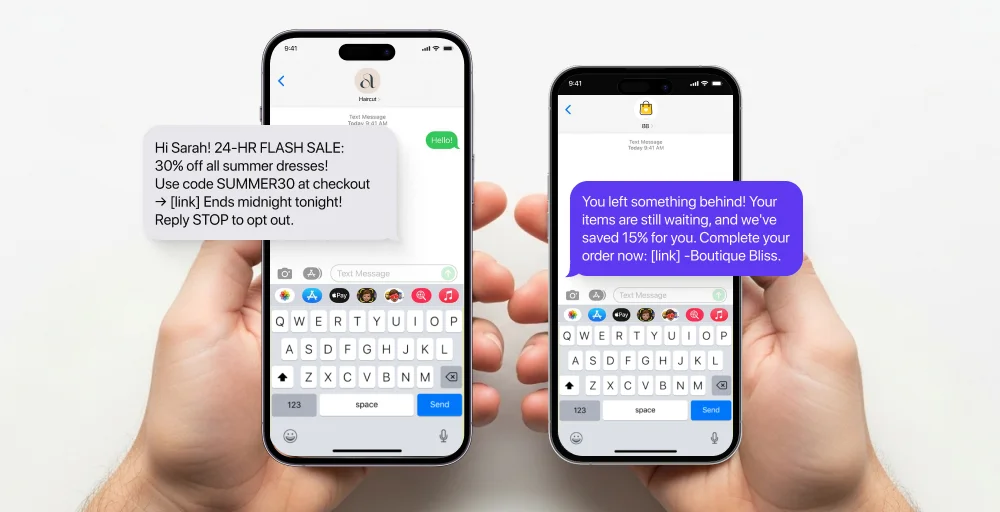
Example 1: “Hi Sarah! 24-HR FLASH SALE: 30% off all summer dresses! Use code SUMMER30 at checkout → [link] Ends midnight tonight! Reply STOP to opt out.”
Example 2: “You left something behind! Your items are still waiting, and we’ve saved 15% for you. Complete your order now: [link] -Boutique Bliss.”
Services and Real Estate
Service businesses reduce no-shows dramatically with these reminders while making it easy for customers to manage their appointments via text. Real estate agents can nurture leads by sending relevant listings based on stated preferences, positioning themselves as helpful resources rather than assertive salespeople.
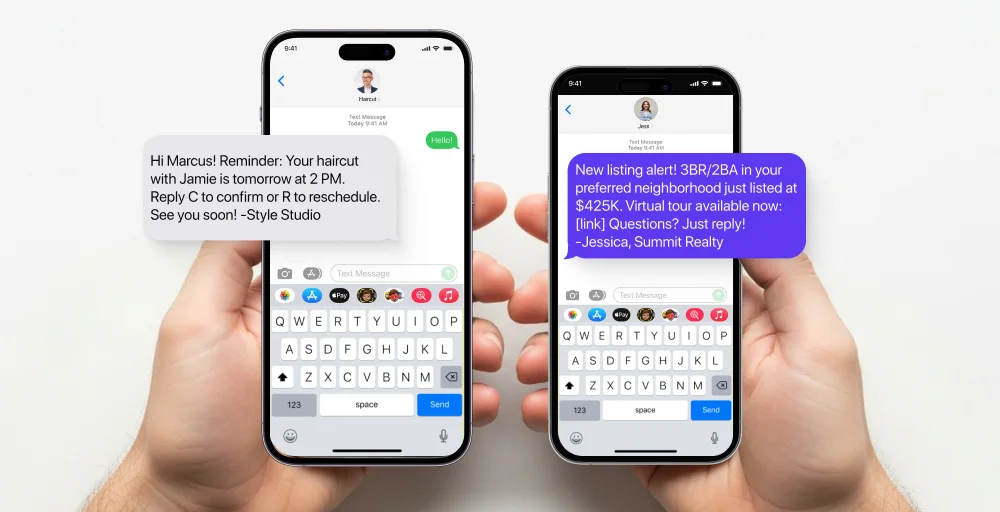
Example 1: “Hi Marcus! Reminder: Your haircut with Jamie is tomorrow at 2 PM. Reply C to confirm or R to reschedule. See you soon! -Style Studio”
Example 2: “New listing alert! 3BR/2BA in your preferred neighborhood just li
sted at $425K. Virtual tour available now: [link] Questions? Just reply! -Jessica, Summit Realty”
Non-Profits and B2B
Non-profits can drive event attendance and participation by making registration easy while reinforcing their mission and impact. B2B companies can gather valuable feedback through simple SMS surveys that respect their clients’ time while demonstrating commitment to service quality.
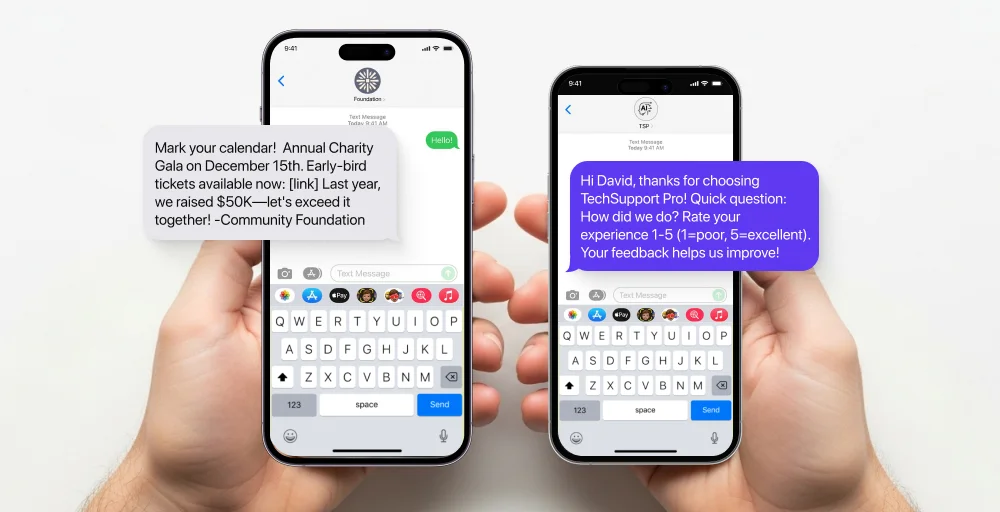
Example 1: “Mark your calendar! Annual Charity Gala on December 15th. Early-bird tickets available now: [link] Last year, we raised $50K—let’s exceed it together! -Community Foundation”
Example 2: “Hi David, thanks for choosing TechSupport Pro! Quick question: How did we do? Rate your experience 1-5 (1=poor, 5=excellent). Your feedback helps us improve!”
Is SMS marketing legal?
Yes, SMS marketing is legal when conducted properly, but regulations exist to protect consumers from spam and unwanted messages. Understanding compliance requirements isn’t just about avoiding fines; it’s about building a sustainable, trustworthy marketing channel.
There are some key regulatory requirements to be followed to make SMS marketing legal, and they are:
- Explicit consent required: You must obtain written consent before sending marketing texts. Oral consent alone isn’t sufficient. Consent must clearly state that subscribers agree to receive automated text messages.
- TCPA compliance: The Telephone Consumer Protection Act (TCPA) regulates SMS marketing in the United States.
- Clear opt-out mechanism: Every promotional message must include simple instructions for unsubscribing, typically “Reply STOP to opt out.” Honor opt-out requests immediately.
- Message frequency disclosure: When collecting opt-ins, disclose how often subscribers will receive messages. Be specific rather than vague.
- Identification requirements: Messages must clearly identify your business as the sender. Recipients should never wonder who’s texting them.
- Record keeping: Maintain detailed records of when and how each subscriber opted in. These records are your protection if compliance questions arise.
- Time restrictions: Don’t send messages between 9 PM and 8 AM local time unless it’s an urgent transactional message, such as an appointment reminder.
- Content Restrictions: Promotional messages must offer genuine value and cannot be deceptive or misleading.
Start your SMS marketing journey with KrispCall!
Text message marketing offers small businesses a unique opportunity to connect with customers in a personal, cost-effective way. With high open rates and direct communication, SMS is a vital component of modern marketing strategies. Success doesn’t require a large budget; it just needs the right tools, a focus on providing value, and respect for subscriber preferences.
To implement SMS strategies focused on personalization, automation, and compliance, your small business needs an all-in-one telephony platform. KrispCall offers robust SMS and bulk messaging features alongside your calling needs. With KrispCall’s unified platform, you can easily manage modern SMS marketing, transforming simple texts into powerful growth tools.
Discover how KrispCall’s SMS and automation tools can help your small business compete!