

Sending the same message to everyone on your list is like shouting into a crowd. Some people might hear you, but most won’t care.
That’s where audience segmentation comes in. By dividing your contacts into smaller, more specific groups, you can send texts that actually speak to their needs, interests, and behaviors.
In this guide, we’ll explain audience segmentation for business text campaigns and how to do it correctly. We’ll also provide easy-to-follow best practices and real-life examples that show how intelligent segmentation can boost response rates and customer engagement.
✨ Key Takeaways
- A business text campaign is a permission-based strategy where businesses send promotional or informational text messages to customers or subscribers.
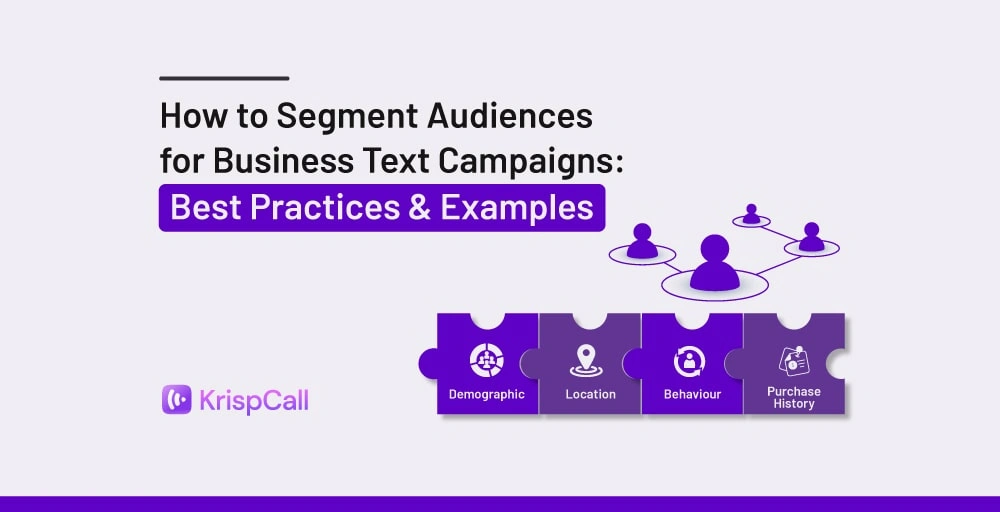
- Audiences can be segmented based on demographics, behavior, engagement level, customer journey, and preferences based on past interactions or queries.
- To collect audience data for segmentation, you can rely on crm and ecommerce integrations, opt-in forms and sms keywords, website and in-app activity tracking, surveys, polls, and a preference center.
What are business text campaigns?
Business text campaigns are marketing strategies that use SMS (short message service) to send targeted messages to customers or subscribers.
These SMS campaigns are designed to promote products, offer discounts, share updates, or build customer relationships through mobile messaging.
Unlike mass texting, modern business text campaigns rely on audience segmentation for SMS marketing to reach the right people with the right message at the right time.
Text message marketing has become one of the most effective ways for businesses to connect with their customers.
However, just sending out generic messages isn’t enough anymore. To stand out and boost results, brands need to focus on customer segmentation tools for text messaging and use innovative strategies to personalize each interaction.
How to segment audiences for business text campaigns?
Audience segmentation for business text campaigns is crucial for delivering effective, personalized, and high-converting SMS marketing messages. Instead of sending the same thing to everyone, audience segmentation allows you to send targeted and relevant messages.
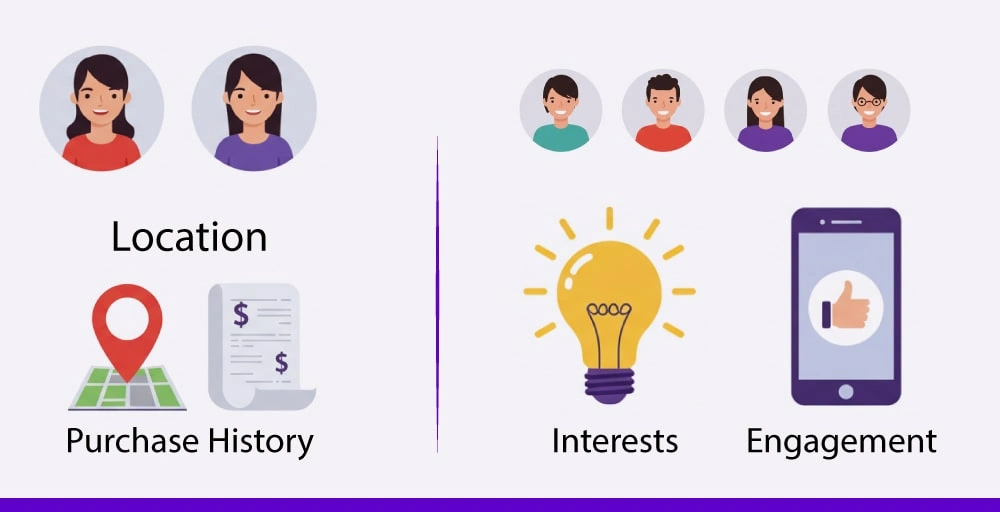
Segmenting your SMS subscribers effectively can improve engagement, conversions, and text message marketing ROI. Here are five methods.
1. Based on demographics
Demographic-based text campaigns segment your audience by age, gender, location, or income level. For example, a clothing retailer might promote various fashions to men and women or offer special discounts to customers in a specific city.
This type of SMS campaign segmentation enables you to send messages that are similar to your customers’ basic attributes.
2. Based on behavior
Behavioral SMS segmentation deals with how your target engages with your business. This includes purchase history, browsing, or app use.
If the customer regularly buys from a certain product category, you can send text marketing personalization strategies based on that activity, increasing relevance and response rates.
3. Based on engagement level
This technique engages customers by how frequently they open or react to your messages. Highly active users can receive special offers, while inactive users can be sent re-engagement messages.
Engagement-level segmentation with engagement levels increases text campaign engagement and maintains your SMS list active.
4. Based on customer journey
Customer journey segmentation for SMS involves sending messages relevant to where someone is in the buying process, such as new leads, first-time buyers, or repeat buyers.
An example would be a welcome message to new subscribers or a reward message to long-term subscribers. This gets your messages to the right place at the right time.
5. Based on preferences and interests
Segmenting your list based on their stated interests or preferences allows for highly personalized SMS marketing campaigns.
You can request a subscription by telling recipients, “Tell us what you’d like to receive messages on new product launches, special promotions, reminders about upcoming events, etc,” and base your subsequent messages on that data. This is one of the most powerful text marketing personalization strategies.


How to collect audience data for segmentation?
In order to create successful and profitable SMS ad campaigns, you need the correct information to determine your audience and what they are looking for.
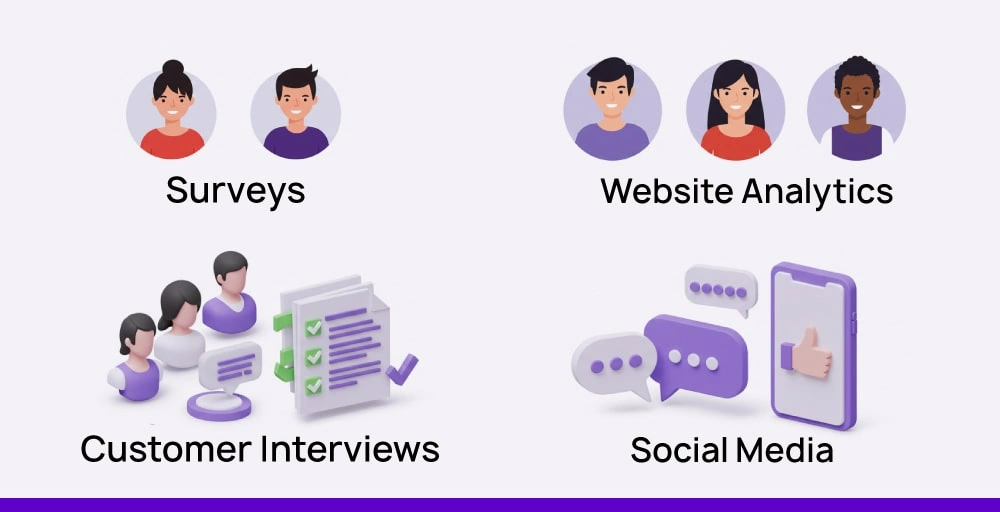
Gathering information about the customer is where effective audience segmentation in SMS marketing starts.
With the right software and process, you can acquire information that helps you create behaviour-based SMS segmentation, preference-based targeting, and maximize overall text message ad ROI.
1. CRM and eCommerce integrations
Attaching your SMS system to your CRM or eCommerce platform automatically captures customer data like purchase history, order frequency, location, etc.
It also makes customer journey segmentation for SMS easier and simplifies the process of personalizing messages based on past behavior and demographics.
2. Opt-in forms and SMS keywords
Opt-in forms and keywords through SMS are simple yet efficient ways to acquire data directly from your subscribers. When users sign up for your list of texts, you can gather general information like name, age, or interest in a product.
You can also use different keywords for SMS in order to segment subscribers into groups of special interest, making more specific and compelling text marketing segmentation ideas.
3. Website and in-app activity tracking
Tracking user behavior within your website or mobile app supports behaviour-based SMS segmentation. For example, if a consumer looks at an item multiple times without buying it, you could send them a reminder or discount.
This sort of mobile marketing audience segmentation makes the most out of engagement and helps in serving timely, contextual messages.
4. Surveys, polls, and preference centers
Surveying your subscribers as to what they would like to see via instant surveys or polls can give you immediate feedback for tailored SMS marketing campaigns.
Preference centers also enable users to update their interests or define what type of messages they would want to receive. These methods increase customer segmentation for text messages and will allow you to deliver what people desire.
Real World Examples of Business Text Campaign Segmentation
Segmentation of the audience allows you to send more meaningful, attention-drawing, and timely messages that have an effect.
Customized SMS marketing campaigns and personalization strategies through text marketing assist different kinds of businesses in connecting their customers more deeply.
Some of the following are a few examples that show ways audience segmentation through SMS marketing is enhancing engagement along with ROI:
Example #1: Restaurant targeting local customers with lunch offers
A local eatery employs demographic-text message campaign promotions to provide lunch specials to only those leads residing or working in the vicinity. By mobile marketing audience targeting, and SMS campaign segmentation, they connect with the most likely to pop in during lunch hours, increasing traffic and daily revenues.
Example #2: Retail business sending exclusive flash sale to VIP customers
A clothing chain uses customer segmentation through text messages to create a VIP list based on purchase history and spending. They conduct a flash sale and provide early access messages to their loyal shoppers in isolation. This action-based SMS segment has high-conversion rates and treats its star customers to unique offers.
Example #3: Gym offering discounted membership to inactive subscribers
A gym club divides customers based on activity and level of engagement. It provides lapsed members a unique discounted price to join up again within a short time frame if they haven’t been in for over 30 days. Such customer journey SMS segmentation helps to win back lapsed customers and improve text campaign response.
Best Practices for Effective Audience Segmentation
SMS marketing audience segmentation is robust, but only if you approach it carefully. To get maximum value from your targeted SMS marketing campaigns, you must follow innovative strategies that have clean lists, relevance in campaigns, and active customers.
The following are essential best practices to help you improve text campaign participation as well as return on investment of your text message marketing.
1. Keep data updated regularly
Ensure your customer data is current and correct.
Regularly syncing your preference centers, eCommerce site, or CRM data enables you to provide behavior-based SMS segmentation and demographic-text-based campaigns responsive to your customers’ most recent activity and interests.
2. Avoid over-segmenting and complicating lists
While it is incredibly enticing to segment into many small pieces, this can lead to disorientation and unnecessary effort.
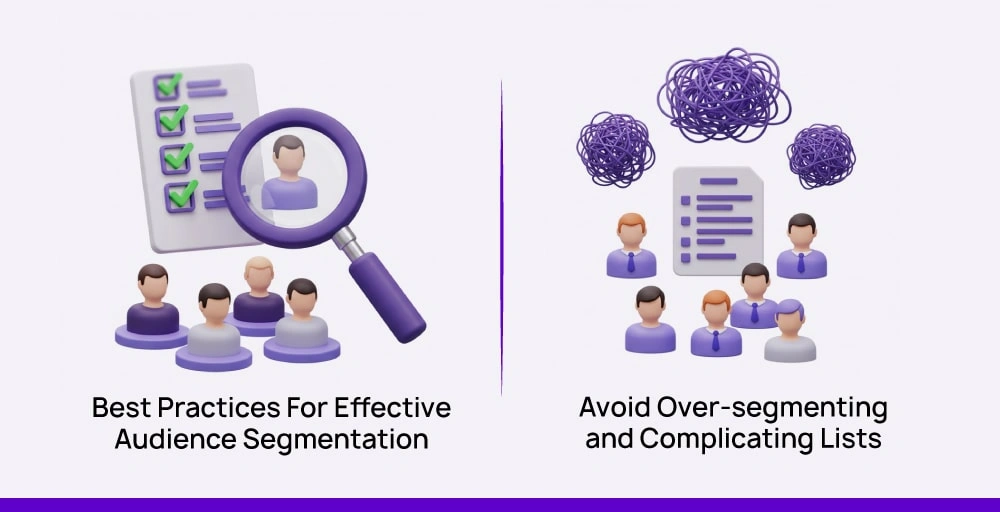
Focus on meaningful groups to reinforce your mobile marketing audience targeting and text marketing personalization techniques without overloading your message system.
3. Test campaigns with different segments
A/B testing can identify which segments react well to a particular batch of messages.
Business text messaging between groups, send times, or offers to optimize your SMS campaign segmentation and see what leads to more engagement and conversion.
4. Respect privacy laws and opt-in permissions
Always remain compliant with SMS rules like GDPR or TCPA.
Make sure all the subscribers have opted in clearly, and gather only what is required. Transparencies build trust and allow for effective customer segmentation for texting.
5. Align segmentation with business goals
Your segmentation strategy must be aligned with your overall marketing objectives whether sales lift, retention lift, or reactivation.
Use customer journey segmentation for SMS to set segments around objectives and measure success accordingly.
Wrapping Up
Effective audience segmentation is key to successful and personalized SMS marketing campaigns.
By using strategies like behavior-based and demographic-based segmentation, collecting the correct data, and following best practices, you can boost engagement, improve ROI, and deliver messages your audience truly values.
Start small, stay consistent, and let data guide your text message marketing success.