


Businesses need efficient ways to communicate with their customers instantly. A2P SMS messaging has emerged as one of the most reliable and effective communication channels, enabling companies to send automated messages directly to mobile phones.
Whether it’s appointment reminders, order confirmations, or security alerts, A2P messaging ensures your messages reach customers wherever they are.
So, in this guide, we will explore everything you need to know about A2P texting.
✨ Key Takeaways
- A2P messaging, or application-to-person messaging, refers to text messages sent from a software application to a person.
- The different types of A2P messaging numbers are 10-DLC, toll-free numbers, and short codes.
- A2P requires adherence to strict compliance rules, including consent, opt-out options, and content guidelines.
- A2P messaging is widely used across industries, including healthcare, retail, real estate, education, legal services, automotive, and home services.
What is A2P messaging?
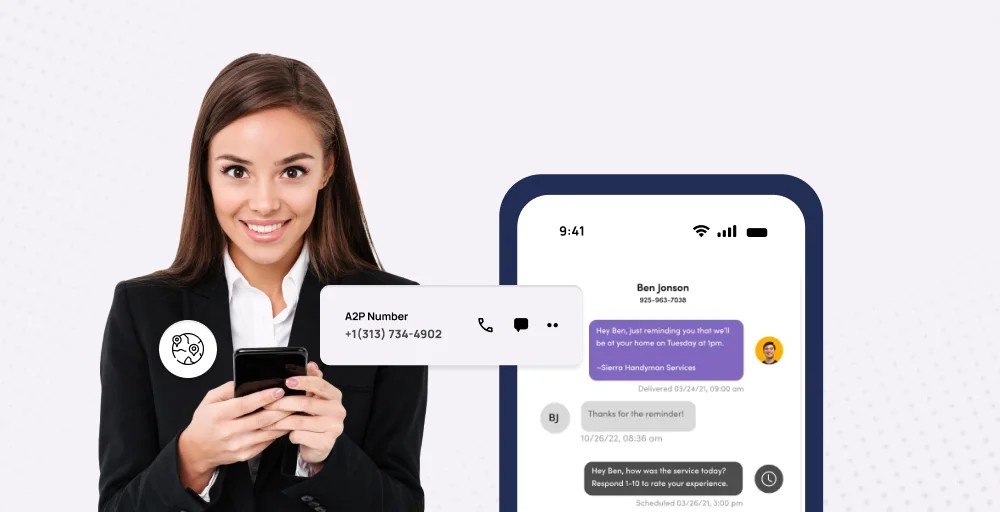
A2P messaging is application-to-person messaging, a type of SMS messaging process where a software application sends text messages to a person’s mobile phone. This application can be web-based or any other software capable of sending messages.
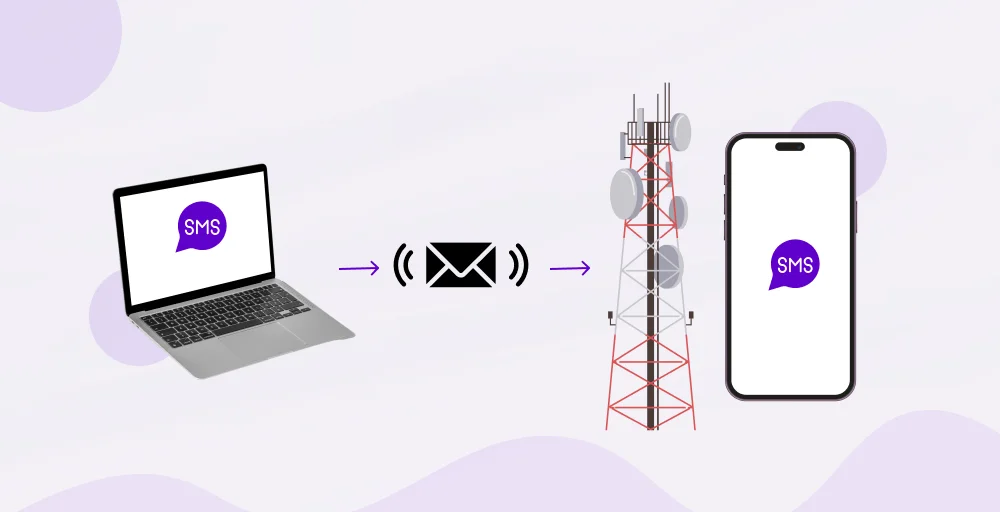
Unlike person-to-person (P2P) messaging, where individuals text each other, A2P involves automated systems sending messages for business purposes such as notifications, alerts, marketing campaigns, two-factor authentication (2FA) codes, and customer service updates.
How does A2P messaging differ from P2P messaging?
A2P (Application-to-Person) messaging and P2P (Person-to-Person) messaging are both SMS/MMS messaging types, but they serve very different purposes and have distinct characteristics. The main differences between them lie in the sender, purpose, and scale of the messaging.
A2P (Application-to-Person) messaging is when a business, app, or automated system sends messages directly to an individual. These messages are usually transactional, informational, or promotional, such as OTP codes, order confirmations, or appointment reminders. A2P messaging is high-volume, often requires short codes or toll-free numbers, and is subject to strict regulations to prevent spam.
In contrast, P2P (Person-to-Person) messaging is direct communication between two individuals. It is personal, informal, and typically low-volume, such as texting friends or family. P2P messages are sent from one mobile number to another, usually at little or no extra cost, and are less heavily regulated than A2P messages.
Benefits of A2P messaging
A2P messaging offers several key benefits for businesses. Some of them are:
- Fast, instant delivery: These A2P messages reach customers within seconds, making them ideal for time-sensitive communications such as appointment reminders or delivery notifications.
- Very high open and response rates: SMS messages have a 98% open rate (Source), with most messages read within minutes of delivery, far exceeding email performance.
- No internet or app required: Recipients don’t need smartphones, data plans, or specific apps to receive A2P messages, ensuring universal accessibility.
- Cost-effective for all business sizes: From startups to enterprises, A2P messaging delivers affordable communication at scale with transparent pricing. It offers a high return on investment (ROI) by delivering predictable, transparent pricing at a massive scale.
- Supports two-way conversations: While automated, A2P messaging supports interactive, conversational workflows. Businesses can facilitate customer support, conduct quick surveys, and collect immediate feedback through two-way texting.
- Handle large message volumes: Automated text messaging systems can send thousands or millions of messages simultaneously without manual intervention.
- Reaches customers globally: A2P messaging works across borders and carriers, allowing businesses to connect with international audiences.
- Reliable for important alerts and OTPs: Critical messages like one-time passwords, security alerts, and emergency notifications are delivered dependably.
What types of numbers are used for A2P messaging?
There are different types of numbers that are used for A2P messaging:
1. 10 DLC
The 10 DLC (10-digit long codes) are the standard 10-digit local phone numbers that businesses register with carriers for sending A2P messages. These are cost-effective and support moderate to high message volumes, making them ideal for most business communications. 10DLC numbers must be registered and verified to ensure compliance and maintain good deliverability rates.
2. Toll-free numbers
Toll-free numbers begin with prefixes such as 800, 833, 844, 877, or 888, allowing businesses to send and receive messages without charging recipients. These are particularly useful for customer service communications and two-way conversations. Toll-free numbers offer higher throughput than 10DLC and are recognized as legitimate business contacts.
3. Short codes
Short codes are 5-6-digit phone numbers primarily used for high-volume messaging, such as marketing campaigns. These deliver the fastest throughput and highest deliverability but come at a premium cost. They’re ideal for large enterprises running major marketing campaigns, voting systems, or mass notifications requiring instant delivery to millions of users.
Rules, regulations, and compliance related to A2P messaging
Understanding and complying with compliance requirements is essential for successful A2P messaging campaigns and for maintaining customer trust.
- Obtaining consent: Businesses must receive explicit opt-in permission from recipients before sending any A2P business text messages. This consent must be clearly documented and obtained through transparent signup processes.
- Providing opt-out options: Every message must include clear instructions for recipients to unsubscribe, typically using keywords like STOP or UNSUBSCRIBE. Opt-out requests must be processed immediately.
- Following content guidelines: Messages must avoid prohibited content such as misleading information, illegal products, or inappropriate material. Content should be relevant, accurate, and aligned with what recipients consented to receive.
- Using approved routes and numbers: Businesses must use properly registered numbers and approved messaging routes. Carriers search for unregistered numbers and may block messages sent through unauthorized channels.
- Respecting message frequency limits: Avoid overwhelming recipients with excessive messages. Establish reasonable sending frequencies based on your industry and customer expectations to prevent opt-outs and spam complaints.
- Complying with local and international laws: Adhere to regulations like TCPA & TCR in the United States, GDPR in Europe, and similar laws worldwide. Requirements vary by region, so businesses must understand the rules in every market they operate.
- Maintaining transparency: Clearly identify your text messages and provide easy ways for recipients to contact you. Transparency builds trust and reduces the likelihood that messages will be marked as spam.
Related Article 👉: Automated Text Messaging vs Manual Messaging: Key Comparison
Which industries can use A2P Texting?
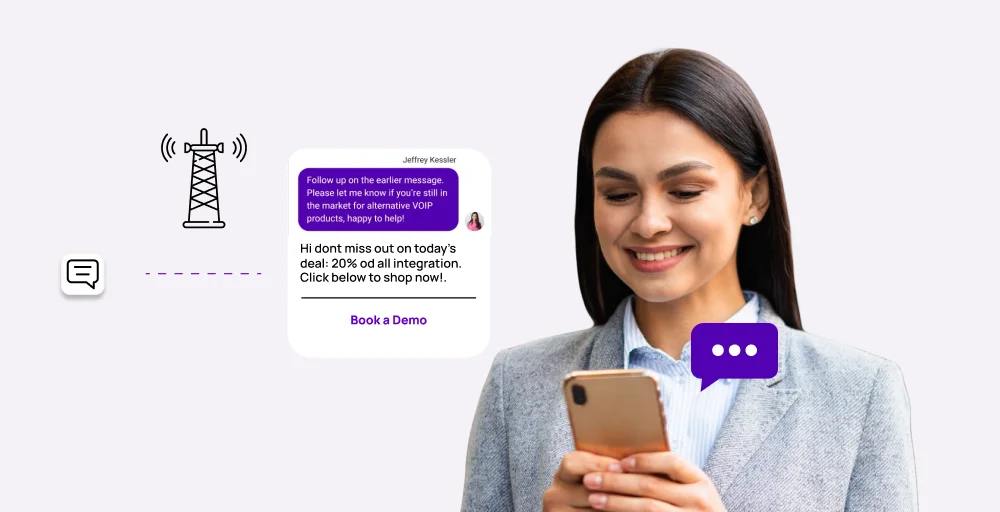
A2P (Application-to-Person) texting has become an essential business communication tool across nearly every sector due to its high open rates and immediacy.
Below is a breakdown of industries that commonly utilize A2P texting:
1. Home services
A home service business needs proper scheduling and instant communication among technicians. A2P helps here in plumbers, electricians, and HVAC technicians send appointment confirmations, arrival notifications, and service reminders to keep customers informed and reduce no-shows.
2. Real estate industry
Real estate industry agents need A2P messaging to enable efficient, timely communication. The A2P messaging helps real estate agents to share property listings, schedule showing appointments, send contract updates, and communicate time-sensitive offers to buyers and sellers.
3. Retail & eCommerce
In eCommerce & retail, sending personalized messages and communication speed are crucial, so they use A2P messaging. With A2P messaging, these businesses can confirm orders and deliveries, share shipping details, offer limited-time discounts, send abandoned cart reminders, and conduct post-purchase surveys to enhance the shopping experience.
4. Healthcare industry
In time, communication with patients matters to life and death in the healthcare industry. And A2P messaging makes such communication easier. This helps medical practices deliver appointment reminders, prescription notifications, test results, health tips, and telehealth links, thereby improving patient engagement and reducing missed appointments.
5. Law firms & insurance agencies
Law firms and legal and insurance agencies need to make frequent contact with their clients to maintain touchpoints and ensure clear communication. Here, A2P helps legal professionals and insurance agents send case updates, document requests, claim status notifications, payment reminders, and appointment confirmations to clients.
6. Education & training institutes
Educational institutions benefit from messaging by keeping parents, students, and staff aligned. So, using A2P messaging, schools, colleges, and training centers communicate class schedules, assignment deadlines, exam reminders, emergency alerts, and administrative updates to students and parents.
7. Automotive dealers & repair shops
For car dealerships and service centers, timely updates are crucial. So, A2P messaging can help them to send maintenance reminders, confirm service appointments, notify customers when vehicles are ready, alert customers to recalls, and offer promotions to vehicle owners.
Maximize your A2P SMS success with KrispCall!
A2P messaging has become an essential tool for modern businesses, offering fast, reliable, and scalable communication across all industries. Whether it’s sending appointment reminders, order updates, OTPs, or marketing campaigns, A2P SMS ensures that messages reach customers instantly, without the need for apps, data, or internet access.
By selecting the right number type, adhering to compliance guidelines, and using approved messaging routes, businesses can maximize the effectiveness of their A2P communication. As the demand for real-time, personalized customer interactions continues to grow, having a dependable platform like KrispCall becomes increasingly essential.
With KrispCall, businesses can run secure, compliant, and scalable A2P messaging campaigns with confidence. Enhance your A2P messaging performance with KrispCall. Get started now.