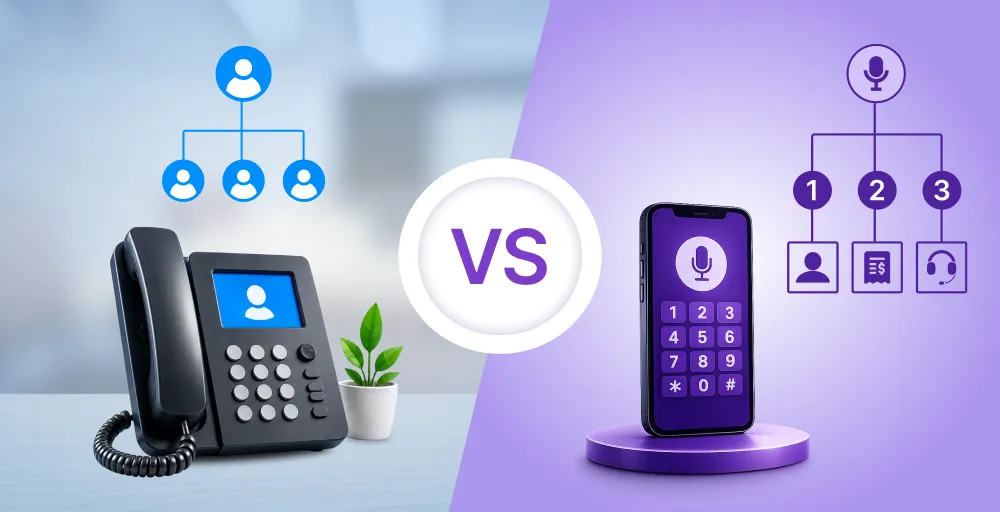



Managing an on-premise traditional contact center often requires significant capital investment in hardware, dedicated IT staff for maintenance, and physical office space for your agents.
A Hosted Contact Center, also known as a Contact Center as a Service (CCaaS), provides a distinct operational model by relocating your entire telephony and customer infrastructure to a provider’s secure data centers.
This architecture provides the foundation for an actual omnichannel experience, unifying voice, email, and chat into a single interface for agents, resulting in an enhanced customer experience.
In this blog, we will explore the benefits of adopting a hosted call center solution and explain its underlying mechanics.
✨ Key Takeaways
- Hosted contact center solution run on cloud infrastructure managed by third-party providers.
- It offers omnichannel support across voice, email, chat, and more.
- A hosted call management system can scale effortlessly by adding agents or features as needed.
- A hosted contact center has lower operational costs with no physical hardware or IT burden.
What is Hosted Contact Center?
A hosted contact center is a customer support software solution operated off-site by a third-party provider. Instead of installing hardware and software on-site, businesses access the hosted VoIP services they need, like call routing, IVR, and CRM integrations, over the internet.
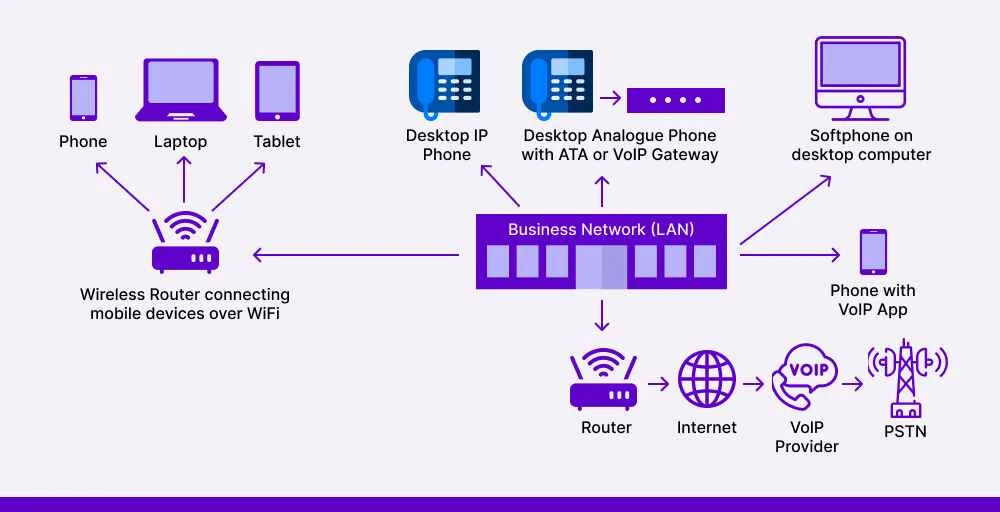
With built-in omnichannel capabilities, hosted contact centers let businesses interact with customers across voice, email, live chat, and social media, all from one interface. This makes agents’ jobs easier and gives customers a smooth, consistent customer experience no matter how they reach out.
Plus, this setup removes the need for large infrastructure investments, and companies can scale operations up or down easily without any service interruptions.
Benefits of Hosted Contact Center
Hosted contact centers offer significant financial and operational advantages.
They address the limitations of traditional on-premise solutions by serving as a multi-channel communication platform for both inbound and outbound communications, and eliminating the need for physical infrastructure.
1. Fast Deployment
A hosted call center solution can be deployed in a matter of days.
As there is no physical hardware to install or configure on-site, businesses can activate agent licenses and begin managing customer conversations much more quickly than traditional on-premises solutions.
2. Easily Scalable
Another key benefit of a hosted contact center is how easily it scales alongside your business.
Whether you’re bringing on temporary agents for a busy season or expanding your reach into new markets, adding users or advanced contact center features takes just a few clicks.
3. Lower Operational Costs
The VoIP-based contact center model converts upfront costs into predictable operational expenditures (OpEx).
By paying a subscription fee for hosted services, businesses avoid the expenses of physical servers, unpredictable maintenance costs, and the need for dedicated in-house IT support.
4. Omnichannel Support
All customer interactions are managed within a single interface. This creates a cohesive system for cloud-hosted customer support.
The agent can view a customer’s entire history here. They can also manage customer support tickets while being on a call and contribute significantly to customer satisfaction.
5. Built-in Advanced Features
Hosted contact centers come with powerful tools that keep supervisors in control. Live dashboards track call queues and agent performance in real-time.
Whereas AI-powered routing connects customers to the right agent more quickly. Also, CRM integrations pull up customer details automatically as soon as a call comes through.
6. Hassle-Free Maintenance
The provider manages all technical upkeep, including software updates, security patches, and system upgrades.
This frees your internal IT teams from patching and maintaining telephony software, allowing them to focus on core business applications.
How Does Hosted Contact Center Work?
Now that the benefits are clear let’s break down how a hosted call management system leverages cloud technology and operates in practice through its core components.
1. Cloud-based Infrastructure
The entire system is built on the service provider’s infrastructure. This includes the servers, data storage, and the telephony backbone, which functions as a hosted PBX for call centers.
Businesses access this platform through a secure internet connection, which eliminates the need for on-premise hardware.
2. Intelligent Routing (ACD & IVR)
The system uses two key technologies to direct customer inquiries:
- Hosted IVR System: An Interactive Voice Response menu allows customers to self-service options (Press 1 for Sales) or provide initial information to qualify their needs.
- Automatic Call Distribution (ACD): After the initial sorting, the ACD routes the interaction to a specific agent or queue based on predefined rules, such as agent skill set, availability, and customer history pulled from a CRM.
3. The Agent Interface
Contact center agents handle all customer interactions through a web browser or an app on their computer or phone.
Calls are managed using softphones, which let agents make and receive calls over the Internet. This removes the need for a physical desk phone, enabling remote access and flexible work arrangements.
4. Applications
Agents access a comprehensive suite of tools through web browsers.
This unified workspace integrates all essential functions, including phone controls, CRM data, ticketing systems, a knowledge base, live chat interfaces, and performance dashboards.
5. Maintenance & Scalability
The provider is responsible for all backend maintenance, including security patches, software updates, and server upkeep.
This means scaling capacity for peak periods is as easy as updating your subscription rather than requiring a new hardware installation.
6. Disaster Recovery
Business continuity is a vital aspect, as the underlying infrastructure is distributed across multiple geographically diverse data centers.
This design removes the single point of failure typical in on-premise systems and ensures that contact center operations remain operational during local disruptions or disasters.
How to Choose the Best Hosted Contact Center?
Before choosing a hosted contact center, try to focus on the specific criteria required for your business. The following six factors can serve as a framework for accessing providers and making an informed decision.
1. Pricing Structure and Value
Hosted contact center providers’ pricing models must be evaluated for transparency and predictability, whether it’s based on per-agent fees, pay-per-use, or a hybrid approach.
Try to find any additional fees for data storage, premium support, or specific CRM integrations so you can accurately estimate the total cost of ownership (TCO) and ensure cost efficiency.
2. Security and Compliance
Your chosen contact center will handle sensitive customer data.
Ask providers for documentation on their data encryption methods, physical data center security, and disaster recovery protocol. Confirm they hold the specific compliance certifications relevant to your industry, such as SOC 2, GDPR, HIPAA, or PCI.
3. Core Features and Integrations
List out all the features that are non-negotiable for your business.
Verify that the platform offers omnichannel support across all your required channels and provides the flexibility to expand into new ones as your business evolves.
4. Practical AI Tools
Instead of generic promises of AI tools, look for specific functions, such as chatbots that can handle routine customer queries, AI-driven analytics that can identify call sentiment, or predictive dialers that increase agent efficiency in outbound campaigns.
5. Customer Experience & Agent Experience
The agent interface directly impacts the operational performance. A cluttered or slow platform increases call handle times and can lead to errors and longer waiting times for customers.
Look for a clean layout, logical workflows, and quick access to customer data and performance dashboards to ensure a positive customer experience and agent productivity.
6. Vendor Reliability and Support
Finally, assess the provider’s operational reliability and support structure. Review their public uptime history, data redundancy protocols, and stated Service-Level Agreements (SLAs).
The provider should offer 24/7 technical support with clear escalation paths for critical issues.