



You’ve probably seen text messages pop up from numbers such as 87563 or 330033, which are not the usual 10-digit phone numbers. These short 6-digit numbers seem unfamiliar, but you can’t escape them; they’re everywhere.
From Amazon sending two-factor 6-digit verification codes to FedEx alerting about your package, businesses use these numbers to connect with customers quickly. These codes are not random; they are short codes.
In this blog, we’ll provide a complete guide to 6-digit numbers, including their definition, benefits, types, setup, and the difference between 10-digit phone numbers.
What is a 6-digit phone number?
A 6-digit phone number, referred to as a short code, is an exclusive number that companies use for sending and receiving text messages, such as promotions, reminders, alerts, and security codes. These six-digit codes are shorter than standard phone numbers used, especially for SMS or MMS messaging, and not for voice calls.
Six-digit numbers are often used for sending bulk SMS because they are easy to remember and can send instant messages to large numbers. They are also used for business promotions, account notifications, and two-factor authentication.
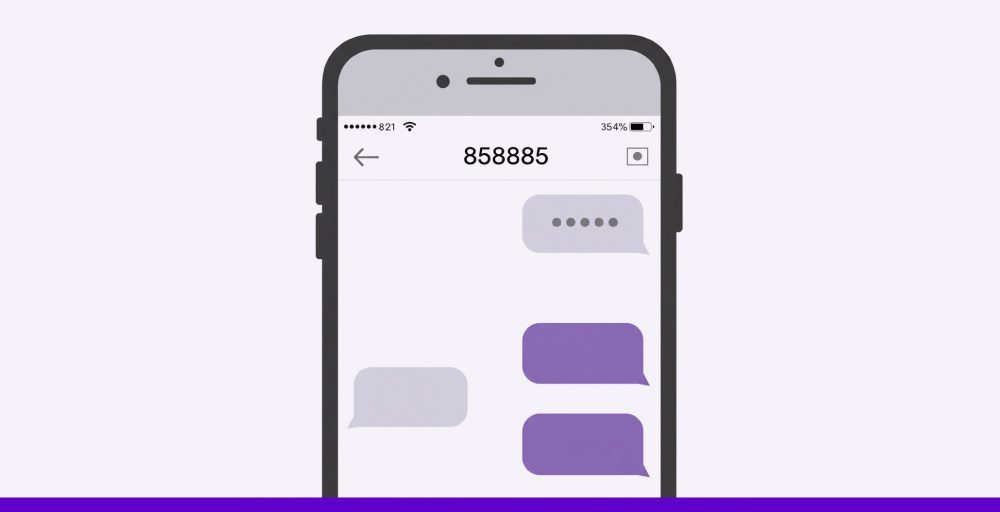
These codes are leased by the Common Short Code Administration (CSCA), which lets businesses send messages reliably through wireless carriers. Once assigned, a short code can be used for one-way messages and two-way communication with customers.
For example, a retailer can use a 6-digit short code to send customers a one-time limited offer. Alternatively, a shipping company can use it to notify customers about the order’s progress.
Short codes are pre-approved by carriers, offering better delivery rates and quicker message speeds than regular telephone numbers.
How do six-digit phone numbers work?
If you want to use a six-digit code, you need to lease it through the U.S. Short Code Registry. Once it’s approved, you can send and receive tons of text messages. This process includes one-time setup fees and ongoing quarterly fees.
Additionally, you must submit an application explaining the exact reason behind your use of the code and the intended recipients.
Compliance is paramount when using shortcodes. The most important regulation is to get explicit permission from customers to text them. Without consent, you can break legislation like the TCPA and face fines.
One simple way to stay compliant is with text-to-join keywords, e.g., “Text JOIN to 123456,” where customers sign up voluntarily. 6-digit codes aren’t free-for-all—mobile carriers and industry regulators monitor their use closely.
As a result, every message must follow strict content guidelines to avoid being flagged as spam. By following rules, you keep your message delivered and create trust with your audience.
What are the benefits of using a 6-digit code?
A 6-digit code is a powerful tool that offers businesses a professional method to engage with customers.
The six-digit numbers are designed for speed, reliability, and credibility, particularly for delivering time-sensitive alerts, promotional messages, or a six-digit verification code.
Here are other benefits of using a six-digit code:
1. Highest message deliverability
When it comes to letting your message reach your audience, 6-digit numbers stand out. These codes are pre-approved by major mobile carriers, so they bypass most spam filters and are delivered directly into customers’ inboxes.
This makes them ideal for sending critical alerts, flash sales, or 6-digit verification codes without any delay.
2. Less filtering by mobile carriers
Unlike regular 10-digit numbers, six-digit codes go through strict verification processes to be certified. This ensures mobile networks recognize your messages as safe and trustworthy. As a result, your messages are less likely to be delayed, flagged, or blocked, even during peak times. Businesses using six-digit codes benefit from more consistent and reliable message delivery.
3. Easy to remember for customers
A short code like “858585” is easily remembered in people’s minds much better than a long phone number like “33-445-9240.” These six-digit numbers are simple, quick to type, and stick in people’s minds.
That makes a big difference when you want customers to act fast, whether it’s texting “JOIN” for an in-store promotion or responding to an online ad. The ease of remembering the number increases the chances of engagement.
4. Easiness of sending high volume quickly
One of the best advantages of using a 6-digit short code is the speed and volume at which it operates. These codes can send up to 100 messages per second, making them ideal for mass marketing efforts, nationwide retail alerts, or appointment reminders.
You will not experience throttling or delays, even if your subscriber list exceeds thousands.
5. Greater brand credibility and professionalism
Customers identify six-digit numbers as well-known brands. Since they’re not similar to the standard text or calling number, it creates a premium and professional feel.
Whether you use them to send a 6-digit verification number to validate account logins or create a timely offer, they bring credibility to your message. This reduces opt-outs and increases customer engagement levels.
6. Database portability
Even if you decide to switch SMS providers, you can continue using the same short code. With this, you avoid potential confusion among customers and reduce the likelihood of losing them. This keeps your customer experience smooth and helps maintain trust in your communications. Ultimately, this leads to a consistent brand image and increased customer satisfaction.
7. Enhanced engagement with interactive messaging
You can use your 6-digit short code to create polls, contests, or even customized customer service. A restaurant can ask customers to text “MENU” to a six-digit number to get the day’s specials and instantly reply with a coupon.
This type of two-way messaging enables you to connect with your audience in a more personal way and allows you to receive quick and helpful feedback. With a 6-digit short code, your brand becomes easier to reach, interact with, and remember, which lets every message contribute to a strong customer relationship.
What are the types of six-digit short codes?
If we go back a little, there were shared short codes where multiple businesses used the same number but with different keywords. However, carriers were forced to phase them out due to security concerns and potential misuse.
Today, there are two main types of 6-digit short codes businesses can lease: random short codes and vanity short codes. Here’s what they are:
1. Random short codes
The first type is a random short code. These are random strings of six-digit numbers (sometimes five). The use of random short codes is due to their affordability. You don’t have to do anything much. Just apply for a short code, and a random short code will be assigned to you.
2. Vanity short codes
Vanity short codes are also similar to random short codes and are five or six-digit numbers. The only catch is that you can customize these short codes to match your brand. Often, businesses use the short codes that align with their brand identity.
For example, 330033 for a brand named “33 Lions.” However, the cost is a bit higher to get your brand’s short code easier to recall.
What is the difference between a 10-digit phone number and a 6-digit number?
So what makes a 6-digit number different from a 10-digit phone number? Here are some of the core differences between a 10-digit phone number and a 6-digit number.
| Feature | 10-Digit Phone Number | 6-Digit Short Code |
| Format | XXX-XXX-XXXX | XXXXXX |
| Example | 555-123-4567 | 858585 |
| Call Forwarding | Yes | No |
| Registration Required | Yes (via carrier or VoIP provider) | Yes (via Common Short Code Administration – CSCA) |
| Setup Cost | Low | High (can cost thousands per month) |
| Activation Timeline | Instant to a few minutes | 8–12 weeks |
| Types | Local, toll-free, VoIP | Random or vanity |
| Throughput | Low (1–60 messages per second) | High (100+ messages per second) |
| Best Use Cases | Calling, 1-on-1 messaging, and customer support. | Mass texting, marketing, alerts, and 2FA. |
| Current Use | Personal and business calls or texts. | Business SMS campaigns and alerts. |
How do you get a 6-digit code?
If you want to use a 6-digit code, you’ll have to lease it. This costs a lot, between $1000 and $1500 a month.
One of the first steps is to decide whether you want a vanity or a random short code. Vanity short codes make your 6-digit number even more memorable and get trusted by your customers. However, it comes with an extra cost, and random 6-digit numbers are affordable.
Setting up your short code
1. Choose your type of 6-digit number, whether you want to have a random 6-digit texting number or a vanity short code.
2. Complete the service approval form by providing information about your company and how you utilize the six-digit code.
3. Provide compliance information to an aggregator that makes sure your number is compliant with carrier rules.
4. Now, the carrier reviews the application and approves it.
5. Once approved, you can use your new number to launch campaigns, send 6-digit verification codes, or power interactive SMS experiences.
With these six-digit codes, you can send a high volume of messages using creative marketing methods. For growing companies, these six-digit phone numbers help you market more efficiently and make more sales.
Frequently Asked Questions
What is 6-digit phone number compliance?
In a 6-digit phone number, the Telephone Consumer Protection Act (TCPA) comes into play as the compliance requirement, where sending SMS marketing messages without obtaining written consent is illegal. Failure to comply leads to hefty fines.